

Illiteracy eradication – the foundation of sustainable development in ethnic minority areas
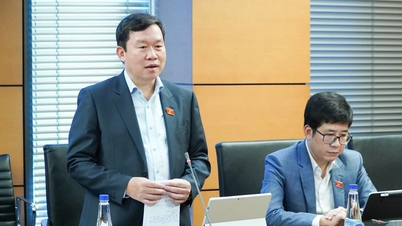
Analyzing the context, challenges and strategic directions to improve the quality of illiteracy eradication (IEL) work in the period 2025-2030, especially in ethnic minority and mountainous areas; Mr. Nguyen Xuan Thuy - Deputy Director of the Department of Vocational Education and Continuing Education ( Ministry of Education and Training ) - said that the current IEL work is not only a task to inherit the tradition of "eradicating illiteracy", but also a vital requirement to ensure equitable development opportunities in the context of integration and digital transformation.
80 years ago, right after the Democratic Republic of Vietnam was born, with 95% of the population illiterate, President Ho Chi Minh stated: “An ignorant nation is a weak nation”. He considered the work of poverty reduction as urgent as fighting famine and foreign invaders.
The establishment of the Popular Education Department (September 8, 1945) initiated a widespread social movement: “Literate people teach illiterate people”, “Husbands teach wives, fathers teach children, older brothers teach younger brothers”. Thanks to that, Vietnam was recognized by UNESCO as a country with outstanding efforts in popular education. By 2000, our country had completed the national standards on popular education and universal primary education .
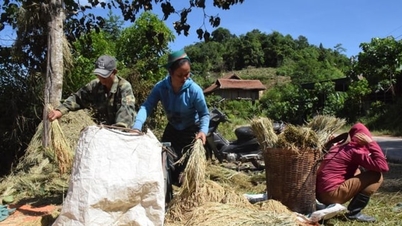
However, entering a new phase, the XMC has encountered other challenges: the rate of illiteracy and re-illiteracy is concentrated mainly in "hardcore" areas - mountainous, border, and island areas, where economic conditions, geography, and language barriers make it difficult for people to access education.
Mr. Thuy believes that the concept of literacy today does not stop at reading and writing. In the digital age, people need to have the ability to receive information and use technology to serve their lives and production. Eradicating functional illiteracy has become an inevitable requirement.
This is also an important foundation for effectively implementing national target programs, especially Program 1719 on socio-economic development in ethnic minority areas.

Policy framework and orientation of the Party and State
XMC has always been identified as a priority task throughout. President Ho Chi Minh stated: “The world is constantly progressing, those who do not learn are backward”, and “Lifelong learning” is the right and obligation of every citizen.
That ideology is institutionalized in many important documents such as: Resolution 29-NQ/TW (2013) on fundamental and comprehensive innovation of education, prioritizing investment in ethnic minority areas; Directive 29-CT/TW (2024) on universal education, compulsory education, and XMC for adults.
The Politburo emphasized the need to focus on equipping newly literate people with essential knowledge and skills, maintaining sustainability, and focusing on eliminating functional illiteracy.
The 2019 Education Law and Decree 20/2014/ND-CP clearly stipulate the State's responsibilities in post-literacy education and continuing education. Policies in the National Target Program 1719, in which Sub-project 1 - Project 5 allocates direct resources for post-literacy education in ethnic minority areas. Vietnam's commitment to SDG4 - ensuring quality education and lifelong learning for all.
Current statistics show that our country's literacy rate is high:
Age 15–35: 99.39% achieved level 1; 98.97% level 2.
Age 15–60: 99.10% achieved level 1; 97.72% level 2.
Nationwide, 34/34 provinces have met XMC level 1 standards and 26/34 provinces have met level 2 standards.
However, these figures do not fully reflect the reality, because the illiteracy rate is still concentrated in particularly difficult villages and hamlets. On the other hand, the risk of re-illiteracy is very high if people do not continue their studies or participate in production and livelihood activities associated with new knowledge.

The solution system needs to be structured in two levels.
Mr. Thuy emphasized that XMC is not a one-time task. People can only preserve the written word when it is attached to their lives. According to him, the solution system needs to be structured at two levels: provincial level and commune level – where it is directly related to the people and the locality.
Firstly, propaganda and awareness raising. At the provincial level, issue specialized directives, include the XMC target in the emulation criteria; coordinate with provincial radio stations to build propaganda columns in common and ethnic languages.
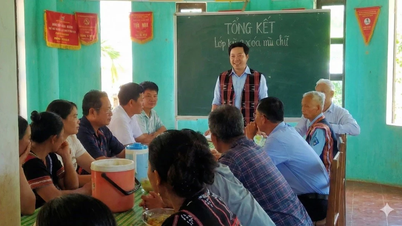
At the commune level, promote the role of village elders and village chiefs "going from house to house"; propagandize through loudspeakers, village meetings, and traditional festivals.
Second, flexible classroom management, investigation and organization:
For provincial level: strengthen the Steering Committee, build a digital database on XMC; compile documents suitable for local culture and language.
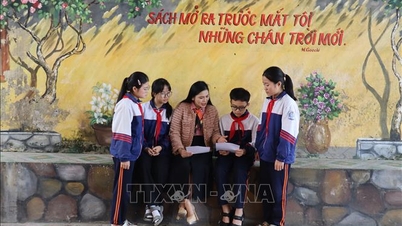
For commune level: review twice a year with practical tests; flexible learning locations (residents' houses, cultural houses, schools), learning hours during the day or at night.
Third, professional solutions and technology applications. Provincial level: training ethnic minority languages for Kinh teachers; implementing online or television teaching of XMC.
Commune level: priority given to teachers from ethnic minorities; combining traditional rhyming methods and international Reflect methods.
Fourth, consolidate results, fight against illiteracy linked to livelihoods.
Provincial level: circulation of books and newspapers, organization of mobile libraries; vocational training support for newly illiterate people.
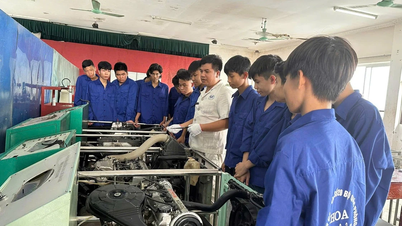
Commune level: Community learning centers organize "Post-XMC" classes, teaching literacy combined with short-term vocational training; open phase 2 classes to reach level 2.
Fifth, policy mechanisms and socialization.
Provincial level: issue specific expenditure levels; coordinate with Border Guard, Women's Union, Farmers' Union.
Commune level: fully pay the regime for teachers and learners; mobilize volunteer students, retired officials, and high school students to participate in teaching XMC during the summer.
Mr. Nguyen Xuan Thuy affirmed: XMC is a persistent process and requires the synchronous participation of the entire political system, in which the commune level plays a decisive role. “Leaving no one behind” will only become a reality when every ethnic minority person is given the opportunity to learn, understand and use words to develop their lives. This is also the most practical way to narrow the regional gap and realize the goal of building a learning society.
Source: https://giaoducthoidai.vn/xoa-mu-chu-trong-giai-doan-moi-khong-de-ai-bi-bo-lai-phia-sau-post759706.html

![[Photo] General Secretary To Lam receives the Director of the Academy of Public Administration and National Economy under the President of the Russian Federation](/_next/image?url=https%3A%2F%2Fvphoto.vietnam.vn%2Fthumb%2F1200x675%2Fvietnam%2Fresource%2FIMAGE%2F2025%2F12%2F08%2F1765200203892_a1-bnd-0933-4198-jpg.webp&w=3840&q=75)




















































































Comment (0)