

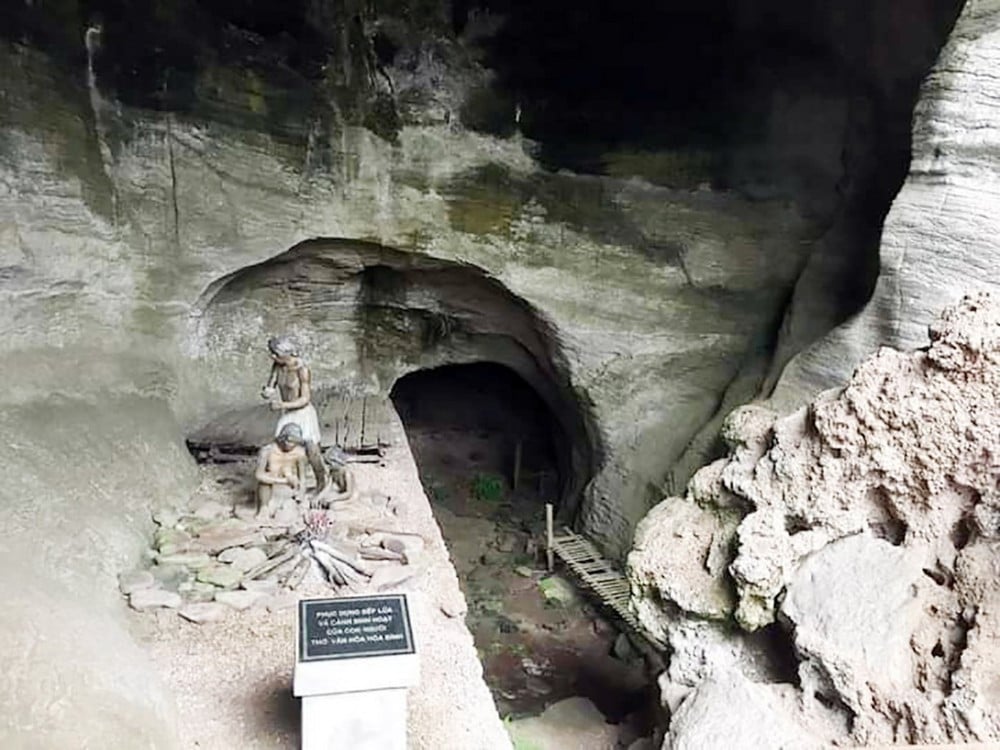
Deputy Prime Minister Le Thanh Long recently signed Decision No. 694/QD-TTg dated July 18, 2024, classifying three sites as special national relics (15th batch): the Xom Trai Cave and Vanh Village Rock Shelter archaeological sites (Lac Son district, Hoa Binh province); the Vinh Hung archaeological site (Vinh Loi district, Bac Lieu province); and the historical sites of the Truong Dinh Uprising (Go Cong town, Go Cong Dong district and Tan Phu Dong district, Tien Giang province).
Thus, after the 15th ranking, Vietnam has a total of 133 special national monuments.
Archaeological sites: Xom Trai Cave and Vanh Village Rock Shelter
The Vành Village Rock Shelter and the Xóm Trại Cave relics are typical representatives of Hoa Binh's cultural heritage in Hoa Binh province in particular and Vietnam in general. These are also archaeological sites with fascinating and unique historical and cultural value, representing valuable tourism resources for the province in the current period of opening up, integration, and regional linkages.
The Vành Village Cave is located right next to the prehistoric dwelling place at Vành Village Rock Shelter. Inside the cave is a small lake and many archaeological traces of the Hòa Bình Culture inhabitants.
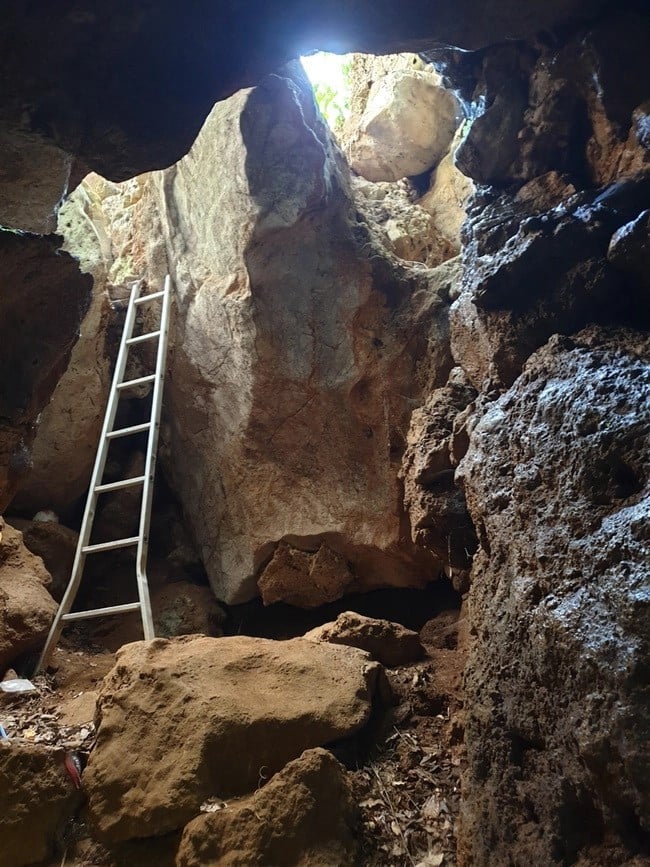
The Xom Trai Cave site was discovered in 1975. Dating back 21,000 years, it was classified as a national archaeological site in 2001. Numerous investigations, explorations, and excavations have uncovered a vast collection of artifacts, including mollusk shells, animal bones and teeth, human remains, pottery, and especially thousands of stone tools. To date, this is the Hoa Binh Culture site with the richest collection of stone tools.
The Vành Village Rock Shelter site was discovered and excavated in 1929 by the French female archaeologist M. Colani and was classified as a national archaeological site in 2004. The site retains a portion of its original cultural layer, with many layers of Quaternary sediments remaining on the rock shelter walls. The site has a very thick stratigraphy, containing a complex of stone tools, pottery, and burial sites of the Hoa Binh Culture, dating from 17,000 to 8,000 years ago.
Through excavations, traces of several fire pit remains, animal bone clusters, and clusters of boulders possibly related to prehistoric tool-making or food-preparation seating areas were discovered; no traces of relics were found in the pits outside the cave. A considerable amount of artifacts were recovered from the excavation and exploration pits, mainly stone tools, bone tools, pottery, and mollusks; seven additional absolute dates were added to the Vành village rock shelter site. After tree ring correction, the earliest absolute date at this site will be up to 25 million years ago.
The recent discovery of new values in the Xom Trai Cave and the Lang Vanh Rock Shelter demonstrates that the Hoa Binh Culture sites in Hoa Binh province still hold many mysteries, attracting scientists to continue researching the Hoa Binh Culture.
Vinh Hung Archaeological Site
The Vinh Hung archaeological site is located in Trung Hung 1B hamlet, Vinh Hung A commune, Vinh Loi district, Bac Lieu province, about 20km from the center of Bac Lieu city. Following National Highway 1A from Bac Lieu towards Ca Mau for 5km, at Cau Sap bridge, turn onto the road leading to Vinh Hung market to reach Vinh Hung tower.
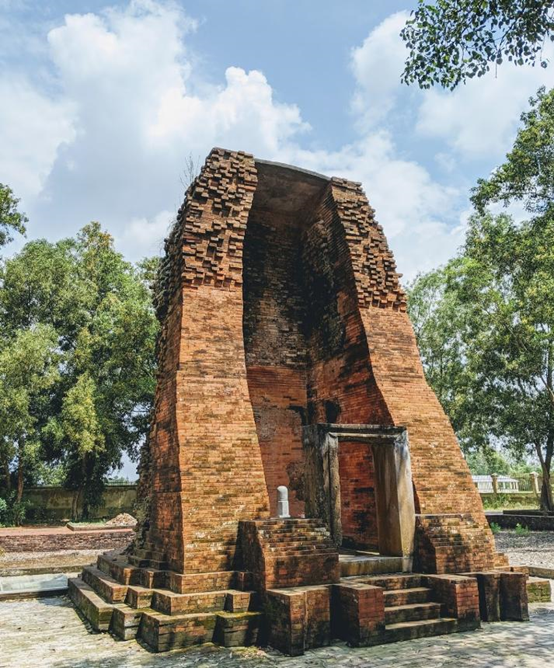
This is not only the only remaining tower architecture of the Oc Eo culture in the Southwest of Vietnam, but during excavations at Vinh Hung Tower, archaeologists also recovered many extremely valuable artifacts, including stone, bronze, ceramic, and precious stone statues, marking a relatively long period of existence and development (from the 4th to the 8th century AD) of the ancient Vinh Hung Tower.
The first person to discover the tower and announce its name, Tra Long Tower, in 1911 was Lunet de Lajonquière. Following this, in 1917, Henri Parmentier surveyed the tower and published his findings in the journal of the French School of Far Eastern Studies (BEFEO) under a new name – Luc Hien Tower.
In 1990, archaeologists from the Institute of Social Sciences in Ho Chi Minh City (now the Institute for Sustainable Development of the Southern Region) collaborated with the Minh Hai Provincial Museum to survey and excavate an exploratory pit, discovering several artifacts such as the head of a deity statue, inscriptions, a grinding stone, and a Linga-Yoni.
Based on that, the tower remains were initially dated to the 7th-8th centuries AD, belonging to the late stage of the Oc Eo culture.
Due to its architectural value, in 1992 the Ministry of Culture, Information and Sports (now the Ministry of Culture, Sports and Tourism) decided to classify Vinh Hung Tower as a national monument.
In 2002 and 2011, to support the restoration and preservation of the Vinh Hung Tower relic, the Center for Archaeological Research, in coordination with the Bac Lieu Provincial Museum, excavated around the tower to reveal its foundations and address buried traces, in order to develop solutions for the restoration and preservation of the tower and enhance its historical value.
The excavation yielded many unique and valuable artifacts (some are currently preserved at the Bac Lieu Provincial Museum and some are displayed at the Vinh Hung Tower Relic Exhibition House). From the archaeological excavation results, scientists determined that the Vinh Hung Tower dates back to the 4th century AD and was renovated in several subsequent periods (from the 4th to 8th centuries), belonging to the Oc Eo and post-Oc Eo cultures.
Historical sites of the Truong Dinh Uprising
Truong Dinh (Truong Cong Dinh) was born in 1820 in Tinh Khe commune, Son Tinh district (Quang Ngai province). Previously, he followed his father to Gia Dinh, then settled in Go Cong (Tien Giang province) to start a new life, reclaim land, and establish a plantation.
In 1859, when the French invaded Gia Dinh, in Go Cong, he rose up and raised the banner of rebellion against the invaders, using "Dark Leafy Hill" in Gia Thuan, Go Cong as his base and achieving many glorious victories, inspiring the people and soldiers, and earning him the title of "Grand Marshal of the Pacification of the West."
On August 20, 1864, betrayed by an informant, the French launched a surprise attack on the "Dark Leaf" base. In this battle, after fighting bravely to the point of exhaustion, Truong Dinh committed suicide to avoid falling into the hands of the enemy; he was 44 years old that year.
In remembrance of his merits, the people of Go Cong often call him "Truong Cong Dinh" or "Mr. Truong," and in some places in Go Cong, he is called "Mr. Big."
Related to the resistance against the French led by National Hero Truong Dinh in Go Cong, many relics remain, such as the Fortress, the Dark Leafy Hill, Dinh Pond, his temple, and his tomb complex…
The Fortress Relic site is located in Phao Dai hamlet (Phu Tan commune, Tan Phu Dong district). Situated right on the Cua Tieu river, it is easily accessible by both water and land.
In 1987, the Fortress was recognized as a national historical monument. In 2000, the Department of Culture, Sports and Tourism undertook the construction of a memorial stele at the Fortress. The stele has a beautiful, airy, and solemn architecture, with a height of 9.4 m, a width of 8.4 m, a tiled roof, concrete columns, and a raised foundation 2 m above ground level. Two cannons were also restored.
The Truong Dinh Temple is located in Hamlet 2, Gia Thuan Commune, Go Cong Dong District. The temple is a place of worship for the national hero Truong Dinh, who played a key role in developing the Go Cong region. This is considered his second home (alongside his native Quang Ngai Province), where he grew up, established his career, and fought against the French colonial invasion.
TB (according to Vietnam+)Source: https://baohaiduong.vn/kham-pha-3-di-tich-duoc-xep-hang-di-tich-quoc-gia-dac-biet-dot-15-387930.html

![[Photo] Prime Minister Pham Minh Chinh receives Lao Minister of Education and Sports Thongsalith Mangnormek](/_next/image?url=https%3A%2F%2Fvphoto.vietnam.vn%2Fthumb%2F1200x675%2Fvietnam%2Fresource%2FIMAGE%2F2025%2F12%2F16%2F1765876834721_dsc-7519-jpg.webp&w=3840&q=75)
![[Image] Leaked images ahead of the 2025 Community Action Awards gala.](/_next/image?url=https%3A%2F%2Fvphoto.vietnam.vn%2Fthumb%2F1200x675%2Fvietnam%2Fresource%2FIMAGE%2F2025%2F12%2F16%2F1765882828720_ndo_br_thiet-ke-chua-co-ten-45-png.webp&w=3840&q=75)
![[Live] 2025 Community Action Awards Gala](/_next/image?url=https%3A%2F%2Fvphoto.vietnam.vn%2Fthumb%2F1200x675%2Fvietnam%2Fresource%2FIMAGE%2F2025%2F12%2F16%2F1765899631650_ndo_tr_z7334013144784-9f9fe10a6d63584c85aff40f2957c250-jpg.webp&w=3840&q=75)

![[Photo] Prime Minister Pham Minh Chinh receives the Governor of Tochigi Province (Japan)](/_next/image?url=https%3A%2F%2Fvphoto.vietnam.vn%2Fthumb%2F1200x675%2Fvietnam%2Fresource%2FIMAGE%2F2025%2F12%2F16%2F1765892133176_dsc-8082-6425-jpg.webp&w=3840&q=75)





































































Comment (0)