

According to experts, it is advisable to set up a contingency fund, and then consider buying gold, real estate, or stocks depending on expected returns and risk tolerance.
Hello expert. My parents have decided to retire completely and enjoy their old age. I didn't choose to inherit the family business like my siblings, so my parents gave me 2 billion VND to use as capital for the future.
Currently, I still enjoy my office job and have no intention of branching out to start my own business. My monthly income is enough to support myself (and a cat), save money, pay for insurance, and occasionally travel ... Therefore, the 2 billion VND mentioned is money I won't touch for at least another 5 years.
I would like to ask for expert advice on how to handle and allocate that money safely, avoid devaluation, and ideally generate an average return. Thank you!
Thanh Tan
Consultant:
You have a stable income, a financial protection plan through life insurance, and currently no financially dependents. Before allocating the 2 billion VND you received as a gift and have idle funds for the next 5 years, you should consider the following two steps.
First, establish an emergency fund (if you don't already have one). This fund will be used in unexpected situations such as a sudden reduction or loss of income, or the urgent need to send money to parents.
An emergency fund is typically equivalent to 3 to 6 months of expenses. In your case (no financially dependents and life insurance), this fund should be set at the equivalent of 3 months of expenses and kept in a savings account for one month.
Secondly, identify the relevant factors before allocating. You should consider your overall portfolio (including current savings), rather than just how to allocate 2 billion VND. The allocation will be very different if you have 1 billion VND in savings, equivalent to 33.33% of your total asset portfolio (3 billion VND), compared to if you have 500 million VND in savings, equivalent to 20% of your total asset portfolio (2.5 billion VND).
You need to answer this question yourself: Is the overall portfolio allocation efficient in terms of return (compatibility with your risk appetite)? You mentioned that you only want an "average" return, but you haven't specified what that average means, which also needs to be clearly defined.
If your desired return is 6-8% per year, bank savings accounts are still meeting that target, and the risk is virtually non-existent.
If your desired return is 8-10% per year, you should consider adding asset classes with higher growth potential than bank savings, such as bonds, apartments less than 6 years old, or residential real estate. Although savings interest rates reached 11% per year at the end of last year and the beginning of this year, in the medium term, interest rates are expected to remain in the range of 6-6.5% per year.
If your desired return is around 12-15% per year, you will need to include additional asset classes with strong growth potential such as stocks (fund certificates or direct investments), suburban real estate, and agricultural real estate.
It's important to consider your risk tolerance, as higher-growth assets come with higher risks. If you expect your assets to grow by 12-15% annually, you need to accept that there will be times when high-growth assets like stocks will lose 15%, or even as much as 30%. If you cannot accept this level of risk, you should reconsider your desired performance.
In addition, you need to find answers to the following questions: Is the portfolio diversified enough? Is there sufficient liquidity or the ability to switch cash flows when needed? Does your asset portfolio deliver the desired returns and has optimal risk management?
Suggestions for asset classes
First, consider bank savings . You should deposit for 1-month terms (for emergency funds), 6-month or 12-month terms to optimize liquidity. The reason is that the interest rates for 1- and 3-month terms, or 6- and 9-month terms, are almost the same.
You could consider gold . I recommend keeping around 5% of your portfolio in it. It remains a suitable defensive asset to hold in the long term.
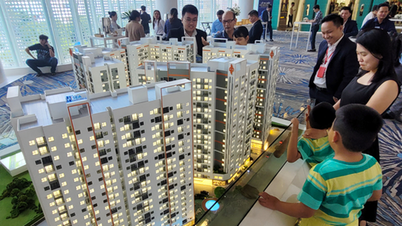
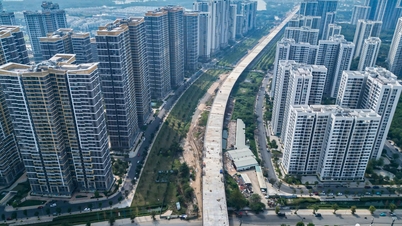
Regarding real estate , the market is frozen, coupled with contributing factors such as high lending interest rates and poor liquidity, leading to pressure on investors owning properties. Therefore, this sector will see many properties priced lower than market value in Q4 2023 or the first quarter of next year.
Finally, there are stocks . At the beginning of the year, the market was historically undervalued. Currently, the market has risen significantly, but recently experienced sharp declines and volatility since the start of the year. Investing in stocks at this time involves short-term risks (potential losses), but in the long term, the market remains attractive as indicators like P/E and P/B ratios haven't exceeded their 10-year averages. Stock holdings still hold significant potential.
Nguyen Thi Thuy Chi
Personal Financial Planning Expert
FIDT Investment Consulting and Asset Management Company
Source link


































































































Comment (0)