

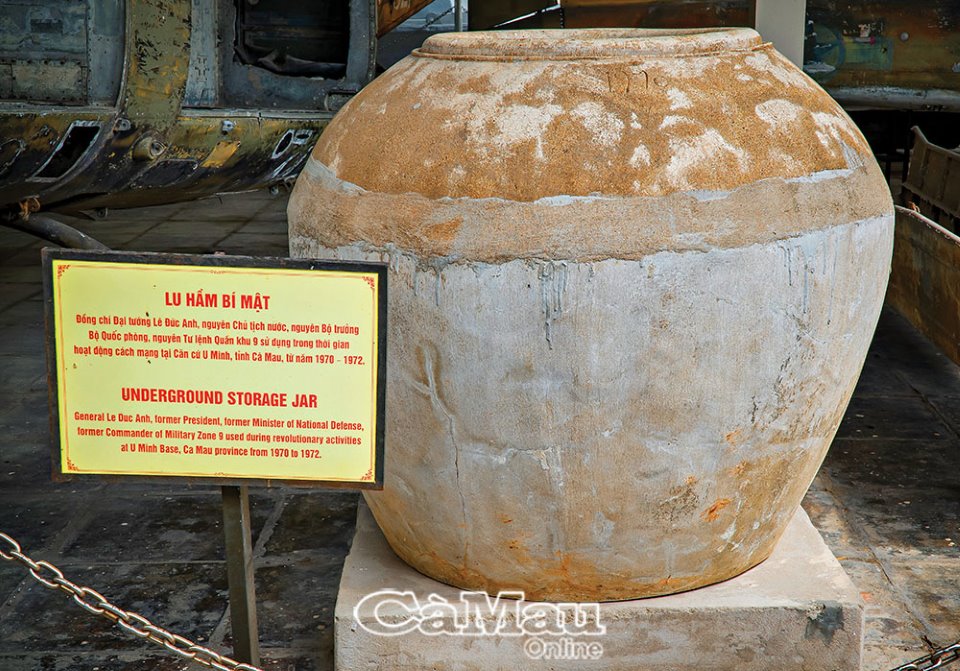
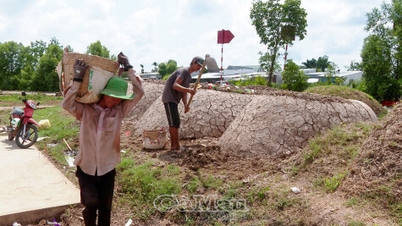
This earthenware jar served as a secret bunker for General Le Duc Anh, former President, former Minister of National Defense , and former Commander of Military Region 9, during his revolutionary activities at the U Minh base in Ca Mau province (from 1970-1972).
Mr. Trang Hoang Lam (Dong Hai district, Bac Lieu province) shared: “The large, round earthenware pot is made of cement, silver-white in color, but over time, it darkens; while the palanquin is reddish-brown, with dragon motifs around it, giving it a luxurious look. There are rows of palanquins decorating the front of the house, their colors making the house stand out even more.”
In the past, people used to buy earthenware jars and pickled vegetables from Lai Thieu ( Binh Duong province), Dong Nai province, Long An province, etc., and transport them by boat downstream to the Mekong Delta. Each boat trip carried hundreds of jars and pickled vegetables neatly arranged, making a striking sight along a stretch of the river. These jars and pickled vegetables were very durable, lasting through many rainy and sunny seasons. They came in many sizes, depending on the needs, whether for storing water or making fish sauce... The business of selling jars and pickled vegetables was also well-known.
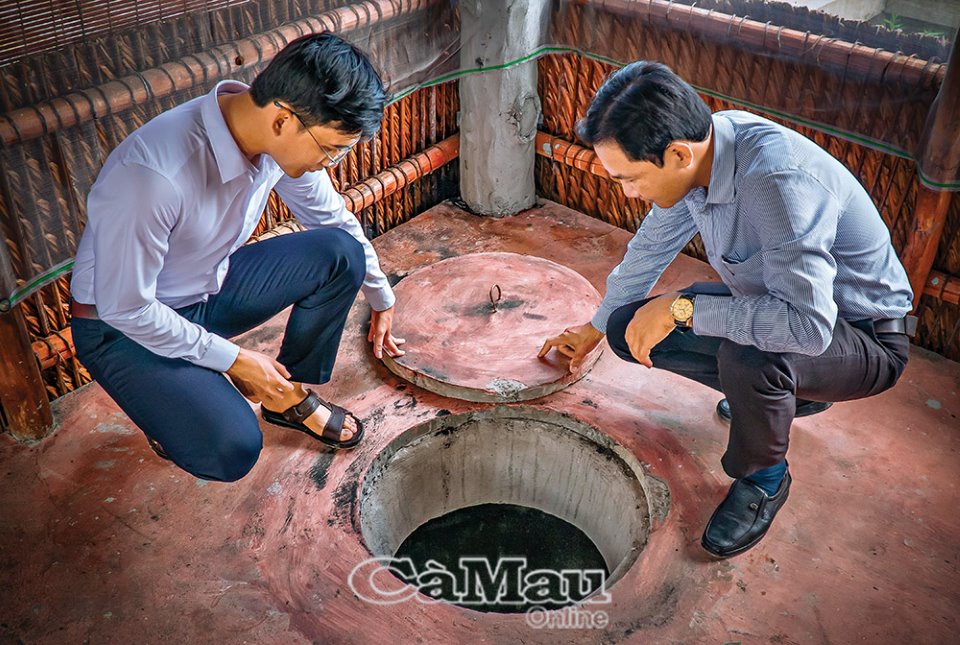
A reconstructed model of a bomb shelter made of earthenware jars at the historical site "The Residence and Workplace of Comrade Vo Van Kiet".
My maternal grandfather said, "Back then, when your parents moved out on their own, I gave them a few pairs of baskets and a large earthenware pot, mainly for collecting rainwater to drink. When it was hot or when we came home from working in the fields, we'd open the lid of the pot, scoop up some rainwater with a coconut shell ladle, and drink it in one gulp—it was very refreshing."
Further south, in Hamlet 6, Khanh Hoa Commune, U Minh District, the memories of the earthenware jars used as shelters by the late Prime Minister Vo Van Kiet during the resistance war are also evoked and recalled by the locals.
Mr. Kim Tay (of Khmer ethnicity), from Hamlet 6, Khanh Hoa Commune, shared: “Uncle Six Dan's jar was discovered more than a kilometer from the historical site, lying on a banana grove, surrounded by dense forest. It was only discovered long after Uncle Six had left the area. The jar is quite large, capable of sheltering 3 or 4 people.”
Living near the historical site of Comrade Vo Van Kiet's residence and workplace, Mr. Ly Duc Khanh, from Hamlet 6, Khanh Hoa Commune, recalled a part of history: "After liberation, those who had taken refuge in the bunkers made of earthenware jars only then showed the locals the location so they could dig them up, preserving the traces of the war."
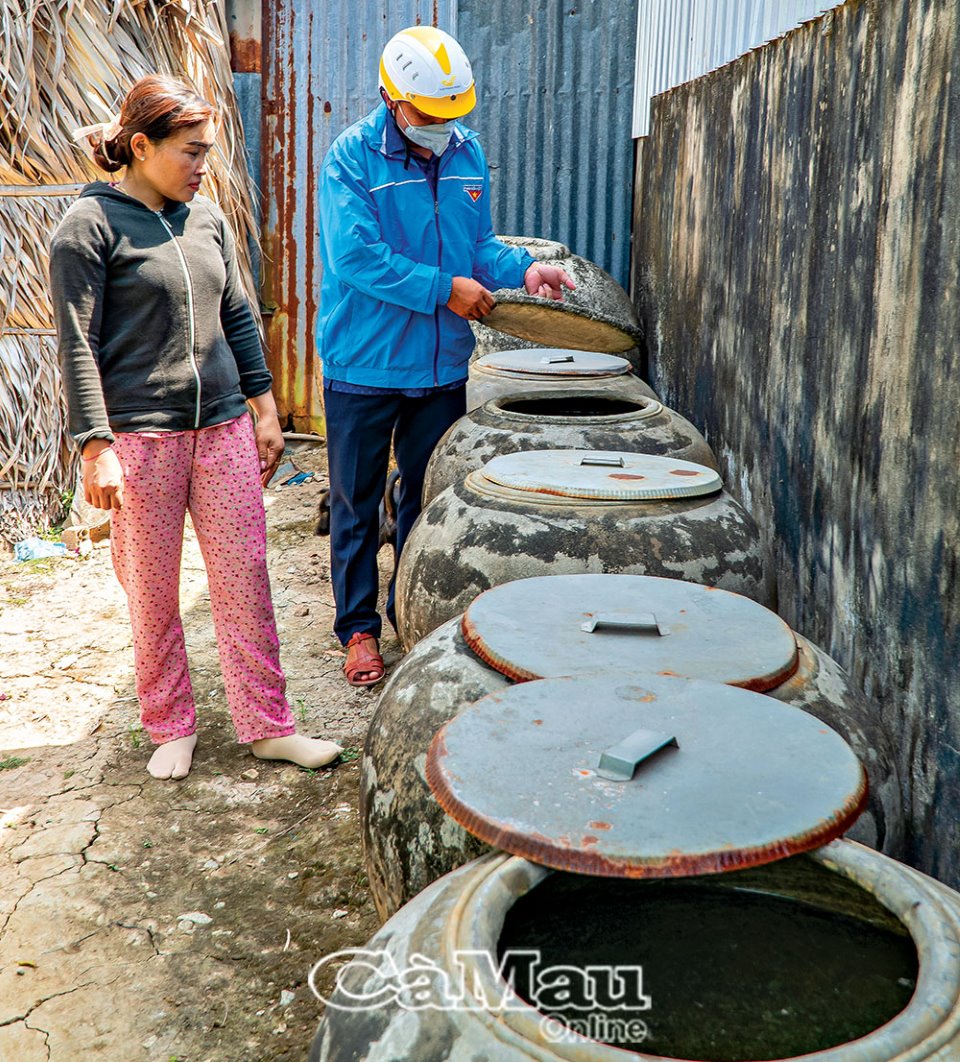
The villagers of Khanh Thuan commune, U Minh district, use these earthenware jars to store rainwater.
The earthenware jars were usually made of cement by soldiers and civilians, done secretly and discreetly. Mr. Hai Khanh also used many of these jars; his house still has several old jars that he uses to store rainwater on the porch. In the past, his family used more than 15 jars to salt snakehead fish and store dried fish... Notably, during the war, every household used these jars as shelters to hide in whenever the enemy bombed.
Mr. Dang Phung Tam, from Quach Pham commune, Dam Doi district, a local veteran, after the war years, after each rice harvest, he would buy a few jars and containers to store water; in years when the rice crop failed, and boats carrying containers from Lai Thieu arrived, he would exchange them for dried coconuts.
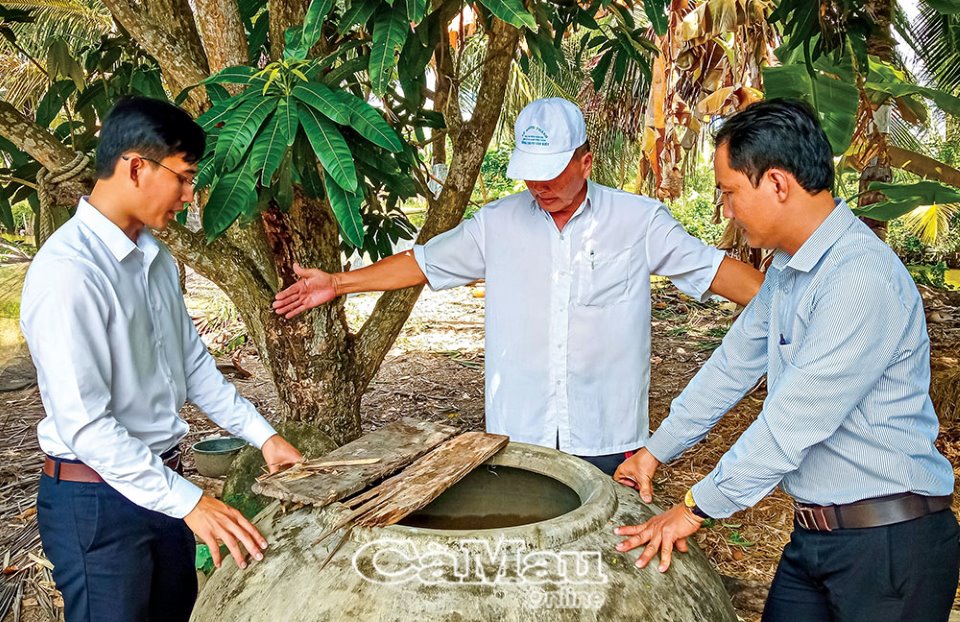
Residents of Hamlet 6, Khanh Hoa Commune, describe how they used earthenware jars to make shelters during the resistance war.
Mr. Bay Tam shared: "After several years of resistance, most of the jars were broken, but I've preserved more than 10 palanquins almost intact. These are also mementos of my life. I designed a lid for each palanquin to ensure hygiene." Most of the palanquins are made of terracotta, glazed inside, so the water doesn't accumulate algae and they are very clean.
Since 2000, boats laden with jars and pickled vegetables traveling up and down the Mekong Delta have become rare, not as common as before. However, whenever I return to my hometown and see these jars and pickled vegetables, it evokes memories of the past. These jars and pickled vegetables not only hold water, but also carry the love and affection for the countryside and its simple, honest people.
Nhat Minh
Source link


























![[Infographic] Vietnam's Economic Situation Report, Q1 2026: Strong Growth Momentum](https://vphoto.vietnam.vn/thumb/402x226/vietnam/resource/IMAGE/2026/04/04/1775298512042_tang-truong-kinh-te-viet-nam.jpeg)
![[Image] Close-up view of the 10-lane road connecting to Long Thanh Airport](https://vphoto.vietnam.vn/thumb/402x226/vietnam/resource/IMAGE/2026/04/04/1775291871988_ndo_br_1-resize-5690-jpg.webp)













Comment (0)