

Unlike grid-like urban structures such as New York, San Francisco, Chicago, and Toronto (USA), or radial spiderweb-like cities like Paris (France), Moscow (Russia), and Palmanova (Italy), Tokyo's development follows the natural contours of the landscape, like flowing water and drifting flowers. Therefore, while some streets are square, others may have diagonal triangular corners or gracefully curve in an S-shape.
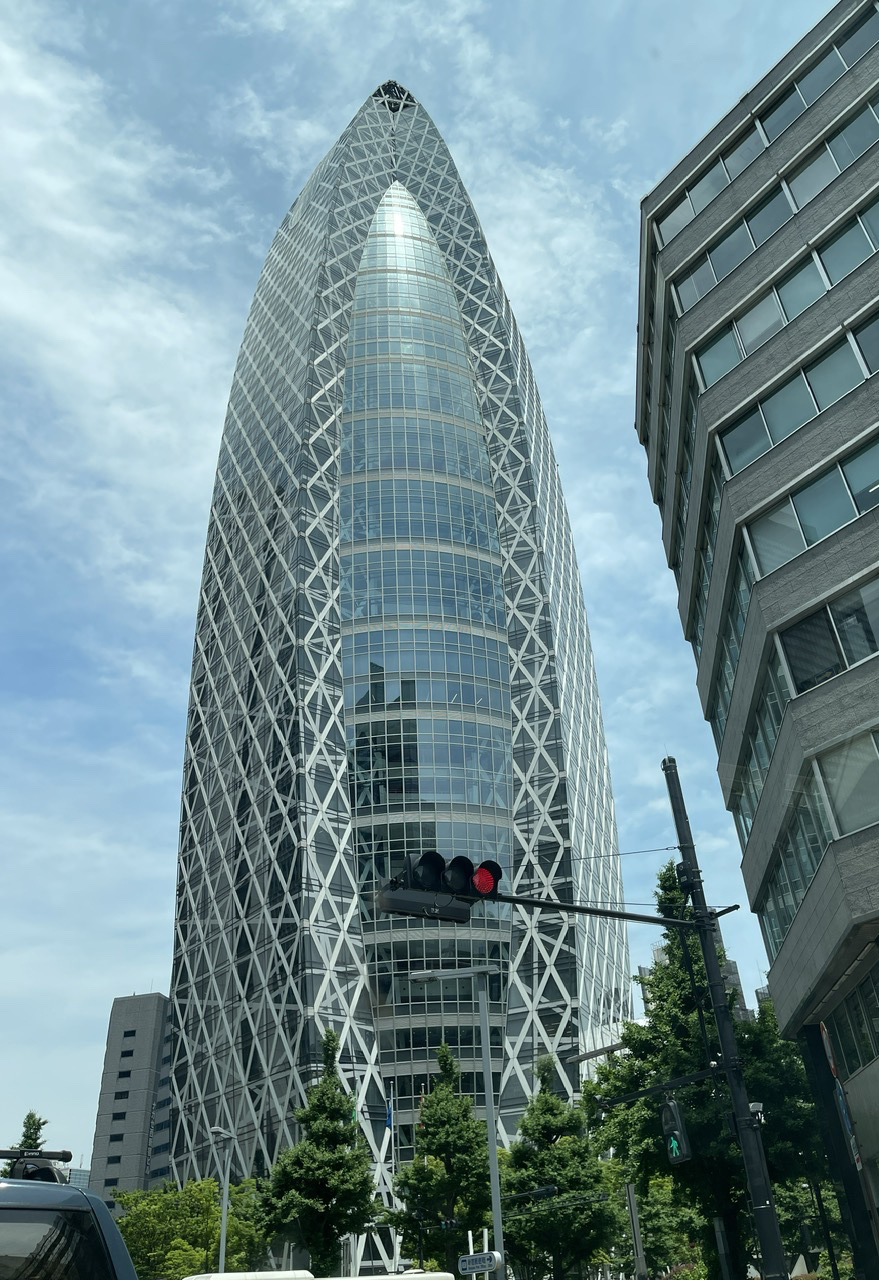
Tokyo's architecture is diverse and innovative, yet not ostentatious or incongruous with the urban environment. Examples include the Nakagin Capsule Tower, inspired by light; the Prada Aoyama Tower, inspired by bamboo weaving; and the Cocoon Tower, shaped like a cocoon, standing 204 meters tall with 50 floors. The cocoon symbolizes the nurturing and development of students. Inside the tower are schools such as Tokyo Mode Gakuen (fashion school), HAL Tokyo (technology and design school), and Shuto Iko (medical school). The Cocoon Tower won the "Skyscraper of the Year 2008" award from Emporis.
Tokyo's population, including its surrounding wards, is 37 million. Therefore, it's a densely populated city. Approximately 80% of the population lives in apartments under 60 square meters. Of these, 34% of the working class live in apartments between 20 and 30 square meters. Some apartments are only 10-15 square meters. Because land is so precious, optimizing space is a strength of Tokyo residents. Looking at it positively, no space seems wasted. A 3-star hotel like Apa has a room of about 11 square meters, including a double bed, a table and chairs, and a nice toilet. You can stand in one place and reach for anything without having to stretch. This feeling is different from when you return to Vietnam and find every room spacious.
Ultimately, everyone just goes to a hotel to sleep, so the Japanese invented the "capsule hotel." Each guest sleeps in a box measuring 2 meters long, 1.2 meters wide, and 1.2 meters high. Inside, there's a reading lamp, charging sockets, a TV, Wi-Fi, and guaranteed privacy. There are also capsule hotels that mimic business class airplane seats. Tokyo has 53 capsule hotels, such as The Millennials Shibuya, First Cabin, and Capsule Hotel Anshin Oyado. On average, there are between 100 and 300 capsules in a hotel. Narita Airport also has a hotel with 129 capsules to serve passengers experiencing flight delays.
At first glance, central Tokyo seems sparsely populated with vehicles and pedestrians, but once you descend to the subway stations, you witness a throng of people, like a swarm of bees leaving their hive. The Tokyo subway system has 13 lines and approximately 280 stations, transporting over 9 million passengers daily. Japan's first subway train rolled on the tracks in 1927. It was the third subway system in the world to be built, after London and New York.
On the streets and in the gardens, it's rare to see groups of parents and children, grandparents and grandchildren playing together like in other countries. Children usually only play at school and at home. The population is aging, so young people are scarce. The demand for labor in this country is at a critical level. Therefore, Japan attracts up to 600,000 Vietnamese workers.
The elderly are now worried that a segment of the younger generation is losing the spirit of hard work, meticulousness, and prestige of their predecessors due to the encroachment of foreign culture and the persistent pressures of economic life.
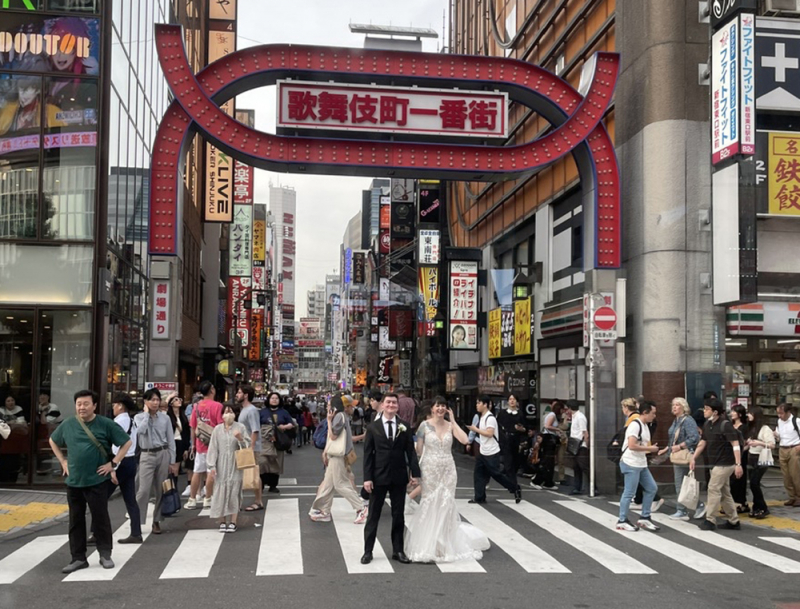
In the entertainment district of Kabukicho, Shinjuku, a few young people wearing dark sunglasses and headphones dance from morning till night. The next morning, at the same street corner, they're still wearing headphones, swaying dreamily from dawn until late at night. The day after that is the same. It's impossible to tell what kind of music they're listening to, completely oblivious to reality. This is a kind of silent dancing culture called Sairento Disuko, a transliteration of Silent Disco.
A strange lifestyle is spreading in Japan: the "Hikikomori" movement. People living this way isolate themselves at home, avoiding social interaction for six months or more. They withdraw from society, with some staying withdrawn for 10 years or more. There are many reasons related to mental health, such as depression and anxiety disorders. As of 2022, there were approximately 1.4 million Hikikomori. They don't work, don't socialize, and completely cut off from life. Their food and drink are provided by their parents. The number of middle-aged Hikikomori is increasing. The aging of both parents and their Hikikomori children has led to the "8050 problem," meaning parents in their 80s are caring for their Hikikomori children in their 50s. This is a significant issue when parents become frail or pass away.
If you encounter a group, couple, or trio walking and laughing, it's easy to see they're tourists of European origin or from other countries. Tokyo residents typically walk briskly or cycle swiftly along the sidewalks, without talking. Train passengers are also silent, checking their phones or taking a quick nap. It seems each person is an independent individual, unburdened by community ties.
Marriage rates are trending downward. Women are becoming increasingly independent and delaying marriage for career and personal freedom. Men often worry about income, financial responsibilities, and family pressure. According to a 2023 Japanese government survey, about 80% of unmarried people still want to get married, but over 50% said they "cannot find a suitable partner." In general, both men and women are experiencing a lack of energy for romance.
Because it's difficult to find love and get married, matchmaking services (Konkatsu) have flourished. This could be called marriage search or marriage rescue. Participants in Konkatsu are arranged to meet offline. Before meeting, they receive basic training on polite communication, attractive self-introductions, how to dress and present themselves better, and how to subtly share their expectations about "a home and children"—all in the hope of winning each other over. Among Konkatsu participants, the marriage success rate is between 20 and 30%. Some local governments even organize public Konkatsu events, fostering relationships between local people who were childhood sweethearts.
There's a segment of the population with many suppressed feelings, who find it hard to love, and who long to share their troubles, confide in others, cry, and have someone wipe away their tears and offer sweet comfort. At the Kabukicho entertainment district, dozens of girls dressed in cosplay outfits, short skirts, and anime-style blue and red hair stand inviting customers with signs advertising prices of 3,000-6,000 yen per hour. This isn't prostitution like in red-light districts around the world. These girls are hosutesu (club hostesses) who offer their services. Customers pay and are invited into a private host club where a girl chats, compliments, shows concern, empathizes, and comforts them. Fluency in Japanese is required to use this service; therefore, it's only for native speakers or those fluent in Japanese. Hosutesu are somewhat similar to geisha, but geisha require artistic training, while hosutesu only need a pleasant appearance and conversational skills. Similarly, on the street, there are a few muscular, gym-going young men waiting for customers, and a few wealthy ladies come to choose from them. Surely, each of these ladies has their own private sorrows that need someone to wipe away their tears.
Japan boasts the world's third-largest economy, yet it still faces persistent and troubling economic and social challenges. These bottlenecks are evident in lifestyles, visible in statistics, on the streets, and within families.
Upon reflection, even if we become powerful and prosperous, if the people are not happy, that wealth is meaningless. Looking at your own problems, we realize that even while enjoying economic glory, we must not forget to care for the people's well-being in the future.
Source: https://cand.com.vn/Xa-hoi/mot-thoang-tokyo-i772133/


![[Photo] President Luong Cuong receives Speaker of the Jordanian House of Representatives Mazen Turki El Qadi](/_next/image?url=https%3A%2F%2Fvphoto.vietnam.vn%2Fthumb%2F1200x675%2Fvietnam%2Fresource%2FIMAGE%2F2026%2F02%2F03%2F1770112220330_ndo_br_1-3704-jpg.webp&w=3840&q=75)


![[Photo] Prime Minister Pham Minh Chinh receives Philipp Rösler, Chairman of the Switzerland-Vietnam Economic Forum.](/_next/image?url=https%3A%2F%2Fvphoto.vietnam.vn%2Fthumb%2F402x226%2Fvietnam%2Fresource%2FIMAGE%2F2026%2F02%2F03%2F1770121222295_ndo_br_dsc-8709-jpg.webp&w=3840&q=75)




Comment (0)