

Proposed tax-free threshold based on regional coefficient, periodically adjusted
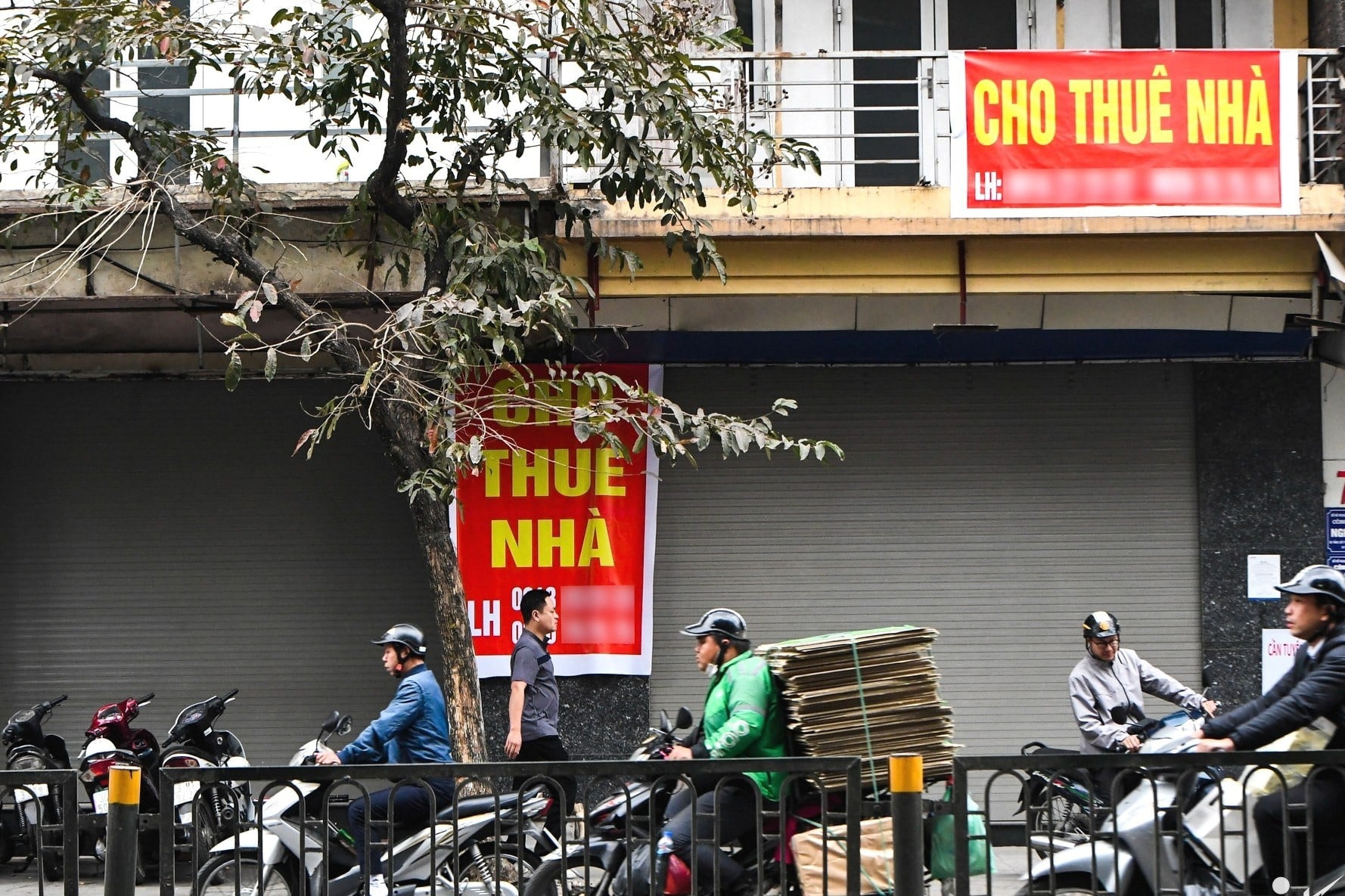
The Ministry of Finance proposed raising the tax-free revenue threshold for business households to VND500 million/year (instead of the previous proposal of VND200 million/year), which is 5 times higher than the level currently applied under the current Personal Income Tax Law.
Speaking with VietNamNet reporter, Mr. Nguyen Quang Huy, CEO of the Faculty of Finance and Banking (Nguyen Trai University), said that raising the tax-free revenue threshold for business households to 500 million VND/year is only truly meaningful when placed within the overall development strategy of this area.
According to him, business households are playing the role of natural "incubators" of the start-up economy , so the policy should not only stop at reducing the tax burden but also create a corridor for them to develop transparently and move closer to the small and micro-enterprise model in the future.
Mr. Huy emphasized a noteworthy factor is the scale of labor in the household. For households with many full-time workers, their income-generating capacity is clearly different from that of households with only one business person. Therefore, when establishing the tax-free threshold, it is possible to compare based on the personal income tax threshold of salaried employees, to ensure compatibility and fairness between income-generating sources, avoiding the feeling of excessive favoritism for business households.
“In essence, the income of a multi-labor household is equivalent to the total income of many individuals working for hire,” he analyzed.

This expert also believes that tax exemptions should be classified by industry. Industries with high profit margins and fast capital turnover should apply low adjustment coefficients, while manufacturing and service industries with low profit margins need more support. This approach helps policies be more realistic and limits the situation of shifting industries just to enjoy tax incentives.
Furthermore, the regional context should also be taken into account. Business costs in large cities such as Hanoi and Ho Chi Minh City are much higher than in other localities. Therefore, it is possible to apply a tax exemption threshold based on a regional coefficient similar to the minimum wage mechanism. This will help the policy to be flexible, practical and avoid unreasonable differences between regions.
He noted that tax reform is not only about tax exemption and reduction, but more importantly, it is about supporting business households to move towards modern management. Accordingly, it is necessary to deploy digital transformation support packages, apply simple electronic books, easy-to-use tax declaration tools, provide training on accounting - business - marketing and advise on model conversion when households are eligible to establish businesses.
To manage effectively without creating pressure, Mr. Huy proposed applying the mechanism of "minimum registration - declaration but no tax payment" for households below the tax-free revenue threshold. Simple revenue declaration via digital application helps management agencies have real data, while also bringing benefits to business households such as easy access to credit capital thanks to transaction history.
Experts also recommend piloting the policy in some localities for 6-12 months, combining quantitative and qualitative impact assessments before applying it nationwide. At the same time, there should be a mechanism for periodic adjustment according to CPI or average income growth so that the tax exemption threshold is always appropriate, avoiding backwardness or too large incentives.
Proposal to raise to 750 million or 1 billion VND
Meanwhile, Mr. Le Van Tuan, Director of Keytas Tax Accounting Company Limited, commented that the tax-free revenue threshold of 500 million VND/year is appropriate and ensures fairness between subjects with income from salaries and wages as well as between business households with value-added tax and personal income tax obligations.
However, Mr. Tuan pointed out that the proposal still did not mention an important thing, which is the support from the State for business entities. Accordingly, when determining the tax exemption threshold, it is necessary to take into account the costs for tax policy compliance such as: equipping cash registers, accounting software, electronic invoices, digital signatures... This is a not small initial cost compared to the scale of a business household, estimated at about 20 million VND, not to mention the annual maintenance costs.
Comparing with some countries with similar GDP per capita and tax-free revenue levels, Mr. Tuan said: "If compared with Thailand, the tax-free revenue level that should be considered is 750 million VND. Or compared with Malaysia, the revenue threshold we should consider is 1 billion VND or the revenue threshold of 1.5 billion VND compared with China."
Emphasizing that tax policy is not to collect small amounts, but to nurture revenue sources and support business development so that they can make larger contributions to the budget in the future, Mr. Tuan proposed to consider raising the tax-free revenue threshold to at least VND750 million, equivalent to Thailand's level, or even VND1 billion to promote entrepreneurship and create long-term development momentum for the household business sector.
Source: https://vietnamnet.vn/nang-nguong-mien-thue-ho-kinh-doanh-len-500-trieu-dong-nam-da-hop-ly-2469485.html






















































































Comment (0)