

Vietcombank has just sent out an email warning about fraudsters impersonating bank employees to scam people, especially in credit card applications. According to the warning, these scammers often pose as bank employees, contacting users via phone, SMS, Zalo, or Messenger to persuade them to proactively open a non-physical debit card or apply for a credit card at the bank.
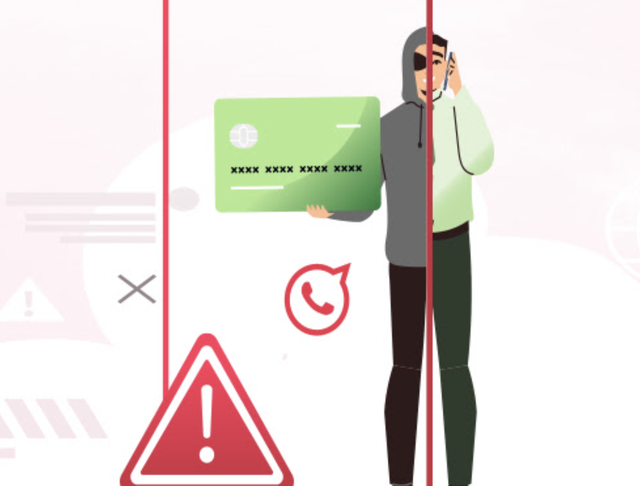
Vietcombank warns of scams impersonating bank employees.
Several phone numbers have been identified as being linked to the scams, including 02366888766, 02488860469, and 02888865154. Notably, the scammers also impersonated bank call centers. When victims answered the call, they played an automated message saying: "Congratulations, you are eligible to apply for a credit card at the bank. If you need assistance, press 1 or 0 to speak with a customer service representative."
If the listener follows the instructions, the call will be disconnected. Then, the scammer will call back, impersonating a bank employee again to request personal and confidential information such as card numbers, OTP codes, or digital banking service passwords.
Furthermore, another reported scam involves fraudsters requesting users to provide card information to link to e-wallets, thereby stealing money from the card. The information commonly requested includes images of the card, the serial number printed on the card, the name on the card, and the OTP code sent via text message. In some cases, scammers even request money transfers to pay for application fees or card issuance fees, then quickly steal the money.
Not only Vietcombank, but BIDV has also recorded many cases of users being scammed through impersonation of delivery drivers. Scammers often pretend to be delivery staff from familiar companies, calling to inform customers about upcoming deliveries or pressuring them to transfer money in advance to avoid order cancellation.
After receiving the money, the scammers will cut off contact or inform the customer that the money was transferred to the wrong account and instruct them to access fake links to activate the service. When the victim follows these instructions, all their personal information and bank account details will be stolen.
Therefore, both Vietcombank and BIDV advise users to absolutely not provide personal information and card details to anyone via phone, text message, or email. Cardholders should also avoid clicking on suspicious links or downloading applications from unknown sources. The banks affirm that they never request confidential information in any form. If any signs of fraud are detected, users should immediately contact the bank via its official hotline for timely assistance.
Source: https://nld.com.vn/ngan-hang-vietcombank-bidv-canh-bao-thu-doan-lua-dao-moi-lien-quan-the-tin-dung-196250310082057258.htm























![[Photo] Prime Minister Pham Minh Chinh attends the Conference on the Implementation of Tasks for 2026 of the Industry and Trade Sector](/_next/image?url=https%3A%2F%2Fvphoto.vietnam.vn%2Fthumb%2F1200x675%2Fvietnam%2Fresource%2FIMAGE%2F2025%2F12%2F19%2F1766159500458_ndo_br_shared31-jpg.webp&w=3840&q=75)


























































Comment (0)