

RCEP and the boost from cumulative rules of origin
Amidst the constantly fluctuating global trade landscape, Vietnam's textile and garment industry continues to maintain its role as one of the key export sectors, making a significant contribution to economic growth and the national trade balance. The period from 2020 to 2025 is considered a challenging time for the industry, but it also clearly demonstrates its adaptability and ability to capitalize on opportunities from free trade agreements (FTAs), especially the Regional Comprehensive Economic Partnership (RCEP) .
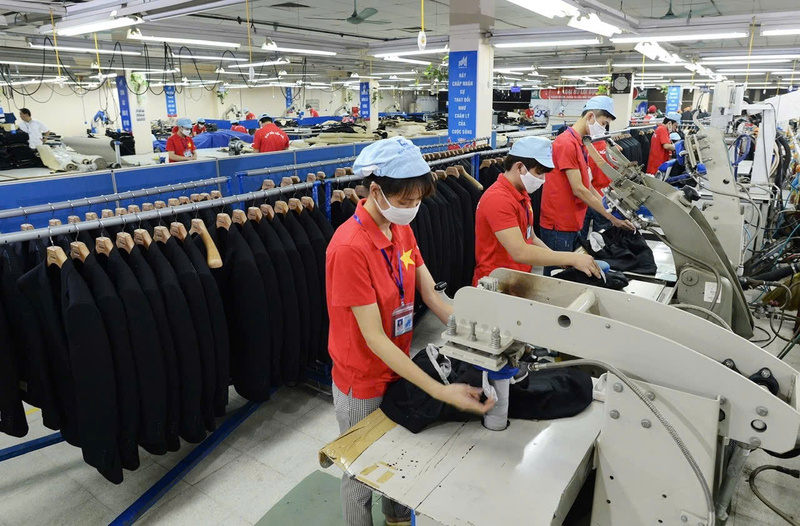
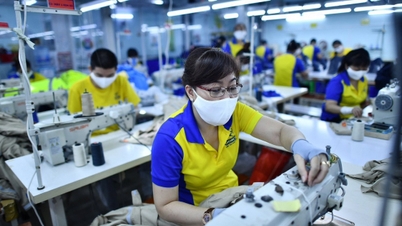
Forecasts indicate that the total export value of the textile and garment industry in 2025 will reach approximately US$46 billion, an increase of 5.6% compared to 2024. (Illustrative image)
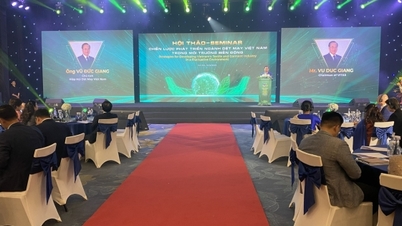
According to Mr. Vu Duc Giang, Chairman of the Vietnam Textile and Garment Association (VITAS), the textile and garment industry has experienced "unprecedented shocks" due to the Covid-19 pandemic, geopolitical conflicts, increasing protectionist trends in many major markets, and new technical barriers related to the environment, labor, and sustainable development. In this context, maintaining growth momentum and retaining its position among the top three textile and garment exporting countries in the world is the result of the proactive and flexible approach of the business community, as well as the effective connecting and coordinating role of the industry association.
The year 2025 marks a significant recovery for Vietnam's textile and garment industry, with many positive indicators. It is projected that total export turnover will reach approximately US$46 billion, a 5.6% increase compared to 2024; the trade surplus is estimated at US$21 billion, further affirming its pivotal role in the national trade balance. Notably, the domestic value-added ratio is expected to reach approximately 52%, demonstrating significant progress in proactively securing raw material and component supplies, gradually reducing dependence on imports.
Within that overall picture, RCEP emerges as a crucial driving force, supporting the textile and garment industry in effectively exploiting the regional market and gradually enhancing its competitiveness in the global supply chain.
RCEP is the world's largest free trade agreement, signed between the 10 ASEAN countries and 5 partners: China, Japan, South Korea, Australia, and New Zealand. The agreement, which officially came into effect in January 2022, has contributed to harmonizing trade commitments in the region, facilitating the movement of goods, services, and investment, and strengthening regional supply chains.
One of the most notable aspects of RCEP for the textile and garment industry is the cumulative rules of origin . According to Chapter 3 of the agreement, goods are considered to originate if they meet one of three conditions: they are wholly originating in a member country; they are produced from materials originating in one or more member countries; or they use non-originating materials but meet specific product rules.
Dr. Vo Tri Thanh, Director of the Institute for Brand and Competition Strategy Research, believes that the fundamental difference of RCEP is that instead of businesses having to comply with multiple sets of rules of origin when exporting to each market, the Agreement has established a harmonized set of rules of origin for the entire region. This allows Vietnamese businesses to use raw materials from any RCEP member country to produce goods and export them to other countries, while still enjoying preferential tariffs.
For the textile and garment industry , this mechanism is particularly important. Previously, many markets such as Japan had strict requirements regarding the origin of raw materials and components, while Vietnam imported most of its textile and garment materials from China. With RCEP, garments produced in Vietnam using raw materials and components originating from China are still eligible for preferential tariffs when exported to Japan, South Korea, or other markets within the bloc.
According to Mr. Vu Duc Giang, RCEP has "resolved" one of the biggest bottlenecks in Vietnam's textile and garment industry for many years: the issue of raw material supply. The agreement not only expands opportunities to access the Chinese market, a country with a billion people and huge consumer demand, but also creates favorable conditions for Vietnamese businesses to increase their market share in traditional markets such as Japan, South Korea, and ASEAN.
Furthermore, the relatively high level of trade liberalization within RCEP helps businesses reduce costs and shorten compliance times, thereby enhancing product competitiveness. The cumulative rules of origin also create momentum for the formation and development of regional production chains, in which Vietnam has the opportunity to become an important transit point for the textile and garment industry.
A long-term strategy is needed.
The textile and garment industry's export target for this year has been set at $47-48 billion. To achieve this goal, effectively utilizing the signed FTAs, including EVFTA, CPTPP, and especially RCEP, has been identified as a key solution.
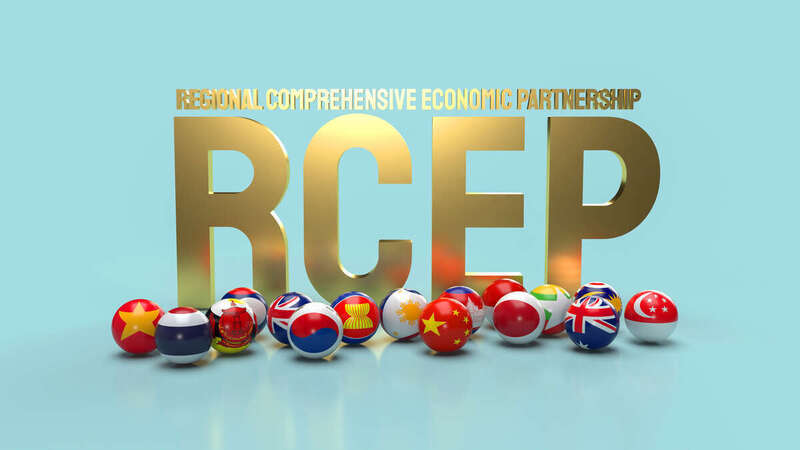
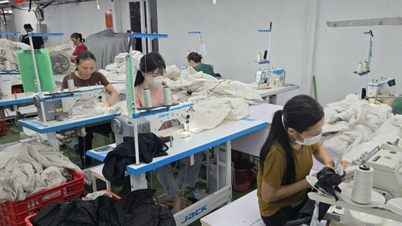
The textile and garment industry is leveraging the RCEP cumulative rules of origin to expand its markets. (Illustrative image)
However, according to experts and regulatory agencies, RCEP is not an automatic "passport" to growth if businesses are not well-prepared. Mr. Ngo Chung Khanh, Deputy Director of the Multilateral Trade Policy Department (Ministry of Industry and Trade), believes that one of the major challenges today is the limited percentage of businesses that truly understand and effectively utilize FTA commitments. This requires greater efforts from regulatory agencies in disseminating information and providing guidance, as well as from businesses themselves in proactively improving their integration capacity. Furthermore, Vietnam is among the world's leading textile and garment exporting countries, but the majority of its raw materials are still imported. This makes the industry vulnerable to disruptions in the supply chain or fluctuations in supply.
From an implementation perspective, Mr. Tran Thanh Hai, Deputy Director of the Import-Export Department (Ministry of Industry and Trade), pointed out that the bottleneck in the localization of raw materials and components, especially in the weaving, dyeing, and finishing stages, remains a persistent challenge. The heavy reliance on imported raw materials results in low domestic added value and makes businesses vulnerable to external fluctuations.
Based on this experience, the Vietnamese textile and garment industry is recommended to focus on several strategic directions, including: restructuring towards increasing added value; developing domestic supply chains; effectively utilizing FTAs; considering green transformation as a core competitive advantage; and simultaneously promoting human resource development and digital transformation.
Dr. Le Quoc Phuong, former Deputy Director of the Center for Industrial and Trade Information (Ministry of Industry and Trade), emphasized the role of technological innovation and investment in supporting sectors, especially the production of raw materials and components. According to Dr. Phuong, only by proactively securing domestic supply can the textile and garment industry maximize the benefits of trade agreements and enhance its position in the global value chain.
From the business perspective, it is necessary to proactively research and thoroughly understand the commitments of the agreement, especially the tariff reduction roadmap, technical standards, and customs procedures. The textile and garment industry needs to focus on building sustainable brands, strengthening supply chain linkages, and increasing self-sufficiency in raw materials. In addition, innovation, keeping up with global fashion trends, and investing in modern technology are considered key factors in creating high value-added products and ensuring long-term competitiveness in the international market.
In the context of environmental, labor, and sustainable development standards becoming increasingly mandatory in many markets, combining the benefits of RCEP trade preferences with a green transformation strategy, technology application, and improved governance will be the "key" for Vietnam's textile and garment industry to not only recover but also achieve sustainable long-term development.
With the support of the State, associations, and the business community, RCEP is expected to continue to be an important platform, helping the Vietnamese textile and garment industry expand its market, increase value, and affirm its position on the regional and global textile and garment map.
Nguyen Hanh
Source: https://congthuong.vn/nganh-det-may-huong-loi-tu-quy-tac-xuat-xu-cong-gop-rcep-435103.html

![[Photo] Prime Minister Pham Minh Chinh receives Lao Minister of Education and Sports Thongsalith Mangnormek](/_next/image?url=https%3A%2F%2Fvphoto.vietnam.vn%2Fthumb%2F1200x675%2Fvietnam%2Fresource%2FIMAGE%2F2025%2F12%2F16%2F1765876834721_dsc-7519-jpg.webp&w=3840&q=75)
![[Image] Leaked images ahead of the 2025 Community Action Awards gala.](/_next/image?url=https%3A%2F%2Fvphoto.vietnam.vn%2Fthumb%2F1200x675%2Fvietnam%2Fresource%2FIMAGE%2F2025%2F12%2F16%2F1765882828720_ndo_br_thiet-ke-chua-co-ten-45-png.webp&w=3840&q=75)
![[Live] 2025 Community Action Awards Gala](/_next/image?url=https%3A%2F%2Fvphoto.vietnam.vn%2Fthumb%2F1200x675%2Fvietnam%2Fresource%2FIMAGE%2F2025%2F12%2F16%2F1765899631650_ndo_tr_z7334013144784-9f9fe10a6d63584c85aff40f2957c250-jpg.webp&w=3840&q=75)

![[Photo] Prime Minister Pham Minh Chinh receives the Governor of Tochigi Province (Japan)](/_next/image?url=https%3A%2F%2Fvphoto.vietnam.vn%2Fthumb%2F1200x675%2Fvietnam%2Fresource%2FIMAGE%2F2025%2F12%2F16%2F1765892133176_dsc-8082-6425-jpg.webp&w=3840&q=75)





































































Comment (0)