

However, today, this craft only remains in the memories of the elderly, along with the looms that bear witness to its golden age in this new land.
Following the policies of the Party and State, in the 1980s, ethnic minorities from the northern mountainous provinces migrated to Gia Lai to build new economic zones. They settled in villages in the districts of Chu Prong, Phu Thien, Dak Po, Ia Pa, etc. During a trip to collect artifacts in Ko Nia village (Ia Trok commune), we (professional staff of the Provincial Museum) had the opportunity to see firsthand the textile products of the Tay people there.
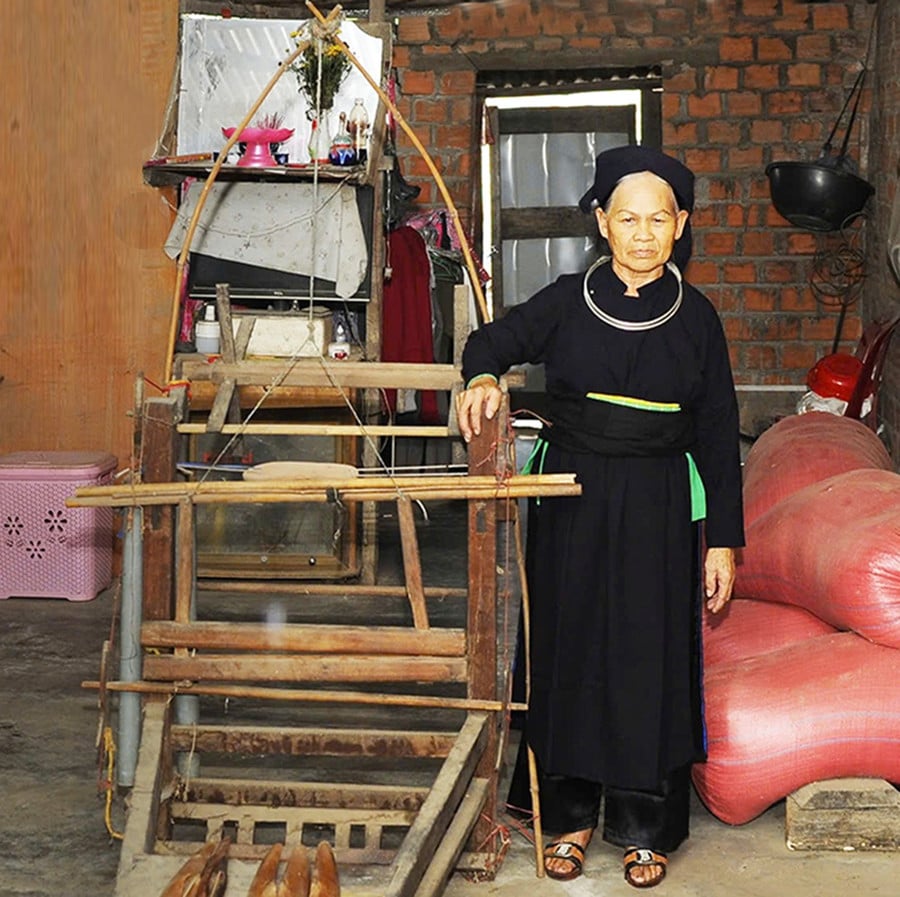
Ms. Hoang Thi Nghieu introduces the traditional Tay ethnic group's weaving loom. Photo: Ba Tinh.
Mrs. Hoang Thi Nghieu (75 years old) showed us the loom that has been with her family since the 1990s. Mrs. Nghieu explained: "This is the loom that my late husband made himself. The traditional Tay loom is very bulky and difficult to transport from the North. So, having carpentry skills and a readily available supply of natural wood, my husband made a simple loom so I could weave cloth and ease my longing for my craft and my homeland."
“I’ve known how to weave since I was 15. In the early years of settling in Gia Lai , life was difficult and goods were scarce, so the local people still wove their own fabric to make clothes, blanket covers, baby carriers, bedsheets, bags, canvas shoes, etc.”
"Previously, people wove brocade using cotton yarn dyed with indigo or silk yarn that had already been dyed. Later, because silk was expensive, they gradually switched to using wool for weaving. As for the traditional clothing of the Tay people, we still have to use cotton yarn to weave, then dye it with indigo, and it hardly has any decorative patterns," Ms. Nghieu shared.
Traditional handcrafted textiles are still present at important events for the Tay people in Kơ Nia village, such as weddings, baby's first month and first year celebrations, and funerals. According to Ms. Nghiêu, weaving a single piece of cloth usually takes more than a month, going through many stages from growing cotton, spinning the cotton, to weaving the yarn. The finished cloth, if used to make shirts or blankets, is dyed blue and embroidered with colorful patterns.
Furthermore, the Tay people also know how to use rudimentary tools, made from bamboo and rattan, to weave rich, diverse, and unique decorative patterns that embody the cultural values of their ethnic group.
To prove her point, Mrs. Nghieu showed us the products she had woven in the past. Brand-new fabrics in a variety of colors, meticulously hand-woven, carefully folded, and meticulously stored for family use. She also showed us rolls of yarn and thread in various colors that she had bought long ago but never used, now kept as mementos since she no longer practiced the craft.
Similarly, Ms. Má Thị Hiếu also stated: Previously, all Tay families in Kơ Nia village had a loom for weaving cloth. Later, due to lack of need, many households abandoned them. Mr. Ksor Minh, a cultural and social affairs official in Ia Trốk commune, added: Currently, there are about 10 Tay households in Kơ Nia village that still possess looms. Those who know how to weave are mostly elderly women; most young people do not know the craft.
In recent years, clothing products have become very diverse in types, materials, and colors, so people often buy ready-made clothes. The sound of weaving looms is no longer heard in Kơ Nia village as it once was. Whenever the elderly people here miss their craft, they clean their looms and weave white cotton cloth to make mourning scarves, in case there is a death in the village. According to Tay custom, families are required to use mourning scarves woven from traditional Tay cotton.
In modern life, traditional crafts are increasingly disappearing, including the weaving craft of the Tay people in Ia Trok. As museum staff, we feel it is our responsibility to collect and preserve the weaving tools here, contributing to introducing the Tay people's weaving craft in this southeastern part of the province to everyone.
Source: https://baogialai.com.vn/nghe-det-vai-cua-nguoi-tay-o-ia-trok-post318936.html


![[Photo] Prime Minister Pham Minh Chinh receives Lao Minister of Education and Sports Thongsalith Mangnormek](/_next/image?url=https%3A%2F%2Fvphoto.vietnam.vn%2Fthumb%2F1200x675%2Fvietnam%2Fresource%2FIMAGE%2F2025%2F12%2F16%2F1765876834721_dsc-7519-jpg.webp&w=3840&q=75)
![[Photo] Prime Minister Pham Minh Chinh receives the Governor of Tochigi Province (Japan)](/_next/image?url=https%3A%2F%2Fvphoto.vietnam.vn%2Fthumb%2F1200x675%2Fvietnam%2Fresource%2FIMAGE%2F2025%2F12%2F16%2F1765892133176_dsc-8082-6425-jpg.webp&w=3840&q=75)
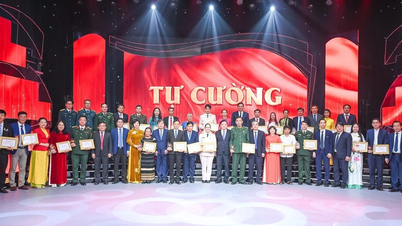
![[Live] 2025 Community Action Awards Gala](/_next/image?url=https%3A%2F%2Fvphoto.vietnam.vn%2Fthumb%2F1200x675%2Fvietnam%2Fresource%2FIMAGE%2F2025%2F12%2F16%2F1765899631650_ndo_tr_z7334013144784-9f9fe10a6d63584c85aff40f2957c250-jpg.webp&w=3840&q=75)
![[Image] Leaked images ahead of the 2025 Community Action Awards gala.](/_next/image?url=https%3A%2F%2Fvphoto.vietnam.vn%2Fthumb%2F1200x675%2Fvietnam%2Fresource%2FIMAGE%2F2025%2F12%2F16%2F1765882828720_ndo_br_thiet-ke-chua-co-ten-45-png.webp&w=3840&q=75)





















































Comment (0)