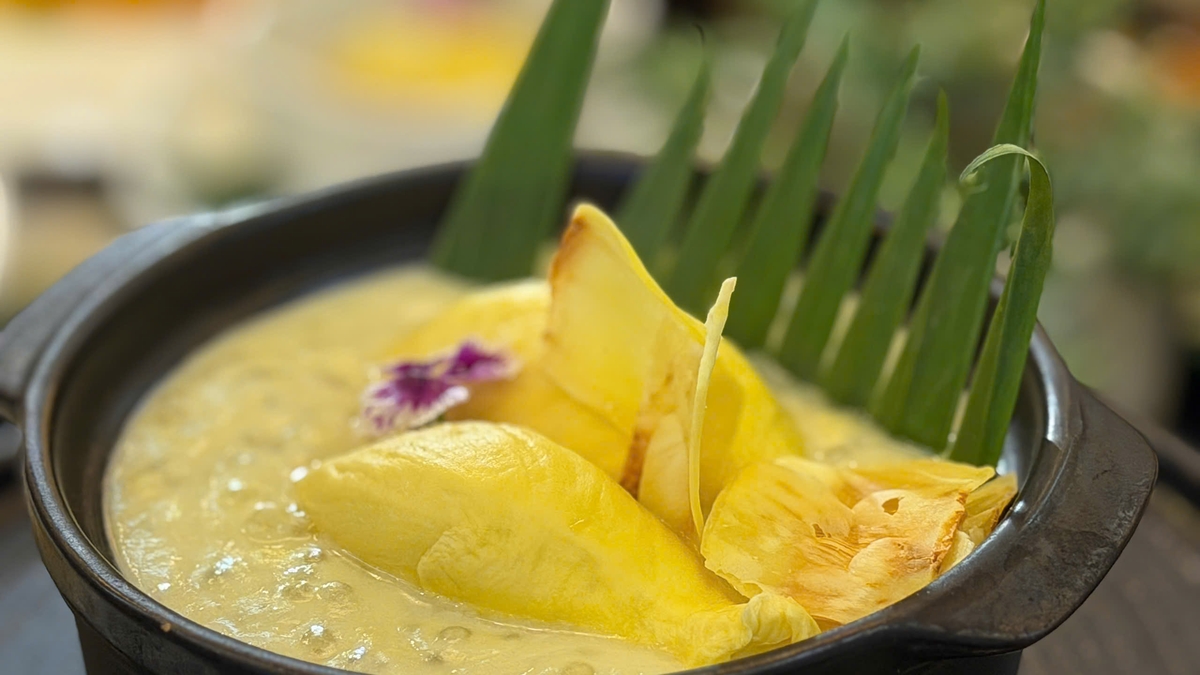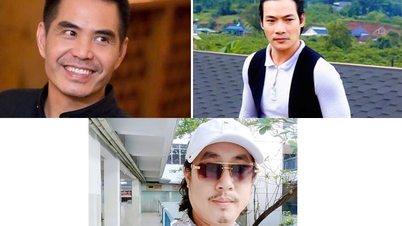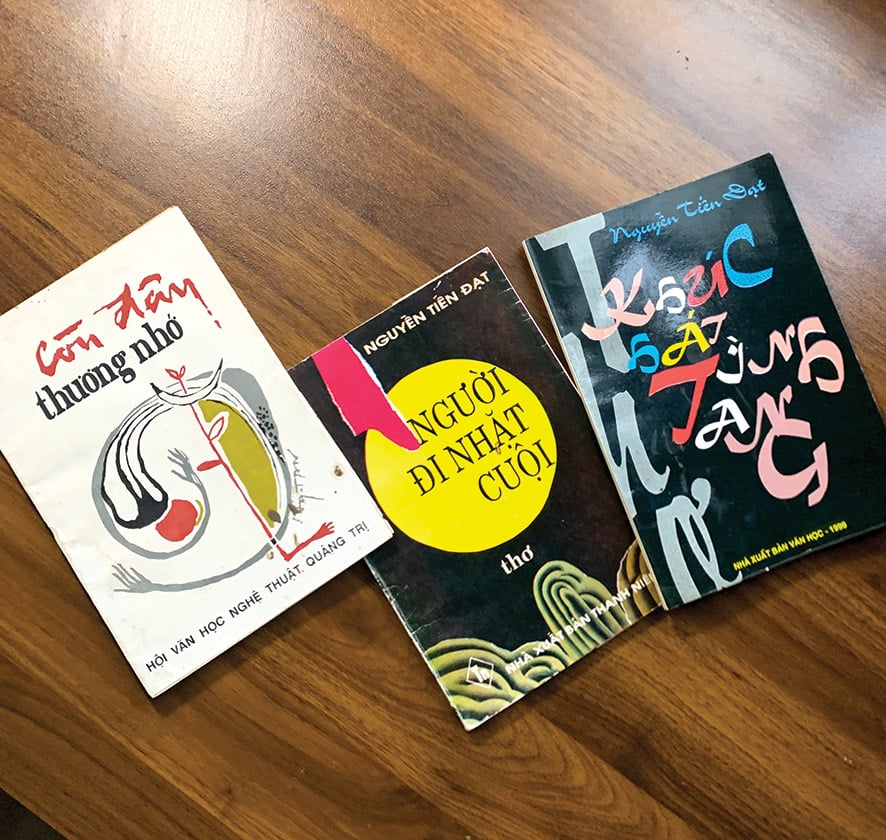
Some poetry collections by journalist Nguyen Tien Dat - Photo: NK
Many people know the poet and journalist Nguyen Tien Dat because, before leaving this world, he managed to leave behind a substantial "legacy" of poetry, short stories, and journalistic works. For me, ever since I was a literature student, on those twilight afternoons in Hue , I would often go to bookstores near Trang Tien Bridge, on the banks of the Perfume River, to read his poems published in the monthly magazine Kien Thuc Ngay Nay (Knowledge Today): "My dear, come back to the river / The river, dreamy and clear / I, the old fisherman / Let the evening rise up boundless..." (Speaking to my former lover).
Later, on my visits home, I often met his family on the Mai Xa ferry traveling back and forth between Dong Ha and Quang Tri, as his house was only a short distance from mine. After graduating, I met him again at the "shared home" of Quang Tri Newspaper. The reason Dat was so fond of and loved me was because both he and I had an elderly mother back home who always longed to visit us.
Therefore, throughout his poetry runs the image of the poor countryside of Lam Xuan, where his elderly mother and village girls reside: “We were born beside the rivers, beside the rivers / Huddled together searching for shrimp and prawns” (The River of My Mother's Life); “Poor countryside! Yes, Mother / My heart is filled with longing for home” (Gio Linh); and he always acknowledges: “Even though I love roses, kiss violets / Read Pushkin’s poetry and hold the hand of a beautiful woman / I am still the Mugic of my village / Where the rice grains of the harvest season open their wings to the sun” (Mugic). Because it is in that very village that Dat always finds his mother and sister: “I mistake your tears / For the dew of the sky / I am like a firefly / Always thirsty for dew” (Ten Years).
When we talk about our elderly mother, my brother and I often mention her selflessness. He recounted: “When I was studying in Hue, whenever she saw me coming home around noon, she would rush out to apply some ointment, and as soon as she saw my thin, chubby face, she would grab a bundle of straw, chop up some poplar branches, split them into five or seven pieces, and dry them in the sun to sell at Hom Market to get money for me to go home. Usually, I would be home for a few days, but once I had to go back early for an exam, the poplar firewood wasn't dry yet, and I couldn't find any money. My mother would shove a bag of rice into my hand, push me out the door, and when I looked back, I saw tears streaming down her face.”
I told him, “My mother sold iced sweet soup. Some nights she had to sit there with the lamp lit until 1 or 2 in the morning, waiting for the village boys who were out courting girls to stop by and finish all the bowls of sweet soup. Because if the syrup and beans weren't sold, she could give them to her children the next day, but if the ice melted, she'd lose all her capital. One morning when I woke up, I saw my mother's eyes were red and swollen.” My brother and I looked at each other and exclaimed, “Oh, how hard it was!”


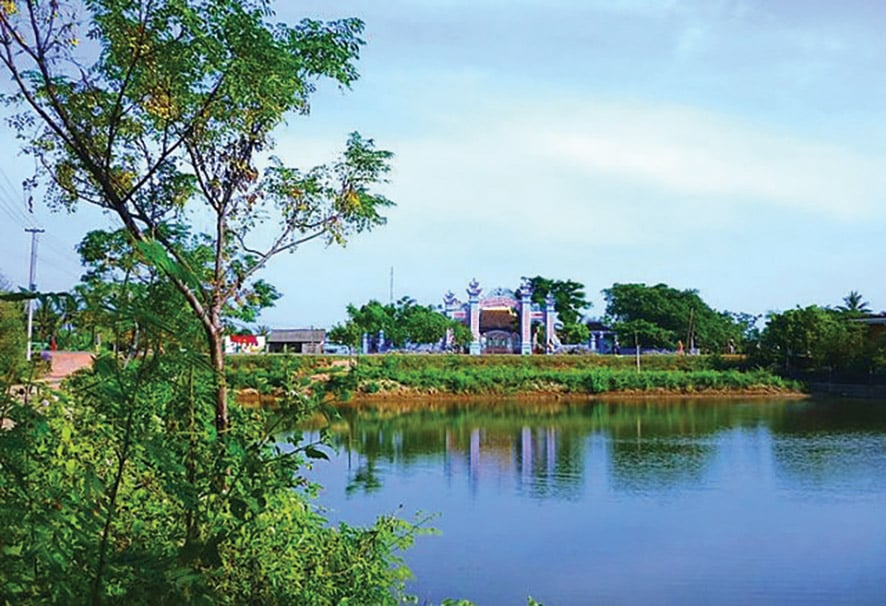
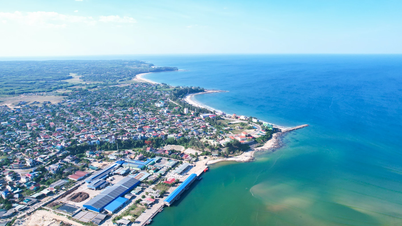
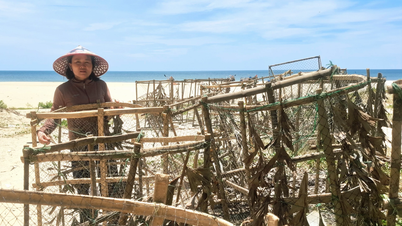
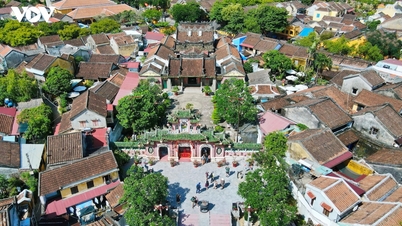
Landscape of Gio Mai village - Photo: Provided
When it comes to hardship and rustic charm, Dat and I have plenty of it. Even as a fairly well-known journalist, he still maintains his honest, simple nature, and especially loves to sit and drink under the mat on the corner porch of my house. I remember when I was building my house, he would come every afternoon, park his motorbike outside the gate, puff on a Jet cigarette, and whisper to me: "Try to build a wide porch so we have a place to drink. Try to make it look impressive to everyone; if you need money, I'll lend you some."
I did as he suggested, building a porch just big enough to spread a mat squarely over four people. We were deeply in debt, and I asked him for a loan several times, but he just scratched his head. It was fine! But then one afternoon, he rushed back, his face beaming with joy.
"I have the money now, you and your wife can come over to my place tonight to collect it," he said. It turned out he had just received a few million dong in journalism awards and had given it to his wife so I could borrow it to build my house. He was always honest, the kind of man who didn't value money much.
“Go home and sell your woven mats/The woven mats will be ready for Tet/I won't take a single penny/In the cold season I'll sit and tend the fire” (Speaking to my ex-lover). What man could be more beautiful, what wife could be happier than “possessing” a husband who is hardworking, caring, and carefree in life? Disregarding money and shunning the daily struggles, Dat always confidently says: “As long as I have my salary and writing fees, I despise debt/I'll live to see old age no matter what” (Admonishing myself). And he always jokingly says: “No matter what, we are all human beings/Money and wealth are all the same/Food, clothes, fame and fortune/From riches to rags, we are still this guy” (Smiling at thirty).
Back then, the small mat and corner of my porch became the "fun spot" that Dat would frequent every day. It became a habit; I felt empty if he hadn't come home by evening. And it wasn't anything fancy; just a jar of herbal wine poured into bottles, a few dried fish as snacks, and sometimes, when things got really tight, we'd reach for some green mangoes from the neighbor's garden and dip them in salt. He wasn't particular about anything, as long as he had a "playground" to sit and chat. I have to admit, he had a knack for making up stories that we'd all believe, but alas, that was when he was drunk, not when he was the village's magician, Lam Xuan. After his fabricated stories were exposed several times, Dat would jokingly confess that he only did it to amuse us.
But fate had other plans; even the small porch of my house couldn't hold him. At that time, he said, "This time, Uncle, you should widen the porch and add a few more bricks to make it brighter so the guys can come and drink." He did it, and I went to see, but alas, before I could even share a drink with him in that small porch, a sudden accident took him to the fields of Lam Xuan. When we laid him out, his mother collapsed. I managed to help her up, guiding her through the heart-wrenching grief. "What can we do? What else can we do? / What can we hope for? / A little peace of mind, Mother / Suddenly this afternoon, standing alone by the river / Turning back to the deserted ferry / Startled - Mother's body - against the sky and clouds..." (The River of Mother's Life).



These verses served as an apology to his parents for not fulfilling his filial duty, but for Nguyen Tien Dat, they seem not to have vanished, but rather remain "a cherished memory" for his family and friends.
Ho Nguyen Kha
Source: https://baoquangtri.vn/nguyen-tien-dat-van-con-day-thuong-nho-194401.htm