

Sow seeds of faith
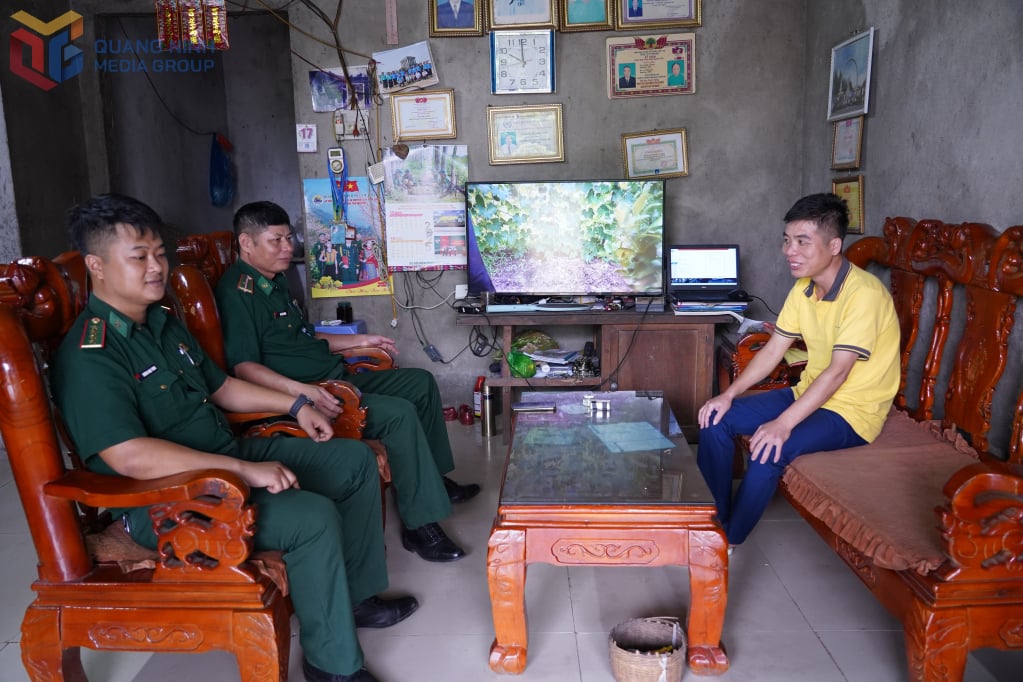
One autumn day, we visited Luc Chan village (Hai Son commune), a high-altitude border area of the province. Nearly 60 years old, Mr. Ly A Chang (of the San Chi ethnic group), Party Secretary and Village Head, still spends his days working in the fields and patrolling the border.
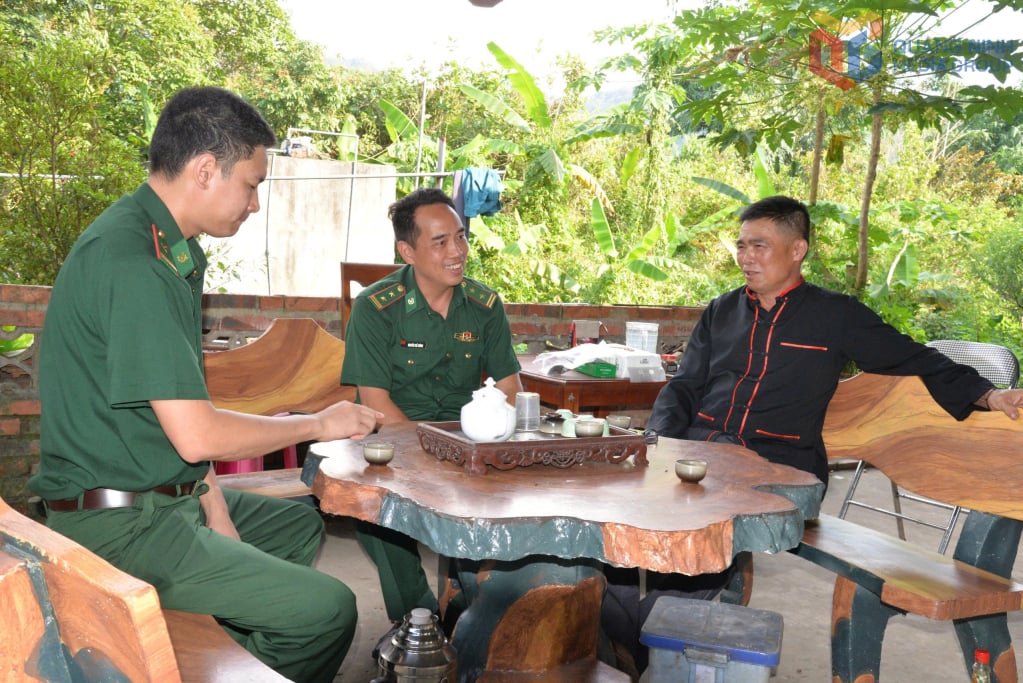
Over 20 years ago, Mr. Chang and his family left their hometown of Tien Yen to settle in the border region. The land was then wild and the security situation was complex. Through perseverance, he both cleared land and built his livelihood while persistently encouraging the villagers to unite and maintain order in the village. He confided: “Initially, it wasn't easy; the villagers didn't trust me. I had to go to each house, setting an example for them to see. Only when the people trusted me could I get things done.”
Now, Luc Chan has transformed. Endless green acacia forests stretch as far as the eye can see, and community bonds are strengthened. More importantly, the awareness of border protection and law enforcement has become ingrained in the lives of every resident. Mr. Chang is a "living landmark" contributing to Luc Chan's steady progress on its development journey.
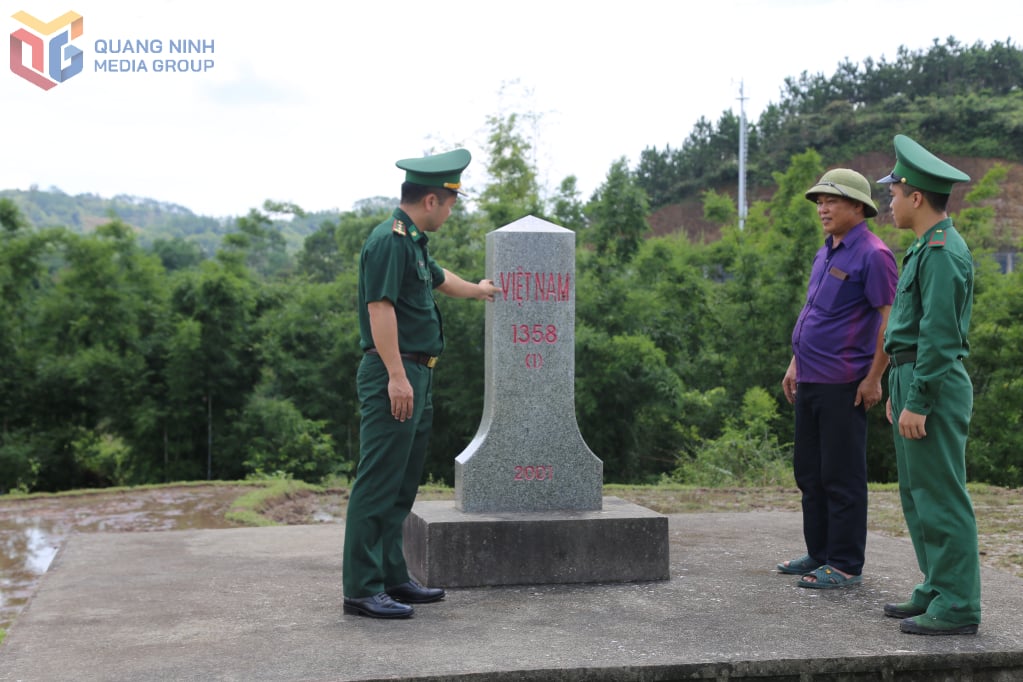
Also along the border in Hai Son commune, Mr. Choong Sao Chan (of the Dao ethnic group), a respected figure in Phinh Ho village, is over 60 years old but still actively participates in the Border and Boundary Marker Self-Management Team. Each week, he spends several afternoons walking along the border, clearing vegetation, cleaning up, and promptly reporting any suspicious activity.
We met Mr. Choong Sao Chan as he was preparing to inspect the border, and he exuded the sense of responsibility of a "living border marker." With his credibility, he always accompanied the border guards in disseminating information and mobilizing the people to participate in border protection; he went to each household to explain the Party's policies, the State's laws, and border regulations so that people understood and complied.
Mr. Chan shared: "Combining production with border protection is the duty and responsibility of all the people of Phinh Ho. When working in the border area, we always remind each other to be vigilant and report any strangers to the authorities and the Border Guard immediately."
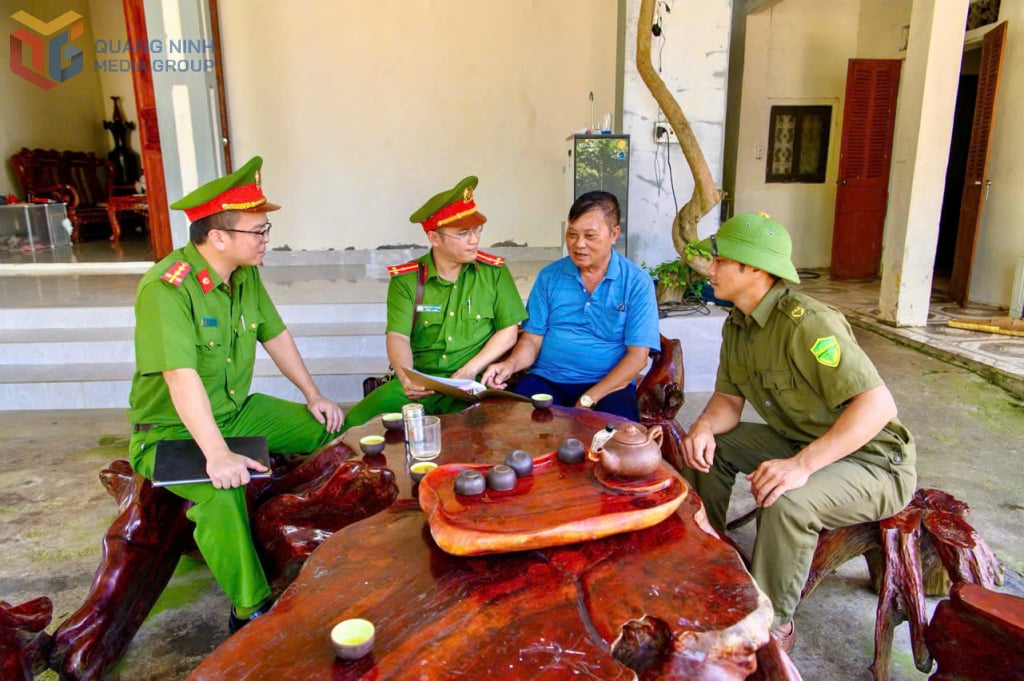
In Na Ly village (Quang Duc commune), when mentioning Mr. Phun Hop Senh (of the Dao ethnic group), the people all hold him in high regard because of his prestige and contributions to the locality. At 76 years old, he still speaks clearly and his eyes shine brightly, reflecting the spirit of the mountains and forests. Having served as the Party Secretary of the commune for nearly 30 years, and then as a member of the National Assembly in the 8th term, he understands the lives of his people better than anyone else. Even after retirement, he remains busy: sometimes attending mediation sessions, sometimes going to households to encourage reforestation, raising cattle, and developing the economy from elephant grass. He smiles and says, "We have to help the people with food and clothing before we can talk about preserving the forest, preserving the village, and preserving peace."
What is remarkable about Mr. Sềnh is his unwavering commitment to preserving the cultural traditions of the Dao people. He teaches the language and writing system to his descendants so that future generations will not forget their roots. He advocates against illegal religious practices, considering it a way to maintain faith in the Party. On September 17th, he was again invited to participate in the "Promoting the Role of Reputable Individuals" model in Quảng Đức commune. With his presence, the villagers have even more confidence, and the movement to maintain peace in the village has spread further. The influence of a "reputable individual" is not only in his words, but also in his simple, exemplary daily life.
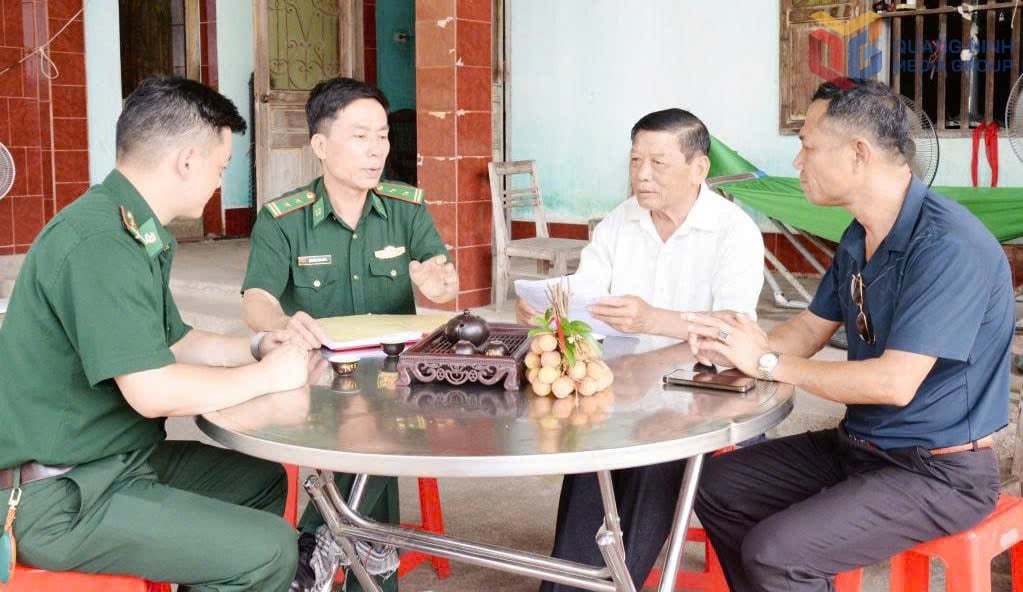
Also in Na Ly village, Mr. Phoong Nhuc Phi (of the Dao ethnic group), former Party Secretary of the commune, despite being nearly 70 years old, still patrols the border with the militia every day, clearing the roads around the border markers. He encourages the villagers to abandon superstition and preserve traditional customs. The results are not only evident in the patrols, but also in the significant reduction in poverty: from 30% of households living in poverty, the village now only has a few near-poor households. He is called by the villagers "the one who ignites the flame" in this border region.
In Pac Poc village (Hoanh Mo commune), Ninh A Ngan (of the San Chi ethnic group), the Party Secretary and Village Head, is always trusted and loved by the villagers. Despite his young age, Mr. Ngan has quickly become a source of moral support for the villagers. He is dynamic in mobilizing the villagers to develop the economy, especially agriculture and forestry with native crops like cinnamon and star anise; encouraging young people to work as factory workers and participate in worker groups at border crossings… to improve their economic situation. Mr. Ngan shared: “As a young person, I have to lead the way, to do things first, so that the villagers can see and believe, and follow.” Not only does he focus on the economy, but he also regularly patrols the border and boundary markers with the Border Guard. The image of the young Party Secretary alongside Border Guard officers has become familiar to the villagers. This youthful energy, fueled by the village elders and leaders, is contributing to writing a new chapter in the nation's border region.
Deep roots
On September 17th, Quang Duc commune launched the model "Promoting the role of influential figures, village elders, shamans, and traditional medicine practitioners in mobilizing people to participate in ensuring security and order and preventing child marriage in ethnic minority villages and hamlets." This is the first model of its kind in the eastern part of the province. With 46 members including village elders, hamlet leaders, shamans, and traditional medicine practitioners, the model aims for close coordination between the political system, armed forces, and the people. The members act as a bridge between the government and the people, mobilizing them to maintain security and order, prevent child marriage, eliminate outdated customs, and raise legal awareness.
Mr. Phùn Hợp Sềnh, along with many other respected individuals, were entrusted with leading the movement. They not only disseminated policies but also mediated conflicts, guided villagers in economic development, and taught their children to stay away from social vices. Mr. Phạm Văn Khởi, Deputy Secretary of the Party Committee of Quảng Đức commune, stated: “When respected individuals speak up, the villagers listen and follow. This is key to maintaining peace at the grassroots level.”
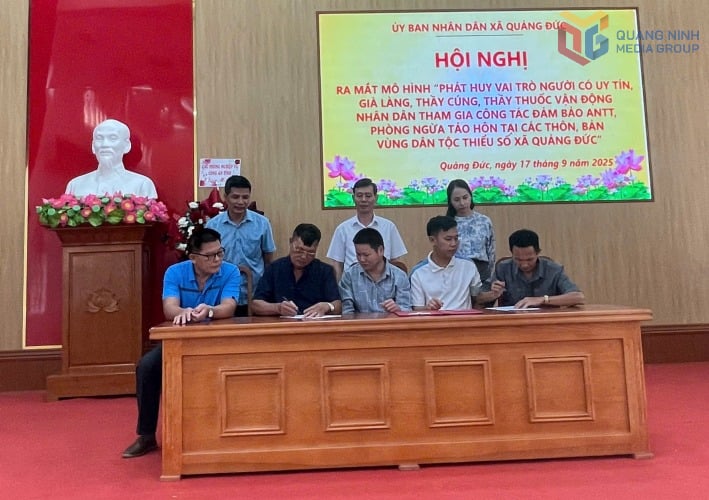
The model has been enthusiastically embraced by the people in the commune. Along with the police, local security guards, and border guards, the model is also an important "address" where people can trust and actively participate in self-governing groups, boldly report crimes, and provide information about security and order, and life in the village. The model is not only a social management initiative but also demonstrates the motto "Putting the people first, relying on the people to protect the land and the village."
Quang Ninh province has over 118km of land border and nearly 200km of sea border. Implementing Directive No. 01/CT-TTg (dated January 9, 2015), the movement "All citizens participate in protecting national territorial sovereignty and border security in the new situation" has proven effective. To date, border guard posts have coordinated the establishment of 497 self-governing border and boundary marker groups with nearly 5,600 members, in which respected individuals always play a core role.
From self-governing border marker groups, peaceful border models, and information provided by the public, border guards and police forces have detected and handled hundreds of law violations. This demonstrates the strength of the "people's support" when each citizen becomes a soldier, and each village and hamlet a fortress.
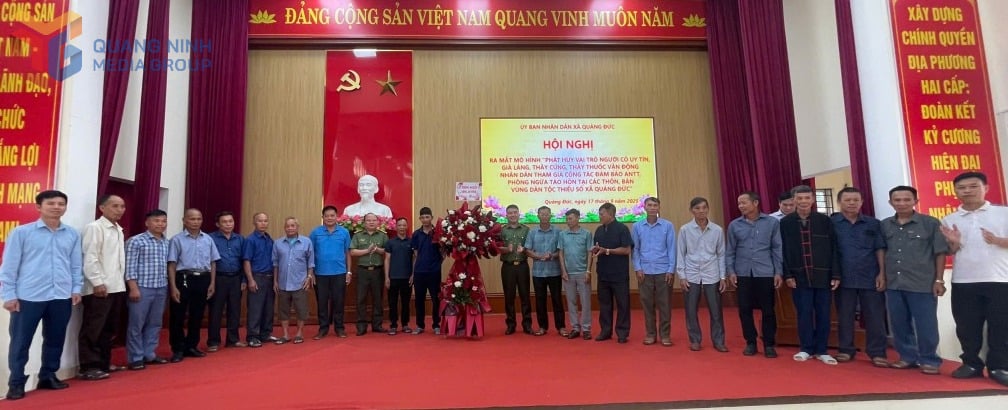
The village elders and community leaders may not hold high-ranking titles, but their prestige and responsibility are an invisible force. Each has their own story, but they all share one thing in common: they use their reputation to build trust and their example to lead the community. They are the "great trees" in the vast forests, deeply rooted in the borderlands of the Fatherland, casting a peaceful shadow over their villages, contributing to the safeguarding of the border and the building of a prosperous and beautiful homeland.
Source: https://baoquangninh.vn/nhung-cot-moc-song-noi-bien-cuong-3376618.html
![[Photo] The General Secretary, President and his wife meet with Vietnamese-Chinese friendship leaders.](https://vphoto.vietnam.vn/thumb/1200x675/vietnam/resource/IMAGE/2026/04/15/1776264829725_vna-potal-tong-bi-thu-chu-tich-nuoc-to-lam-gap-mat-nhan-sy-huu-nghi-viet-nam-trung-quoc-8703641-3130-jpg.webp)
![[Photo] National Assembly Chairman Tran Thanh Man attends the opening session of IPU-152](https://vphoto.vietnam.vn/thumb/1200x675/vietnam/resource/IMAGE/2026/04/16/1776277863731_ctqh5-jpg.webp)
![[Photo] My Son at night: A thousand-year-old heritage site amidst the Milky Way](https://vphoto.vietnam.vn/thumb/1200x675/vietnam/resource/IMAGE/2026/04/15/1776261039184_ndo_br_chon6-jpg.webp)
![[Photo] Mrs. Ngo Phuong Ly meets and exchanges views with Mrs. Peng Li Yuan](https://vphoto.vietnam.vn/thumb/1200x675/vietnam/resource/IMAGE/2026/04/16/1776277858080_phu-nhan-1-jpg.webp)




































































Comment (0)