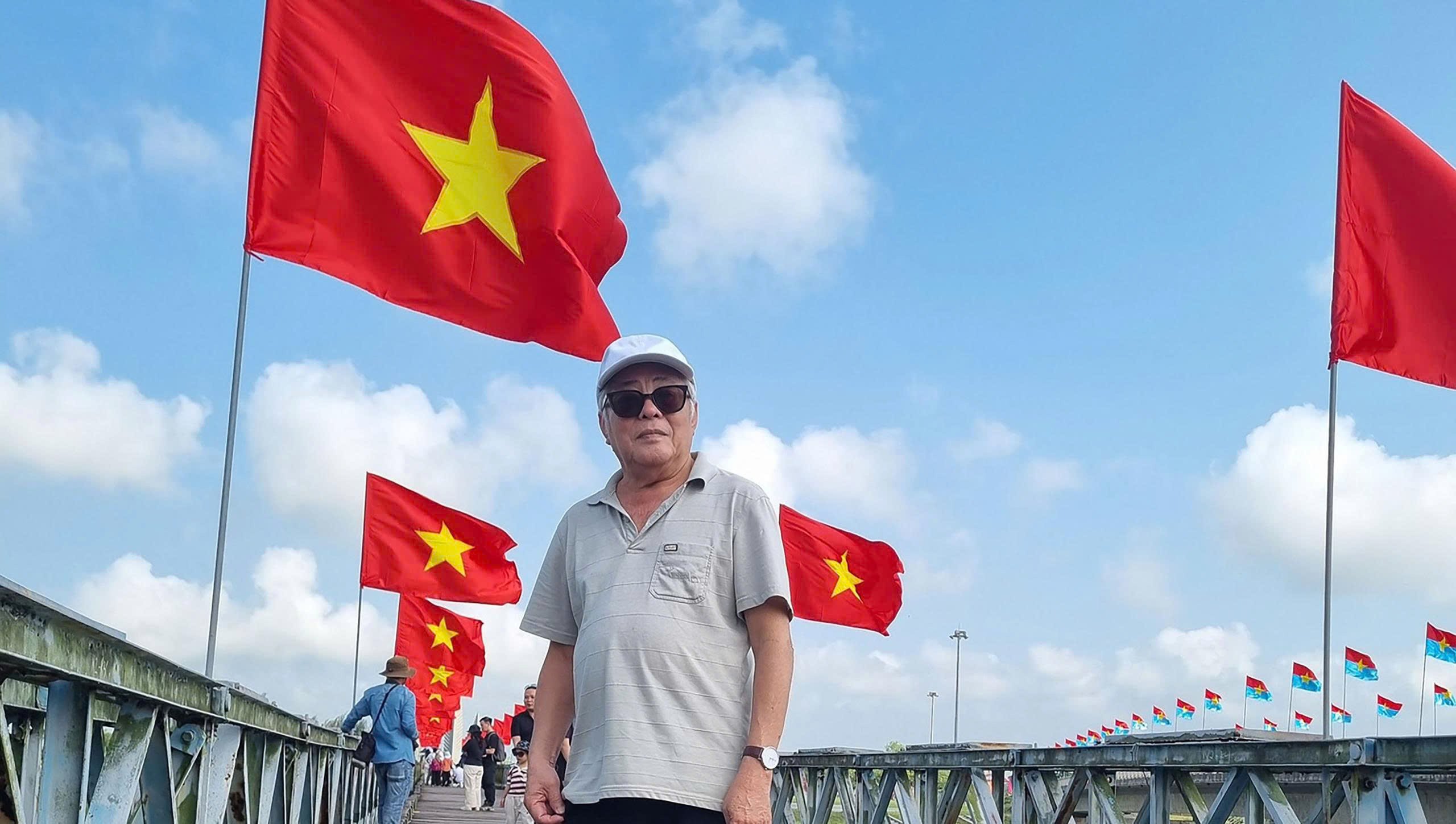
Mr. Nguyen Van Nhuong at Hien Luong Bridge - Photo: NGOC MAI
Journey into the "land of fire"
These are the recollections of Mr. Nguyen Van Nhuong (born in 1950, formerly Canh Duong commune), a member of the special transport unit and former Deputy Head of the Quang Binh Provincial National Assembly Delegation. The transport unit was led by Mr. Dau Thanh Long as the unit commander; Mr. Nguyen Ngoc Lien as the company's political commissar ; and Mr. Nhuong as the branch secretary.
After a night adrift, disguised as fishing boats, the group landed at Vũng Si, near the Vịnh Mốc tunnels. They anchored their boats in a rocky crevice and took refuge in the tunnels. That afternoon, enemy aircraft spotted them and dropped bombs, sinking two boats. The Party cell held an emergency meeting, assigning some to stay behind to salvage the wreckage, while the rest continued their journey.
With resourcefulness, courage, and determination to support the Tri Thien battlefield, the group crossed Cua Tung and Ben Hai, advancing into the fierce battle zone. A few kilometers from Cua Viet port, enemy flares illuminated each person on the boat, creating a tense and suffocating atmosphere. The boats carrying weapons were specially designed, with a "drainage" hole in the wheelhouse to allow them to self-sink if detected by the enemy. Several times, facing perilous situations, the captain ordered the "drainage" hole to be pulled, causing the boat to sink. After escaping enemy sight, they bailed out the water, sealed the hole, and continued their journey.
At dawn, Mr. Nhuong and several sailors ventured deep into the area, into Hamlet 1, Trieu Van Commune (now part of Nam Cua Viet Commune). Sailors from other boats arrived sporadically from Hamlet 1 to Hamlet 9. They hastily handed over their weapons to the army units with immeasurable joy. The 22 sailors who ventured deep into the war zone were housed in the homes of local people in the former Trieu Van Commune. "The months of being sheltered and protected by the people here have left a deep impression on my heart," Mr. Nhuong recalled with emotion.
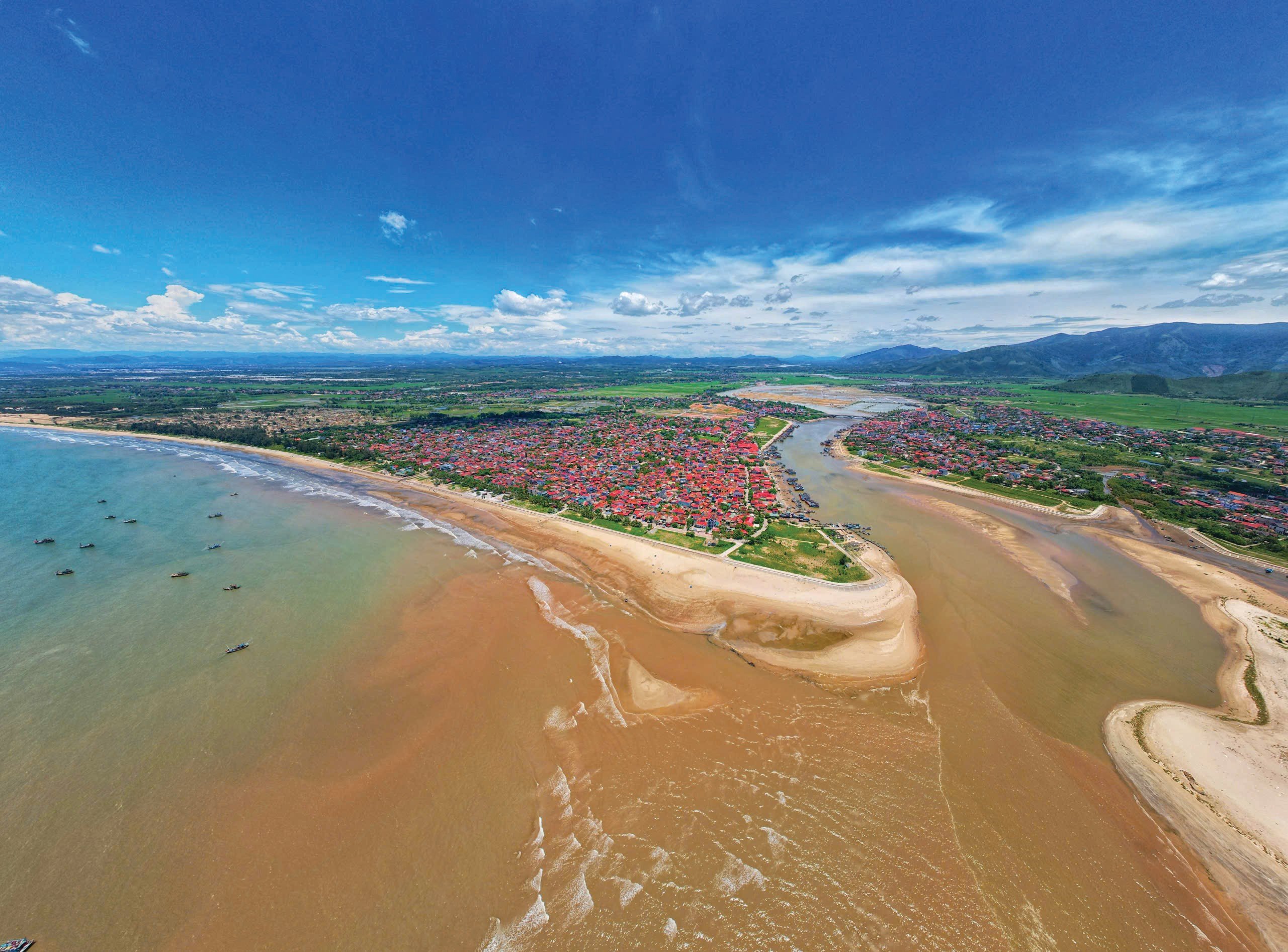
Cảnh Dương fishing village's boat landing, the starting point of the VT5 transport operation to supply weapons to the Tri-Thien battlefield in 1968 - Photo: THANH HAI
Unforgettable faces
Nearly 60 years have passed, and there are things he no longer remembers clearly, but he will never forget the memories of the heroic people of Zhao Yun and their silent protection during those perilous days.
During the convoy's stop in Trieu Van, the Tri Thien battlefield was raging fiercely. Enemy aircraft and warships operated day and night, continuously shelling villages. People were forced to leave their villages, living crowded together on the coastal sands under strict control. The My Thuy naval port was always brightly lit, with enemy medical ships, patrol boats, aircraft carriers, and helicopters stationed offshore. In the air, reconnaissance planes and helicopters continuously dropped leaflets, broadcast propaganda through loudspeakers, conducted sweeps, and dropped troops... making the situation constantly tense and dangerous.
In Hamlet 1, Mr. Nhuong was assigned to stay at the hamlet leader's house. The house had a son named Hoa, about 9 or 10 years old, dark-skinned, clever, and very agile. Despite his young age, the boy was tasked with guiding and protecting Mr. Nhuong. During a raid, Hoa led him to a secret bunker, camouflaged with thatch and dried willow leaves. "Stay in there, Uncle; I'll come back if anything happens," he instructed clearly before leaving. Not just once, but this boy had saved Mr. Nhuong and many other cadres from dangerous raids.
Nearby was Tình's mother's house. She was assigned to care for a war veteran who had suffered severe burns from phosphorus, his entire body covered in pus and emitting a foul odor. The mother and daughter cared for him without a single complaint. Whenever there was an attack, the villagers would work together to move him to another location for safety. "That image of love has stayed with me my whole life!" Mr. Nhượng recounted emotionally.
After spending some time in Village 1, due to its proximity to the My Thuy naval port, the situation became too dangerous, so the group leader moved them deeper into Village 4. Mr. Nhuong and a sailor were housed in a villager's home, sheltering in a secret bunker during raids. They were instructed to dress like civilians to avoid detection if they couldn't escape in time. There, he was fortunate to meet a heroic woman named Trieu Van, whose two children, Ms. Xuyen and Mr. Luyen, repeatedly sheltered them and saved them from certain death.
After several intense sweeps, the Front had planned to move the group from Trieu Lang back north by land via Cua Viet and Cua Tung, but all plans failed due to tight enemy control. Finally, the leadership decided to move the group to the western Quang Tri war zone and from there to the north. Knowing the group was about to leave, the people secretly offered gifts, but the group received orders not to take or accept anything, except for a few small souvenirs.
Meeting my benefactor again.
After the country was reunified, some of the former sailors returned to visit Trieu Van commune. The villagers, believing they had perished, made the reunion incredibly emotional. They met the liberation soldier who had served as a telegraph operator and received the message about the convoy delivering supplies that year. Mr. Nhuong sought out Mr. Luyen, and they reminisced about their time in the secret bunker. Ms. Xuyen had died, and Mr. Luyen's mother was now blind. Mr. and Mrs. Luyen had also visited Mr. Nhuong's family in Quang Binh, maintaining a deep and lasting bond.
Now that Quang Binh and the former Quang Tri provinces have been reunited, the sailors of that special transport unit—some still alive, some deceased, some seriously ill—still deeply cherish the time they spent living among the people, bound by kinship. In their memories, those were unforgettable days. They are profoundly grateful to the people here, not only for being sheltered and protected, but also because this land has become their homeland—first, a homeland of compassion amidst the fierce war, and now, a true homeland after the two provinces merged—a homeland of ordinary yet great people, always generous in their support and solidarity.
Ngoc Mai
Source: https://baoquangtri.vn/noi-cho-che-nay-thanh-que-huong-195543.htm


![[Photo] General Secretary and President To Lam presides over the meeting to approve the draft report on the results of the second inspection by the Politburo of the Standing Committee of the Hanoi City Party Committee.](https://vphoto.vietnam.vn/thumb/1200x675/vietnam/resource/IMAGE/2026/05/26/1779789811432_a2-bnd-4430-9620-jpg.webp)



















































Comment (0)