

 |
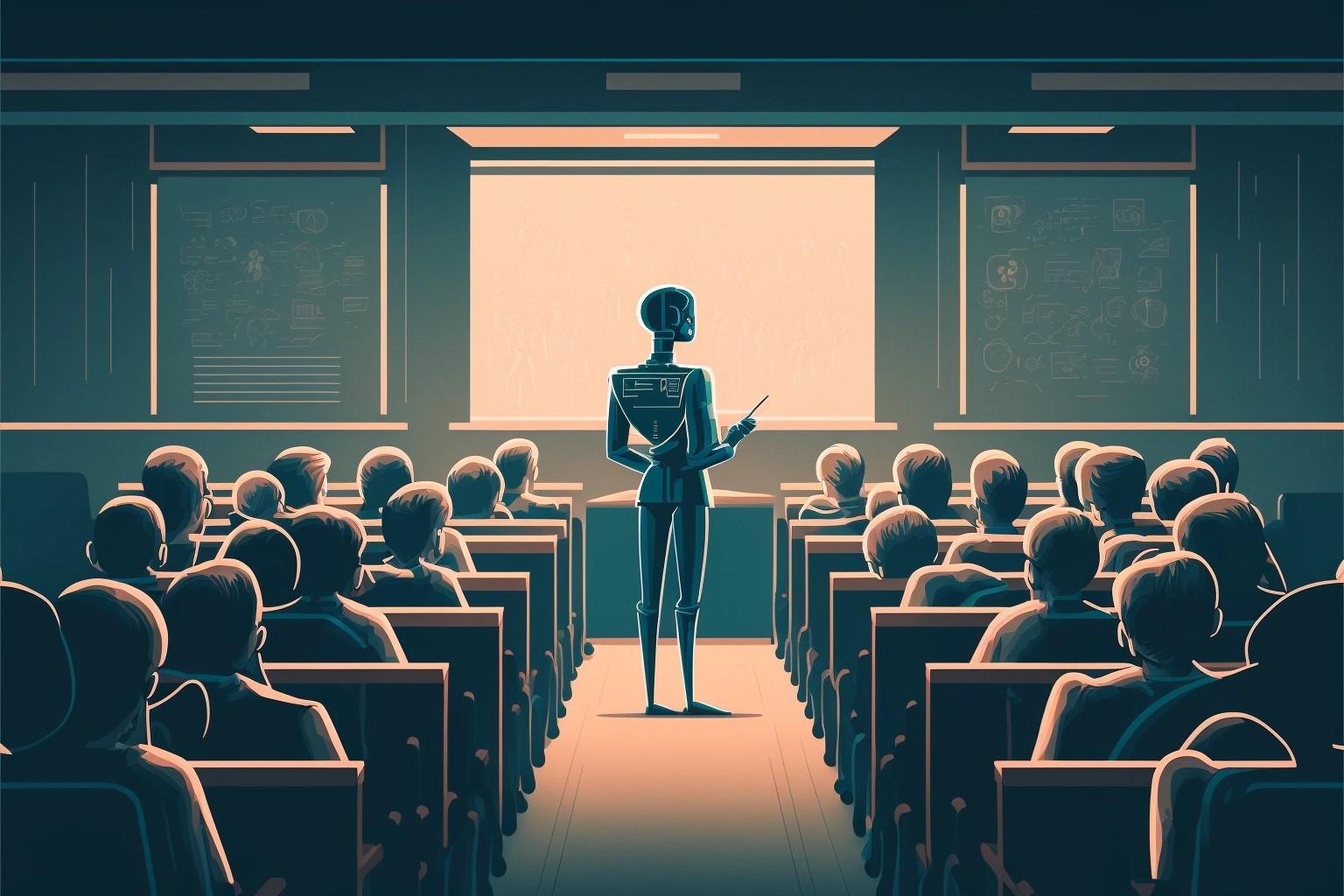
| OpenAI aims to harness the potential of ChatGPT in education to support both teachers and students. (Source: unrulr) |
Recently, OpenAI CEO Brad Lightcap shared that the company will be forming a team to explore the educational applications of AI, a technology that threatens to disrupt industries, create new laws, and become a ubiquitous learning tool.
"Most teachers are trying to figure out how to incorporate ChatGPT into their curriculum and into how they teach," Lightcap said at the INSEAD Americas conference last week. "OpenAI is trying to help them consider all the possibilities, and perhaps next year we will form a team with the sole purpose of doing just that."
With billions of dollars in investment from Microsoft, OpenAI created an AI craze in November 2022 with its chatbot, ChatGPT. It quickly became one of the fastest-growing applications in the world. Trained on data streams, the generative AI can create entirely new, human-like content, helping users complete homework, write scientific essays, or even compose novels. Following ChatGPT's launch, regulators raced to keep up with the new technology: the European Union amended its AI Act, and the US launched efforts to regulate AI.
Meanwhile, teachers realized ChatGPT could be used as a tool for cheating and plagiarism, which sparked a backlash and led to the chatbot being banned in many schools. According to Lightcap, teachers considered this "the worst thing that ever happened." But within months, they realized how ChatGPT also offered benefits.
In an emailed statement, an OpenAI spokesperson said that AI can become a tool to support learning and education. The company is showcasing ChatGPT's capabilities to educators, as well as outlining what they are doing to improve it. This allows teachers to understand the potential benefits and potential misuse of AI, so they can learn how to apply it in the classroom.
OpenAI is partnering with educational institutions like Khan Academy to create AI tutors and with Schmidt Futures to fund educational teams in underserved communities. This is a huge market. Global spending on education and training is projected to reach $10 trillion by 2030, according to estimates by Australian research firm HolonIQ.
Former OpenAI employee Andrew Mayne shared that there are countless ways to use ChatGPT in the classroom. For students, it could be used as a tutor or to tailor content to different learning styles. For teachers, it could assist in curriculum development or act as a creative classroom assistant, for example, writing an introduction in Old English for a class on the Middle Ages.
However, others see a potential "quagmire" regarding children's privacy issues if the use of chatbots in schools is promoted. In many countries, different online privacy laws apply to children. While users must be over 13 to use ChatGPT and parents must give permission if users are between 13 and 18, most countries lack age verification procedures.
Source
![[Photo] Close-up of an Australian warship visiting Tien Sa port, Da Nang](https://vphoto.vietnam.vn/thumb/1200x675/vietnam/resource/IMAGE/2026/03/28/1774675489416_tau-5-jpg.)

![[Photo] General Secretary To Lam attends the ceremony commemorating the 80th anniversary of the Traditional Day of the Vietnamese Sports and Physical Education Sector.](https://vphoto.vietnam.vn/thumb/1200x675/vietnam/resource/IMAGE/2026/03/28/1774673986806_a1-bnd-4909-8531-jpg.)



























































Comment (0)