

Semiconductors are essential components of electronic circuits (chips), which are used in virtually every modern electronic device. With everything becoming increasingly "smarter" and the demand for electronic devices growing ever larger, the demand for semiconductors continues to surge.
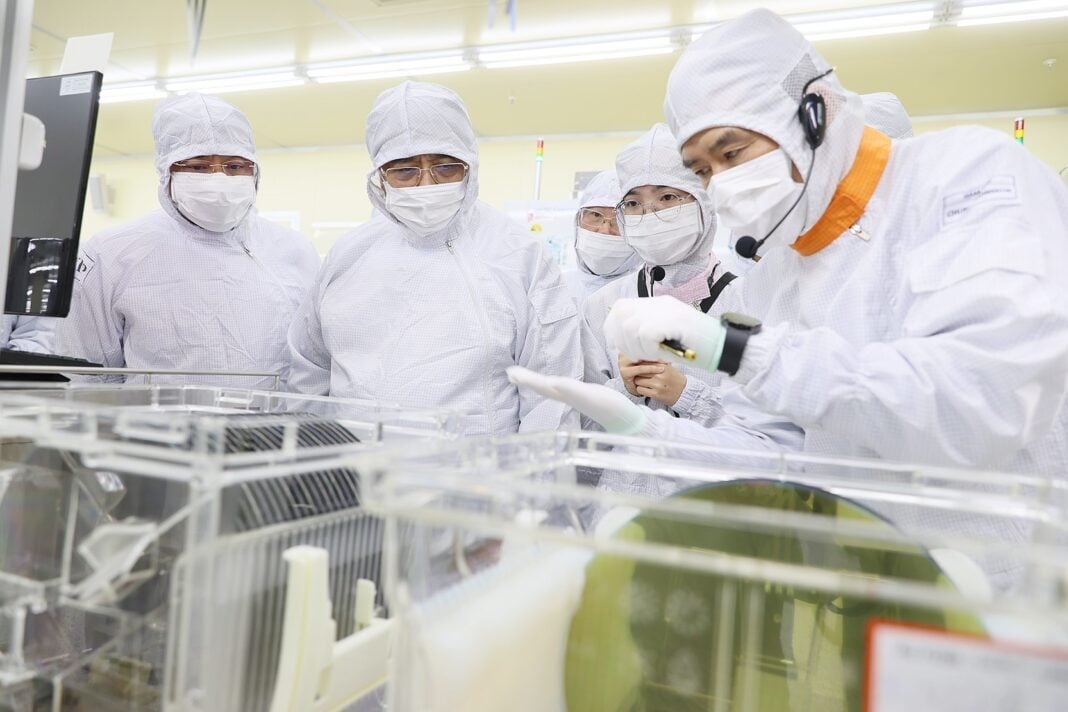
Semiconductor chip production line of Hana Micro Vina Co., Ltd. Photo: Duong Giang - VNA
However, after the COVID-19 pandemic broke out in early 2020, the world faced a severe chip shortage. This negatively impacted most industries, especially automotive and electronics, as chips are indispensable inputs for these sectors.
In this context, many countries around the world, especially the United States, Japan, South Korea, and China, have begun to recognize the importance of self-sufficiency in semiconductor and chip supply, and have developed their own strategies to develop this industry.
The US is pouring money into semiconductors and chips.
Despite being the birthplace of semiconductors, the United States today accounts for only about 10% of the world's semiconductor supply and is not the producer of the most advanced chips. Instead, the US relies on supplies from East Asia.
Therefore, to reduce dependence on external sources, in August 2022, President Joe Biden enacted the Chips and Science Act, aiming to restore the United States to a dominant position in chip manufacturing and address supply chain issues that had hampered research and production.
Under this law, the US government will spend $52.7 billion to support research, development, semiconductor manufacturing, and human resource development, including $39 billion for manufacturing incentives, $13.2 billion for R&D and human resource development, and $500 million to fund activities related to technology security, information, communications, and the international semiconductor supply chain.
Immediately after President Biden signed the Science and Chips Act, major American corporations announced nearly $50 billion in additional investment in semiconductor manufacturing, bringing the total investment in this sector to nearly $150 billion since President Biden took office.
Then, in mid-December 2023, the U.S. Department of Commerce signed a non-binding preliminary agreement on the terms of providing $35 million to BAE Systems Electronic Systems—a subsidiary of BAE Systems—to support the modernization of its New Hampshire Microelectronics Center in Nashua. This was the first grant to a U.S. company under the CHIPS and Science Act.
U.S. Commerce Secretary Gina Raimondo said the subsidies reflect a program to support semiconductor research and manufacturing aimed at U.S. national security and to create a sustainable domestic semiconductor industry. Secretary Raimondo expressed hope for more announcements of similar subsidies in the first half of next year.
Meanwhile, President Joe Biden also revealed that the US Department of Commerce will spend billions of dollars more in the coming period to produce more semiconductor chips in the US, as well as to strengthen research and development in this area.
For his part, White House National Security Advisor Jake Sullivan stressed that Washington does not want to find itself in a difficult situation regarding semiconductor chip supply in case any other country were to cut off this supply during a crisis.
Japan is spending heavily to revitalize its semiconductor industry.
Japan was once the world's largest semiconductor producer, accounting for over 50% of the global semiconductor chip supply. However, concerns about environmental impact and globalization have led many semiconductor manufacturers in the country to relocate their production facilities overseas. As a result, Japan's market share in the semiconductor market has gradually declined and is now around 10%.
By the early 2000s, the Japanese government and domestic semiconductor companies began to realize the seriousness of losing their position as the world's largest semiconductor producer to foreign competitors. In just the last two decades, they have undertaken numerous efforts to revitalize the industry. Notably, in 2020, the Japanese government announced its semiconductor strategy, which aims to increase domestic semiconductor industry revenue to 5 trillion yen by 2030.
However, to date, these efforts have yielded rather limited success, partly because semiconductor manufacturing investment projects often take a considerable amount of time to implement, and partly because Japan's policies have not been attractive enough to the industry's "big players." Therefore, in June 2023, Japan announced a revised strategy aimed at strengthening efforts to develop and manufacture advanced semiconductor chips critical to economic security and cutting-edge technologies such as generative artificial intelligence (AI).
Previously, Japan had pledged 330 billion yen in financial support to Rapidus and 476 billion yen to the semiconductor chip manufacturing plant invested and built by TSMC (Taiwan, China) in Kumamoto Prefecture. The Japanese government also subsidized 92.9 billion yen for Kioxia Holdings Corp. to build a plant in Mie Prefecture.
South Korea invests in R&D.
South Korea has long been known as one of the world's leading manufacturers of memory chips, with Samsung Electronics Co. and SK Hynix Inc. being the two main producers, accounting for 73.6% of South Korea's chip supply to the world.
Despite being a leading chip manufacturer in Asia, South Korea is facing significant challenges from major competitors, most notably TSMC.
In an effort to maintain its position, in early April 2023, the South Korean government announced its “Research and Development (R&D) Strategy for Core Technologies,” in which Seoul decided to prioritize the development of semiconductors, displays, and next-generation batteries, beginning with policy planning.
According to this strategy, South Korea will invest a total of 160 trillion won in public and private R&D funds until 2027, of which 156 trillion won will be for R&D expenses of companies and approximately 4.5 trillion won will be used to provide tax incentives for businesses.
In addition, Seoul will establish a public-private research advisory body to identify and consolidate fundamental technologies, core technologies, applied technologies, and research at the commercialization stage.
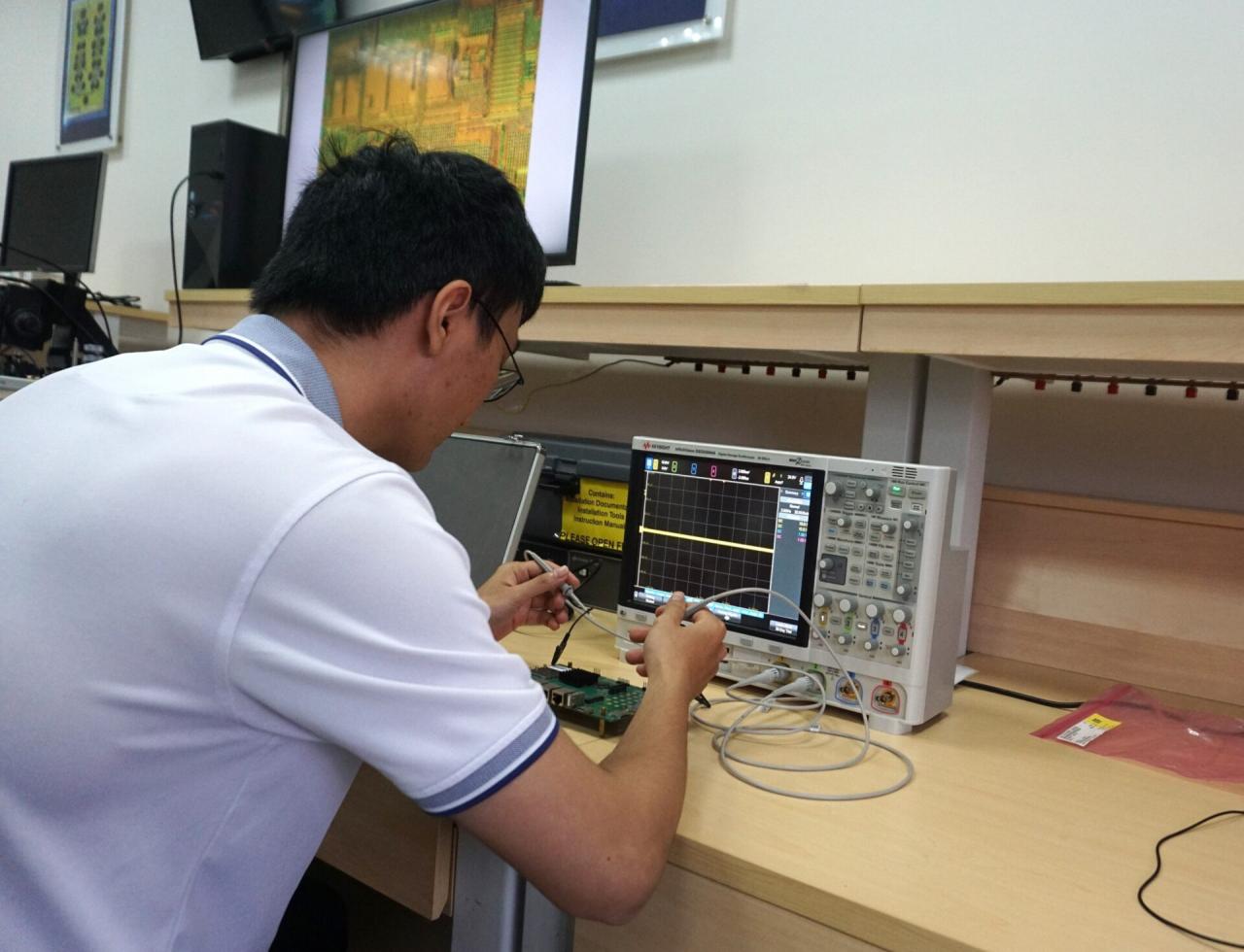
South Korea invests heavily in R&D. (Illustrative photo: Thu Hoai - VNA)
On the other hand, to support the development of high-level human resources, the South Korean government plans to increase the number of research facilities and utilize flexible human resource management through various recruitment mechanisms.
Then, in mid-May, South Korea announced its first detailed research and development (R&D) plan for the chip industry amid increasing global competition in the field. In this 10-year roadmap, the South Korean Ministry of Science, ICT and Communications outlined goals for technological advancements in three areas: next-generation memory and logic chips, and advanced packaging technology.
The ministry affirmed its commitment to supporting the semiconductor industry in producing faster, more energy-efficient, and higher-capacity chips so that the industry can maintain its global dominance in the areas where it leads and gain a competitive advantage in advanced logic chips.
Subsequently, in July, the South Korean government issued a decision to establish seven "specialized complexes" dedicated to the semiconductor, display, and secondary battery industries in major cities across the country, increasing incentives for private businesses to set up factories or production facilities in these key areas, aiming to nurture advanced technology sectors and transform them into drivers of future economic growth.
Specifically, the South Korean government will build two specialized complexes to serve the semiconductor (chip) industry. The first, located in Yongin-Pyeongtaek city in Gyeonggi province, will accommodate a 56.2 billion won investment from Samsung Electronics Co., SK hynix Inc., and other chip manufacturers for the production of memory and system-on-a-chip products until 2042.
The second complex, located in Gumi, North Gyeongsang Province, is expected to become the main facility for core semiconductor products, such as silicon wafers and substrates.
China is rushing to build its own supply chain.
China is one of the world's leading semiconductor suppliers, but it lacks complete self-sufficiency in semiconductor chip manufacturing technology and equipment, especially for advanced chips. This dependence on foreign technology and equipment makes China vulnerable to any geopolitical tensions. Meanwhile, strategic competition between the US and China continues to intensify. In particular, the US has taken steps to restrict China's access to advanced chip technology.
Against this backdrop, China is seeking to build a domestic chip supply chain that can be "immune" to US restrictions. Chinese chip manufacturing equipment and materials suppliers have projected a 50 billion yuan (US$7.26 billion) investment with state support to strengthen the domestic supply chain.
Speaking at a chip supply chain conference in Guangzhou, China, Chiu Tzu-Yin, chairman of the National Silicon Industry Group (NSIG), said: "We cannot avoid a split in the semiconductor industry. This will be the biggest opportunity for Chinese companies producing machinery and manufacturing materials."
With imports of foreign-made chip manufacturing equipment stalled due to US restrictions, Chinese companies specializing in chip manufacturing equipment and materials have gained attention thanks to government-sponsored subsidies and investments under the Made in China 2025 initiative.
According to Chinese media, approximately 35% of Chinese semiconductor factories used domestically produced equipment in 2022, up from 21% in 2021.
David Wang, CEO of ACM Research, a company specializing in wafer cleaning equipment, said: “Global political conflict could usher in a golden age for China’s semiconductor manufacturing machinery sector.”
Khanh Linh


![[Photo] Prime Minister Pham Minh Chinh receives the Governor of Tochigi Province (Japan)](/_next/image?url=https%3A%2F%2Fvphoto.vietnam.vn%2Fthumb%2F1200x675%2Fvietnam%2Fresource%2FIMAGE%2F2025%2F12%2F16%2F1765892133176_dsc-8082-6425-jpg.webp&w=3840&q=75)
![[Live] 2025 Community Action Awards Gala](/_next/image?url=https%3A%2F%2Fvphoto.vietnam.vn%2Fthumb%2F1200x675%2Fvietnam%2Fresource%2FIMAGE%2F2025%2F12%2F16%2F1765899631650_ndo_tr_z7334013144784-9f9fe10a6d63584c85aff40f2957c250-jpg.webp&w=3840&q=75)
![[Image] Leaked images ahead of the 2025 Community Action Awards gala.](/_next/image?url=https%3A%2F%2Fvphoto.vietnam.vn%2Fthumb%2F1200x675%2Fvietnam%2Fresource%2FIMAGE%2F2025%2F12%2F16%2F1765882828720_ndo_br_thiet-ke-chua-co-ten-45-png.webp&w=3840&q=75)
![[Photo] Prime Minister Pham Minh Chinh receives Lao Minister of Education and Sports Thongsalith Mangnormek](/_next/image?url=https%3A%2F%2Fvphoto.vietnam.vn%2Fthumb%2F1200x675%2Fvietnam%2Fresource%2FIMAGE%2F2025%2F12%2F16%2F1765876834721_dsc-7519-jpg.webp&w=3840&q=75)













































![[Video] Independence and self-reliance linked with international integration through 40 years of reform](https://vphoto.vietnam.vn/thumb/402x226/vietnam/resource/IMAGE/2025/12/16/1765899635777_1-1-8054-png.webp)























Comment (0)