

During my business trips, I've had many opportunities to visit Quang Yen, a land rich in cultural heritage and also the former town, economic, and political center of the Northeast region. Changes over time, along with the pace of urban life, have permeated the tranquil rural areas, but the village culture here has not been lost. The "village within the city" is also a distinctive and easily recognizable feature of the Ha Nam island area, Quang Yen town.
Ha Nam Island (Quang Yen Town) has long been known as "Ha Nam Phong Coc". The name Phong Coc is a source of pride for the people of Ha Nam and also serves to easily distinguish it from the Ha Nam Phu Ly region.
Located among eight wards and communes on Ha Nam island, Phong Coc was formed in the early 15th century under the names Bong Luu, then Phong Luu, later Phong Coc commune, and now Phong Coc ward. In 1963, a part of the eastern part of the commune was separated to form Phong Hai commune (now Phong Hai ward).
To this day, Phong Coc still retains many aspects of village culture, along with ancient relics and traditional customs typical of island village culture.

Writer Duong Phuong Toai, a man deeply connected to the Ha Nam Phong Coc region and the author of the short story collection "Village Anecdotes," told us many interesting and humorous stories about the countryside where he lives—stories passed down through generations that have become common sayings among the villagers, which he calls village anecdotes. From the story of the Betel Nut, "Slowly, Mr. Nhinh," "Turning Sideways, Mrs. Huan…"
Reading these stories, both ancient and modern, tradition and contemporary, we see vividly reflected in the minds of a clustered community that, through generations, has preserved its centuries-old folk culture, nurturing its enduring vitality and making it a "cultural code" that identifies this land.
Unable to hide his pride when speaking about his hometown, writer Duong Phuong Toai said: "Our hometown can be said to be a miniature version of the Northern Delta. This land contains countless beautiful customs and traditions, preserving many historical relics and rich, unique cultural festivals. This is also the land where the ancestors from Thang Long (Hanoi) built dikes to reclaim land from the sea, establishing villages and settlements. And to this day, we people of Ha Nam Phong Coc are still proud of our origins from the capital."

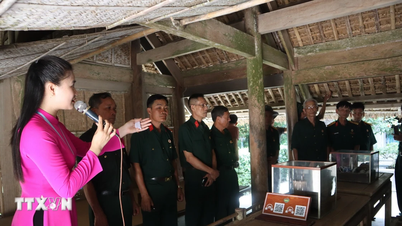
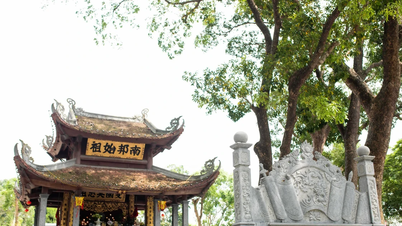
When mentioning Phong Coc, one must talk about Phong Coc communal house – the "heart" of the island village. Built in the late 17th and early 18th centuries, Phong Coc communal house is the largest and most beautiful of the six ancient communal houses remaining in Quang Yen town today. With its exquisite architecture and sculpture, it was recognized as a National Architectural and Artistic Monument in 1988.
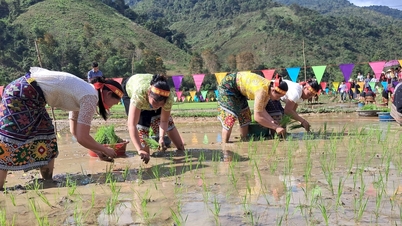
Located at the Cua Dinh riverbank, Phong Coc communal house has been closely associated with the lives of the people of Ha Nam island for centuries and is the venue for important cultural activities and festivals such as the rain-praying festival, the rice planting festival, and the New Rice Festival.
It is also a place that strengthens the bonds between families and serves as a spiritual anchor for the residents of Ha Nam island. Every time they mention Coc communal house, the people of Phong Coc feel even more proud of the beauty of this ancient communal house with its unique architectural style, which is distinct from other traditional Vietnamese village communal houses.
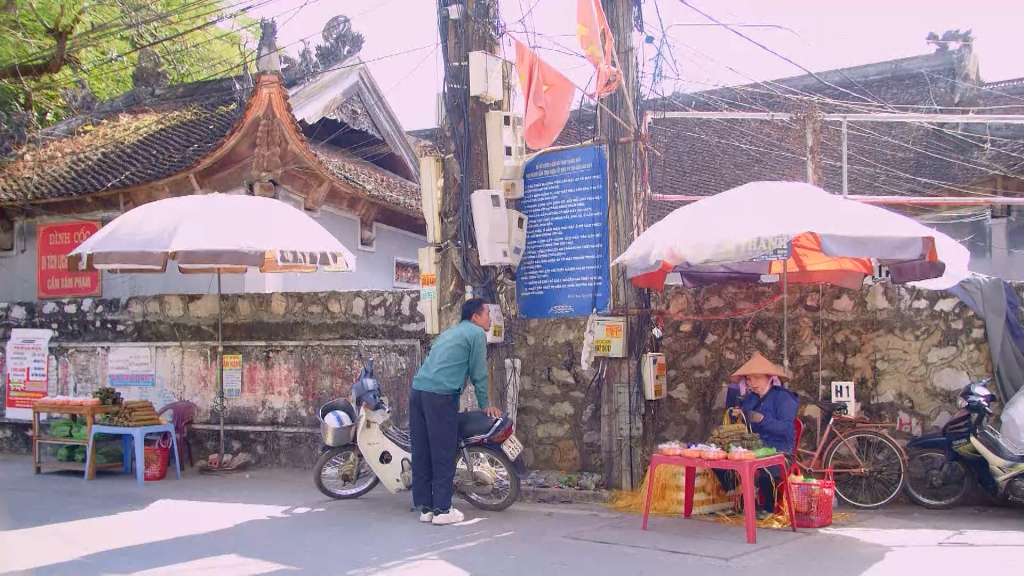
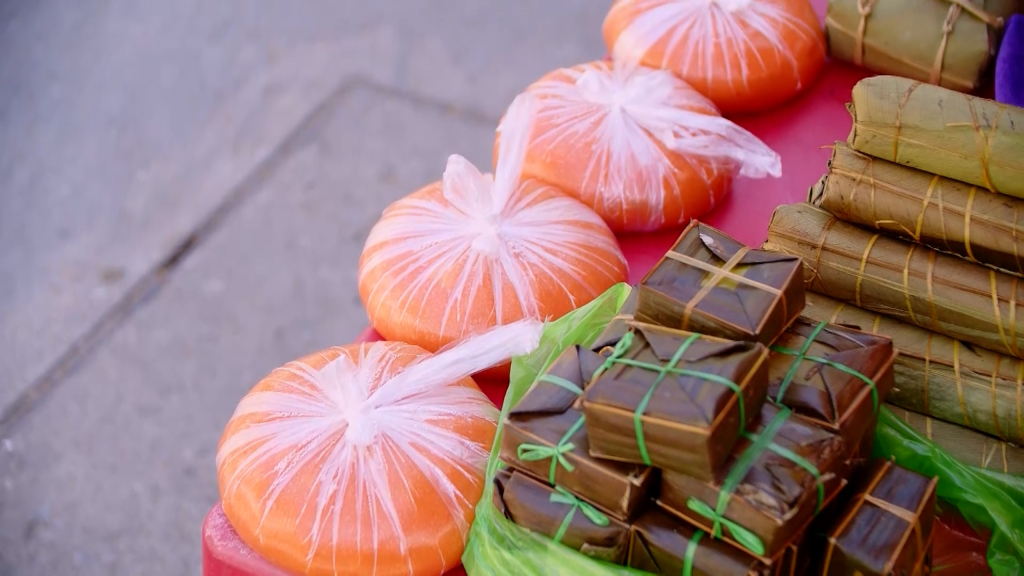
In the past, the area in front of the Coc communal house was the Coc market, where stalls sold all kinds of cakes and local specialties, from sticky rice cakes, glutinous rice cakes, honey cakes, and fermented pork rolls... Now, the Coc market has moved to another location to make way for festival activities in front of the communal house, but following the old tradition, the locals still maintain a few small stalls behind the communal house, reminiscent of the bustling scene of Coc village and Coc market in the past.
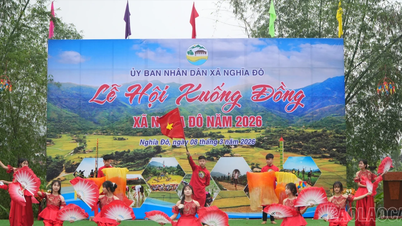
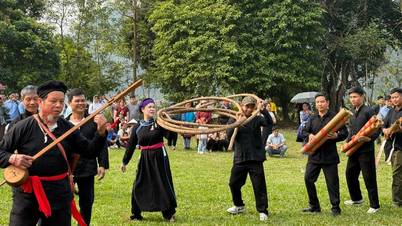
Along with Coc communal house, six ancestral temples in Phong Coc have also been recognized as national relics. In particular, local traditional festivals such as the Tien Cong Festival and the Xuong Dong Festival are rare and distinctive cultural features that the people of Phong Luu have inherited and developed. These are all festivals that have been recognized as national intangible cultural heritage.
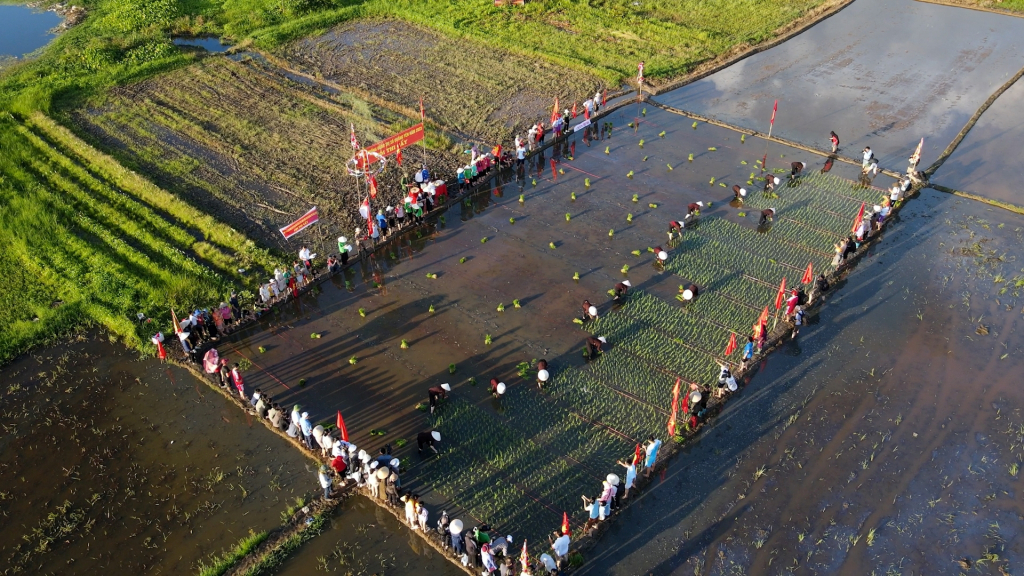
The highlight of the Rice Planting Festival is the rowing competition held on the Cua Dinh River (Phong Coc Ward), which has become a unique folk cultural and sporting activity of the island village of Ha Nam, with the wish for favorable weather and a bountiful harvest. In particular, the pole rowing event is a unique characteristic of Quang Yen that cannot be found anywhere else in the country.
Mr. Ngo Thanh Tung, a resident of Zone 2, Phong Coc Ward, said: "In the old days, when this land of Ha Nam was first established, there was almost no road transport system. People mainly traveled by water, on wooden or bamboo boats. Bamboo boats used oars to paddle, giving rise to the sport of rowing, while wooden boats required poles to propel, giving rise to pole rowing. This was also a sport that helped improve the health of the working people and was a unique local festival."
Only by participating in the local rice planting festival can one truly appreciate the vibrant and bustling atmosphere of a village festival within the city. Months before the festival, people begin practicing for the boat race. Every afternoon, the Cua Dinh River in front of the Coc communal house is filled with laughter, chatter, and the sound of festival drums. Not only young people, but also middle-aged individuals who are still healthy enthusiastically participate in the boat race.

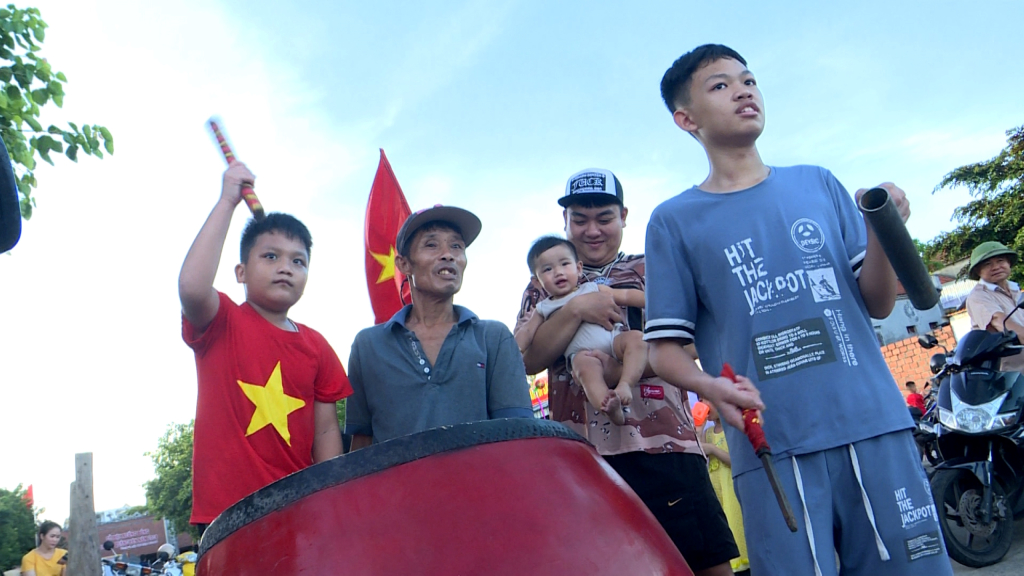
The people of Ha Nam island believe that rowing boats during the rice planting festival is a traditional folk culture that fosters unity and consensus within the community to improve irrigation, withstand harsh natural conditions, protect dikes and crops. It also motivates and encourages the people's labor and production after a bountiful harvest and prepares them for the new season.
Local traditional cultural values are also preserved and passed on to the younger generation through activities such as rowing boats on the river for teenagers organized by Phong Coc ward, or folk singing classes for students of all ages. Through these activities, the children gain a better understanding of the unique cultural features of their locality and develop a greater love for the festivals and melodies of their homeland.

The village culture of the island, passed down through generations, is still preserved by the people today in the same way, becoming an integral part of the rural atmosphere amidst the rhythm of modern city life. The old Phong Luu village, now Phong Coc ward, has been enriched with new cultural values, bearing the face of a modern city, yet it still retains its red-tiled roofs, three-room wooden houses, families preserving traditional crafts, and familiar landmarks like Coc communal house, Coc market, Mieu bridge, Cho bridge... all imbued with the spirit of the countryside, a source of nostalgia and pride for the people of Coc village today and in the future.
Source
![[Photo] General Secretary and President To Lam presides over the meeting to approve the draft report on the results of the second inspection by the Politburo of the Standing Committee of the Hanoi City Party Committee.](https://vphoto.vietnam.vn/thumb/1200x675/vietnam/resource/IMAGE/2026/05/26/1779789811432_a2-bnd-4430-9620-jpg.webp)










































Comment (0)