

Lack of highly specialized personnel.
Cao Duc commune was formed by merging two communes: Cao Duc and Van Ninh of the former Gia Binh district; the commune has a total natural area of over 19 km2 and a population of approximately 17,000 people. Due to having only 27 staff positions in the government sector, the commune's Culture and Social Affairs Department is only staffed with one head and two specialists. With limited personnel but responsible for many areas, the department lacks staff to advise on state management tasks in the fields of education and health.
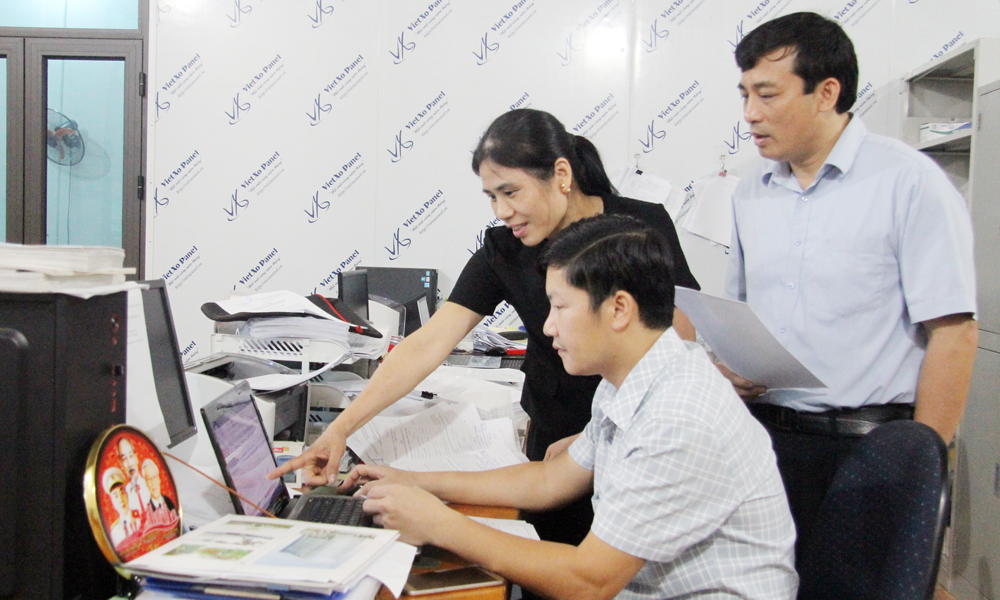 |
To handle the large workload in the field of education , officials and civil servants of the Culture and Social Affairs Department (Truong Son Commune People's Committee) frequently work overtime. |
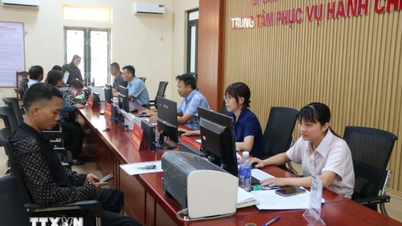
To fill the gap, the People's Committee of Cao Duc commune reinforced the department with an official from the Center for Public Service Supply. However, because the person reinforced lacked expertise in education and healthcare , management and advisory work in these areas was slow and ineffective. Mr. Lai Dinh Te, Vice Chairman of the People's Committee of Cao Duc commune, stated: "Upon review, the People's Committee of the commune does not have any officials or civil servants with expertise in these two fields, leading to inadequacies in arranging and assigning personnel according to their specialization. Transferring teachers from other schools is difficult due to the lack of guidance on policies and regulations for seconded teachers; and the health station staff is under the responsibility of the Gia Binh Health Center, making reassignment impossible."
| According to statistics from the Department of Internal Affairs, the total number of commune-level officials and civil servants in the province is currently 4,229, of which 613 are leaders of the People's Council and People's Committee, and the rest are civil servants in specialized agencies. The province has 30 communes and wards that do not have specialized civil servants in the education sector; and 81 communes and wards do not have specialized civil servants in the health sector. |
Implementing a two-tiered local government model, the Culture and Social Affairs Department under the People's Committee of communes and wards is responsible for state management in the fields of education and health. However, currently, many localities lack specialized personnel in these fields. A review revealed that 30 communes and wards in the province do not have civil servants with expertise in education, and 81 communes and wards lack civil servants with expertise in health.
In Truong Son commune, the Culture and Social Affairs Department currently oversees eight schools, from preschool to junior high school. Weekly, the department receives and processes numerous directives from the Department of Education and Training, and implements tasks previously assigned by the Department of Education and Training, such as: procedures for appointing and increasing salaries for school administrators; selecting, training, and organizing competitions for outstanding students… However, due to a lack of specialized education staff and the fact that the assigned personnel have no prior experience in this field, the implementation of these tasks is often untimely and of low quality.
Comrade Luong Van Tu, Head of the Culture and Social Affairs Department (Truong Son Commune People's Committee), said: “The department currently has 4 staff members (including management) while processing and advising on more than 10 documents daily related to education, health, internal affairs, culture and information, ethnic groups and religions, intellectual property, science and technology. There are no civil servants with knowledge and experience in state management of education and health, so the advisory, inspection, supervision, and resolution of professional issues in these two fields still face difficulties.”
Ensure sufficient personnel to perform the task.
In reality, due to the mechanical merger and consolidation of officials from communes and wards, and the uneven distribution of officials from the district level to communes and wards, some positions have many officials with the same expertise, while other areas suffer from shortages. To overcome these difficulties, localities have been flexible and proactive in finding suitable solutions; officials assigned to these areas have also proactively sought to understand and adapt to new tasks. In Truong Son commune, to improve the quality of state management in health and education, officials and civil servants of the Culture and Social Affairs Department regularly work on Saturdays and Sundays. At the same time, they proactively study relevant documents in their specialized fields, thus gradually adapting to their new work. In the health sector, the People's Committee of the commune proactively connects with the Luc Nam Health Center to support and guide the organization of related professional activities.
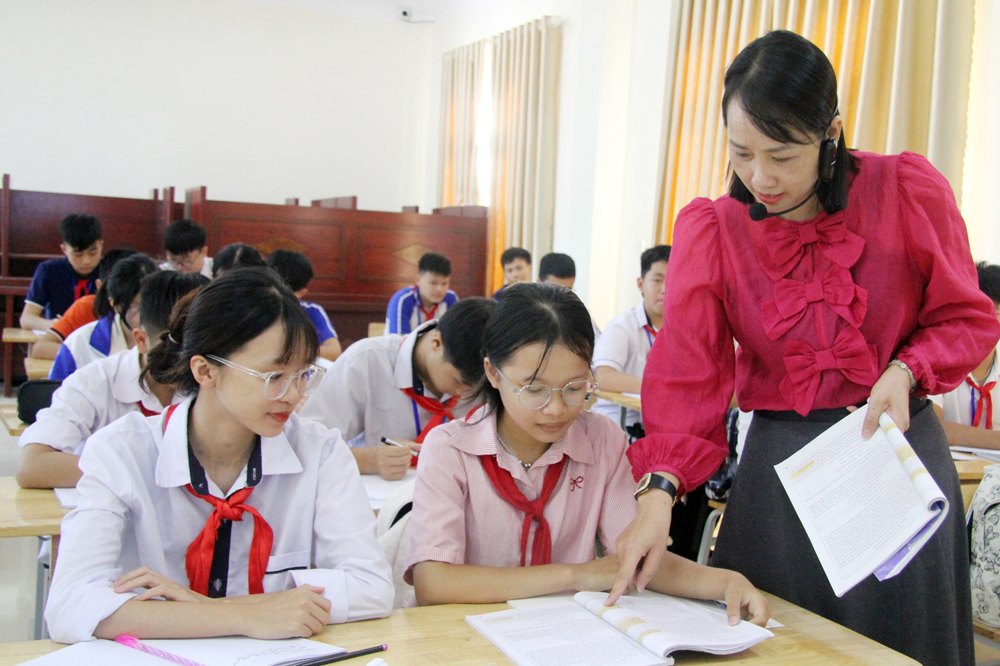 |
Review session for Literature at An Chau Junior High School (Son Dong commune). |
In Son Dong commune, to manage and advise on the practical situation and specific characteristics of each educational level, the commune has divided its 12 schools into 3 clusters corresponding to the 3 levels. Each level has a cluster leader who regularly exchanges information and finds solutions to problems arising during the implementation of tasks. Mr. Dam Van Long, Principal of An Chau Secondary School (Son Dong commune), said: “As the cluster leader of secondary schools, we coordinate with the members of the cluster to advise the Commune People's Committee on developing a plan for nurturing gifted students and a plan for the commune-level gifted student competition. Currently, the cluster has established a team of teachers and selected outstanding students to participate in 9 teams of gifted students for the commune.”
According to statistics from the Department of Internal Affairs, the total number of officials, civil servants, and public employees at the commune level throughout the province is currently 4,229, of which 613 are leaders of the People's Council and People's Committee, and the rest are civil servants in specialized agencies. To ensure sufficient personnel to perform tasks at the commune level, on October 14th, the Provincial People's Committee issued a document assigning the Department of Internal Affairs to coordinate with the Departments of Education and Training, Health, and the People's Committees of communes and wards to review and implement the transfer and secondment of civil servants and public employees from the health and education sectors to work in specialized departments under the People's Committees at the commune level.
Following the directive, on October 16th, the Department of Internal Affairs sent a document requesting the Department of Health to select and assign 81 civil servants or public employees with medical expertise currently working at health centers and commune health stations to be seconded to 81 localities that lack specialized personnel in this field. Regarding the education sector, the Department of Internal Affairs sent a document requesting the Ministry of Internal Affairs to provide guidance on maintaining teaching allowances for teachers seconded to perform the duties of education civil servants in communes and wards.
Comrade Nguyen Dang Khang, Deputy Director of the Department of Internal Affairs, said: “Based on the list of civil servants and public employees sent by the Department of Health (before October 25th), the Department of Internal Affairs will complete the procedures and implement the secondment in a way that facilitates the travel distance so that those seconded can feel secure and perform their assigned tasks well. When the Ministry of Internal Affairs issues guidelines on the regime for seconded teachers, we will guide the People's Committees of communes and towns to select and temporarily transfer cadres and teachers from schools to work at the Culture and Social Affairs Department.”
Source: https://baobacninhtv.vn/phong-van-hoa-xa-hoi-cap-xa-thieu-can-bo-chuyen-sau-ve-giao-duc-y-te-postid429605.bbg


![[Photo] Closing Ceremony of the 10th Session of the 15th National Assembly](/_next/image?url=https%3A%2F%2Fvphoto.vietnam.vn%2Fthumb%2F1200x675%2Fvietnam%2Fresource%2FIMAGE%2F2025%2F12%2F11%2F1765448959967_image-1437-jpg.webp&w=3840&q=75)






































![[OFFICIAL] MISA GROUP ANNOUNCES ITS PIONEERING BRAND POSITIONING IN BUILDING AGENTIC AI FOR BUSINESSES, HOUSEHOLDS, AND THE GOVERNMENT](https://vphoto.vietnam.vn/thumb/402x226/vietnam/resource/IMAGE/2025/12/11/1765444754256_agentic-ai_postfb-scaled.png)







































Comment (0)