

On a late autumn morning transitioning into winter, I noticed Lam Thuong waking up to a different rhythm. Normally, the sounds of roosters and people would be enough to liven up the entire village, but today, from every corner, there were added sounds of drums, flutes, and boisterous laughter – signs of a festival.
The small village, nestled amidst lush green mountains and hills, seems to have donned a new look with fluttering flags, colorful brocade fabrics, the vibrant blouses of Tay women, the elaborate, multi-colored red costumes of the Dao people, and the concrete road leading to the stadium appearing wider and more beautiful.
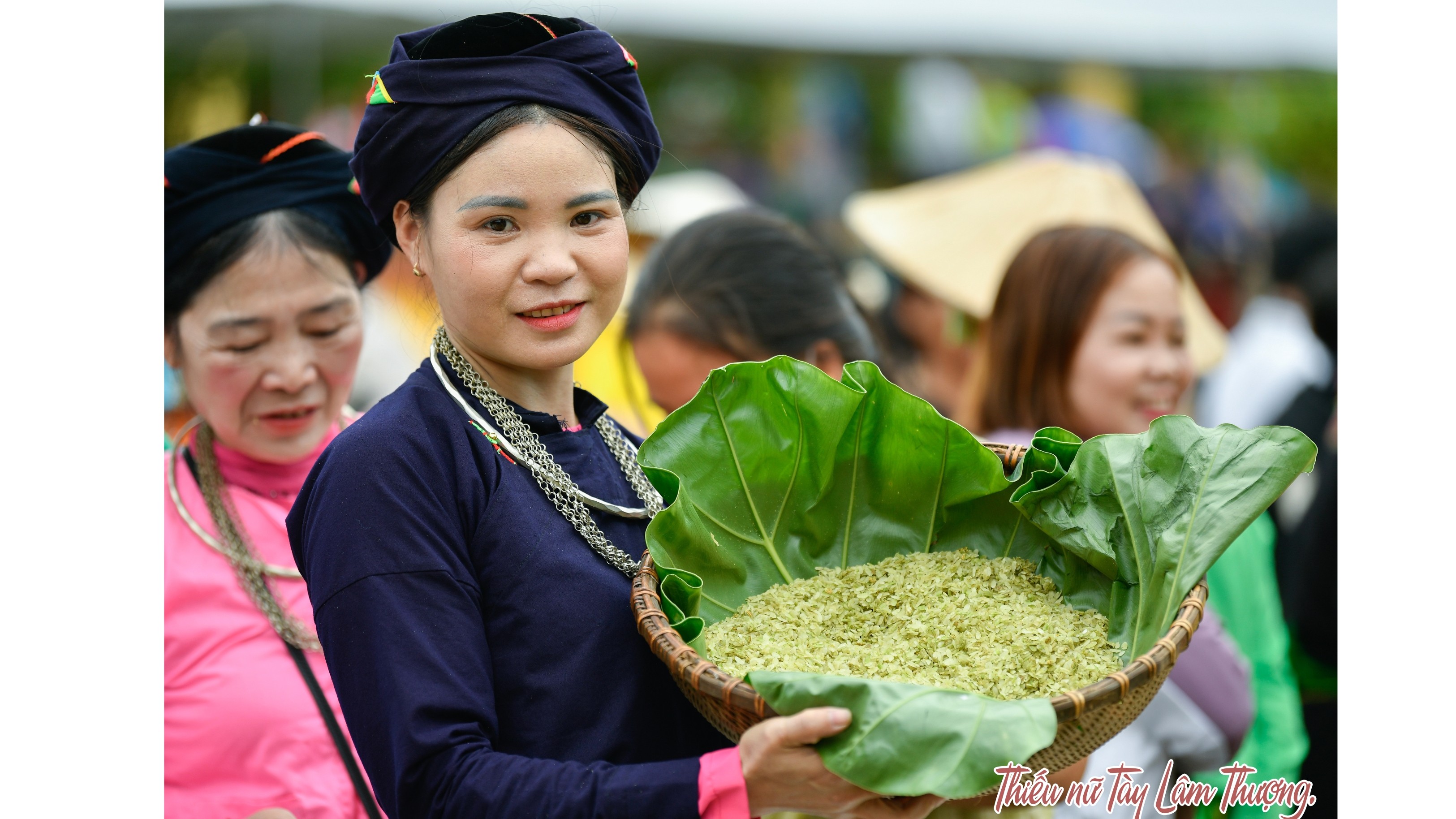
The Lam Thuong Ethnic Culture Festival is an opportunity to showcase cultural artifacts and local products, allowing the ethnic communities here to collectively tell their cultural stories. From afar, the sound of loudspeakers can be heard, but it's not the noisy invitation of the city – it's a simple, warm invitation, like a mother calling her child home for a meal.
I followed the hurried footsteps; children cheered, the elderly's faces beamed, young women gracefully dressed in colorful gowns, young men changing into new clothes—all like notes resonating in a symphony.
The stadium was decorated, with a small stage in the center, but large enough to showcase the intangible richness of culture. Lam Thuong commune today is formed by the merger of four communes: Mai Son, Khanh Thien, Tan Phuong, and Lam Thuong. Everyone was excited because the merger made the festival more joyful, more crowded, and especially more colorful.
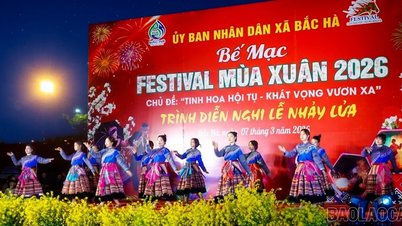
The festival featured a packed schedule of activities, including group performances of traditional folk dances by Tay and Dao girls, with graceful movements that seemed to let their souls drift with the wind.
Every movement, every smile, embodies a simple yet enduring philosophy of life, gentle yet resolute. The artisans, clad in shimmering costumes, each embroidery stitch and patchwork like a story told through colorful threads.
Mrs. Trieu Thi Binh, a Dao woman from Khe Bin village, whose gnarled hands are still nimble with the embroidery needle, said: "Each pattern is a message left by our ancestors. Looking at these patterns, you can see the history of your own life." For me, the viewer, it's not just about beauty, but also about the words of the rice fields and the mountains of Lam Thuong.
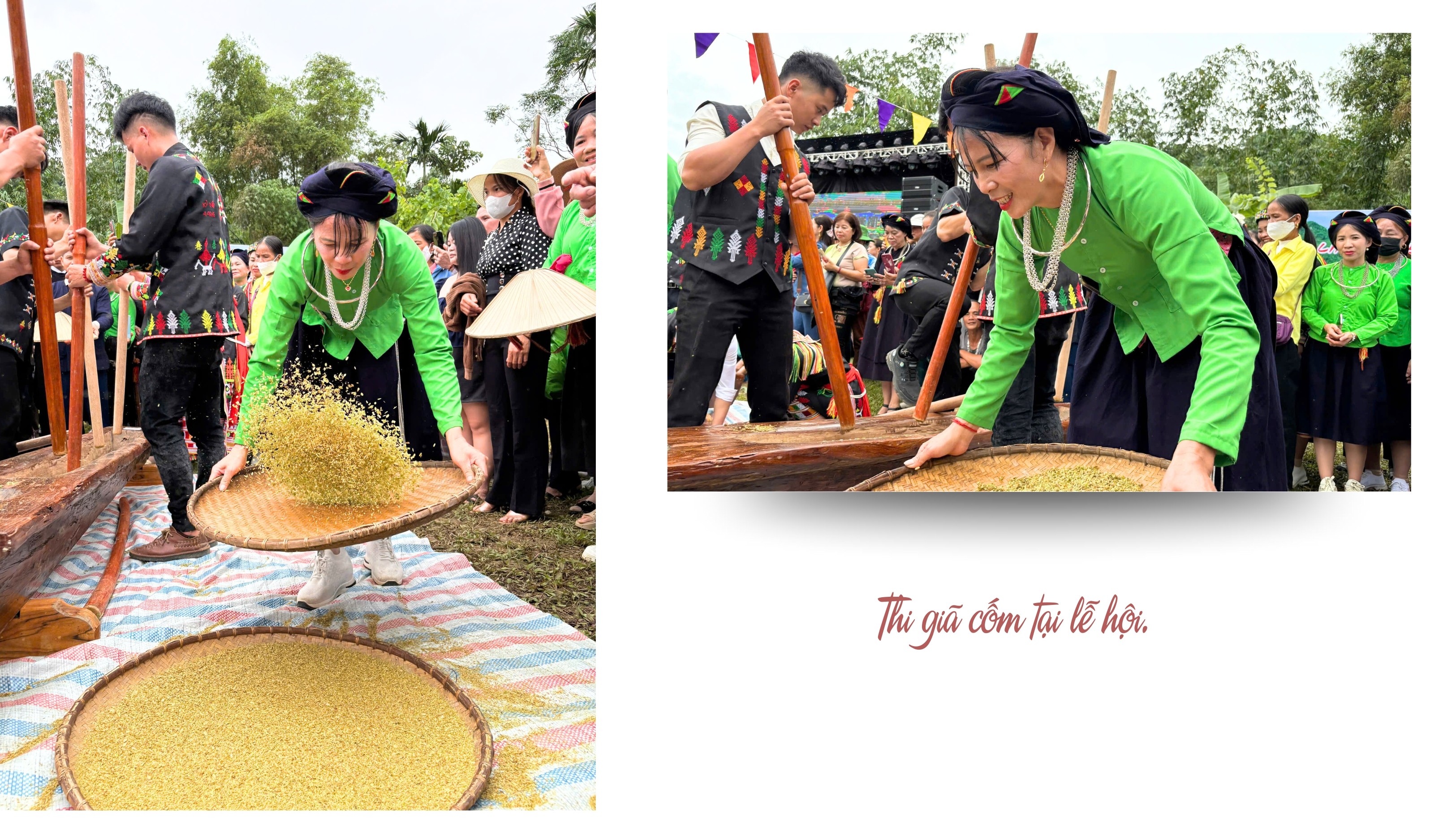
The "Cắc Kẻng" festival wouldn't be complete without the rice pounding competition. The Lao Mu glutinous rice variety is widely grown in the villages of Tông Luông, Tông Mộ, Tông Áng, and Làng Giàu. Through the skillful hands and dexterity of the women, the rice stalks are continuously turned over and over to ensure the grains cook evenly, then allowed to cool completely before being pounded in the mortar. Each team demonstrates their strength and skill to produce the most beautiful rice flakes in the shortest time possible.
In a corner of the courtyard, I stopped in front of a stall selling traditional crafts and local products. There were colorful blouses, special headwear worn only during wedding ceremonies by Dao women, various types of bamboo shoots, forest leaves… and even neatly arranged wooden spinning tops.
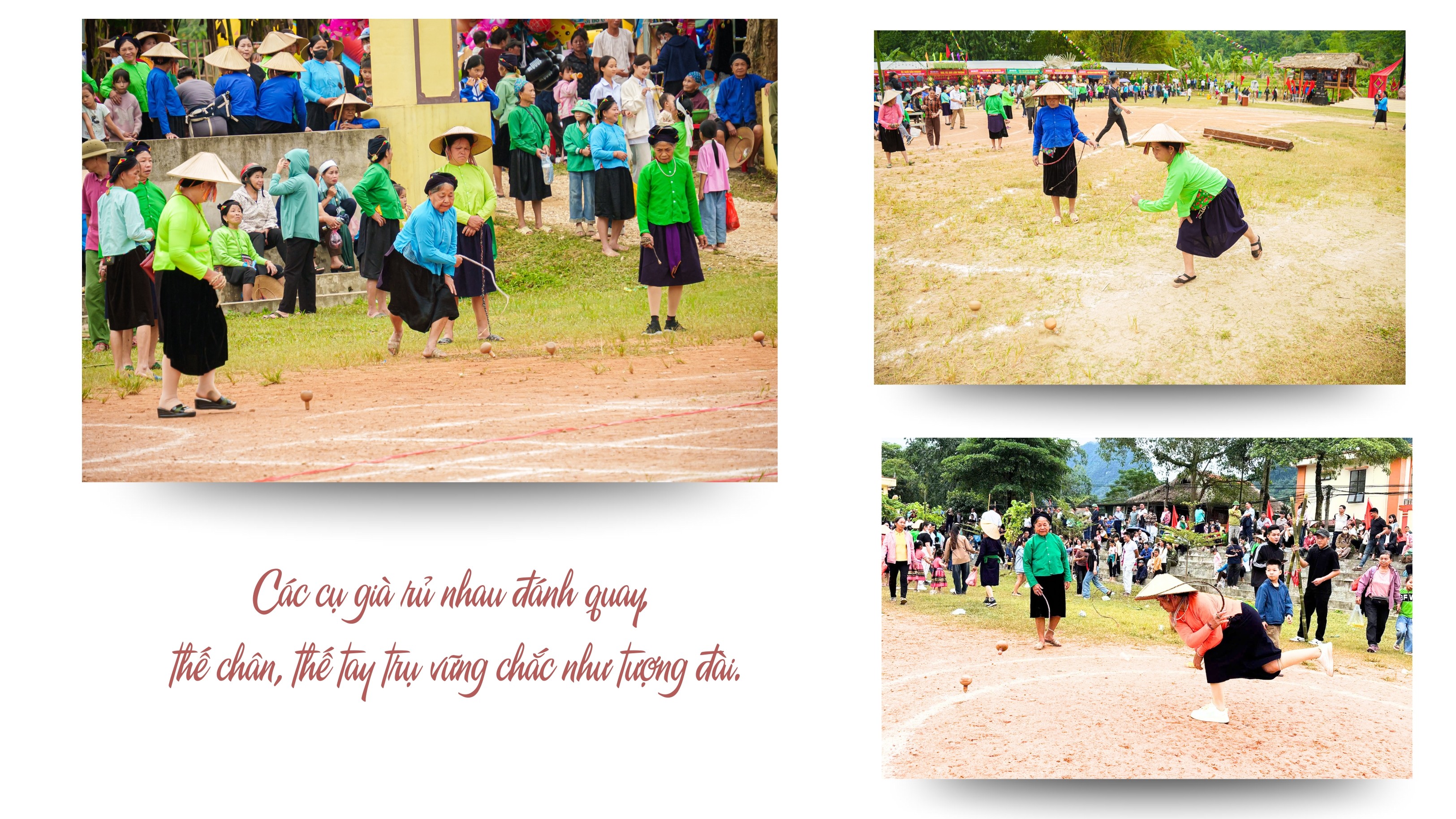
Spinning tops – a seemingly insignificant game – have become a special highlight of the festival in Lam Thuong today, attracting men and women, the elderly and children alike.
They stood in a circle, spinning tops in hand, their eyes sparkling with joy. They competed to see who could keep the top spinning the longest, passing it around as if it were a secret. Sometimes the top spun so fast that it created tiny streaks of light, like falling stars.
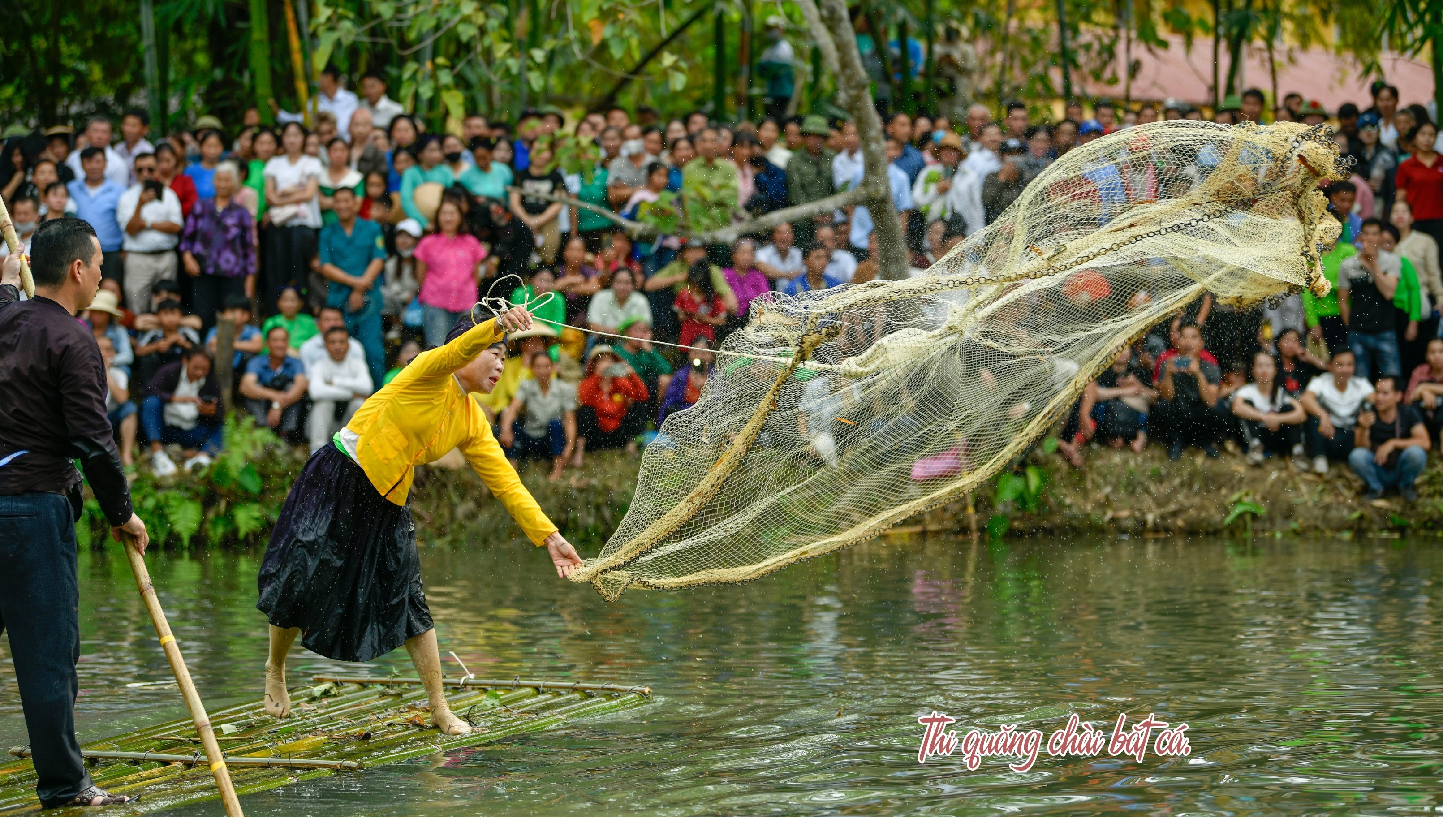
After the competitions, the elderly women gathered to play spinning tops, their stances and postures as firm as statues. Mrs. Hoang Thi Tam, nearly 70 years old, from Lang Giau village, said she had played spinning tops since childhood and still loved them. She played them during village festivals and holidays, never getting tired of them. She also said that playing spinning tops helped improve her health for productive work. Her words made me realize that most of the games at the festival saw a large number of women participating, even those requiring physical strength like fishing net throwing and women's football.
What intrigued me most was the women's football match. Elsewhere, women are considered spectators, but in Lam Thuong, they are players.
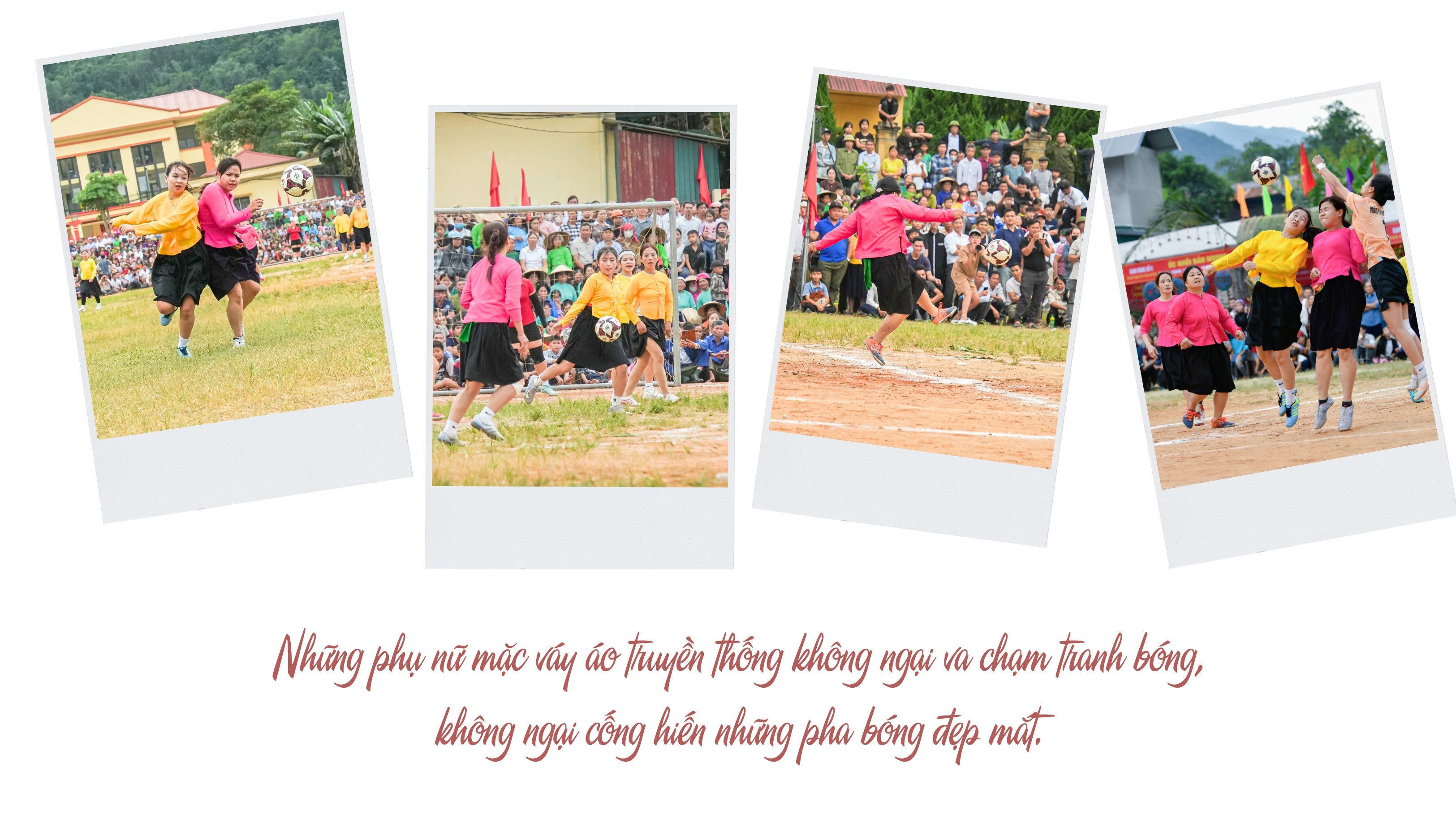
I witnessed skillful shots, decisive passes, and smiles after each play. The image of women in traditional dresses, unafraid to engage in physical challenges and contribute to beautiful plays, symbolizes the connection between tradition and modernity. Spectators here cheer with affectionate gazes, as if watching a powerful dance.
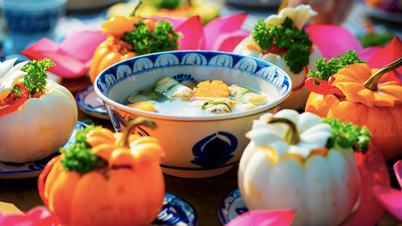
At midday, the communal meal was served, with a table full of traditional dishes. Everyone gathered around, sharing bites and exchanging stories about the festival and the village.
I sat near a group of young people, talking about their plans to develop community-based tourism to preserve traditional crafts and promote culture… The festival is not only a celebration but also a stepping stone for the future.
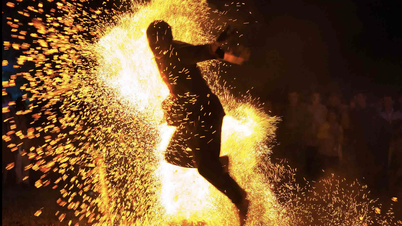
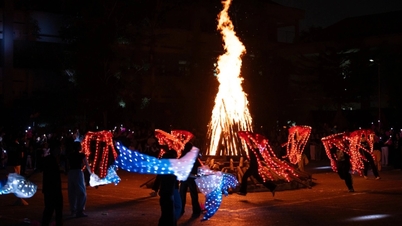
As night fell, the festival atmosphere became lively again with the appearance of the fire dance. Not just a purely adventurous activity for entertainment, the fire dance in Lam Thuong carries a deep ritualistic significance, representing a covenant between humans and deities, between the community and nature.
When the embers glowed brightly, the rhythmic sounds of the bamboo flute, zither, and drums urged the villagers forward, performing the opening ceremony – offering prayers, pouring wine, and invoking their ancestors and deities for blessings. Their words, like tiny needles piercing the air, prayed for peace in the village, a bountiful harvest, and good health for the people.
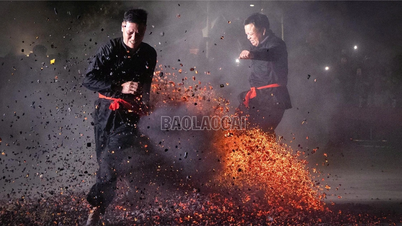
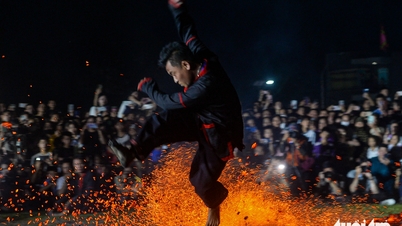
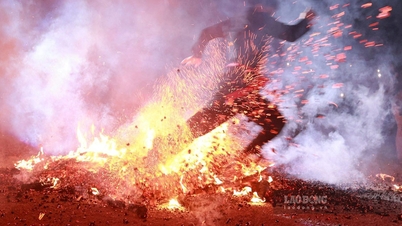
Then the music shifted to a more rapid, pounding rhythm, and the dancers stepped out, their eyes blazing with fire, their faces resolute yet serene. Their steps were orderly, each movement passed down through generations, from tiptoeing and light jumps to touching down on the glowing coals.
An old woman sitting nearby whispered, "Touching the fire barefoot is a way of showing faith, to tell the forest that we are children of this land."
Then there were cheers in rhythm, but the dominant atmosphere was one of respectful silence, as if participating in a sacred dialogue. More than once, I witnessed a fleeting, serene smile appear on their faces after overcoming the challenge – a strengthened belief, an affirmation of themselves and their community. Children stood close to the fence, their eyes eager, their small hands clapping in rhythm, as if learning to believe in something greater than themselves.
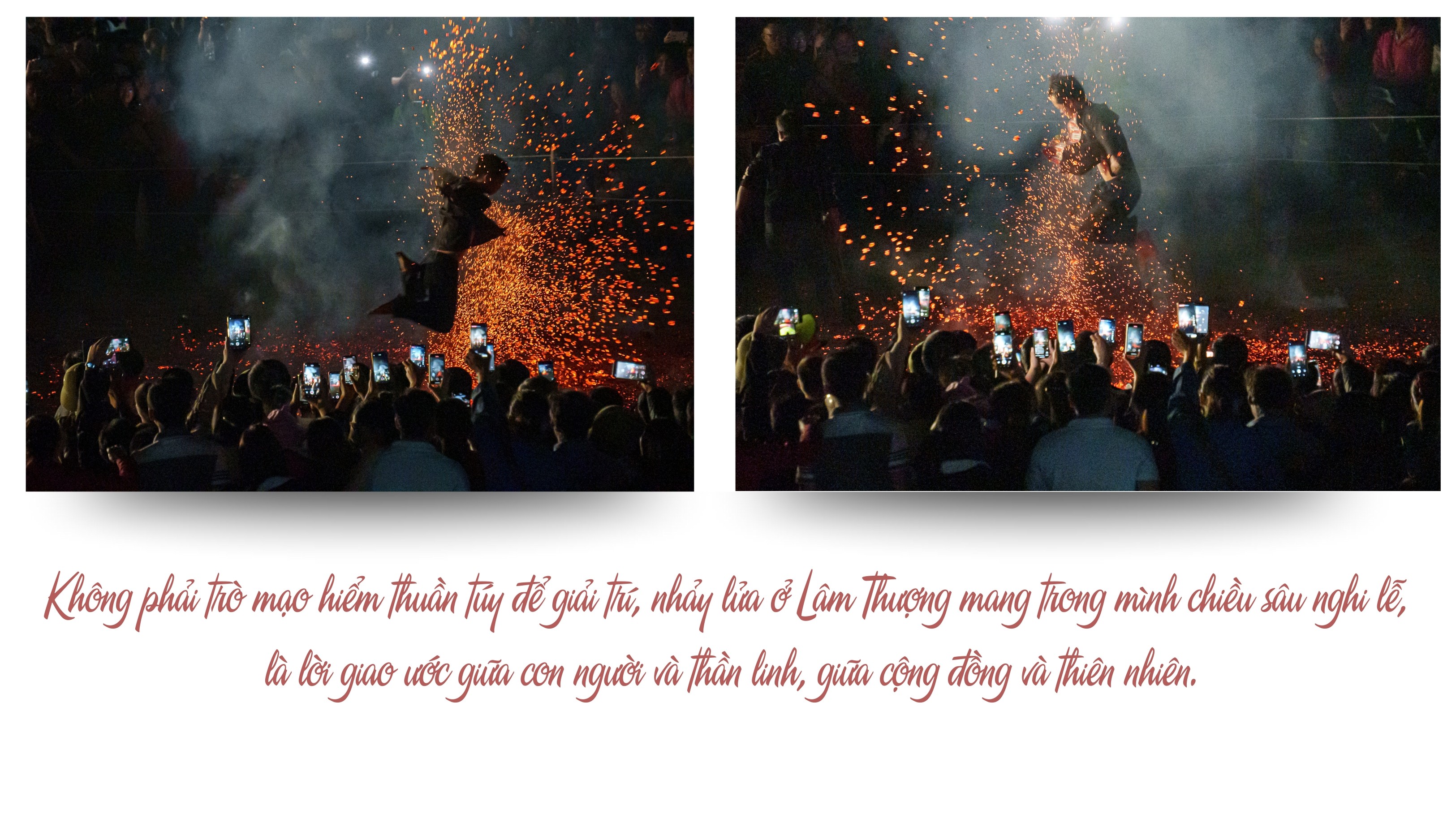
At the end of the fire dance, tourists clap slowly in rhythm with the locals, not to cheer for individual victory, but to express gratitude for the ritual that connects them to their roots. In that moment, fire becomes a symbol of purification, a symbol of courage, faith, and the bond between the Dao people and the earth and sky.
Before leaving the gathering, I stood silently, imagining the vibrant colors of the brocade fabrics swirling in the wind, the lingering melodies of the folk songs, the echoes of footsteps on the football field, and the sparks of fire clinging to the tops of people's feet as they ran across piles of burning coals, leaving behind temporary trails of coal before disappearing… The people of Lam Thuong have created a living diary, where the past meets the present, where tradition continues to live, change, and spread.
Source: https://baolaocai.vn/sac-mau-van-hoa-o-lam-thuong-post885901.html
























































































Comment (0)