

According to dantri.com.vn - Time has shown that despite the emergence of many modern means that help people quickly access information, reading culture remains relevant and irreplaceable.

The joy of reading will never disappear.
In the 1990s, when digital technology began to transform lives, many experts predicted that paper books would eventually disappear. Half a century earlier, when television became increasingly prevalent, experts had made similar predictions. Nevertheless, even today, reading both paper and e-books remains a familiar activity for many people.
After years of struggling, printed books have started selling well again in recent years. The publishing industry in many countries is reporting encouraging signs of growth. At this time, experts are once again explaining the enduring existence of reading culture through time and change.
Reading books gives readers freedom of mind; they enter new and unfamiliar worlds opened up by the pages, temporarily escaping the pressures and fatigue of everyday life.
The concentration required when reading allows the reader's mind to become calm and peaceful amidst an increasingly fast-paced world of constant change.
For those who love reading, reading time is a magical time that helps them escape the noise and hustle of life and enjoy a wonderful tranquility. This tranquility helps the reader's inner self become balanced, peaceful, strong, and wise.
These points have long been analyzed by psychology experts to explain the appeal and enduring presence of books, regardless of the dominance of technology.
Reading is a habit that can last a lifetime. Over the years, an individual's reading ability will improve. Reading helps improve memory, expand vocabulary, enhance knowledge, foster deeper thinking, and enrich the spiritual life of each person.

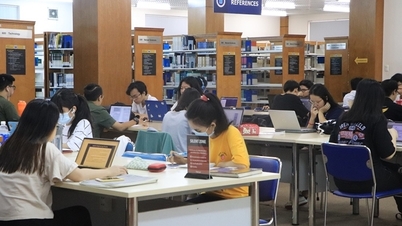
Reading books helps people relax better than listening to music or going for a walk (Illustrative image: iStock).
The benefits of reading for young children.
Reading helps develop emotional intelligence (EQ). Besides increasing knowledge, reading also gives readers perspectives and experiences different from what they have in real life. Readers will have the opportunity to broaden their horizons, gain a multi-dimensional perspective, increase their emotional intelligence (EQ), and improve their ability to understand and empathize with characters.
By truly immersing themselves in the book's content, readers also cultivate their ability to concentrate, think deeply, and view issues from multiple perspectives.
Reading books helps improve thinking skills. Search engines can provide us with a wealth of knowledge at a glance, but they cannot teach us how to think logically. In life, logical thinking skills are very important and need to be cultivated from a young age.
Furthermore, in today's life, people are easily distracted by countless surrounding factors, especially by electronic devices and social media. Therefore, the ability to concentrate and think deeply about a problem also needs to be cultivated. Reading is one way to train concentration.
Reading helps expand vocabulary, improve communication skills, and develop interpersonal skills. When children read literature and become engrossed in the characters' experiences, their brains function as if they are experiencing those experiences themselves. This is crucial emotional practice, helping children become more mentally prepared for real-life situations.
Reading enhances cognitive function. It trains the brain and stimulates cognitive abilities. The more you read, the more your brain is activated.
Regular reading is a form of exercise for the brain, enhancing thinking ability, analytical skills, information connection, and judgment, thereby developing problem-solving skills. Over time, reading also helps readers improve their memory, concentration, and deep thinking abilities.

Reading helps reduce stress. Even just 10 minutes of reading can significantly improve a reader's mental state, making them calmer and more relaxed. Many psychologists even consider reading a form of therapy.
The reason is that reading helps the brain distract itself from the problems the reader is facing in real life, thereby reducing stress throughout the body.
Some psychological studies show that reading helps people relax better than listening to music or walking. The effects of reading are equivalent to meditation. After reading, readers find their self-awareness clearer, and their thoughts and emotions more coherent.
Reading can improve sleep. Reading before bed, instead of watching TV or browsing on your phone, helps calm the brain and signals to the body that it's time to sleep.
Exposure to blue light emitted from electronic device screens makes it difficult to fall asleep. Conversely, reading helps the body relax both physically and mentally, lulling the reader into sleep more quickly.
Reading helps improve writing skills. Reading and writing are two skills that go hand in hand. Practicing one skill will improve the other. For young children, reading helps them develop their first concepts of writing skills.
Books can be a child's best friend. For young children, books can be a constant companion, helping them relax and maintain emotional stability and balance. This is especially true if a child is experiencing problems at school, with friends, or in their family life; books can become an even better friend.

Ways to help children enjoy reading.
When children are young, parents should read to them early on, helping them understand the storyline and become interested in the story. The way parents read to their children helps them understand what it means to read fluently and expressively.
Parents should find books that suit their children's interests to nurture their initial enthusiasm for reading. After reading a chapter, parents should ask their children what they think about the characters and what they predict will happen next, to help them truly think about the characters and the story.
Ultimately, reading is an activity that helps cultivate a relaxed and inspiring spiritual life. Reading can become a small daily pleasure, regardless of the pressures of real life.
Helping children cultivate a reading habit is giving them a meaningful gift, enriching their spiritual lives in the years to come.
According to Psychology Today/95 Percent Group
![[Photo] Prime Minister Pham Minh Chinh receives the Governor of Tochigi Province (Japan)](/_next/image?url=https%3A%2F%2Fvphoto.vietnam.vn%2Fthumb%2F1200x675%2Fvietnam%2Fresource%2FIMAGE%2F2025%2F12%2F16%2F1765892133176_dsc-8082-6425-jpg.webp&w=3840&q=75)
![[Image] Leaked images ahead of the 2025 Community Action Awards gala.](/_next/image?url=https%3A%2F%2Fvphoto.vietnam.vn%2Fthumb%2F1200x675%2Fvietnam%2Fresource%2FIMAGE%2F2025%2F12%2F16%2F1765882828720_ndo_br_thiet-ke-chua-co-ten-45-png.webp&w=3840&q=75)
![[Photo] Prime Minister Pham Minh Chinh receives Lao Minister of Education and Sports Thongsalith Mangnormek](/_next/image?url=https%3A%2F%2Fvphoto.vietnam.vn%2Fthumb%2F1200x675%2Fvietnam%2Fresource%2FIMAGE%2F2025%2F12%2F16%2F1765876834721_dsc-7519-jpg.webp&w=3840&q=75)
![[Live] 2025 Community Action Awards Gala](/_next/image?url=https%3A%2F%2Fvphoto.vietnam.vn%2Fthumb%2F1200x675%2Fvietnam%2Fresource%2FIMAGE%2F2025%2F12%2F16%2F1765899631650_ndo_tr_z7334013144784-9f9fe10a6d63584c85aff40f2957c250-jpg.webp&w=3840&q=75)


































































































Comment (0)