

After 50 years of construction and development, Ho Chi Minh City has affirmed its position and role as the economic driving force of the whole country; the core of the Southern Key Economic Region and the Southeast Region. At times, Ho Chi Minh City has contributed more than 20% of GDP, 30% of budget revenue, and 25% of industrial and commercial production value; and has been a leader in attracting FDI.
Aspiration for development
Between 1980 and 2025, the city's economy is projected to grow approximately 30 times, while its urban area is expected to expand fourfold towards a more modern and civilized direction. The renovation of old urban areas and the development of new ones have transformed the face of Ho Chi Minh City, significantly improving the quality of life for its residents and moving towards becoming a global metropolis. However, over the past decade, Ho Chi Minh City's position and role have shown signs of decline, both in terms of its contribution to the economy and its development model, with many stalled projects and constructions resulting in wasted resources.
Resolution 31-NQ/TW of the Politburo dated December 30, 2022, on the direction and tasks for the development of Ho Chi Minh City until 2030, with a vision to 2045; and Decision No. 1711/QD-TTg dated December 31, 2024, of the Prime Minister approving the Ho Chi Minh City Master Plan for the period 2021-2030, with a vision to 2050, have set development goals for the next 20-25 years: “Ho Chi Minh City will develop to the level of major cities in the world, becoming an economic, financial, and service center of Asia; a globally attractive destination; with distinctive economic and cultural development, and a high quality of life for its people; the nucleus of the Ho Chi Minh City region and the Southeast region, a growth pole of the whole country; and a place that attracts international financial institutions and economic corporations.” This is also the aspiration for development of the people of Ho Chi Minh City.
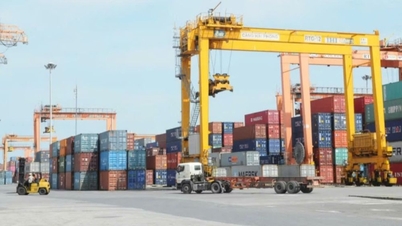
Economic activity in Ho Chi Minh City must be the most "market-oriented" in the country. A market economy model must be clearly established here, considering three aspects: sustainable economic growth; social progress, equity, and welfare for citizens; and a healthy living environment. Simultaneously, the city's role as a gateway for domestic and international economic exchange must be enhanced; the construction of the Can Gio International Transshipment Port and the International Financial Center is a breakthrough factor in this regard.
Ho Chi Minh City must take the lead in digital transformation and the green economy, reducing greenhouse gas emissions towards net-zero. It must implement a "dual transformation" of both the economy and social life. Digital spaces and creative cultural spaces must integrate into socio-economic life. Ho Chi Minh City, once a place where entrepreneurs from across the country "started their careers," must, in the new era, be a "startup hub" for the region, a destination for Asia with a global vision.
Leverage projects
Ho Chi Minh City will focus on quickly and effectively handling long-standing projects that have been stalled for many years due to legal obstacles, suspended planning without investors, and prolonged projects wasting resources… in order to absorb investment capital and create a ripple effect in 2025-2026.
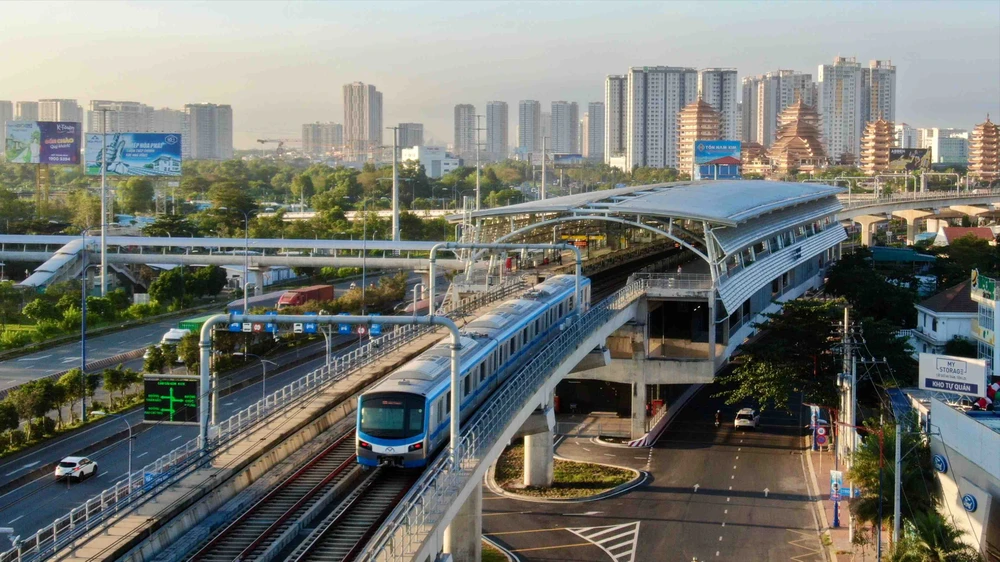
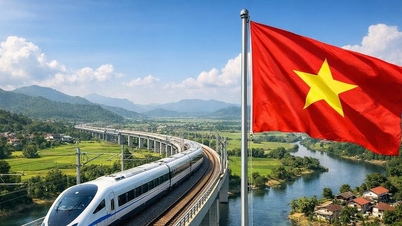
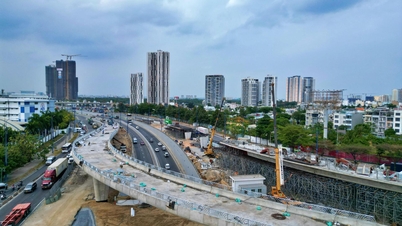
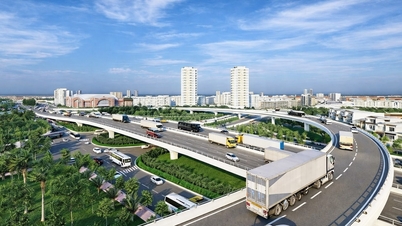
More importantly, Ho Chi Minh City will complete the regional transportation system, including expressways and Ring Roads 3 and 4 (currently under construction since 2024); complete the connection of Ring Road 2 in 2025-2026; and implement the North-South transportation axis and the Saigon River waterfront road according to the plan. Priority will be given to addressing bottlenecks at gateways such as National Highways 13, 22, 1, and 50 early in 2025-2027. The entire road network, both internal and external, must be completed before 2030. The urban railway system will be implemented according to the schedule outlined in Resolution 188 of the National Assembly dated February 19, 2025, with the goal of completing approximately 355km of urban railway by 2035; the Ho Chi Minh City - Can Tho high-speed railway will be implemented; and options for connecting with Can Gio and Ba Ria - Vung Tau will be studied. The urban railway connects Thu Thiem station with Long Thanh International Airport.
Ho Chi Minh City must also focus on major projects that impact the transformation of its growth model, with a focus on the green economy, circular economy, and digital economy (part of the four breakthrough and key programs of the Resolution of the 11th Congress of the Ho Chi Minh City Party Committee). It should establish a center for innovative startups in Thu Duc City and large data centers (DCs) to serve the digital economy. It should concentrate on resolving obstacles in dozens of real estate projects that are wasting resources, including projects with significant spillover effects that have been stalled for decades.
The conversion of the functions of 5 export processing zones/industrial parks (out of 17) will be implemented according to the conclusions of the Standing Committee of the City Party Committee in 2025 and subsequent years. This is an inevitable trend that must be quickly implemented to attract new investment flows. The construction of the Ho Chi Minh City International Finance Center will follow the plan approved by the central government, gradually affirming its position and role in the region and the world.
The revolution in reorganizing the administrative apparatus from the central to local levels is underway under the strong direction of the Party and State leaders, opening up opportunities for Ho Chi Minh City to build an efficient, effective, and effective public service; perfecting the governance model of Ho Chi Minh City's urban government to suit the operation of the market economy mechanism and the development trends of the times. This is the mission of the people of Ho Chi Minh City in the new era - the era of national progress.
The economic growth rate in the area must be maintained at a level approximately 1.2-1.5 times higher than the national average, as achieved previously. Specifically, the GRDP growth rate should be 1.2 times higher during the 2026-2030 period and 1.5 times higher during the 2031-2035 period compared to the national average; meaning that on average, during the 2026-2035 period, Ho Chi Minh City's economy must grow at a double-digit rate (11-12%/year), and maintain a stable growth rate of approximately 9-10%/year for the following 10 years.
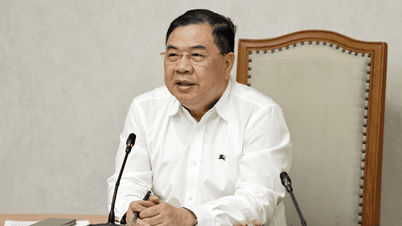
Dr. Tran Du Lich
Source: https://www.sggp.org.vn/tam-nhin-20-25-nam-toi-post793088.html




































































Comment (0)