

Decree No. 178/2024/ND-CP on policies for officials and civil servants in the implementation of organizational restructuring contributes to building confidence in the new era of the country.
This move is very timely and meaningful.
On December 31, 2024, the Government issued Decree No. 178/2024/ND-CP on policies for officials, civil servants, public employees, and members of the armed forces during the process of reorganizing the political system's organizational structure, with eight major policy groups.
The purpose of issuing Decree No. 178/2024/ND-CP (Decree 178) is to have a good policy to ensure the rights of officials, civil servants, and public employees who leave their jobs due to organizational restructuring, contributing to the goal of streamlining the organizational structure, reorganizing, and improving the quality of the workforce of officials, civil servants, and public employees.
Decree 178 takes effect from January 1, 2025. Simultaneously, the Government assigns responsibility for guiding and organizing its implementation to central ministries and agencies; provincial People's Committees; and agencies, organizations, and units directly managing and employing cadres, civil servants, public employees, and workers in issuing evaluation criteria and conducting a comprehensive review of the quality of cadres, civil servants, public employees, and workers under their management.
Based on that, identify those who must leave their jobs due to restructuring, falling under the scope of this Decree, in order to streamline the organizational structure, reduce staffing levels, restructure and improve the quality of cadres, civil servants, and public employees, and enhance the effectiveness and efficiency of operations.
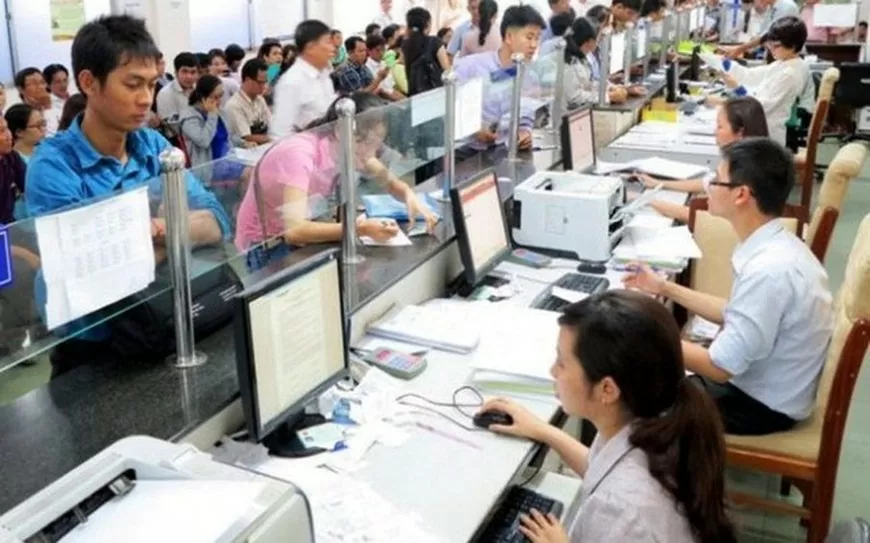 |
| Decree No. 178/2024/ND-CP takes effect from January 1, 2025. Photo: VGP |
Decree 178, issued on the last day of 2024, just before the start of 2025, has been widely considered a very timely and significant step. This policy not only demonstrates keen state management but also shows the government's determination and resolve to achieve the goal of streamlining and reorganizing the political system.
In a quick exchange with the Industry and Trade Newspaper, Dr. To Hoai Nam - General Secretary of the Vietnam Association of Small and Medium Enterprises - said that, despite being drafted in a very urgent and rushed timeframe, the spirit of Decree 178 has demonstrated many humane elements, aiming to encourage, compensate, and stabilize the psychology of officials, civil servants, and workers affected by organizational restructuring, as well as being consistent with the current context and resources of the country.
“ In particular, the issuance of Decree 178 also aims to accelerate the streamlining of the administrative apparatus, implementing the Central Government's directive to reorganize the organizational structure so as not to affect operations and the achievement of economic and social development goals, ” said Dr. To Hoai Nam.
Speaking to the Industry and Trade Newspaper, Associate Professor Bui Hoai Son also emphasized that the fact that Decree 178 takes effect from January 1, 2025, sends a clear message about the synchronization between policy and practice, helping to create momentum for agencies and organizations to implement it from the beginning of the year. This also reflects the thorough preparation of the Government, ensuring that the major policy groups introduced are not just formalities, but can also be effectively implemented in practice.
Motivate and build confidence.
Many experts share the view that it is absolutely necessary to build mechanisms and policies to support officials, civil servants, and public employees affected by the streamlining of the organizational structure under Decree 178. This is not only the responsibility of the management agency but also a crucial factor in ensuring consensus, sharing, and cooperation from those directly impacted. In particular, with eight major policy groups, the Government has set out clear principles and solutions to protect the rights of officials, civil servants, public employees, and the armed forces, thereby creating motivation and confidence for them during the organizational restructuring process.
Dr. To Hoai Nam stated that what he noticed was that Decree 178 had established regulations, mechanisms, and policies for those retiring early that demonstrated superiority and preferential treatment compared to other aspects. For example, the regulation stipulates that early retirement does not result in a reduction of pension, and also entitles individuals to additional benefits; contract workers are also considered for benefits; and the policy encouraging officials to volunteer to work at the grassroots level has opened up many new options for officials and civil servants when reorganizing the administrative apparatus.
Furthermore, according to Dr. To Hoai Nam, the policies of prioritizing the recruitment of outstanding individuals and the policies of training and development... in Decree 178 contain many strong provisions compared to previous documents. “ Given the urgent need to reorganize and streamline the administrative apparatus, the drafting of Decree 178 has balanced the factors of application, current policies, and the country's available resources… making it humane and appropriate, ” Dr. To Hoai Nam commented.
Therefore, given the above implications, for Decree No. 178 to be implemented effectively, thorough and coordinated preparation across many aspects is necessary. In particular, developing detailed action plans is crucial to concretize each policy group and ensure feasibility in practice. Simultaneously, communication efforts need to be intensified so that all relevant parties, from officials and civil servants to the armed forces, clearly understand the objectives, content, and significance of Decree 178. Especially, transparency in information will create consensus and minimize unnecessary misunderstandings.
Associate Professor Bui Hoai Son emphasized that the rational allocation of resources, including budget, infrastructure, and human resources, is a key factor in implementing Decree 178. This will ensure that organizations and agencies do not encounter obstacles during the restructuring process. Simultaneously, training and capacity-building programs should be organized to enhance the skills of leaders and managers, helping them grasp the implementation methods and effectively handle any arising issues.
At the same time, transparent monitoring and evaluation mechanisms are necessary to track the implementation process. Regular evaluations will help detect shortcomings early, thereby allowing for timely adjustments. Equally important, according to Associate Professor Bui Hoai Son, attention must be paid to the rights of officials, civil servants, and members of the armed forces. Support policies, such as job reassignment, retraining, or retirement schemes, need to be implemented uniformly and fairly to create trust and motivation during the transition process.
Furthermore, close coordination among all levels and sectors, from the central to local governments, will be a prerequisite for ensuring uniformity and effectiveness in the implementation of Decree 178. “ These efforts, if implemented synchronously and decisively, will help the policy maximize its role, contributing to improving the effectiveness of the political system and meeting the expectations of sustainable national development, ” said Associate Professor Bui Hoai Son.
It can be said that, in addition to demonstrating humanitarian values and the superiority of the policy in the current context of the country, the issuance of Decree 178/2024/ND-CP at the right time during the transition between 2024 and 2025 is also symbolic, reflecting the determination to innovate and develop, and readiness for new challenges and opportunities in 2025. This is a positive and strong signal, creating confidence in society about the direction of the country in the new era - the era of national progress.
Decree 178/2024/ND-CP stipulates policies and regulations, including: policies for those leaving their jobs (retirement and resignation); policies for those ceasing to hold leadership or management positions or being elected or appointed to lower leadership or management positions; policies to strengthen work assignments at the grassroots level; policies to prioritize individuals with outstanding qualities and abilities; and policies for training and improving the skills of cadres, civil servants, and public employees after restructuring. Decree 178 also stipulates the responsibilities for implementing policies and regulations for officials, civil servants, and employees in agencies, organizations, and units of the Party, State, Vietnam Fatherland Front, and socio-political organizations from the central to district levels; officials and civil servants at the commune level; and the armed forces (including the People's Army, the People's Police, and the intelligence services) during the process of reorganizing the organizational structure and administrative units at all levels of the political system. |
Source: https://congthuong.vn/nghi-dinh-1782024nd-cp-tao-dong-luc-niem-tin-trong-ky-nguyen-moi-367344.html






































































Comment (0)