

As a tradition, after the 25th day of the Lunar New Year, when the ancestral worship ceremony is over, people in the Mekong Delta gather to clean the bronze incense burners, tidy up the altars, and decorate their houses.
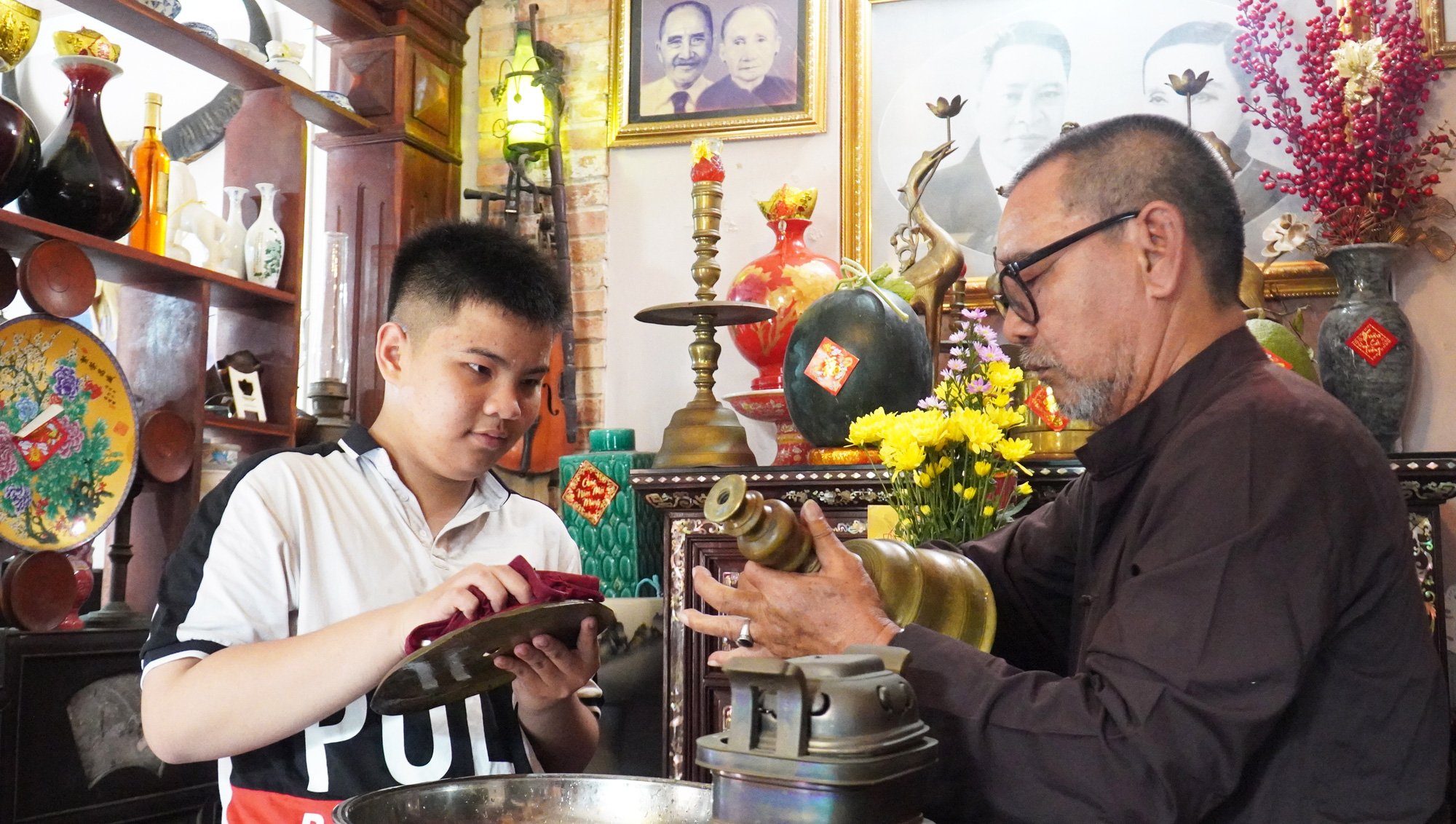
Cleaning the bronze incense burners for Tet (Lunar New Year) not only beautifies and cleans the items on the altar but also serves as an opportunity to educate children and grandchildren about their roots and ancestors - Photo: THANH HUYEN
In the rural areas of Southern Vietnam, it's common to see incense burners and candlesticks placed in the most prominent spot on the ancestral altar. The size and material of these sets vary depending on each family's financial situation . However, they all share the common goal of expressing the reverence of descendants for their deceased ancestors.
The bronze incense burner set is exquisitely crafted. The designs vary depending on the region, but a common feature is the lid of the burner depicting a unicorn. The bronze incense burner set is usually accompanied by a pair of candlesticks or a small incense burner.
No matter how busy people are during Tet (Lunar New Year), cleaning and polishing brass incense burners is always a top priority for families. Around the 25th day of the lunar month, families begin cleaning their incense burners. Each era has its own secret to keeping the brass incense burners shining like new.
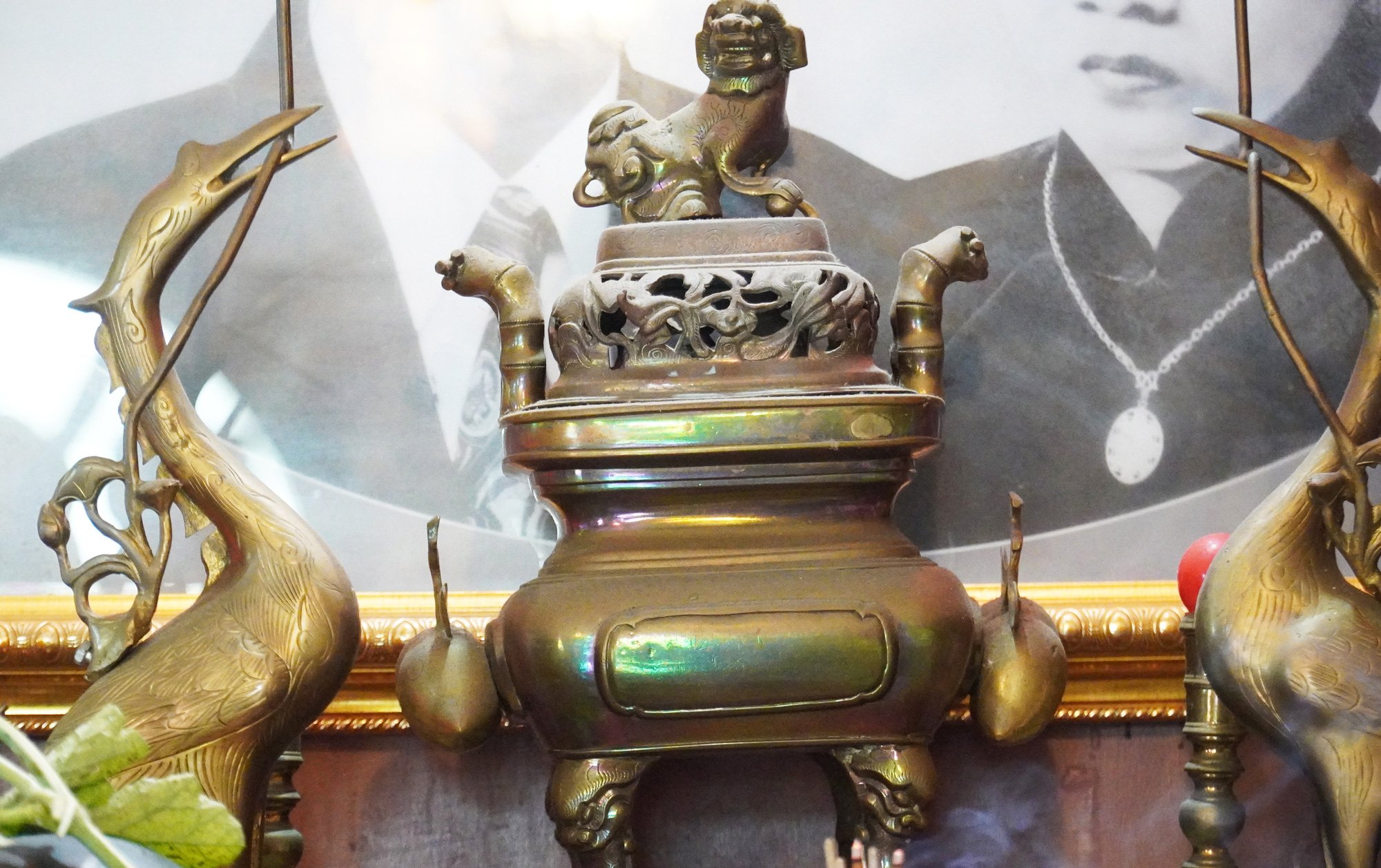
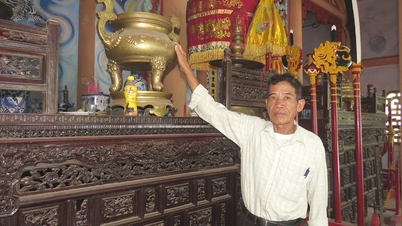
There are some bronze incense burners that have been passed down through generations and are considered "treasures" by their owners.
Mr. Do Van Nghiep, from Ly Van Lam commune, Ca Mau city, said that in the last days of the year, family members often take down the incense burners to clean them, usually with rice husks and soap. Some people soak the incense burners in rice wine lees to make them shiny.
According to folk beliefs, the shine of the bronze incense burner not only reflects the filial piety of descendants towards their ancestors but also holds great significance during the New Year.
Mr. Nguyen Thai Thuan, from Ly Van Lam commune, believes that cleaning bronze incense burners may seem simple, but it is no less important and cannot be done carelessly; it must be done with reverence and respect.
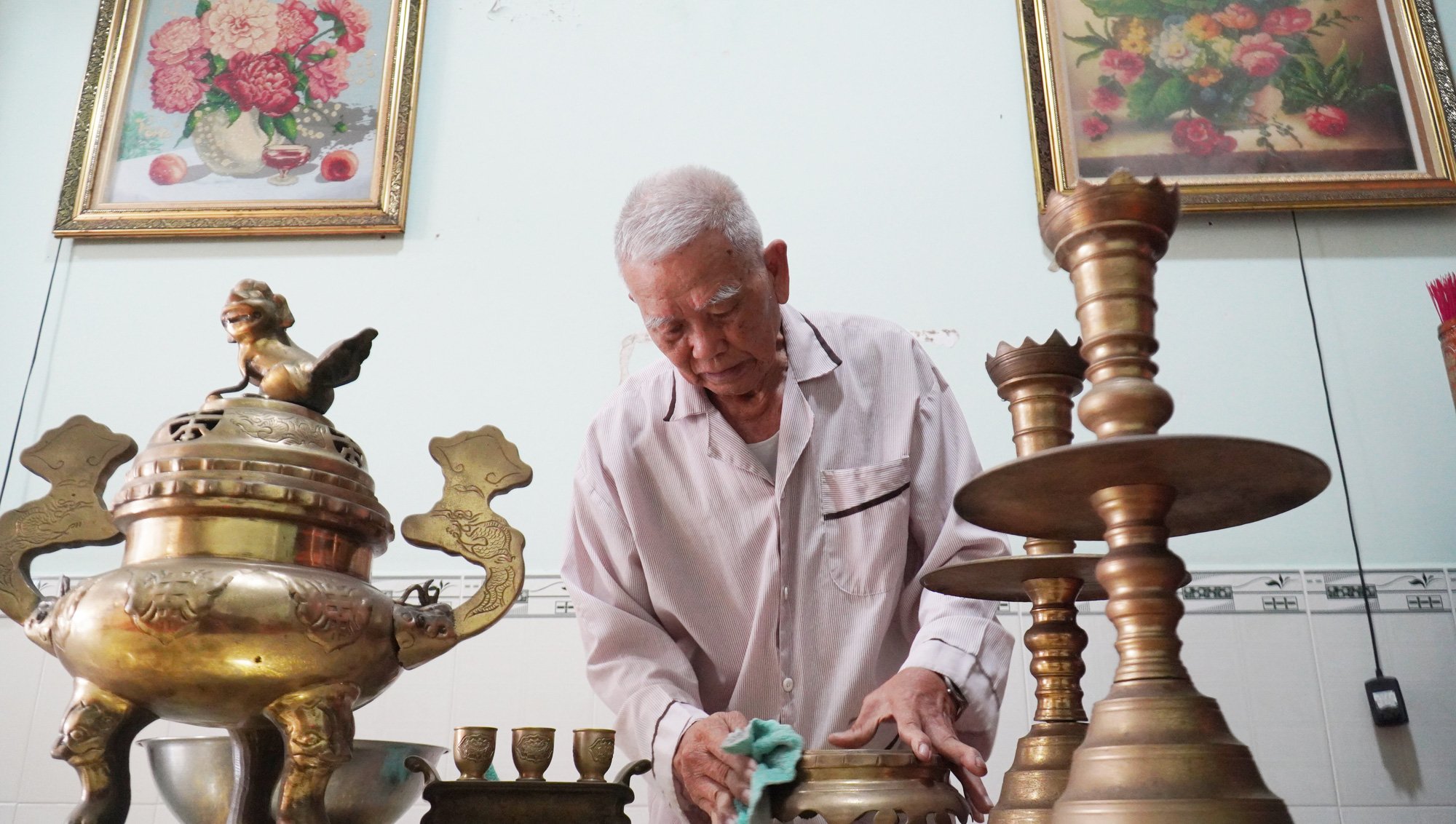
Because he didn't want the incense burners to corrode, Mr. Nguyen Thai Thuan chose to clean them at home.
Regardless of the method, cleaning the incense burner for Tet (Lunar New Year) always carries a sacred meaning each spring. It's not only about making the house look neater, but also about preserving a long-standing tradition in the South.
According to Mr. Ta Hoang Nguyen from Ca Mau City, cleaning the bronze incense burner for Tet (Lunar New Year) is an indispensable task in the last days of the year. Mr. Nguyen believes that the incense burner should only be cleaned once a year because he has already taken his ancestors to their graves on the 25th, at which point the altar will no longer contain the spirits of his ancestors, allowing him to clean it freely.
Cleaning the incense burner cannot be rushed; it must be done slowly and meticulously to recall memories with grandparents and also as an opportunity to guide the children and grandchildren to live with a sense of roots and filial piety.
Although many places now have electric incense burner cleaning machines, many people still prefer to clean them themselves at home. It's not necessarily to save money, but rather to minimize wear and tear on the incense burners, keep them shiny for longer, and show respect for their ancestors.
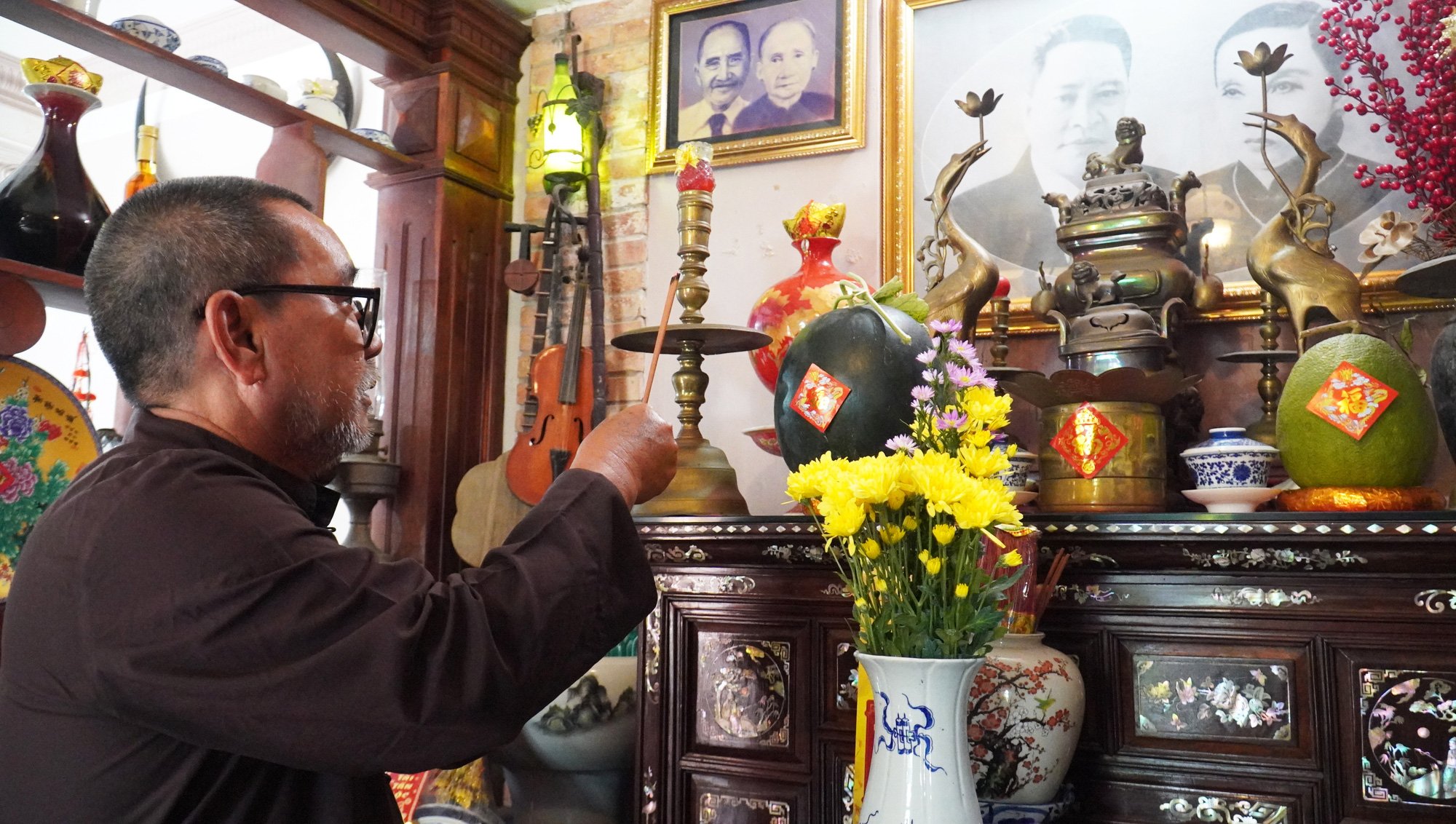
Before taking the bronze incense burner down to clean it, one must offer food to the ancestors.
For those who are busy or inexperienced, they can take their bronze incense burners to the market and hire a professional to clean and polish them. Each incense burner and candlestick, depending on its size and the complexity of the details, takes one to two hours to polish, and the price ranges from tens to hundreds of thousands of dong.
According to the craftsmen who polish bronze incense burners, polishing a set of incense burners involves many steps, with the polishing being the most difficult, as even a slight mistake can ruin the entire set. For large, intricately carved sets, which the owners consider family heirlooms, the craftsmen must be even more careful; if an accident occurs, even money cannot compensate for the damage.
Mr. Ngo Chi Tam, from Ward 2, Ca Mau City, said that cleaning incense burners with a machine is much less labor-intensive than doing it manually by hand. However, cleaning with a machine still requires caution because even a small mistake can scratch the burners.
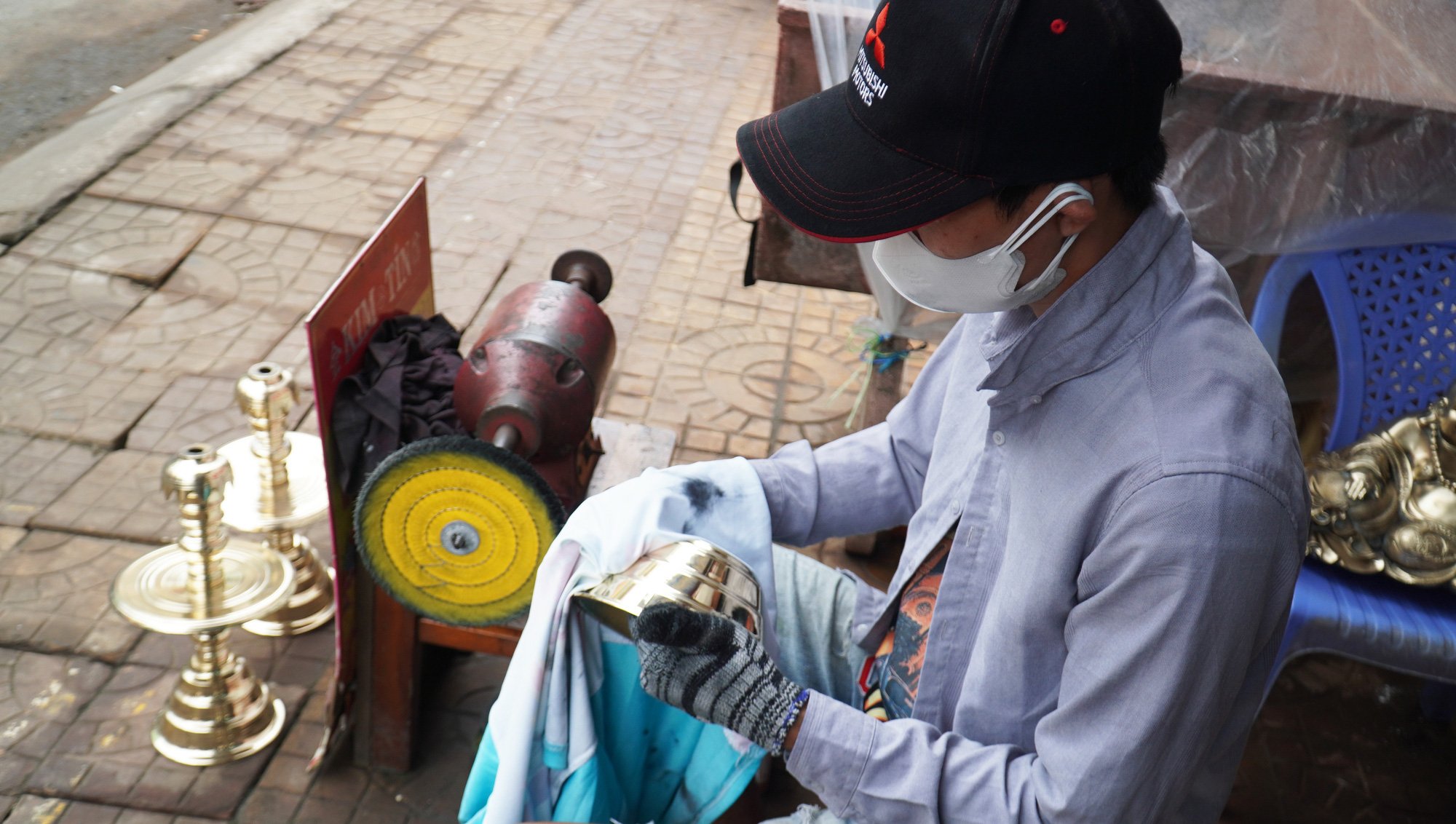
Cleaning incense burners is hard work and requires concentration and carefulness; Chí Tâm earns about 2 million VND per day from it.
Whether you hire someone or do it yourself, cleaning the incense burner for Tet (Lunar New Year) remains a beautiful tradition that reflects filial piety towards deceased ancestors.
Source: https://tuoitre.vn/tet-ve-danh-bong-lu-dong-nho-thuong-nguon-coi-20250125095631199.htm

![[Photo] Delegation attending the 14th Congress of the Vietnam Trade Union visits the Mausoleum of President Ho Chi Minh.](https://vphoto.vietnam.vn/thumb/1200x675/vietnam/resource/IMAGE/2026/06/03/1780451842301_ndo_br_img-3824-jpg.webp)

















































































Comment (0)