

This strategy is integrated into the Science and Technology Development Plan (S&T) to 2030, towards modern, safe and sustainable agriculture .
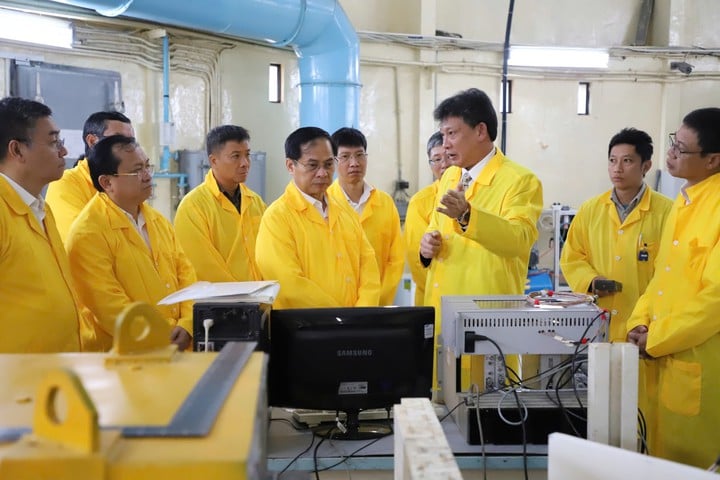
Deputy Prime Minister Bui Thanh Son visits the Nuclear Research Institute, Vietnam Atomic Energy Institute
Nuclear technology opens up new opportunities for agriculture
According to data from the Institute of Nuclear Research, Vietnam currently ranks 8th in the world in the number of published mutant plant varieties, with 80 varieties put into production, including: 55 rice varieties, 15 soybean varieties, 3 flower varieties, 2 corn varieties and a number of fruit tree varieties and other crops.
Many of these varieties originated from irradiation experiments carried out at the Co-60 irradiation sources of the Dalat Nuclear Research Institute - one of the oldest nuclear research centers in the country.
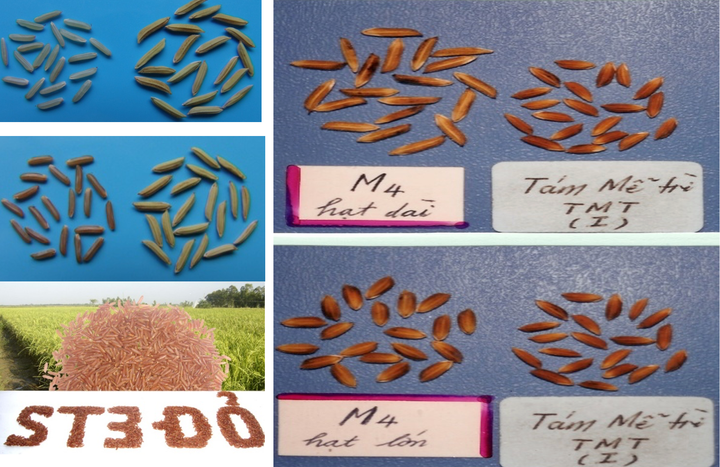
The long grain and round aromatic rice varieties were irradiated at the Nuclear Research Institute (1999), selected to M4-M6 in Soc Trang (2000 - 2002) as raw materials for the hybridization of iron-rich red aromatic rice (ST3 red) and specialty aromatic lines.
In Lam Dong province, there are currently 675 human resources working in the field of atomic energy and radiation safety, including: 2 Associate Professors, 15 PhDs, 79 Masters and nearly 600 engineers and bachelors, capable of receiving and mastering advanced technology in the field of research and application of nuclear science and technology.
In Lam Dong alone, radiation technology has contributed to the creation of many plant varieties with high economic value. Notable are the group of yellow Tiger, Viking, Kim Vang, and Pink Button chrysanthemums... treated with gamma rays and neutrons (gamma rays with a dose of 10-15 Gy or fast neutrons with a dose of 10 Gy). These plant varieties are currently grown stably by farmers in Da Lat and have become the main products of the local flower industry.
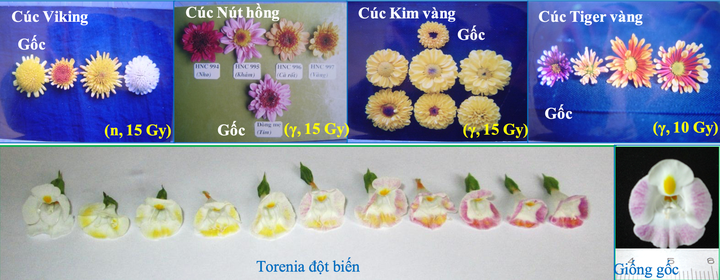
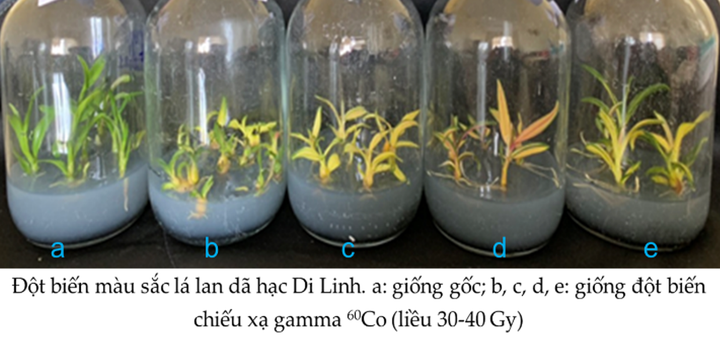
Selecting and creating mutant flower varieties
Another achievement is the seedless pomelo variety LD4, irradiated and selected in Da Lat, which has been officially recognized by the Department of Crop Production and put into seed production.
Other varieties such as Cayenne LD2 pineapple; Nam Roi grapefruit with few seeds and seedless; dragon fruit, honey orange, seedless orange are also being widely used, not only in Lam Dong but also spreading to the southern provinces.
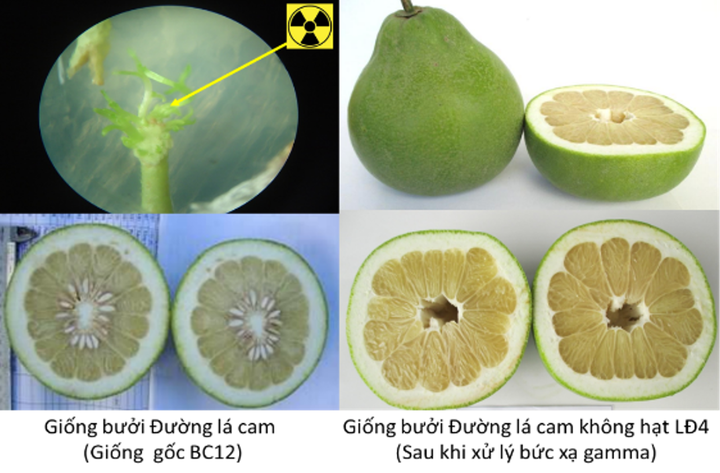
The seedless LD4 orange-leaf pomelo variety was created by gamma irradiation and is recognized by the Department of Crop Production (according to Decision No. 242/QD/TT-CCN dated May 19, 2011).
In addition to breeding, nuclear technology also brings practical benefits in preservation and cultivation. Irradiation sterilization technique helps prolong the preservation time of agricultural products, reduce post-harvest losses by up to 20-40%, meeting the strict standards of the US, EU and Japanese markets.
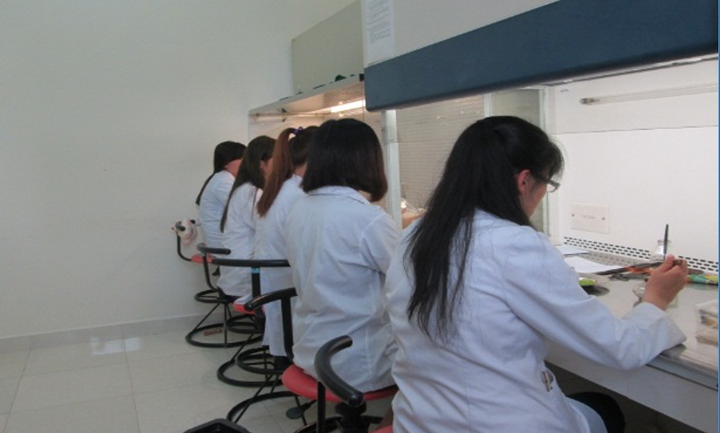
Research work of engineers at Dalat Nuclear Research Institute
Radiation technology also helps the Institute develop many agricultural products with high application value such as T&D (plant growth stimulant, registered number 189/06 RR in 2006), Olicide (fungal treatment, registered number 68/05 ECR in 2005 and 2617/CNĐKT-BVTV in 2015), nano chitosan, nano selenium.
These products have won the Vietnam Golden Rice Award, helping to reduce the use of chemicals in production, contributing to improving productivity and environmental safety.
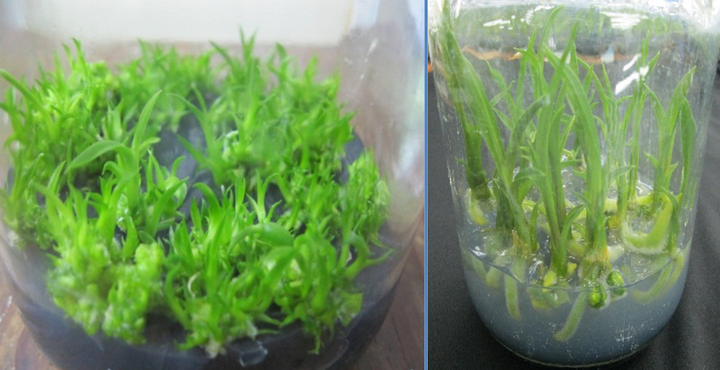
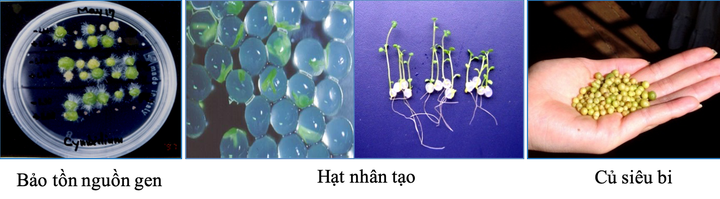
In vitro propagation
At the same time, the province is also promoting the application of stable isotope technology in nutrition research and farming processes. Field assessments show that this technology helps reduce 20-40% of fertilizer use, optimize water use and support increased crop yields - an important foundation for sustainable agricultural production.
Vietnam's leading nuclear engineering center
In that flow of innovation, Dalat Nuclear Research Institute plays a central role, not only in research but also in training human resources.
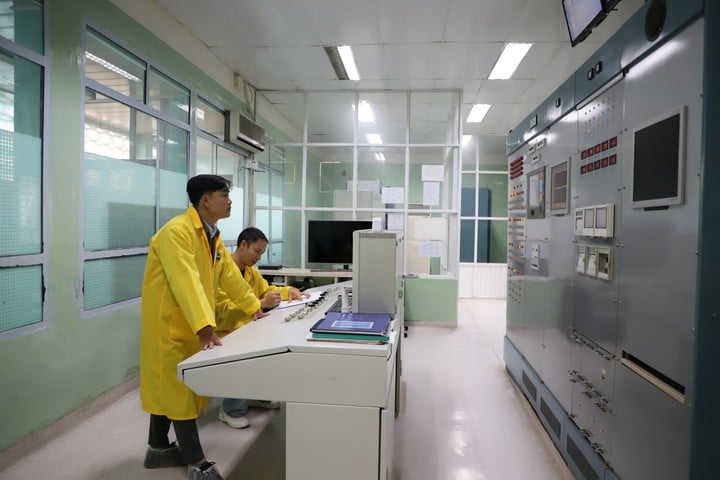
Dalat Nuclear Research Institute, Vietnam Atomic Energy Institute
With the 2026 - 2030 plan, the Institute aims to create at least 1-2 new varieties each year for mass production. In particular, focusing on food crops, industrial crops, fruit crops, medicinal plants and cut flowers, with special priority given to varieties that adapt to climate change, are seedless and have high biological activity.
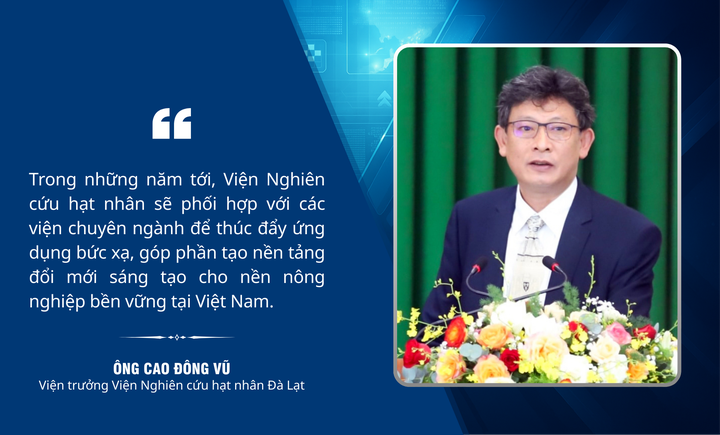
Mr. Cao Dong Vu, Director of the Dalat Nuclear Research Institute, affirmed: This determination is not only a commitment but also a strategic vision, emphasizing the combination of nuclear technology and modern biotechnology such as gene editing and gene marking to speed up the breeding process.
At the same time, state management plays a key role in ensuring safe and effective application.
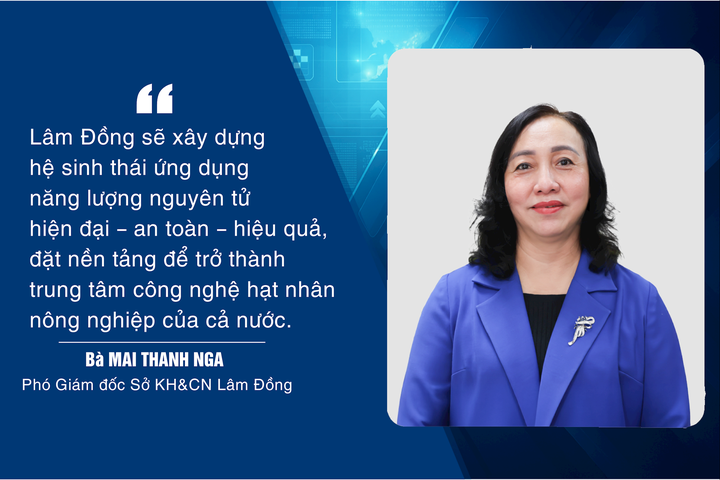
Ms. Mai Thanh Nga, Deputy Director of Lam Dong Department of Science and Technology, emphasized: "The Department will focus on perfecting state management of atomic energy applications according to the decentralization of the Ministry of Science and Technology, including: Licensing, monitoring and inspection of activities using irradiation equipment and radioactive sources. We promote digital transformation to monitor in a centralized, transparent and timely manner, meeting the IAEA's radiation safety requirements, ensuring absolute safety for humans and the environment."
The Department of Science and Technology also gave specific directions with three major strategic groups until 2030: Perfecting radiation safety management; investing in laboratory infrastructure and on-site irradiation equipment; promoting applications in breeding, preserving agricultural products and researching stable isotopes.
The application of nuclear energy in agriculture in Lam Dong is not only a story of technology, but also a symbol of the desire for innovation, of the effort to restructure Vietnamese agriculture in a modern and sustainable direction.
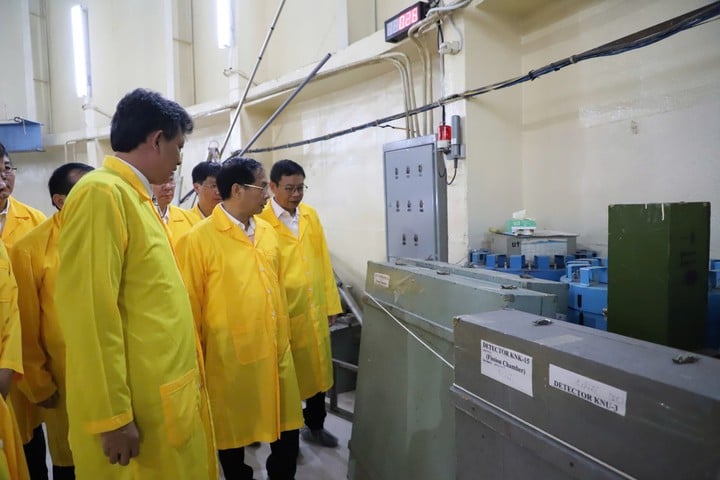
Dalat Nuclear Research Institute, Vietnam Atomic Energy Institute
With consensus from the central to local levels, and the strong participation of managers, scientists and businesses, Lam Dong is gradually shaping the future of Vietnamese agriculture, where technology for peace becomes the pillar of green, efficient and sustainable development.
Source: https://mst.gov.vn/ung-dung-nang-luong-nguyen-tu-trong-san-xuat-nong-nghiep-tai-lam-dong-197251201220336044.htm
![[Photo] Parade to celebrate the 50th anniversary of Laos' National Day](/_next/image?url=https%3A%2F%2Fvphoto.vietnam.vn%2Fthumb%2F1200x675%2Fvietnam%2Fresource%2FIMAGE%2F2025%2F12%2F02%2F1764691918289_ndo_br_0-jpg.webp&w=3840&q=75)



![[Photo] Worshiping the Tuyet Son statue - a nearly 400-year-old treasure at Keo Pagoda](/_next/image?url=https%3A%2F%2Fvphoto.vietnam.vn%2Fthumb%2F1200x675%2Fvietnam%2Fresource%2FIMAGE%2F2025%2F12%2F02%2F1764679323086_ndo_br_tempimageomw0hi-4884-jpg.webp&w=3840&q=75)
















![[Video] Protecting World Heritage from Extreme Climate Change](https://vphoto.vietnam.vn/thumb/402x226/vietnam/resource/IMAGE/2025/12/03/1764721929017_dung00-57-35-42982still012-jpg.webp)






































Comment (0)