

Chest pain is not usually a common sign of breast cancer; if it does occur, it is usually in one breast or in a few locations as the cancer metastasizes.
Chest pain can be caused by many factors, such as hormonal fluctuations during puberty, menstruation, pregnancy, menopause, fibroids, or side effects of medication. However, breast cancer usually does not cause pain.
According to a 2017 study by the University of Exeter, UK, and several other institutions, on over 2,300 breast cancer patients, only 6% experienced breast pain. The most common symptom was a breast lump (83%), followed by nipple abnormalities (7%), and non-breast-related symptoms such as back pain (1%), weight loss (0.3%), with other signs making up the remainder.
Researchers suggest that chest pain is not a common symptom of breast cancer. Breast lumps are hard masses that only cause pain if they are larger than 2 cm in diameter. In many cases, lumps larger than 2 cm do not cause pain.

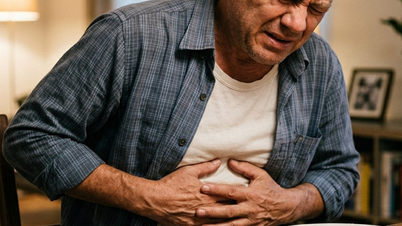
Most cases of chest pain are related to menstruation or benign conditions. (Image: Freepik)
Most breast pain occurs during the menstrual cycle. It is also associated with benign, non-hormonal causes such as blocked milk ducts, cysts, and fibroids. Some conditions that cause breast pain, such as complex fibroids, radial scarring, dilated milk ducts, and simple fibroids, increase the risk of developing breast cancer.
A less common type of breast cancer is inflammatory breast cancer, which can cause breast pain. This pain is usually unrelated to the menstrual cycle. Other signs include redness, rash, and intense itching.
Breast cancer can appear long before it causes pain. If pain does occur, it is usually only in one breast or another specific location on the body due to the tumor spreading or metastasizing to other parts of the body.
Back pain accompanied by leg weakness or bone pain may be due to a malignant breast tumor metastasizing to the bones. Dull back pain is a sign that breast cancer has spread to the adrenal glands. Headaches may indicate that a tumor has spread to the brain. Upper right abdominal pain is sometimes a sign that cancer has metastasized to the liver. This condition is often accompanied by jaundice (yellowing of the skin and eyes).
Breast cancer in men is also often painless. Hormonal-related chest pain is less common in men.
Warning signs of this type of cancer include dimples on the breast skin, retracted nipples, non-milky discharge including blood, swelling of part of the breast, a lump in the armpit, etc. Women should see a doctor if they experience breast pain or any unusual symptoms in their breasts.
Mai Cat (According to Very Well Health )
| Readers can ask questions about cancer here for doctors to answer. |
Source link




![[Photo] Prime Minister Pham Minh Chinh receives the Chinese Ambassador to Vietnam](https://vphoto.vietnam.vn/thumb/1200x675/vietnam/resource/IMAGE/2026/04/05/1775397481797_ndo_br_dsc-5512-jpg.webp)




































































































Comment (0)