 |
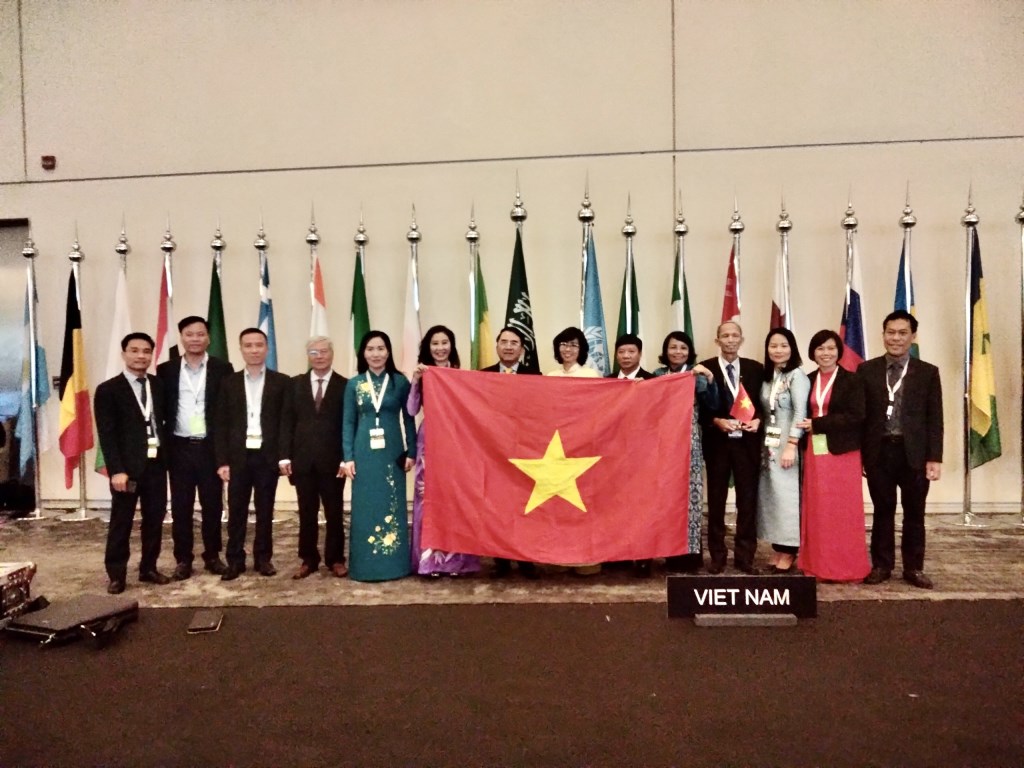
| The Vietnamese delegation participated in the 45th session of the World Heritage Committee held in Riyadh, Saudi Arabia. |
Ha Long Bay was recognized twice by UNESCO as a World Natural Heritage Site in 1994 and 2000 under criteria (vii) and (viii). In 2013, the nomination dossier for Cat Ba Archipelago as a World Natural Heritage Site under the biodiversity and ecosystem criteria (criteria ix and x) was submitted to the World Heritage Centre. Following the assessment process, the International Union for Conservation of Nature (IUCN) drafted Decision No. WHC-14/38.COM/INF.8B for adoption by the World Heritage Committee at its 38th Session in Qatar in 2014, which recommended: “The Member State should consider the possibility of proposing an extension with Ha Long Bay, under criteria (vii) and (viii) and possibly criterion (x), to include Cat Ba Archipelago.” Since then, the implementation of conservation activities and research to develop a dossier for nomination of Ha Long Bay - Cat Ba Archipelago as a World Heritage Site has continued to be promoted. In September 2016, based on proposals from localities and advice from the Ministry of Culture, Sports and Tourism, the Prime Minister agreed to allow Hai Phong City to preside over and coordinate with Quang Ninh Province to develop a dossier to expand Ha Long Bay to Cat Ba Archipelago to submit to the Prime Minister for consideration and approval to UNESCO; at the same time, the Ministry of Culture, Sports and Tourism was assigned to guide Hai Phong City in developing a dossier for the World Natural Heritage of Ha Long Bay - Cat Ba Archipelago in accordance with the provisions of the law on cultural heritage and related regulations. The process of developing the dossier also encountered many difficulties, with recommendations and comments from UNESCO and IUCN. However, with the dedication and responsibility of the specialized agencies of the Ministry of Culture, Sports and Tourism, the determination of Hai Phong city, Quang Ninh province, and the Vietnam National UNESCO Committee, in early 2021, the dossier for Ha Long Bay - Cat Ba Archipelago was revised and completed according to the recommendations. Accordingly, the People's Committee of Hai Phong city and the People's Committee of Quang Ninh province agreed to submit a document requesting the Ministry of Culture, Sports and Tourism and the National Council for Cultural Heritage to appraise and submit it to the Prime Minister for approval to send it to UNESCO for inclusion in the World Heritage List. After the appraisal process, in January 2021, the Ministry of Culture, Sports and Tourism reported and received the Prime Minister's approval for the Minister of Culture, Sports and Tourism to sign the nomination dossier for Ha Long Bay - Cat Ba Archipelago and assign the Vietnam National UNESCO Committee to preside over and submit the dossier to UNESCO within the stipulated timeframe. Participating in the 45th Session of the World Heritage Committee, held in Riyadh, Saudi Arabia from September 10, 2023, the Vietnamese delegation was led by Assoc. Prof. Dr. Le Thi Thu Hien - Director of the Department of Cultural Heritage (Ministry of Culture, Sports and Tourism), Permanent Member of the National Council for Cultural Heritage, and included Ambassador Le Thi Hong Van - Head of the Permanent Mission of Vietnam to UNESCO in France, and representatives from the Secretariat of the Vietnam National UNESCO Committee/Ministry
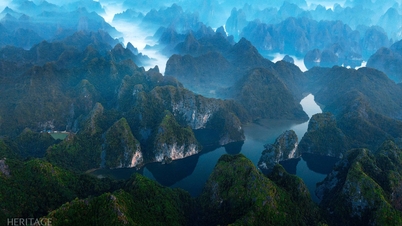
of Foreign Affairs . Representing the localities were Mr. Le Khac Nam, Vice Chairman of the People's Committee of Hai Phong City, Ms. Nguyen Thi Hanh, Vice Chairman of the People's Committee of Quang Ninh Province, and representatives from several Departments of Culture, Departments of Foreign Affairs, World Heritage Management Boards/Centers in Vietnam, and Cat Hai District. During the working session of the 45th Session of the World Heritage Committee, the delegation from the Ministry of Culture, Sports and Tourism, together with the Ambassador, Head of the Permanent Mission of Vietnam to UNESCO in France, and representatives from Hai Phong city and Quang Ninh province, worked with UNESCO's specialized agencies, the Director of the World Heritage Centre, the Director-General of ICOMOS, the Director of the IUCN World Heritage Programme, the Head of the Nomination Dossier of the World Heritage Centre, and 21 member states of the World Heritage Committee to provide information, explanations, clarifications, and express Vietnam's views and commitments in managing, protecting, and promoting the value of the heritage after its inscription on the World Heritage List. Through this, international experts, scientists, and member states of the World Heritage Committee highly appreciated the heritage's value, thereby supporting Ha Long Bay - Cat Ba Archipelago becoming a World Natural Heritage site and expressing their desire to visit the site in the near future. Ha Long Bay and Cat Ba Archipelago are recognized as a UNESCO World Heritage Site, encompassing areas of natural beauty including vegetation-covered limestone islands and jagged limestone peaks rising from the sea, along with associated karst features such as domes and caves. The spectacular scenery is unspoiled, featuring vegetation-covered islands, saltwater lagoons, and jagged limestone peaks with sheer cliffs rising from the sea. With 1,133 diverse limestone islands (775 in Ha Long Bay and 358 in Cat Ba Archipelago) covered in rich vegetation on the shimmering turquoise waters, Ha Long Bay and Cat Ba Archipelago appear like a chessboard of precious stones; a serene landscape of rolling hills and pristine white sand beaches.
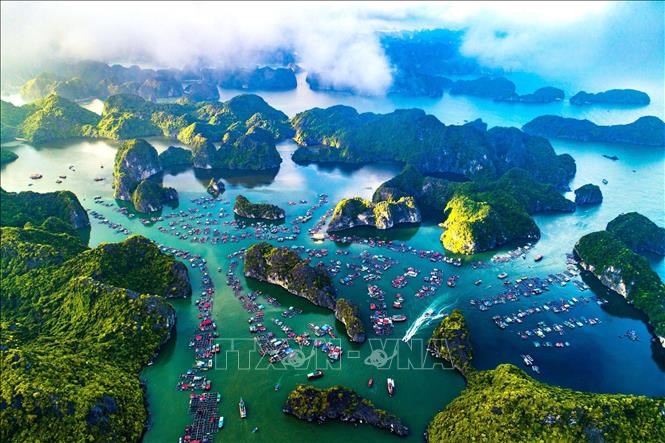 |
| Cat Ba Archipelago viewed from above. Photo courtesy of VNA (Vietnam News Agency). |
Ha Long Bay and Cat Ba Archipelago are considered a geological museum, containing heritage of outstanding global value, witnessing characteristic changes in the Earth's history. The Ha Long Bay - Cat Ba sea area comprises numerous clastic and carbonate sedimentary formations, dating from the Paleozoic to the Cenozoic eras. Many sedimentary formations in this area contain traces of paleontology in various fossil forms, including groups of plants and animals that are extinct or nearly extinct on Earth. The presence of primeval forests, bays, and islands within the bay are unique evidence of the continuous movement and development of karst landforms, fengcong (clusters of conical peaks), and fenglin (isolated tower features) formed over millions of years in tropical, humid conditions, progressing significantly from high mountain ranges down to the sea, where the karst landforms finally reach the basic erosion level. With its intermingling of mountains, forests, and islands, Ha Long Bay - Cat Ba Archipelago is a typical area with a high level of biodiversity in Asia, possessing seven interconnected tropical and subtropical marine and island ecosystems: primary tropical rainforest ecosystem; cave ecosystem; mangrove forest ecosystem; tidal flat ecosystem; coral reef ecosystem; soft bottom ecosystem; and saltwater lake ecosystem. These ecosystems represent ecological and biological processes that are still evolving and developing, as evidenced by the diversity of plant and animal communities. Ha Long Bay - Cat Ba Archipelago is also home to many rare and endangered plant and animal species. Possessing the largest marine forest in Vietnam, covering over 17,000 hectares, along with diverse ecosystems, Ha Long Bay - Cat Ba Archipelago is home to 4,910 species of terrestrial and marine flora and fauna, including 198 species on the IUCN Red List and 51 endemic species. The approximately 1,045.2 hectares of primary forest on Cat Ba Island is a crucial factor contributing to the ecological value and biodiversity of the heritage site. In particular, the Cat Ba langur (Trachypithecus poliocephalus) is a rare species, listed among the most endangered animals and included in the World Red List. To date, only about 60-70 individuals remain, distributed exclusively in Cat Ba; this species is found nowhere else in the world. Here you'll find many endemic plant species, adapted only to limestone islands, found nowhere else in the world, such as: Ha Long Cycas tropophylla, Chirita drakei, Ha Long palm (Livistona halongensis), Ha Long ear-shaped nail (Impatiens verrucifera), Ha Long Schefflera alongensis, and Paphiopedilum concolor... Succulent or rough-looking plants like Euphorbia antiquorum (Euphorb.), Dracaena cambodiana (Liliac.), Cycas sp. (Cycad.), and the leafless, root-rooted vine Sarcostemma acidum (Apocyn.) give the vegetation here a drought-resistant desert appearance. Ha Long Bay and Cat Ba Archipelago were recognized by UNESCO at the 45th session of the World Heritage Committee (September 2023), becoming the first inter-provincial/city World Heritage site in Vietnam. This serves as a valuable lesson in combining the management, protection, and promotion of World Heritage sites in particular, and historical and cultural relics and scenic landscapes in general in Vietnam in the coming years.
Source: https://dangcongsan.vn/tu-tuong-van-hoa/vinh-ha-long-quan-dao-cat-ba-duoc-cong-nhan-la-di-san-thien-nhien-the-gioi-646985.html











![[Video] The craft of making Dong Ho folk paintings has been inscribed by UNESCO on the List of Crafts in Need of Urgent Safeguarding.](https://vphoto.vietnam.vn/thumb/402x226/vietnam/resource/IMAGE/2025/12/10/1765350246533_tranh-dong-ho-734-jpg.webp)




































































Comment (0)