

A single person's applause is quite different from the applause of an entire auditorium, concert hall, or stadium joining in. And the way an audience applauds—whether voluntarily or simply "asking for a round of applause"—speaks volumes.
1.
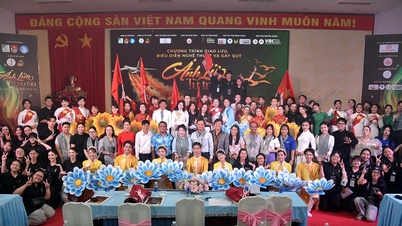
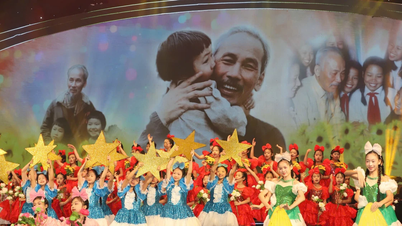
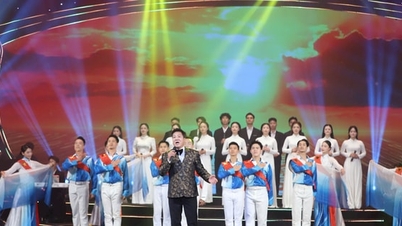
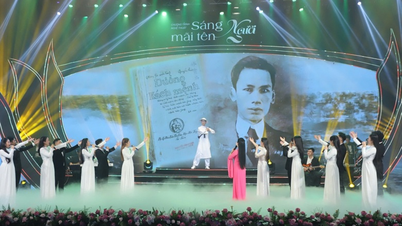
During the Phan Huynh Dieu - Love Remains art program recently held at the City Theater, every time the artists sang, the entire auditorium erupted in applause. In particular, when artist Thuc An and the other singers spontaneously sang the song "Life Is Still Beautiful ," the audience's applause became a wonderful musical accompaniment throughout the performance, overpowering even the background music.
The applause continued uninterrupted as the final lines of the song "The Night Stars" concluded the program. Not only the artists performing on stage and the family of composer Phan Huynh Dieu, but every audience member felt more excited by the applause. This was the necessary synergy to create the success of the concert in particular and cultural and artistic events in general.
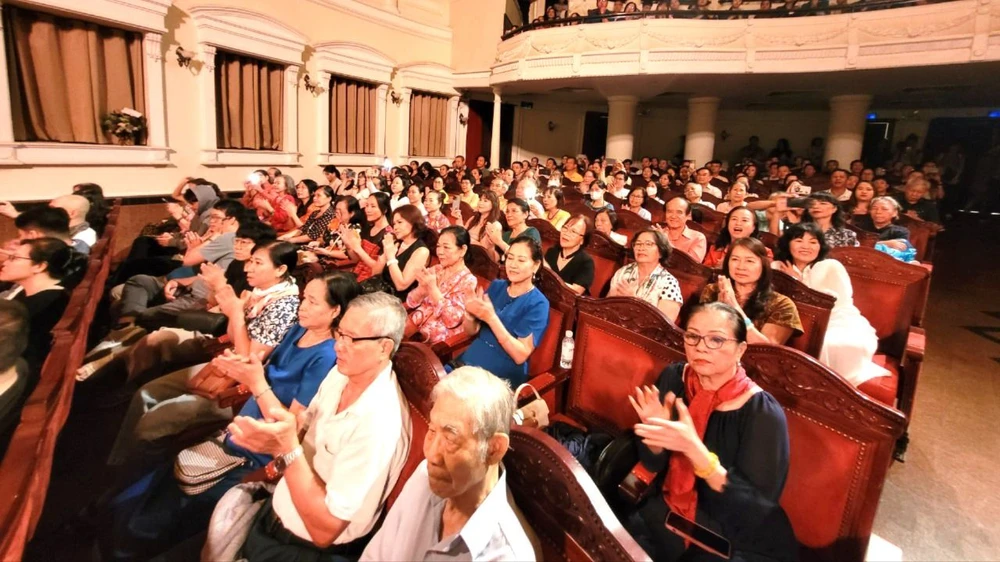
Previously, at the Ho Chi Minh City International Film Festival (HIFF 2024), during events such as the exchange with renowned Japanese director Kore-eda Hirokazu, or the global premiere of the documentary film Dearest Viet , attendees also experienced a wonderful atmosphere with enthusiastic applause.
Interestingly, at major international film festivals, there's a standing ovation for films after each screening. At Cannes, the record for the longest standing ovation belongs to the film Pan's Labyrinth ( directed by Guillermo Del Toro) at Cannes 2006, lasting 22 minutes. At Cannes 2023, the Vietnamese film Inside the Golden Cocoon also received a five-minute standing ovation.
While it's impossible to accurately assess whether applause is a measure of a film's quality or simply a matter of cultural etiquette, it's still a very beautiful gesture.
Imagine this: the names of the film crew members scroll across the screen, the lights in the screening room slowly come on, and the entire audience stands up and applauds – what greater happiness could there be! It's truly a mesmerizing and addictive moment for those in the arts.
2.
Applause is a cultural expression of etiquette. Although a simple act, applause carries many profound and diverse meanings, depending on the context and culture. It can be a sign of appreciation or praise, agreement or support, welcome, emotional release, encouragement, recognition of effort, and more.
Many people even consider clapping to be a form of nonverbal communication, helping to convey information and emotions quickly and effectively.
For cultural and artistic events such as music nights, concerts, film screenings, and sporting competitions, applause is indispensable. In Vietnamese culture, audiences still seem somewhat hesitant to stand up and join in the cheering and applause. However, this is less concerning than the lack of applause, or applause that is inappropriate, insincere, and disrespectful.
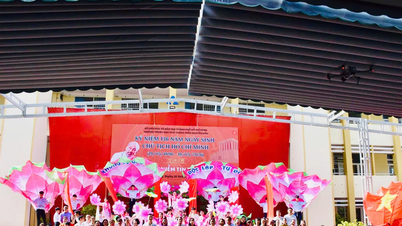
In life, there are many activities where applause can be a request or a command. This can be seen in school events, where students are sometimes trained to clap beforehand. Or at many events, even formal ones, the common phrase of the host is always, "Please give a round of applause," or "Please give a round of applause." And because it's a request, the audience may or may not give it, sometimes even just clapping out of obligation. Why does this request-and-granting continue as an unchangeable habit?
Clapping, like other forms of communication such as saying sorry or thank you, should become a voluntary habit over time. It's similar to when you enjoy an art or sporting event; the act of clapping spontaneously and naturally evokes emotion. In this case, if you're the only one not clapping, you feel out of place in the crowd. So, why should you refrain from clapping?
Conversely, imagine yourself standing in front of a crowd and hearing absolutely no applause, or only sparse applause; then you will truly understand the meaning of giving and receiving.
VAN TUAN
Source: https://www.sggp.org.vn/vo-tay-la-van-hoa-ung-xu-post755693.html

















































Comment (0)