

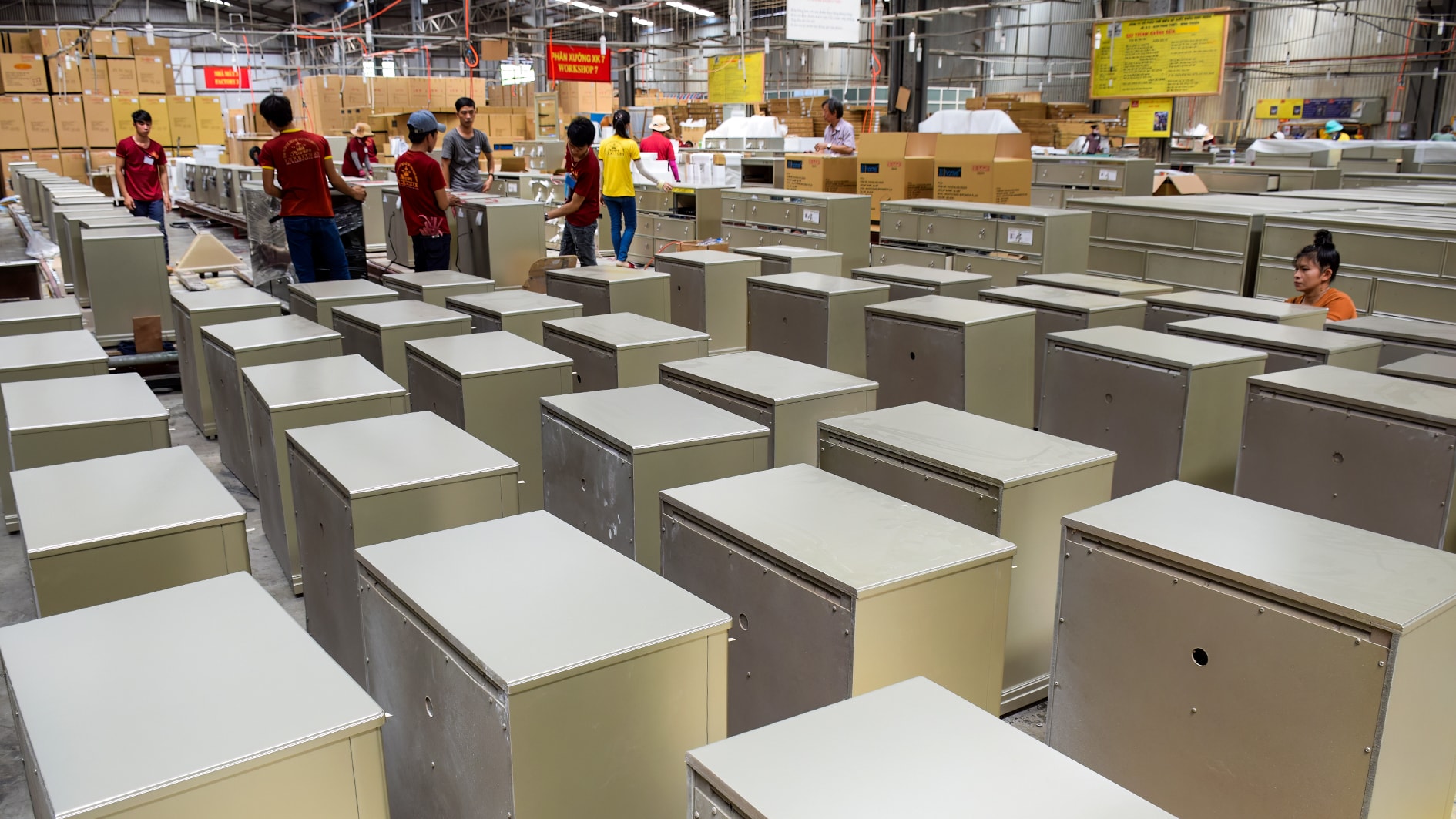
1. At this time of year, export-oriented industries in the province are usually preparing for the peak season. However, this year, the market has slowed down, not stockpiling as usual, but instead following the prominent export trend from the beginning of the year – "rushing ahead." This stems from the psychology of companies and corporations wanting to avoid the new US tariffs. Worryingly, this is not only affecting the US market but also causing a chain reaction in other markets.
That's why, at this point, export companies and corporations are in a state of fulfilling orders when they have them, and stopping when they don't, rather than focusing on stockpiling raw materials and goods as before. This approach to ensuring safety in production and business is in line with the companies' plans, but on the other hand, it also creates widespread disruption to related activities, even the supply of food.
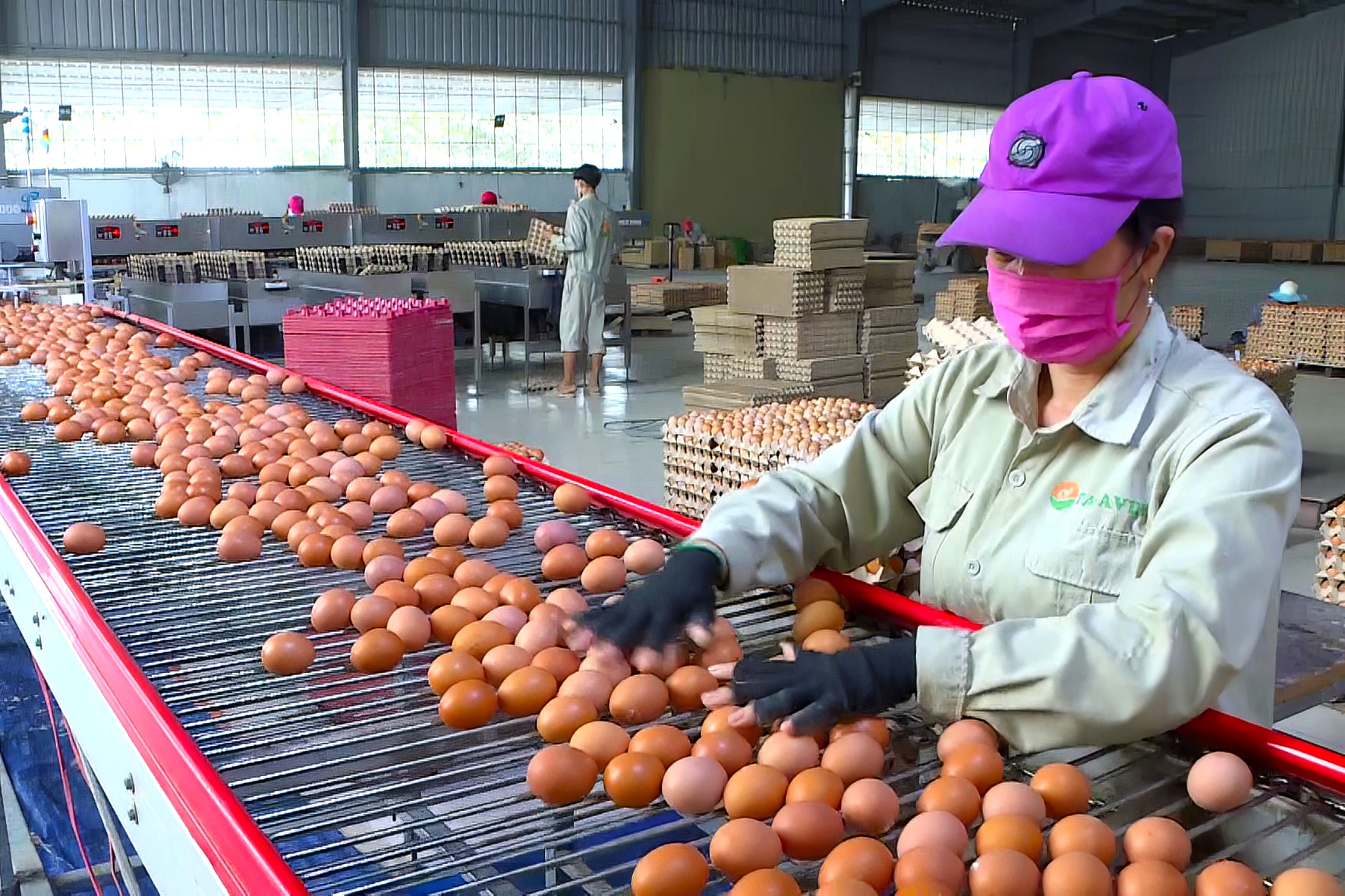
The leader of an egg production company in Tra Tan commune (Lam Dong province) said that for a long time, at this time of year, factories in industrial zones in Ho Chi Minh City, Dong Nai, Binh Duong, etc., have been buying a lot of eggs to provide meals for their workers. This is because workers are working overtime to produce and stockpile goods. However, the company's egg sales have now decreased by 30%. Therefore, the company is focusing on building its brand from farm to table, as well as completing the necessary procedures and conditions to prepare for exporting products to Singapore, Saudi Arabia, and other markets next year.
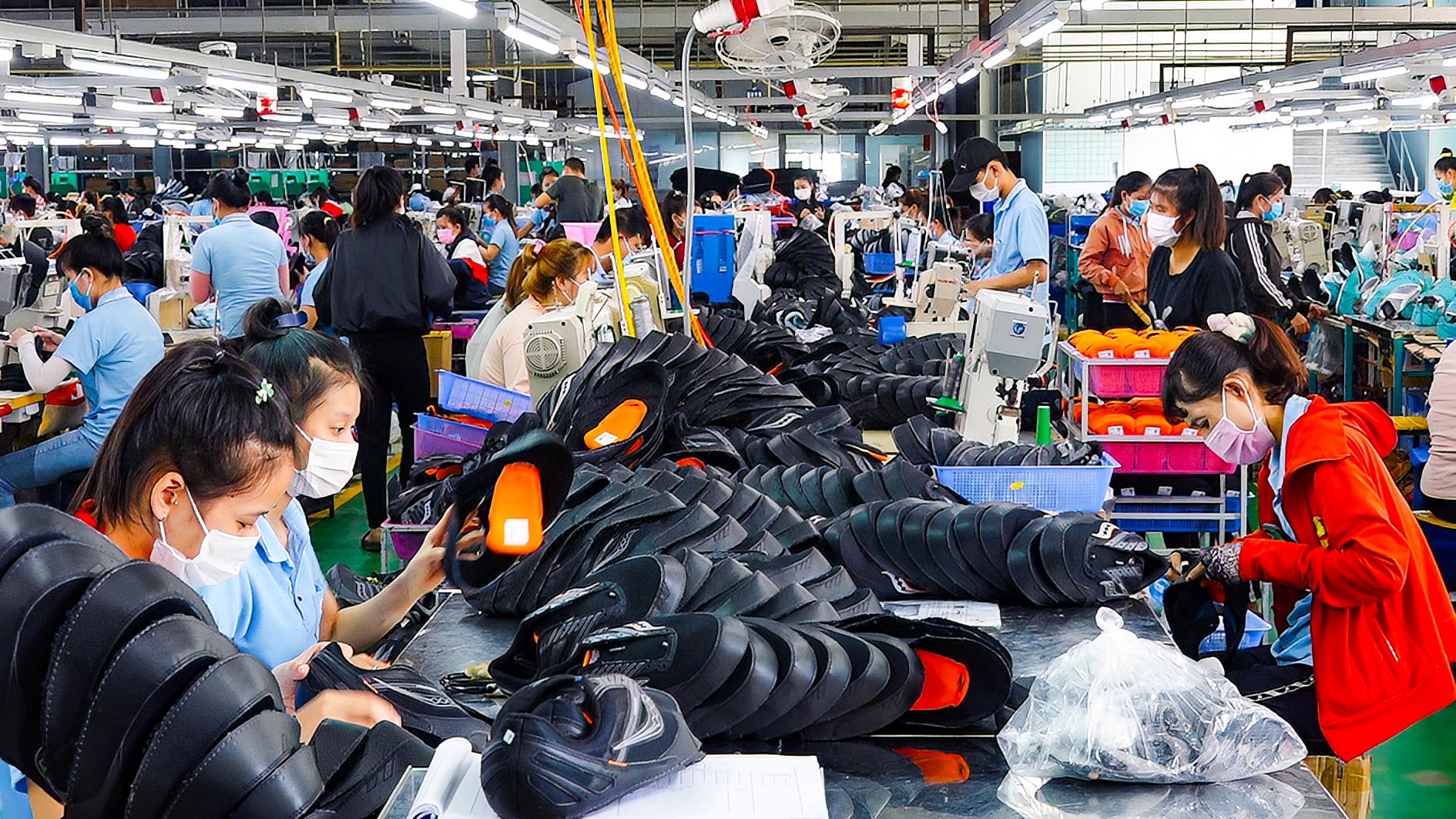
Meanwhile, a company specializing in manufacturing shoes for export to the US and French markets in the Nam Ha Industrial Cluster (Tra Tan commune) is also experiencing a slowdown in orders. During this time, the company is constructing phase 2 of its factory, recruiting and training additional workers, bringing the current workforce to over 4,000. They are preparing for the end of the year or into 2026, when orders are expected to increase significantly.

2. These developments show that those involved are aware of the transformation of the export market. In fact, over the past 10 months, companies and corporations, after rushing to export to avoid US tariffs, have become more cautious in this final phase of the year.
This is the general situation nationwide. In some ways, this proactive approach has contributed to the very positive export growth of the entire country over the past 10 months. Lam Dong province is no exception. Specifically, in the southeastern region of the province, where many industrial parks and clusters with diverse export goods are concentrated, the export value of goods in the first 10 months reached over 668 million USD. This shows that both the state-owned and private sectors have seen increased export value, and especially the foreign-invested sector, which has seen a 152.4% increase in export value compared to the same period last year. Besides some items that saw significant increases in export value, such as rubber (up 624.4% and nearly $29 million), fruits and vegetables (up 175.4% with $16.5 million), and footwear (up 202%, reaching over $98 million)... Meanwhile, major export items maintained stable positions, although not experiencing high growth, such as textiles and garments (up nearly $215 million, 102% compared to the same period) and seafood (up $240 million, 75% compared to the same period)...
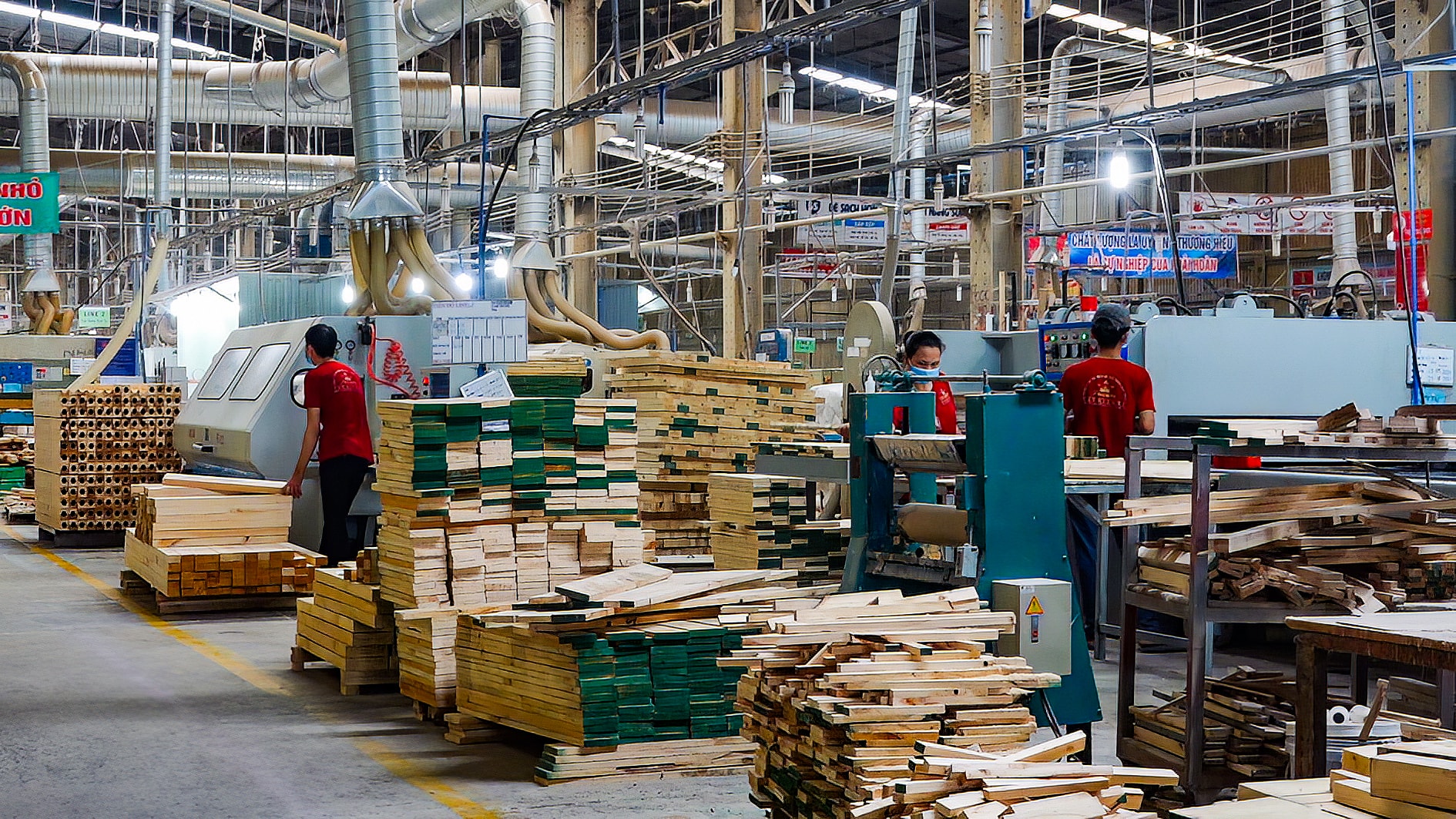
In the final months of the year, market assessments of exports revealed several challenges. Besides the US retaliatory tariffs, some key markets temporarily suspended imports of Vietnamese rice. Most recently, the US issued a new decree on tariffs for imported wood products: From October 14, 2025, imported softwood and sawn timber will be subject to a 10% tariff; kitchen cabinets, bathroom cabinets, and upholstered furniture will be subject to a 25% tariff. Furthermore, from January 1, 2026, the tariff on upholstered furniture will be 30%; and kitchen cabinets and bathroom cabinets will be 50%. This will undoubtedly impact exports of these product groups.
Therefore, the end of this year presents both challenges and opportunities for export turnover. Because the market is as unpredictable as it is every year, the answer will become clear at the end of the year, with some unexpected factors.
According to Lam Dong Statistics, “The global economy in the first nine months of 2025 recorded short-term optimistic signals as international organizations slightly raised their full-year growth forecasts to 2.4% - 3.2%, mainly due to export activities ‘rushing ahead’ to avoid new US tariffs. However, this is only a temporary impetus, and global growth is projected to slow down significantly towards the end of the year, as trade tensions increase and macroeconomic risks become more apparent.”
Source: https://baolamdong.vn/xuat-khau-chay-truoc-397953.html
![[Photo] General Secretary and President To Lam receives Amazon's Senior Vice President David Zapolsky](https://vphoto.vietnam.vn/thumb/1200x675/vietnam/resource/IMAGE/2026/05/22/1779466547770_a1-bnd-3513-6601-jpg.webp)





















































































Comment (0)