

Below are some eating habits that people with high blood pressure should be aware of and avoid, as they can reduce the effectiveness of their medication.
Eating grapefruit while taking medication
Eating grapefruit or drinking grapefruit juice is a healthy habit. However, if a person is taking certain blood pressure medications, it can lead to interactions. According to the U.S. Food and Drug Administration (FDA), grapefruit juice and fresh grapefruit can affect many types of medications, including blood pressure medications.
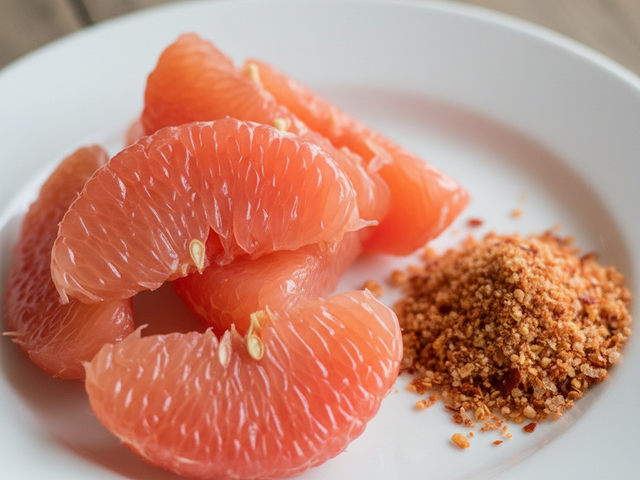
Fresh grapefruit may interfere with blood pressure medication.
Photo: AI
This is because grapefruit contains components that inhibit the CYP3A4 enzyme in the small intestine, and many medications are metabolized by this enzyme. As a result, the medication is not properly broken down in the intestine, causing the amount absorbed into the bloodstream to be 2-3 times higher than normal. This can lead to increased hypotensive effects, resulting in dizziness and fatigue.
If you are taking blood pressure medication, especially calcium channel blockers, consult your doctor or pharmacist to see if it's safe to take grapefruit juice. The best approach is to avoid grapefruit juice or grapefruit while taking medication, or to wait several hours between taking grapefruit and grapefruit.
Salty food
Eating salty foods leads to the body absorbing a high amount of salt. This not only increases blood pressure but also reduces the effectiveness of blood pressure medication. In fact, research evidence shows that a low-sodium, high-potassium diet enhances the blood pressure-lowering effects of RAS inhibitors, according to the health website Healthline (USA).
Sodium is abundant in salt. When you consume too much sodium, your body reacts by retaining more water, increasing blood volume and vascular pressure. This reduces the effectiveness of blood pressure medication.
Experts recommend that people consume only about 5 grams of salt per day. If you want to maintain the flavor of your meals while reducing salt intake, you can switch to using flavorings from herbs or lemon.
Regularly drinking alcohol
Drinking alcohol not only directly affects blood pressure but also reduces the effectiveness of blood pressure medication. These types of drinks dilate blood vessels and increase blood flow temporarily, causing a long-term increase in blood pressure.
When taken with blood pressure medication, alcohol can cause adverse reactions or reduce the effectiveness of the medication. Furthermore, alcoholic beverages affect the liver and kidneys, which are responsible for metabolizing and eliminating the medication. This contributes to changes in medication concentration.
Experts advise that if you are taking medication for high blood pressure, you should avoid or limit alcoholic beverages because they can cause blood pressure fluctuations and drug interactions.
Drinking too much caffeine
Many people are drinking coffee, tea, and caffeinated energy drinks without knowing that they can affect their blood pressure or medications. This is because caffeine increases heart rate and temporarily constricts blood vessels, thereby causing an acute increase in blood pressure.
This situation reduces the intended effect of blood pressure medication or makes the medication less effective. Additionally, some energy drinks containing herbs or other stimulants may interact with medication, according to Healthline .
Source: https://thanhnien.vn/4-thoi-quen-an-uong-anh-huong-den-thuoc-huyet-ap-185251022183052467.htm


![[Photo] Closing Ceremony of the 10th Session of the 15th National Assembly](/_next/image?url=https%3A%2F%2Fvphoto.vietnam.vn%2Fthumb%2F1200x675%2Fvietnam%2Fresource%2FIMAGE%2F2025%2F12%2F11%2F1765448959967_image-1437-jpg.webp&w=3840&q=75)















































![[OFFICIAL] MISA GROUP ANNOUNCES ITS PIONEERING BRAND POSITIONING IN BUILDING AGENTIC AI FOR BUSINESSES, HOUSEHOLDS, AND THE GOVERNMENT](https://vphoto.vietnam.vn/thumb/402x226/vietnam/resource/IMAGE/2025/12/11/1765444754256_agentic-ai_postfb-scaled.png)













































Comment (0)