

A group of nearly 50 economists co-signed a petition to the Supreme Court on October 24th. The petition asserts that trade deficits between the U.S. and other countries are normal and not an unusual or serious threat, as the Trump administration has cited to impose a series of tariffs based on the International Emergency Economic Powers Act (IEEPA) of 1977.
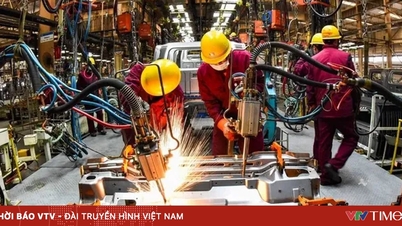
Economists also argue that these tariffs will not help eliminate the trade deficit with the U.S. On the contrary, tariffs will have a multi-trillion-dollar impact on the U.S. economy, spreading to every household and every state. The petition also "complains" that the Trump administration is imposing tariffs on countries based on trade deficits that are nearly impossible to balance.
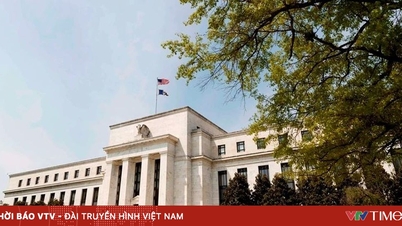
This group comprises many leading economic experts from diverse political leanings. Notable among them are two former Chairs of the Federal Reserve (Fed), Ben Bernanke and Janet Yellen; Douglas Holtz-Eakin, former Director of the Congressional Budget Office; Greg Mankiw, Chairman of the White House Council of Economic Advisors (CEA) under President George W. Bush; and Jason Furman, Chairman of the CEA under President Barack Obama.
The Supreme Court will consider the legality of President Trump's tariffs in a hearing on November 5th. While awaiting the ruling, numerous outside groups have submitted "friend-of-the-court briefs" to express their views. The submission from the group of economists is one of many documents filed with the Supreme Court before the October 24th deadline, supporting companies that are suing over President Trump's tariffs. Additionally, 31 former federal judges, former military and national security officers, and foreign policy professors have also joined the petition.
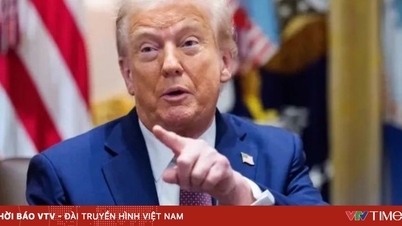
In a filing submitted to the Supreme Court on September 19, the Trump administration argued that the President's tariff measures were necessary to "fix the trade deficit that is destroying America." The filing also asserted that imposing tariffs would help make the United States a wealthy and powerful nation.
Previously, on May 28, the U.S. International Trade Tribunal (CIT) concluded that the U.S. President's imposition of tariffs under the IEEPA was unconstitutional, as the law does not permit the use of tariffs as a trade tool. On August 29, the Federal Court of Appeals upheld the CIT's ruling, reinforcing the view that the administration had exceeded its authority. The Court of Appeals' ruling against the use of the IEEPA to impose tariffs paves the way for the case to go to the Supreme Court. Supreme Court justices will decide whether President Trump was lawful in issuing the tariffs under the IEEPA.
Source: https://vtv.vn/50-nha-kinh-te-hang-dau-tai-my-kien-nghi-phan-doi-thue-doi-ung-100251026095904459.htm
















![[Photo] Prime Minister Pham Minh Chinh holds a phone call with the CEO of Russia's Rosatom Corporation.](/_next/image?url=https%3A%2F%2Fvphoto.vietnam.vn%2Fthumb%2F1200x675%2Fvietnam%2Fresource%2FIMAGE%2F2025%2F12%2F11%2F1765464552365_dsc-5295-jpg.webp&w=3840&q=75)















































Comment (0)