

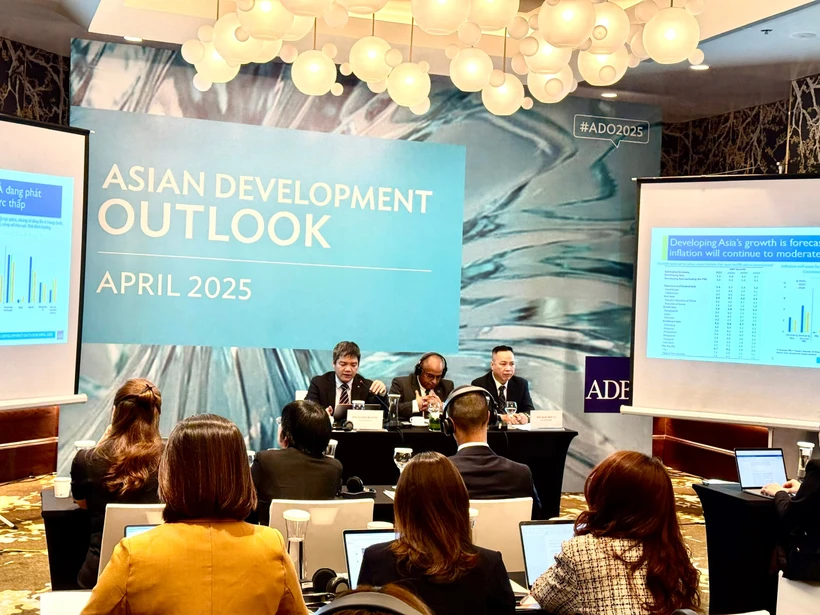
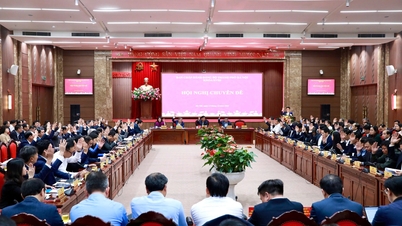
ADB leaders at the announcement ceremony. (Photo: Vietnam+)
The Asian Development Bank (ADB) forecasts that Vietnam's economy will grow by 6.6% in 2025 and 6.5% in 2026, after reaching 7.1% in 2024.
This assessment was made by the ADB in its Asian Development Outlook (ADO) report published on April 9th.
While maintaining a positive outlook for Vietnam this year and next, the April 2025 ADO report also highlighted risks to growth prospects, and these forecasts were calculated before the US announced tariff measures on April 2nd.
Retail, tourism , and FDI are bright spots.
ADB experts forecast the services sector to grow by 7.2% in 2025, driven by increased domestic and international tourism as well as technology industries. In the first two months of the year, nearly 4 million international visitors arrived in Vietnam, a 30.2% increase compared to the same period last year. Facilitated visa procedures, tourism promotion programs, and international recognition have fueled this growth.
The government's focus on digital transformation and sustainable development will open up new opportunities, particularly in financial services and retail. However, the service sector still faces global economic uncertainties, despite ongoing reforms. Although global tariffs are rising, demand for agricultural products and free trade agreements will help sustain exports.
According to ADB experts, agriculture is expected to continue its solid growth at 3.2% in 2025. However, climate change, limited access to technology, and infrastructure deficiencies remain challenges for the sector. Improving productivity through technology and managing increasingly global tariffs while maintaining competitive prices is key to sustaining export growth.
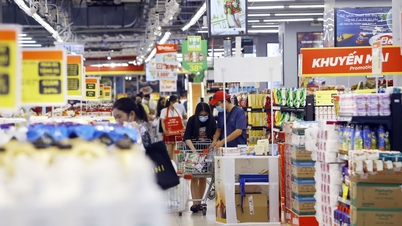
Retail sales are growing, thanks to supportive monetary and fiscal measures. In February 2025, retail sales increased by 9.4% year-on-year in 2024, but still fell short of expectations. The government is aiming for a 12% increase in retail sales and consumer service revenue by 2025. However, 67,000 businesses ceased operations in the first two months of 2025, a 7.0% increase year-on-year, reflecting the challenges businesses face despite strong consumer demand.
According to Nguyen Ba Hung, an economist at the Asian Development Bank (ADB), Vietnam's inflation is projected to remain stable at 4% this year and slightly increase to 4.2% next year. The two main drivers of Vietnam's economic growth over the next two years will continue to be abundant foreign direct investment (FDI) and stable retail sales.

International tourists arriving in Vietnam. (Photo: Vietnam+)
Before the US implemented specific tariff policies, Vietnam remained an attractive destination for FDI. However, US tariffs will impact this.
"When quantitative factors are still unclear, investors' natural reaction is to pause and wait for new decisions. Their pausing and waiting will slow down the disbursement of FDI capital," Mr. Hung commented.
The data shows that retail sales have remained relatively stable, contributing to Vietnam's steady GDP growth. However, for breakthrough economic growth, domestic demand needs to be stimulated even more strongly, Mr. Hung added.
What challenges does Vietnam face?
According to ADB experts, global trade tensions could impact export-oriented manufacturing. The global economic environment, with increasing trade conflicts and geopolitical tensions, could significantly affect export-oriented manufacturing. The return of protectionist policies under the new US administration could reduce global demand for products manufactured in Vietnam, especially given the large trade surplus with the US.
The global economic landscape is volatile, influenced by US tax policies, geopolitical tensions including the Russia-Ukraine conflict and instability in the Middle East. Coupled with slowing growth in the US and China – two of Vietnam's major trading partners – these factors could adversely affect Vietnam's economic outlook in the near future.
Assessing the impact of the new tariffs announced by the US on April 2nd on Vietnam, Shantanu Chakraborty, ADB Country Director for Vietnam, noted that the forecast figures in the ADO report were finalized before the US announced these measures. Because the events are still unfolding and the full details are unclear, it is currently too early to accurately estimate the quantitative impact on Vietnam's economic growth.
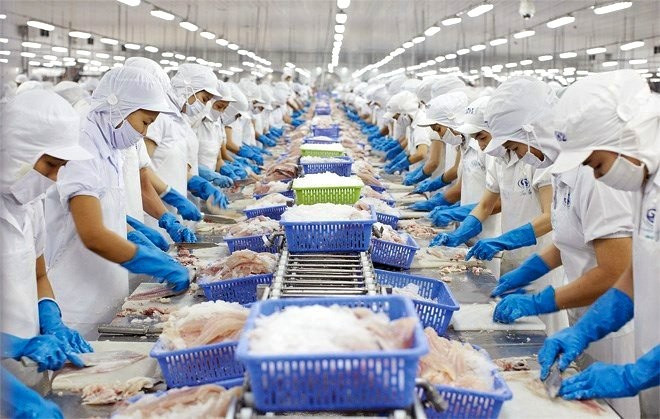
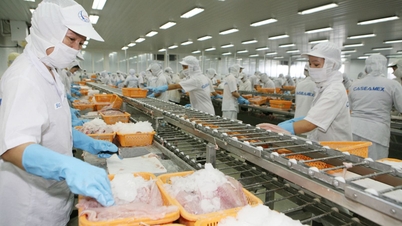
Exports could be affected by the US tariffs that are about to take effect. (Photo: Vietnam+)
However, Chakraborty argues that a country's relative competitiveness depends not only on tariffs but also on many other factors. Therefore, a comprehensive view is needed when assessing the impact of the new policy.
“The Vietnamese government has set ambitious growth targets, which could significantly mitigate external risks. Higher and more sustainable economic growth is possible if the comprehensive institutional reform efforts implemented recently are carried out quickly and effectively. These reforms will stimulate domestic demand, improve the efficiency of state management in the short term, and thus boost the development of the private sector in the medium and long term,” said Mr. Chakraborty.
According to ADB experts, enhancing Vietnam's participation in global supply chains is a key policy challenge for the country's development. As global economic dynamics shift, so too do Vietnam's advantages in increasing value added within global supply chains.
"Understanding the limitations and challenges related to expanding Vietnam's participation and increasing value added in global supply chains is crucial to improving the country's economic development trajectory and long-term growth potential," the ADB leader recommended.
(Vietnam+)
Source: https://www.vietnamplus.vn/adb-kinh-te-viet-nam-gia-tang-suc-manh-truc-nhung-thach-thuc-toan-cau-post1026667.vnp


![[Photo] Prime Minister Pham Minh Chinh attends the Conference summarizing and implementing tasks of the judicial sector.](/_next/image?url=https%3A%2F%2Fvphoto.vietnam.vn%2Fthumb%2F1200x675%2Fvietnam%2Fresource%2FIMAGE%2F2025%2F12%2F13%2F1765616082148_dsc-5565-jpg.webp&w=3840&q=75)


















































































Comment (0)