

Vietnam – an attractive investment destination in the new growth cycle.
Between 2015 and 2024, Vietnam maintained an average GDP growth rate of 6.0%, ranking first among major economies in Asia. Entering 2025, Vietnam is projected to continue growing at over 8%, maintaining its position as one of the most dynamic economies in the region.
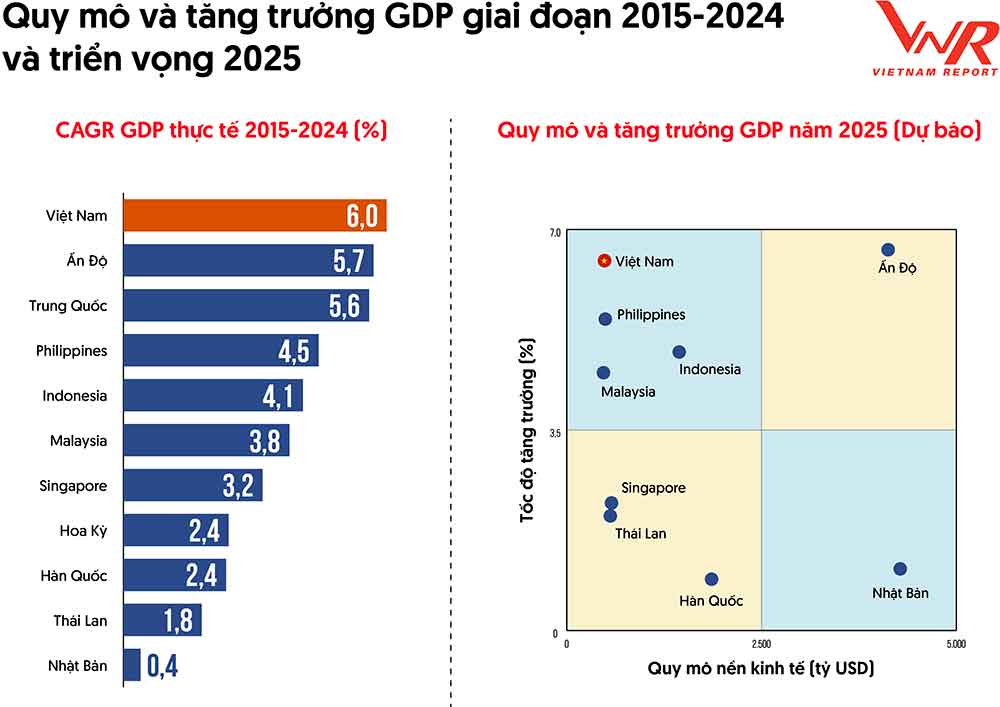 |
Source: Compiled and analyzed by WB, IMF, Vietnam Report, and Boston Report Group. |
Foreign direct investment (FDI) flows also showed positive growth. In the first 10 months of 2025, total registered FDI reached US$31.52 billion, a 15.6% increase year-on-year and the highest level in the last five years. International investor confidence continues to strengthen thanks to sustainable growth, competitive costs, and a stable policy environment. Simultaneously, the merger of provinces and cities, the formation of large-scale economic zones, increased public investment, administrative procedure reforms, logistics infrastructure development, and digital transformation are creating new development opportunities for localities. These driving forces pave the way for the formation of "strategic hubs" for large enterprises nationwide.
Top 10 Most Attractive Locations for Large Businesses in 2025
Vietnam Report employs an independent and objective research methodology based on three main groups of criteria:
(1) Number of large enterprises (VNR500) in the period 2021–2025: Reflects the attractiveness and scale of the local business ecosystem.
(2) Investment environment and FDI attraction in 2025: Consider the level of attractiveness to domestic and foreign investors, including infrastructure, logistics, industry, and administrative procedures.
(3) Contribution to national growth: Based on GRDP growth rate, state budget revenue and role in inter-regional value chains.
Data was collected from government agencies, socio-economic statistics, and large enterprise data from Vietnam Report, along with quantitative and qualitative analysis according to international standards.
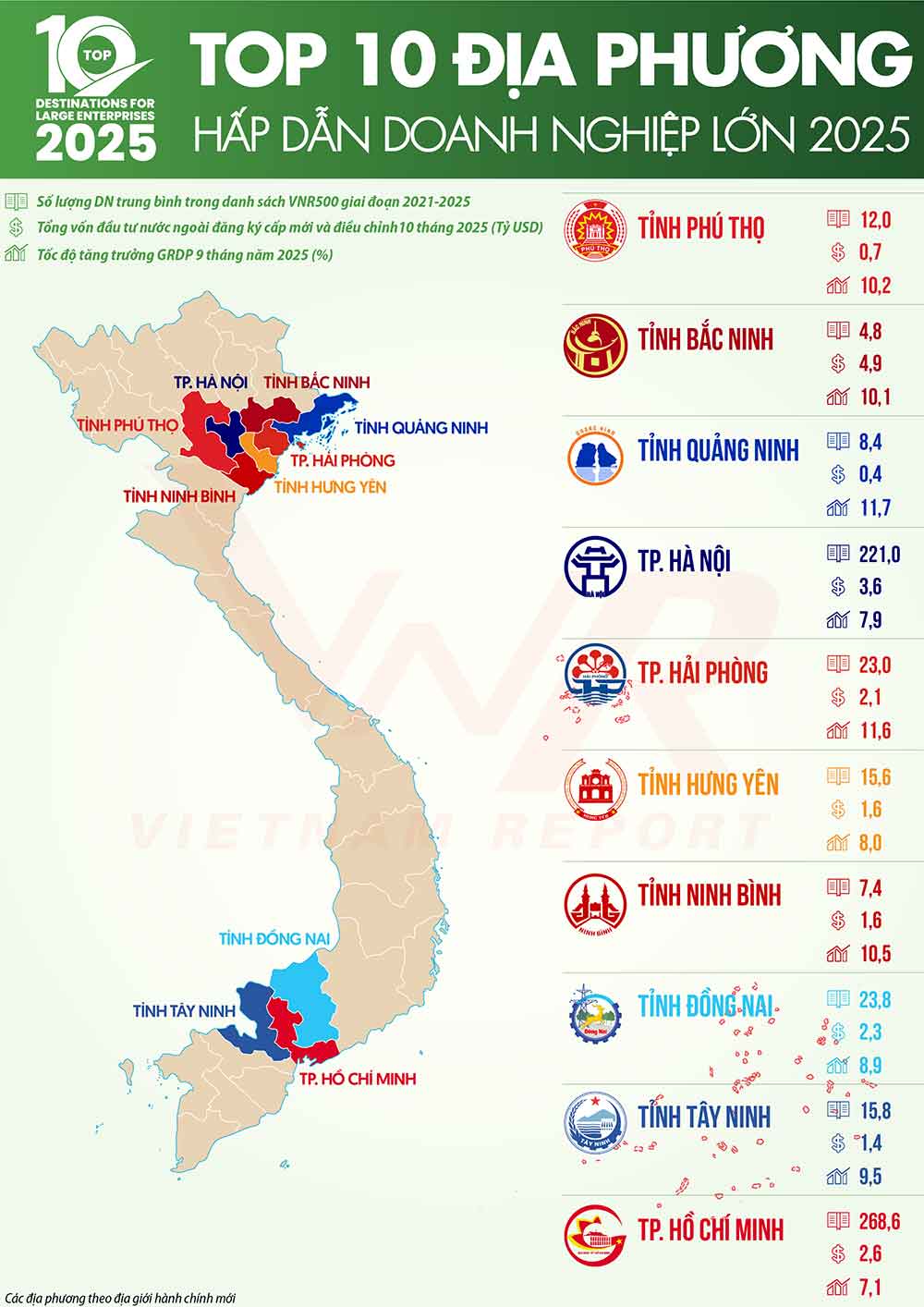 |
Source: Compiled by Vietnam Report and Boston Report Group, November 2025. |
A detailed analysis of each locality in the Top 10
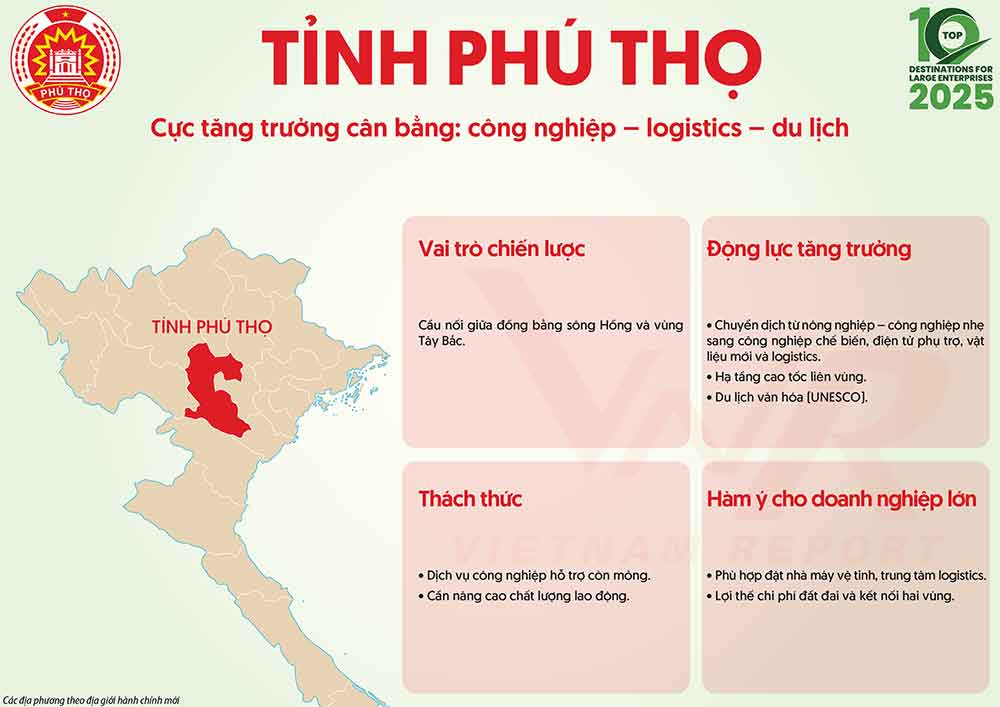 |
Source: Vietnam Report and Boston Report Group. |
Phu Tho is gradually asserting its position as a new growth pole in the Northern Midlands and Mountains region as the administrative reorganization and regional linkages are accelerated, opening up opportunities to reposition the locality's role in the development structure of the North. Unlike its traditional image as a midland locality, Phu Tho today is undergoing a strong transformation to become a medium-sized industrial, logistics, and cultural tourism service center directly connecting Hanoi with Tuyen Quang, Lao Cai, Son La, and Thanh Hoa. Thanks to its location as the western gateway to the capital, Phu Tho plays a crucial role as a bridge between the Red River Delta and the Northwest region, creating a strategic axis for the movement of goods, labor, and services.
Following the merger, Phu Tho's development space has expanded significantly as the locality is located within a network of regional expressways: Noi Bai – Lao Cai, Viet Tri – Ba Vi, Hoa Binh – Moc Chau (future), along with radial national highways leading to Hanoi. This allows Phu Tho to become an important logistics transit point serving both the northern market and international trade via Lao Cai. For businesses, this "interconnected two regions" advantage makes the locality an optimal location for satellite factories.
Phu Tho's economic structure is shifting from agriculture and light industry to processing industries, supporting electronics, new materials, and logistics. The local modern industrial parks are well-planned with large areas of clean land and synchronized infrastructure meeting international standards, attracting many large corporations such as Japfa Comfeed, Piaggio Vietnam, Viet Duc VG PIPE, AMY GRUPO, and Daesang Vietnam, affirming Phu Tho's attractiveness to both domestic and foreign investors. Alongside industry, Phu Tho possesses an advantage that few northern localities have: unique cultural and tourism resources, notably the Hung Kings worship tradition (UNESCO), the Hung Temple Festival, creating a spearhead for the development of festival tourism and experiential tourism.
However, to achieve greater breakthroughs, Phu Tho needs to improve several bottlenecks: the province's internal infrastructure is not yet synchronized; the quality of technical human resources is still limited; industrial and logistics support services are not yet developed adequately; and the connection between industry, tourism, and services is not strong enough to create synergistic value. At the same time, the regional coordination mechanism between Phu Tho and Hanoi needs to be upgraded to avoid policy disruptions in attracting investment.
Overall, Phu Tho is at a favorable point to become a balanced growth hub in the North, encompassing clean industries, logistics, services, and cultural tourism. With its role as a bridge between the delta and the midland, and its strong shift towards supporting industries, Phu Tho will make a significant contribution to the region's new growth structure.
Bac Ninh
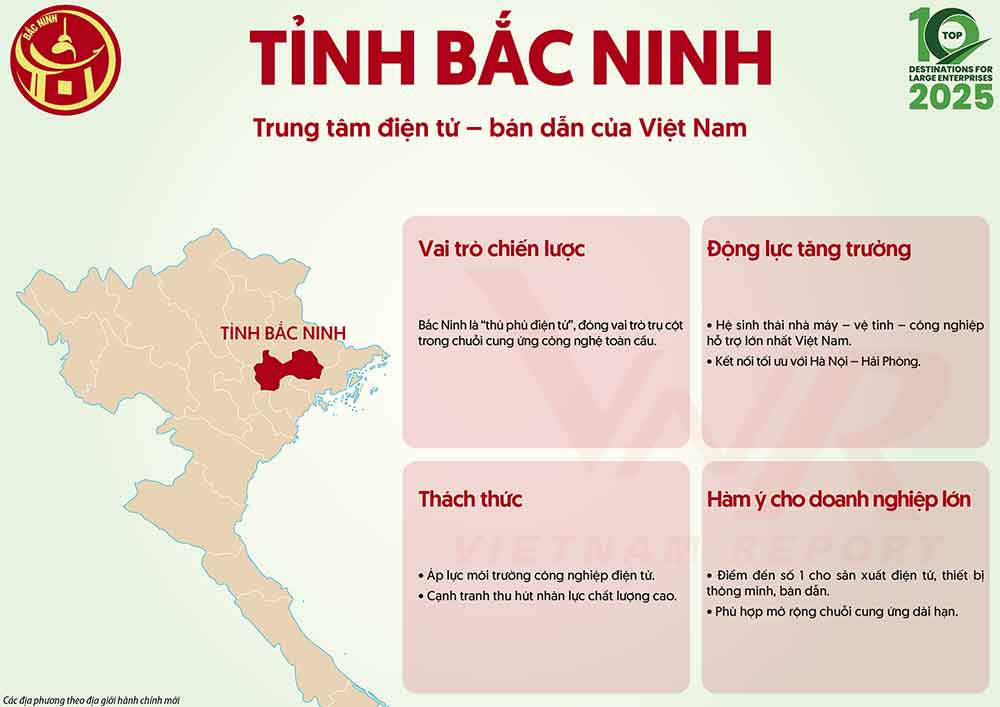 |
Source: Vietnam Report and Boston Report Group. |
In 2025, for the first time, Bac Ninh was named among the Top 10 most attractive localities for large enterprises. Bac Ninh is holding a key position in the growth structure of Northern Vietnam as the administrative reorganization process and strengthened regional linkages are helping the locality solidify its position as the "electronics capital" and a high-tech industrial center of Vietnam. Located within the "production-technology belt" surrounding the capital, Bac Ninh is not only a preferred destination for global corporations in the electronics and semiconductor sector, but also a crucial link connecting Hanoi – the center of operations and knowledge, Hai Phong – the import-export gateway, and neighboring production hubs like Hung Yen. Thanks to its unique economic geography combined with inter-regional transportation infrastructure, Bac Ninh is becoming one of the localities with the deepest integration into the global technology supply chain in ASEAN.
Bac Ninh's strength lies in its large-scale electronics industry, which has developed over two decades, forming the richest electronics, components, and supporting technology ecosystem in the country. This model helps Bac Ninh maintain high productivity, large export turnover, and stable economic resilience, even in the context of global fluctuations. After the merger, the local industrial development space has expanded towards direct connections with key infrastructure projects such as Hanoi's Ring Road 4, the expressway to Hai Phong and Quang Ninh, helping to accelerate the flow of goods and attract new FDI in the semiconductor, smart device, battery, and green technology sectors. According to information from the General Statistics Office (Ministry of Finance), as of October 2025, Bac Ninh was the leading locality in newly registered and adjusted FDI capital, with a total newly registered and adjusted capital reaching US$4.94 billion, an increase of 11.3% compared to the same period last year.
Along with industry, Bac Ninh is strongly developing a technology-service urban model to suit its high-quality workforce and the needs of multinational corporations. Satellite cities, high-tech zones, and commercial-educational-medical centers are being invested in synchronously, gradually transforming Bac Ninh from a manufacturing hub into a "modern industrial city". However, this rapid development also poses many challenges: environmental pressure from the electronics industry, rapidly increasing demand for housing and urban infrastructure, competition to attract highly skilled technical personnel with Hanoi and neighboring localities, and the need to upgrade the public service system to keep pace with industrialization.
Despite facing numerous challenges, Bac Ninh possesses unique advantages: a high concentration of the electronics and technology supply chain, a strategic location within the Capital Region, convenient seaport and airport connectivity, and a deep foundation of supporting industries. In the context of Vietnam's focus on improving the quality of growth, developing high technology, and participating more deeply in global value chains, Bac Ninh not only serves as Vietnam's "electronics manufacturing hub" but is also becoming a strategic growth pole with strong competitiveness and the ability to integrate deeply into the region's high-value chains.
Quang Ninh
 |
Source: Vietnam Report and Boston Report Group. |
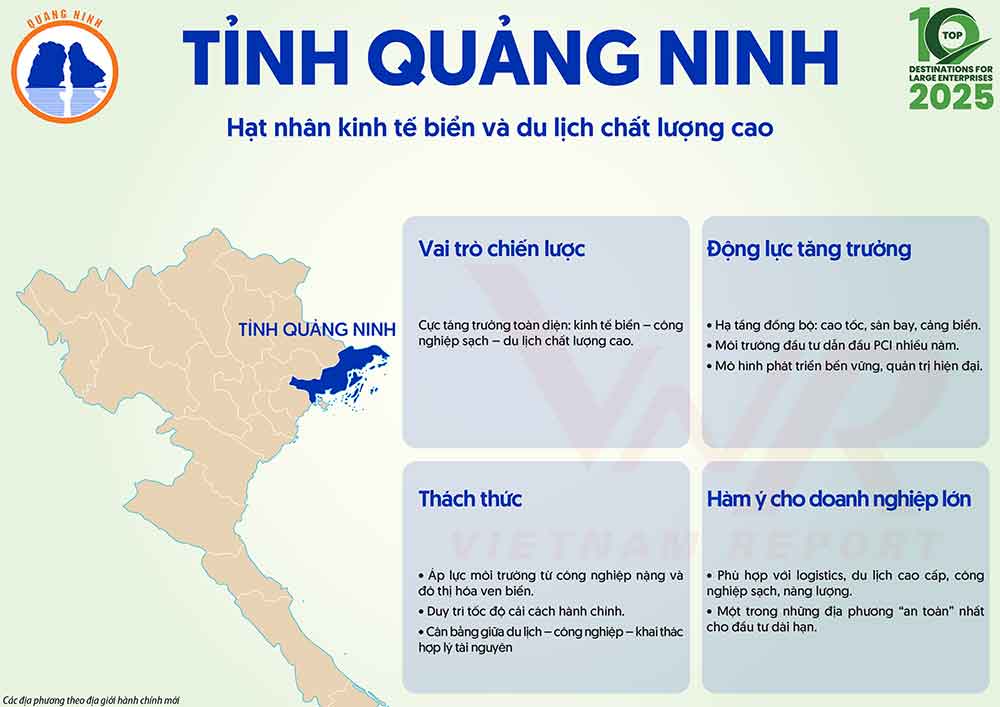
Quang Ninh, with its role as the nucleus of the marine economy, high-quality tourism, and modern governance model, is asserting its position as one of the most dynamic and influential development hubs, creating a solid foundation for the entire Northeast region and the Northern industrial belt.
Quang Ninh's transformation over the past decade is clear evidence of its "development based on institutional reform" mindset. It has consistently led the Provincial Competitiveness Index (PCI), promoting the digitalization of procedures and reforming the investment environment, creating significant confidence for both domestic and foreign investors. Major corporations that have chosen Quang Ninh as a strategic destination include the Northeast Corporation with its energy and construction materials projects, Calofic (a Wilmar-Singapore joint venture) expanding its modern edible oil factory complex in Cai Lan Industrial Park, and BIM Group developing a series of high-end resorts, hotels, and large-scale renewable energy projects. Quang Ninh possesses significant advantages for expanding coastal economic zones, clean industrial parks, and integrated urban-tourism-port models. This allows the province not only to maintain high growth rates but also to reshape its economic structure towards reducing resource exploitation and increasing clean production, services, and high-value tourism.
Quang Ninh's most outstanding feature is its connectivity and strategic location. Together with Hai Phong, it forms a "twin pillar" of the Northern Coastal Economic Corridor. The synchronized expressway system extending from Hanoi – Hai Phong – Ha Long – Van Don – Mong Cai has transformed Quang Ninh into a gateway connecting Vietnam with China and Northeast Asia, while also opening up a rare land-sea trade corridor. Van Don Airport, Cai Lan Port, deep-water seaports, and coastal logistics centers make the province a major transit point for international goods and tourism services. For businesses, this represents a significant advantage for developing logistics, trade, tourism, port services, and large-scale clean industries.
Besides its coastal advantages, Quang Ninh possesses a rare tourism ecosystem with the World Natural Heritage site of Ha Long Bay, the adjacent Cat Ba Peninsula, a unique forest-sea system, and modern tourist cities such as Ha Long, Cam Pha, and Van Don. Quang Ninh has strongly shifted from mass tourism to high-quality tourism, focusing on entertainment, resort, and experiential infrastructure, transforming Quang Ninh into a leading destination in Asia. The development of tourism infrastructure and spaces in a "high-class, green, and sustainable" direction has also helped the locality attract high-spending international tourists.
However, Quang Ninh still faces three major challenges: environmental pressure from heavy industry and coastal urbanization; the need to maintain the pace of administrative reform in the context of increasingly fierce competition to attract investment; and the challenge of balancing tourism, industry, and rational resource exploitation. If these issues are successfully addressed, Quang Ninh has the potential to become one of the localities with the most comprehensive development models in Vietnam, combining marine economy, services, clean industry, and modern governance.
Overall, Quang Ninh is not only a bright spot in the Northeast region but is also playing a key role as a comprehensive growth engine for the entire country, contributing to shaping a sustainable development model for Vietnam.
Hanoi
 |
Source: Vietnam Report and Boston Report Group. |
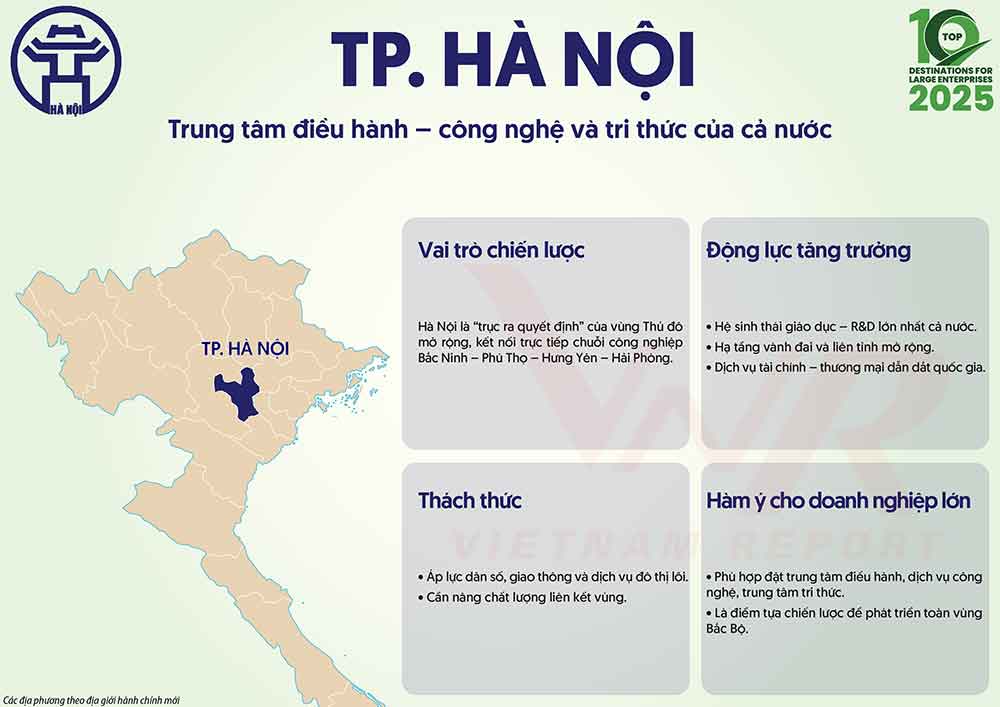
Hanoi is facing a pivotal development opportunity as the administrative reorganization and expansion of regional linkages place the capital in the position of the "brain" of the entire national growth structure. From its role as the political, economic, and cultural center, after the merger, Hanoi has become the coordinating nucleus of a "mega-urban-mega-industrial region" stretching to Bac Ninh, Hung Yen, and Phu Tho – home to high-tech FDI enterprises and the largest electronics, mechanical, and automotive factories in the country. According to data from the General Statistics Office (Ministry of Finance) as of October 2025, Hanoi had attracted newly registered and adjusted FDI capital reaching US$3.63 billion, 1.7 times higher than the same period in 2024. From a strategic perspective, Hanoi is shifting from the position of a central urban area to a decision-making hub for the entire Northern region, similar to the Seoul-Gyeonggi or Tokyo-Kanagawa models in Asia.
A key highlight of the new structure is its ability to lead the high-tech supply chain. Hanoi possesses the largest intellectual ecosystem in the country – from high-level human resources, universities, research institutes to R&D centers and technology enterprises. Meanwhile, satellite provinces such as Bac Ninh (electronics), Phu Tho (automotive – mechanical), and Hung Yen (supporting industries) take on the role of production. As regional linkages are strengthened, Hanoi becomes the focal point for technology and investment decisions, while the surrounding areas are the implementation sites. This linkage significantly shortens product development time, optimizes logistics costs, and increases the level of engagement of businesses with the entire production region.
Alongside its technological role, Hanoi continues to be a center for high value-added services: finance and banking, commerce, high-quality education, specialized healthcare, and high-end consumer services. This provides a foundation for large businesses to expand their market share, build brands, and develop new business models based on data and digital consumption. Hanoi's consumer market, with its high stability and strong purchasing power, acts as an "anchor" for service, retail, fintech, and education corporations.
However, along with its increasingly important role, Hanoi also faces commensurate challenges as a strategic center of the country. Pressure on core urban infrastructure is increasing, while the need to expand and modernize the public transportation system is becoming urgent. Disparities in service quality between regions remain, requiring more effective regional coordination mechanisms to avoid development conflicts. The issue of high-quality human resources will also become increasingly acute as Hanoi has to compete not only domestically but also with regional cities such as Bangkok and Kuala Lumpur.
Nevertheless, with its advantages in policy, technology, knowledge, and regional coordinating position, Hanoi is fully equipped to become a strategic growth pole for the entire country, with a strong ripple effect in the ASEAN region. The capital is not only the administrative and political center, but also the intellectual and operational foundation for the entire "high-tech industrial belt" in the North. In the context of Vietnam's shift to a high-quality growth model and increased integration into international value chains, Hanoi will continue to play the role of a "strategic anchor," determining the speed and quality of development for the entire region, while consolidating the nation's position on the world economic map.
Hai Phong
 |
Source: Vietnam Report and Boston Report Group. |
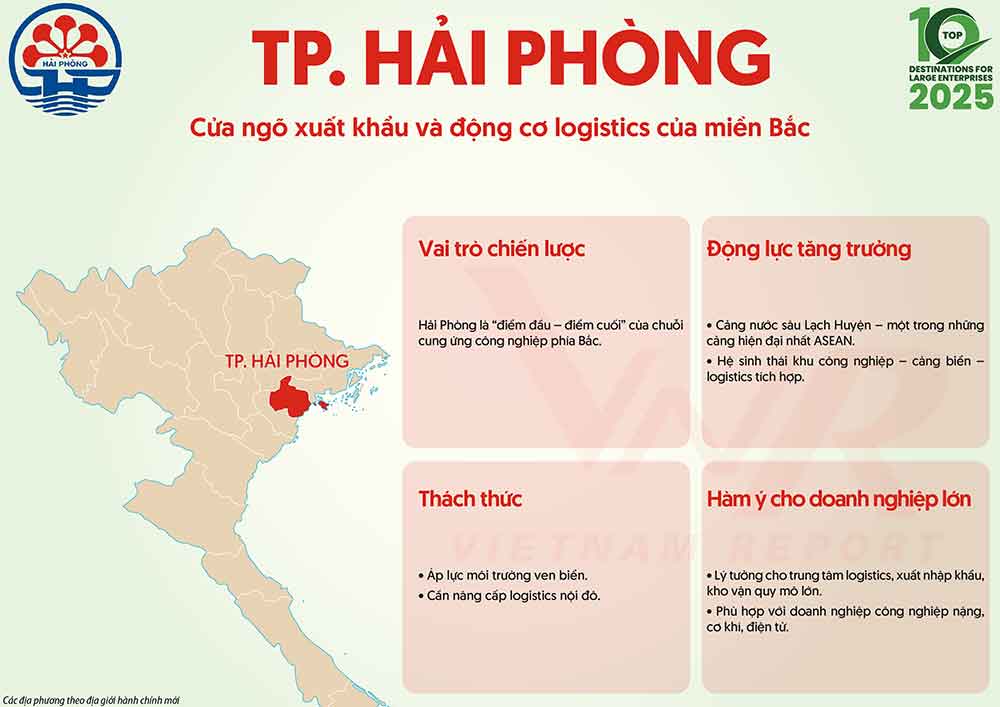
If Hanoi is the brain of policy planning and technology, Bac Ninh the electronics center, and Quang Ninh a model of governance and tourism, then Hai Phong assumes the function of a production, logistics, and export hub for the entire region, creating a crucial connecting axis for the flow of international trade. The city has transformed from a traditional port city into a regional industrial and seaport center, reminiscent of growth hubs like Busan (South Korea) or Kaohsiung (Taiwan) during the East Asian industrialization era.
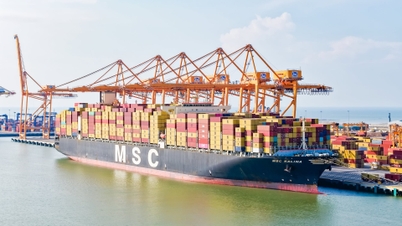
Hai Phong's position as a major maritime economic gateway has been significantly strengthened with the operation and continuous upgrading of the Lach Huyen deep-water port complex. This is one of the few ports in ASEAN capable of receiving large-tonnage vessels, significantly reducing transportation costs and increasing the competitiveness of Vietnamese goods. Following mergers and strengthened regional linkages, Hai Phong's influence has expanded throughout Northern Vietnam: from Bac Ninh – a leading electronics manufacturing center in ASEAN – to Hung Yen and Quang Ninh – hubs for supporting industries and coastal logistics chains. Hai Phong has become a "starting and ending point" in the value chain: receiving FDI and technological equipment from abroad, and serving as a major export gateway for electronics, machinery, and processed industrial goods.
Along with its port infrastructure, Hai Phong boasts a modern system of industrial parks and economic zones such as Dinh Vu - Cat Hai, Trang Due, and VSIP, attracting global technology corporations like LG Electronics (South Korea), Ford Vietnam (USA), LS-VINA (South Korea), and Phu Lam Plastics (Taiwan). In the first 10 months of 2025, newly registered and adjusted FDI capital in Hai Phong reached nearly US$2.08 billion, a 45.9% increase compared to the same period last year. The city's industrial structure has clearly shifted from traditional heavy industry to high technology, logistics, processing industries, and new-generation port services. This forms the foundation for Hai Phong to become an integrated production and logistics center, directly linked to the Hanoi - Hai Phong - Quang Ninh - Lang Son expressways, creating a cross-regional connectivity network.
However, Hai Phong's rapid development also presents many significant challenges: pressure on the coastal environment, the need to upgrade urban logistics, a shortage of highly skilled labor, and the need to improve regional coordination mechanisms to ensure harmonious development with neighboring localities. These are problems that any industrial port city in the world must face when entering a period of accelerated growth.
Nevertheless, overall, Hai Phong is in a position few localities possess: strong production capacity, an international-class seaport, complete regional connectivity, and momentum from administrative restructuring. The city is not only a transit point for goods in the North, but is also becoming a strategic growth pole, playing a key role in upgrading national competitiveness. Hai Phong is the "Eastern engine" of Vietnam – the place that will determine the speed, depth, and sustainability of growth in the next decade.
Hung Yen
 |
Source: Vietnam Report and Boston Report Group. |
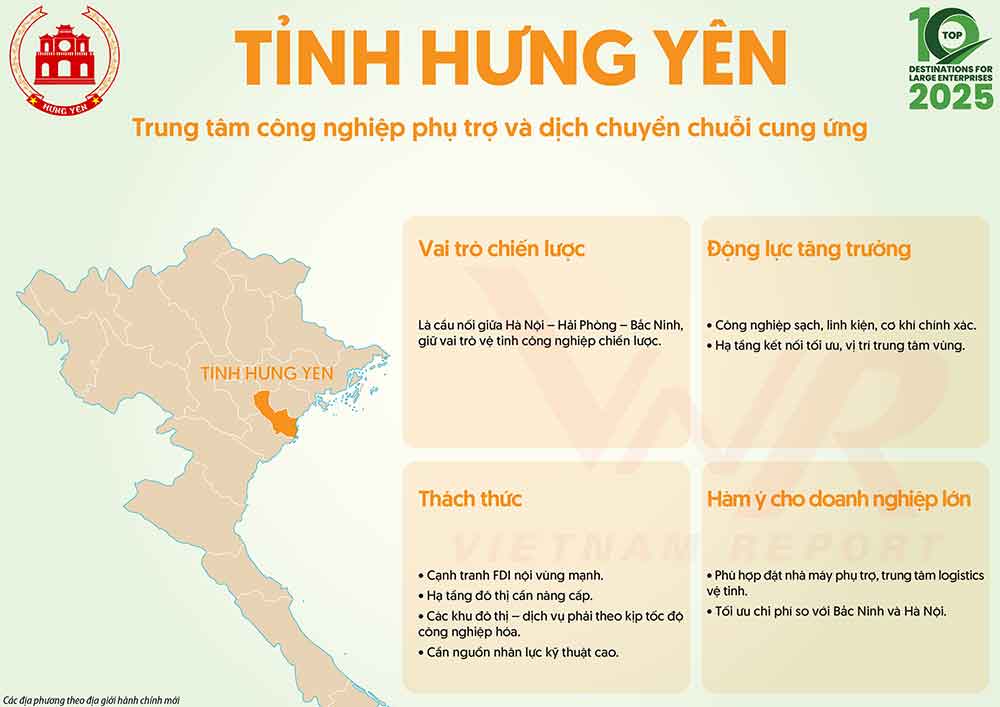
Hung Yen is emerging as a new industrial hub in Northern Vietnam as administrative reorganization and regional linkage expansion place the province strategically on the Hanoi-Hai Phong-Bac Ninh development axis. Previously considered a satellite city of Hanoi, Hung Yen is now repositioning itself as a high-tech industrial center playing a crucial supporting role in the electronics and mechanical supply chains of the Northern region. Hung Yen's momentum stems from two factors: its geographical and economic location near major production hubs (Bac Ninh, Hai Phong, Ninh Binh) and the strong spillover effect from the Hanoi connectivity belt after the merger, making Hung Yen one of the most attractive destinations for supporting industrial enterprises.
The new regional linkage mechanism creates a larger "functional space" for Hung Yen, where the locality can directly leverage Hanoi's strengths in policy planning, human resources, R&D, and technology, while seamlessly connecting with the seaport and logistics center in Hai Phong and the major production clusters of Bac Ninh and Hai Duong. The expansion of the expressway, ring road, and inter-provincial routes creates a significant logistics advantage: goods can be transported from Hung Yen's industrial zones to seaports or airports in a short time, helping businesses reduce operating costs and enhance competitiveness. This is a prerequisite for attracting high-tech FDI, which is highly sensitive to infrastructure.
Over the past 10 years, Hung Yen has strongly shifted towards clean, high-tech, and supporting industries, with the emergence of many electronics and mechanical projects, smart devices, components, and high-value-added technology products. Notable names contributing to shaping Hung Yen's industrial landscape include Hoa Phat Group, Stavian Chemicals, and Mavin Austfeed. Currently, Hung Yen has one economic zone and 23 industrial parks established, with a total area of over 5,890 hectares and an occupancy rate of 64.9%. Notable examples include Thang Long II, Yen My, Pho Noi A-B, Nguyen Duc Canh, Phuc Khanh, and Lien Ha Thai, which are playing an important role as "production satellites" for Bac Ninh and Hanoi, while gradually asserting their independence through self-created value chains. This provides a foundation for Hung Yen to join the group of localities capable of maintaining sustainable growth as Vietnam shifts to a growth model based on productivity and technology.
However, Hung Yen is also facing significant challenges: increasingly fierce competition to attract investment with neighboring localities; pressure on the environment and infrastructure quality that needs to be addressed to higher standards; urban and service areas must keep pace with the rate of industrialization; and highly skilled technical human resources must be properly trained to meet the needs of technology businesses. Coordination of development with Hanoi and other localities in the region also requires clearer mechanisms to avoid conflicts in planning or intra-regional competition.
Nevertheless, Hung Yen is currently possessing rare conditions to enter a breakthrough development phase: a core location within the Northern industrial triangle, optimal connectivity infrastructure, a continuous influx of high-tech capital, and the potential to participate increasingly deeply in the global electronics and mechanical supply chain. The locality is no longer a "buffer zone" of Hanoi, but is becoming a strategic industrial hub in the new growth map of the North.
Ninh Binh
 |
Source: Vietnam Report and Boston Report Group. |
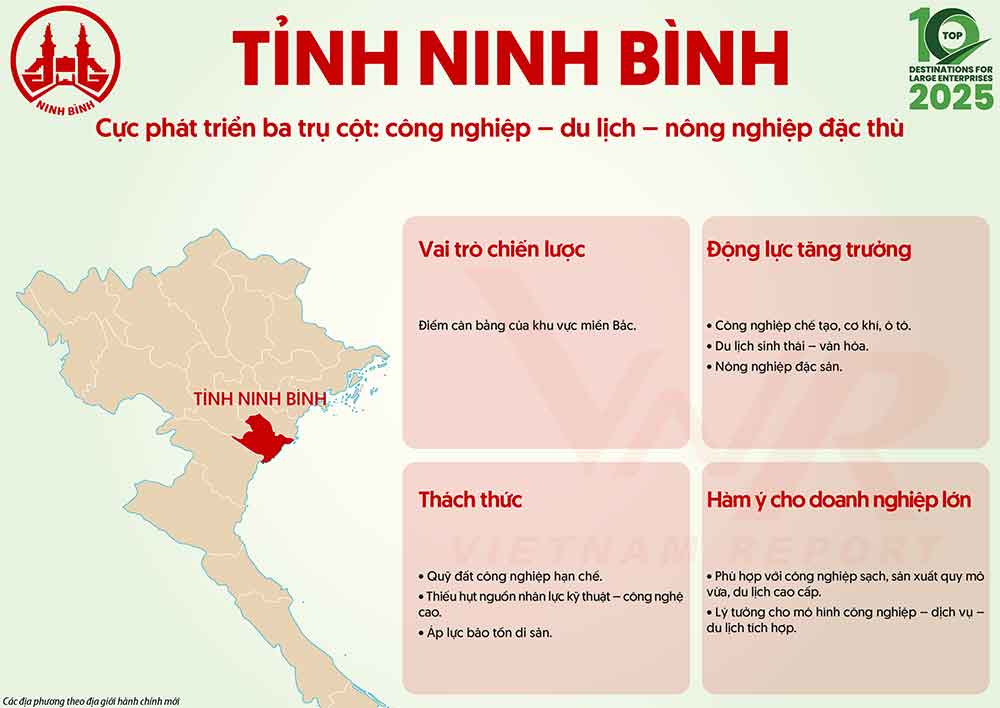
Making its first appearance in the Top 10 Most Attractive Localities for Large Enterprises, Ninh Binh is gradually repositioning itself as a balanced development hub in the region. The process of administrative reorganization and strengthening regional linkages opens up new economic spaces where manufacturing, ecotourism, and specialized agriculture coexist in a rare and harmonious structure. While many localities depend on a single key industry, Ninh Binh develops according to a "three-pillar" model, creating stability and high resilience against economic fluctuations. Following the merger, the province's strategic position is strengthened by seamless connectivity with Hanoi and Thanh Hoa, making Ninh Binh a balanced point within the region's production-service-tourism triangle.
The most important pillar of Ninh Binh's economy today is the manufacturing industry, especially mechanical engineering, automobiles, and supporting electronics, exemplified by the Hyundai Thanh Cong factory. The development of this large-scale manufacturing complex has created a strong ripple effect, attracting many supporting businesses in the fields of precision mechanics, molds, materials, and components. Thanks to its location on the vital transportation axis connecting the capital with the North Central region, goods from Ninh Binh can easily connect with the seaports of Hai Phong and Quang Ninh, opening up a competitive advantage for large-scale manufacturing businesses. After the merger, the locality has the opportunity to attract green and high-tech industrial projects, especially as global businesses are shifting away from high-cost industrial centers and seeking localities with stable infrastructure, labor, and policies like Ninh Binh.
Alongside industry, ecotourism and cultural tourism are pillars that shape the local identity. Ninh Binh currently boasts the Trang An scenic complex (UNESCO), Tam Coc - Bich Dong, Van Long ecological area, Bai Dinh Pagoda, and many unique ecotourism and resort routes based on limestone mountains and cave systems. This provides a foundation for the locality to develop a high-quality tourism model, targeting international markets with high spending power. However, Ninh Binh's biggest challenge is maintaining a balance between tourism development and the preservation of natural landscapes – a strategic problem that the locality must solve if it wants to build a sustainable high-end destination image.
The third pillar – specialized agriculture – adds stability to the economy. Products such as mountain goats, sticky rice, vegetables, and especially agricultural models integrated with tourism create double value: increasing income for local people and enriching the experience for tourists. This direction aligns with the "experiential agriculture" trend that is becoming popular in developed markets.
Despite possessing many advantages, Ninh Binh still faces significant challenges: limited industrial land, a shortage of highly skilled technical and technological human resources, pressure to preserve heritage, and the need to upgrade urban infrastructure and services to keep pace with growth. However, with its multi-pillar economic structure, favorable connectivity, and advantages in landscape and culture, Ninh Binh possesses a solid foundation to become a sustainable growth pole of the Northern region in the new economic restructuring period.
Dong Nai
 |
Source: Vietnam Report and Boston Report Group. |
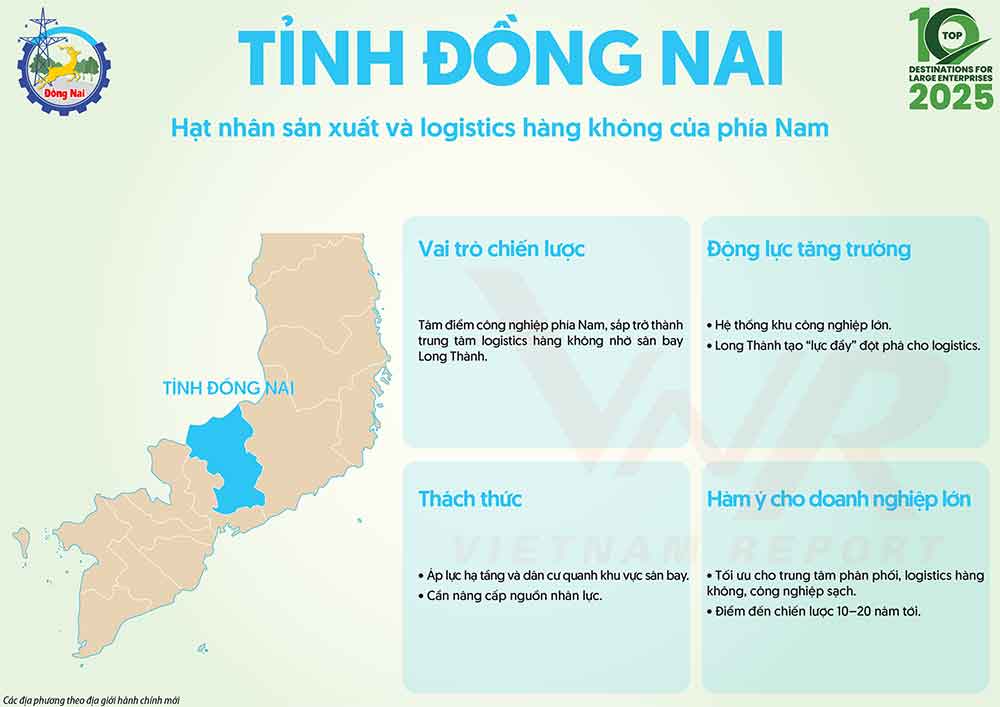
Dong Nai is entering a new phase of accelerated growth as the administrative reorganization and expansion of regional linkages have transformed the province into one of the most important pillars of the Southern economic structure. From its position as a key industrial and high-tech agricultural center of Vietnam, Dong Nai has formed a diverse business ecosystem with many big names: state-owned enterprises playing a role in developing economic and industrial infrastructure such as Sonadezi and Dofico; large national corporations like Tin Nghia and Truong Hai; and prominent FDI investors such as Cargill, Nestlé, and Sunjin Vina. After the merger, Dong Nai has benefited greatly from its strategic location adjacent to the "economic megacity" of Ho Chi Minh City, thereby forming the largest production-logistics-seaport axis in the country. The formation of the "Southern Super Economic Zone" further helps Dong Nai expand its industrial and agricultural development space, enhancing its role from a traditional FDI destination to a manufacturing, aviation logistics, and supporting industry hub of the region.
The biggest driving force for Dong Nai in the coming period is the national "mega-project" Long Thanh International Airport, one of the most important infrastructure projects in Vietnam in recent decades. Long Thanh will not only solve the problem of overcrowding at Tan Son Nhat but also reshape the entire logistics and investment map of the region. With the new international airport, Dong Nai will become the "air gateway of the South," opening up opportunities to form air logistics centers, supporting industrial zones, distribution centers, and global trade service centers. Logistics, e-commerce, and supporting industry corporations will prioritize Dong Nai as a strategic transit point, similar to the development model around Suvarnabhumi Airport (Bangkok) or Changi Airport (Singapore).
However, Dong Nai also faces several key challenges: the need to improve intra-provincial connectivity infrastructure to alleviate congestion on National Highway 51 and the Long Thanh - Dau Giay Expressway; issues related to urban planning, the environment, and worker housing in the context of rapid industrialization; and the requirement to upgrade high-quality human resources to keep pace with the needs of the technology, logistics, and aviation industries.
Nevertheless, considering its potential and strategic advantages, Dong Nai is poised to enter a "golden cycle" of growth. With Long Thanh Airport, a large-scale industrial park system, its central location within the super-regional economic zone, and its multimodal connectivity (road, air, and sea), Dong Nai is not only a strong industrial locality but is also becoming a strategic anchor, playing a crucial role in shaping the competitiveness of the entire Southern economic region.
Tay Ninh
 |
Source: Vietnam Report and Boston Report Group. |
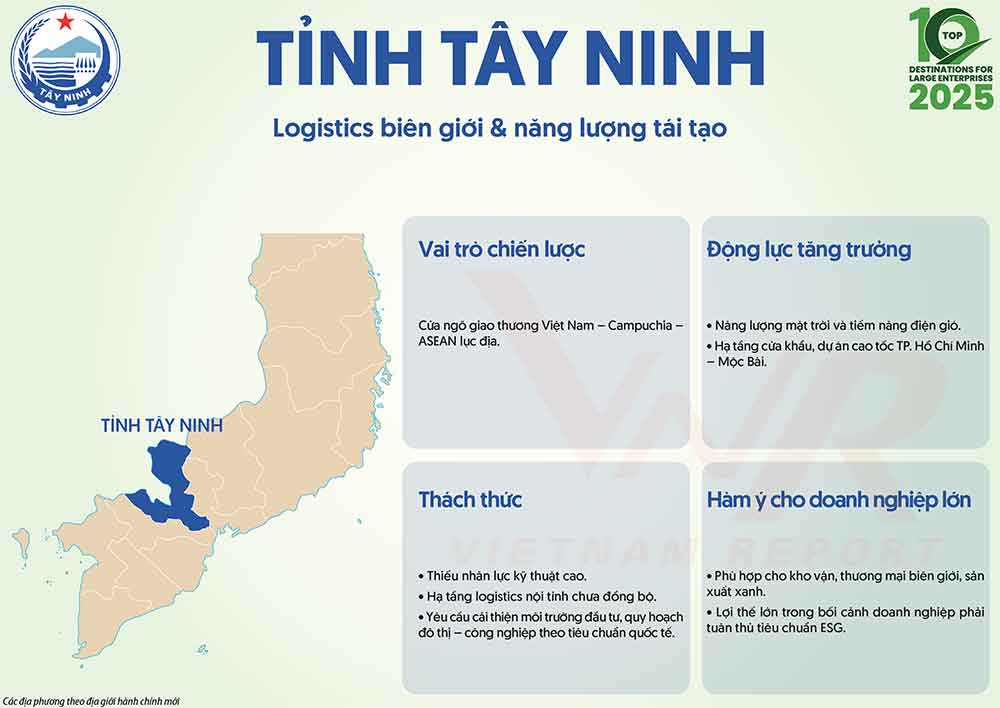
Tay Ninh is emerging as a unique growth pole in the South as administrative reorganization and regional linkage expansion transform the province from a traditional border locality into a strategically influential logistics, trade, and renewable energy hub. Located between Ho Chi Minh City and Phnom Penh, Tay Ninh serves as a gateway for trade between Vietnam and Cambodia and the Greater Mekong Subregion, facilitating the flow of agricultural products, light industrial goods, materials, and cross-border trade. Following the merger, this advantage is further enhanced as the province becomes a crucial link in the cross-border supply chain, and a "rear base" that Ho Chi Minh City and Dong Nai are seeking to alleviate pressure on inner-city infrastructure and expand development opportunities.
The key competitive advantage that has earned Tay Ninh high praise in this new phase lies in renewable energy. The province boasts one of the largest solar power plant complexes in the country – the Dau Tieng Solar Power Plant, with a total investment of up to VND 12,600 billion and an area of over 7.2 km², along with the potential for wind power development, creating a stable foundation for clean energy for businesses needing to meet global ESG standards. In the context of Vietnam's exports facing increasingly stringent requirements from the EU's CBAM mechanism and carbon regulations of developed markets, Tay Ninh – with its renewable energy advantage – has become a potential location for the formation of "green" industrial parks, attracting industries such as textiles, footwear, processed agricultural products, cold chain logistics, and supporting industries.
Besides energy, border trade is a strong growth driver for Tay Ninh. The Moc Bai and Xa Mat border gates are being planned as modern border logistics centers, where goods from Ho Chi Minh City and the entire Southeast region can connect directly with Cambodia, Thailand, and further afield to the ASEAN market. Simultaneously, the Ho Chi Minh City – Moc Bai expressway project will reshape trade flows by significantly shortening travel time between Ho Chi Minh City and the border, creating a major advantage for import-export, logistics, and e-commerce businesses. For industrial and service businesses, Tay Ninh is not only a buffer zone between Ho Chi Minh City and the border, but also an optimal location for warehouses, distribution centers, and supporting factories thanks to low land costs, ample space, and cross-border connectivity.
However, Tay Ninh still faces many fundamental challenges: a shortage of highly skilled technical personnel; inadequate intra-provincial infrastructure; limited quality of logistics services; and the need to improve the investment environment and urban-industrial planning to international standards. To become a sustainable growth hub, the locality needs to accelerate the completion of strategic transportation projects, develop green industrial parks integrating renewable energy, and upgrade its cross-border trade and logistics coordination capacity.
Tay Ninh is currently undergoing a significant transformation thanks to the convergence of three factors: its strategic border location, large-scale renewable energy, and its role as a logistics hub west of Ho Chi Minh City. The province is not just a border crossing, but is becoming a new development hub in the Southeast region – connecting ASEAN trade, clean energy, and converging industrial supply chains, promising to make a significant contribution to Vietnam's regional competitiveness in the coming period.
Ho Chi Minh City
 |
Source: Vietnam Report and Boston Report Group. |
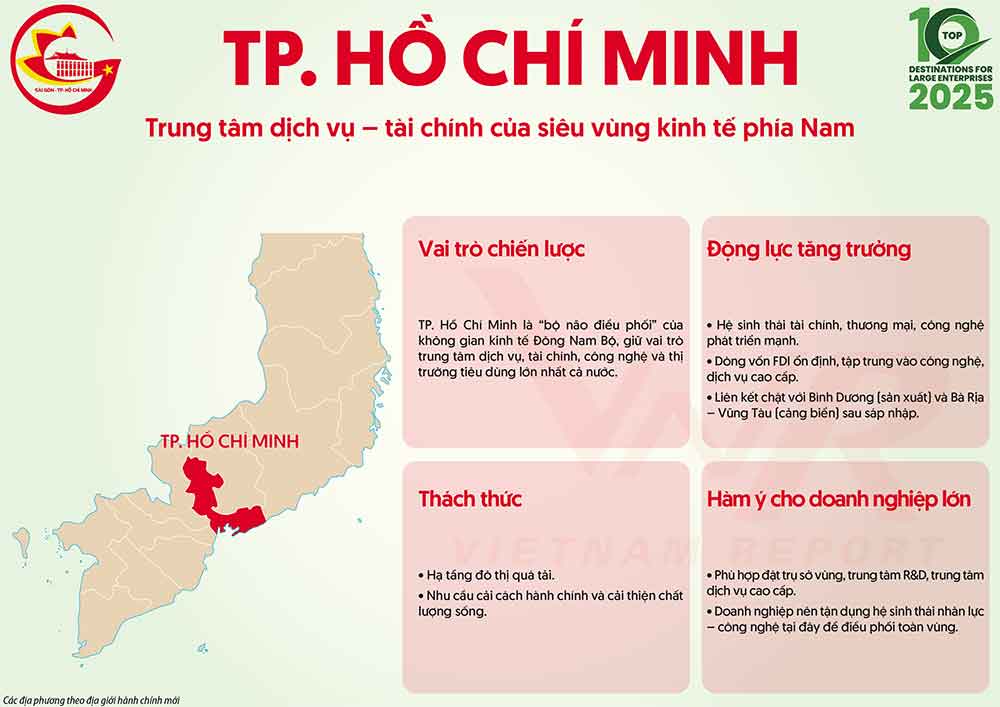
Ho Chi Minh City (HCMC) is entering a crucial repositioning phase, as the process of administrative reorganization and spatial restructuring is opening up a "super economic region" with a scale and influence far exceeding that of a traditional central city. Previously, HCMC, Binh Duong, and Ba Ria – Vung Tau operated as three independent growth poles – services, industry, and seaports – but after the merger, these three components connect into a unified ecosystem, with HCMC playing the coordinating role. Here, decisions regarding capital, products, investment expansion, and innovation are initiated, while the two industrial and port poles play a supporting role, forming a complete arc for production and export.
In the post-merger structure, Ho Chi Minh City's position has not only expanded geographically but also been elevated in terms of economic capacity. The city has become the largest financial and service center in the country, a key destination for attracting FDI capital, and a leader in business model innovation and strategic human resource supply. In the first 10 months of 2025, Ho Chi Minh City attracted newly registered and adjusted FDI capital totaling US$2.63 billion, a 2.1-fold increase compared to the same period in 2024. Through the proposed Bau Bang – Cai Mep railway line, Ho Chi Minh City will play a key role in linking large-scale production systems in Binh Duong and Dong Nai with the Cai Mep – Thi Vai deep-water port cluster in Ba Ria – Vung Tau, creating a seamless transportation-production-export flow that large enterprises can utilize to optimize costs and shorten goods transit time. Based on that foundation, a unique "economic triangle" has been formed: Ho Chi Minh City plays the role of a service and financial center; Binh Duong takes on the role of manufacturing and supporting industries; and Ba Ria - Vung Tau is the international trade gateway. This is a typical model of Asian mega-economic regions such as Greater Tokyo or the Bangkok Metropolitan Region.
Alongside these advantages, Ho Chi Minh City also faces systemic challenges: transportation infrastructure has not kept pace with the rate of urbanization; population pressure and rapidly increasing demand for housing, healthcare, and education; administrative reforms need to be more decisive to match its role as a financial and technology center; and the regional coordination model needs to be standardized to reduce policy conflicts between neighboring localities. However, these challenges also serve as the driving force for Ho Chi Minh City to upgrade its status to a true regional center, integrating science and technology, international finance, logistics, and high-quality services.
In Vietnam's new economic landscape, Ho Chi Minh City is not only the traditional economic engine but is also becoming the strategic pivot of the entire southern region, playing a key role in a growth structure based on technology, innovation, and deep integration into global value chains. Ho Chi Minh City possesses all the elements to become a "mega-economic city" according to international standards – a crucial pillar in the journey to upgrade national competitiveness in the next decade.
As Vietnam enters a period of strong institutional, infrastructure, and growth model restructuring, the story of local development is no longer a disjointed sum of individual localities, but a harmonious blend of strategic growth poles. This year's top 10 most attractive localities for large businesses clearly reflects this: each locality possesses a unique role, core competency, and "position within the regional ecosystem," but all converge on a common goal – upgrading national competitiveness. While Ho Chi Minh City, Hanoi, and Hai Phong form the three axes of trade, finance, and logistics, industrial localities like Bac Ninh, Hung Yen, Dong Nai, Ninh Binh, and Phu Tho act as "production engines," while Quang Ninh and Tay Ninh open up two new growth avenues: marine economy – high-quality tourism and logistics – renewable energy.
This development picture reveals an important rule: business prosperity increasingly depends on the quality of local governance, regional connectivity, and the strength of the value chain that each locality can create. The localities on this list attract large businesses not only through infrastructure or preferential policies, but also through a new development model – where administrative reform, sustainable thinking, long-term planning, and the ability to “activate social resources” become real competitive advantages.
On a deeper level, the Top 10 list of most attractive locations for large businesses in 2025 also sends a clear message: Vietnam's growth in the next decade will come from dynamic regions, not from individual localities. Businesses choosing to locate their headquarters in Ho Chi Minh City, factories in Dong Nai, logistics centers in Hai Phong, or satellite industrial parks in Hung Yen – all reflect a shift towards "regional ecosystems," where each locality plays its right role and creates the right value. The increasingly complex context of climate change also places new demands on regional ecosystems. Recent widespread and severe natural disasters demonstrate that regional interconnectedness not only creates growth advantages but also forms the foundation for increased resilience to climate risks. The ability to protect critical infrastructure, maintain supply chain continuity, and respond to natural disaster shocks is becoming an increasingly important consideration for large businesses when planning medium- and long-term investments.
As Vietnam strives towards ambitious goals in productivity, technology, high-quality exports, and sustainable development, the role of localities becomes increasingly crucial. Localities that proactively implement reforms, lead regional linkages, and reposition their growth models will become top destinations for capital, human resources, and innovation.
The Top 10 Most Attractive Localities for Large Businesses in 2025 is a "strategic map" of the places shaping Vietnam's economic future – new growth poles, "regional anchors," and focal points of capital, technology, and opportunities in the new era of development.
Source: https://baobacninhtv.vn/bac-ninh-xep-thu-2-trong-top-10-dia-phuong-hap-dan-doanh-nghiep-lon-nam-2025-postid433096.bbg


![[Photo] Prime Minister Pham Minh Chinh attends the Conference summarizing and implementing tasks of the judicial sector.](/_next/image?url=https%3A%2F%2Fvphoto.vietnam.vn%2Fthumb%2F1200x675%2Fvietnam%2Fresource%2FIMAGE%2F2025%2F12%2F13%2F1765616082148_dsc-5565-jpg.webp&w=3840&q=75)








































































Comment (0)