

According to Mr. Le Hoang Chau, Chairman of the Ho Chi Minh City Real Estate Association (HoREA), social housing should naturally be affordable because developers are exempt from land use fees and receive tax incentives such as value-added tax and corporate income tax. In addition, developers also receive preferential credit, so the price of social housing will be about 15% cheaper than comparable commercial housing in the same area.
However, he argued that because all legitimate and valid business costs are included in the price, the price of social housing in some projects has reached 21 million VND/m2. In some projects in Hanoi , the price even exceeds 29 million VND/m2. This also means that the investment costs of social housing projects are currently not subject to any restrictions.
“ Currently, we are facing a shortage of social housing supply. The government is also pursuing the goal of building at least 1 million social housing units, and Ho Chi Minh City has been assigned 211,000 units in the period from now until 2030, after the Prime Minister added another 15,000 units to the social housing development target for 2026. This will be an opportunity for businesses to participate in social housing development ,” Mr. Le Hoang Chau assessed.
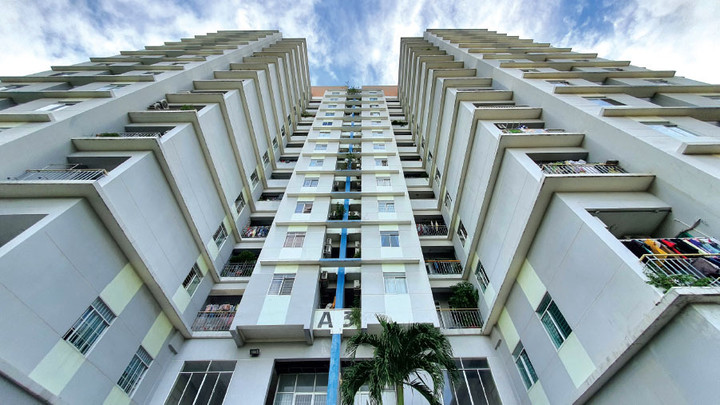
According to experts, there should be no price ceiling for social housing.
According to Mr. Chau, there should be no price ceiling for social housing. He argues that in the past, the price of social housing was capped at under 15 million VND/m2, which discouraged investors from undertaking social housing projects.
However, currently, the Housing Law allows all legitimate, valid, and reasonable business expenses to be included in the price of housing; at the same time, investors are exempt from land use fees, receive tax reductions, and are given preferential credit. Therefore, the price of social housing is still determined by market mechanisms.
Sharing the same view, Mr. Nguyen Anh Que, Chairman of G6 Group, believes that the new regulations, along with inflation leading to increased labor and construction costs, have caused the price of social housing to rise by 20-30% compared to before.
For example, in 2022, the projected price for social housing in Kim Hoa, Hanoi, was around 16.5 million VND/m2, while the price for social housing in Ha Dinh, according to the old regulations, was 19 million VND/m2. However, based on information provided by the investors and published by the Department of Construction, the current price for social housing in Ha Dinh is 25 million VND/m2; in Kim Hoa, it's 21-22 million VND/m2. Projects with complex construction structures can even reach 27-28 million VND/m2. Therefore, imposing a price ceiling on social housing would help increase its accessibility for the people.
However, in reality, this is very difficult to implement because, in the current context, project investment costs are increasing, and imposing price caps may not guarantee profits for businesses, making them even less enthusiastic about building social housing. Whether a social housing project can be implemented depends on the progress of procedures, land clearance, and whether profitability is guaranteed. "Inadvertently, the plan to implement the 1 million social housing project is also affected," Mr. Que commented.
Mr. Le Huu Nghia, Vice Chairman of the Ho Chi Minh City Real Estate Association, also shared the view that a price ceiling should not be imposed on social housing for several reasons. For example, land prices vary from province to province; Ho Chi Minh City will have different prices than Long An and vice versa.
Currently, there are two types of social housing: one where businesses acquire their own land and purchase it, and another where the state provides clean land. In the case of businesses purchasing land, the land cost is added to the house price, making it higher than the price of projects where the state provides clean land. Furthermore, geological conditions vary from place to place, so construction costs will also differ.
Similarly, the construction costs for high-rise social housing will differ from those for low-rise buildings, and prices will vary depending on whether or not a building has a basement. Social housing does not have uniform standards; some are built beautifully and with quality comparable to commercial housing, while others are built at a lower standard. Therefore, how can we predict and set a price ceiling for social housing nationwide?
Meanwhile, if a price ceiling is imposed, developers will calculate the selling price in reverse and use each type of material in a way that minimizes costs to meet the ceiling. This will lead to millions of houses being of very poor quality in the future.
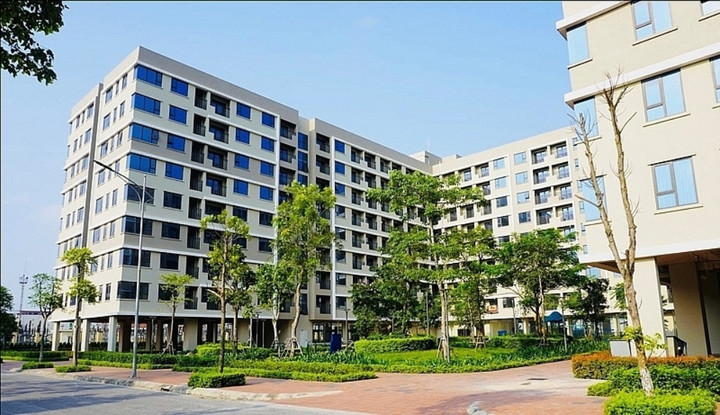
Reducing the price of social housing requires implementing multiple solutions.
" It's extremely difficult to impose a price ceiling on social housing. Currently, even without a price ceiling, the state is still approving and managing social housing prices based on input and output costs and the standard profit margin of businesses. This helps keep social housing prices 15-20% lower than commercial housing due to exemption from land use fees and a reduced value-added tax of 5%. Furthermore, bank loans are also more favorable ," said Mr. Le Huu Nghia.
How can I get a discount?
Mr. Nguyen Anh Que suggested that to reduce the price of social housing, the profit margin could be increased to 13-15%, the value-added tax on social housing would be waived, while the value-added tax on commercial housing would still be collected, land use fees for commercial housing would be waived, and the total profit from social and commercial housing would be combined rather than separated… However, policy adjustments need to be accompanied by control.
According to Mr. Que, a strict mechanism for calculating construction costs needs to be established to avoid excessive price discrepancies between localities. This aims to ensure transparency and fairness. The pricing must ensure that it does not "squeeze" investors, giving them the motivation to participate in the development of social housing, while also not being too "lenient" to prevent profiteering and price gouging.
“ Instead of imposing price caps, let's find a way to create a win-win situation for all three parties. The State achieves its goals in terms of social welfare, stabilizing housing prices, meeting the housing needs of low-income earners, priority groups in society, and those facing difficulties in owning a home, thereby reducing housing pressure, improving quality of life, and contributing to the sustainable development of the community; people can buy at reasonable prices, allowing them to work and produce with peace of mind; and investors can complete social housing projects early and ensure a minimum profit ,” the Chairman of G6 Group emphasized.
To bring social housing prices back to a reasonable level, HoREA Chairman Le Hoang Chau also believes that many solutions are needed, not just government policy support. According to him, market management is crucial because the prices of construction materials, electricity, water, gasoline, etc., have all increased sharply, directly affecting housing prices. In addition, it is necessary to shorten the time for processing social housing project procedures, creating favorable conditions for investors to implement projects and increase the supply of social housing.
Source: https://baolangson.vn/co-nen-ap-gia-tran-nha-o-xa-hoi-5068075.html


![[Photo] Prime Minister Pham Minh Chinh attends the Conference summarizing and implementing tasks of the judicial sector.](/_next/image?url=https%3A%2F%2Fvphoto.vietnam.vn%2Fthumb%2F1200x675%2Fvietnam%2Fresource%2FIMAGE%2F2025%2F12%2F13%2F1765616082148_dsc-5565-jpg.webp&w=3840&q=75)
























































































Comment (0)