

Hanoi consistently ranks among the world's most polluted cities, with pollution levels reaching high levels at various times, leaving residents feeling suffocated.
At its peak, on the night of December 12th, Hanoi 's air quality recorded the most severe levels of pollution since the beginning of the year, with many monitoring stations showing the Air Quality Index (AQI) reaching hazardous levels.
At 10 PM, the monitoring station of Hanoi University of Technology (Giai Phong Street), operated by the Department of Environment, displayed an AQI of 282 - the highest level since the beginning of winter and approaching the hazardous threshold (above 300). At this location, from the afternoon of December 12th, the AQI index continuously escalated with each hourly update.
The Giai Phong station also recorded very poor air quality for 36 consecutive hours (from 7 am on December 11th), marking the most severe air pollution episode since the beginning of the season.
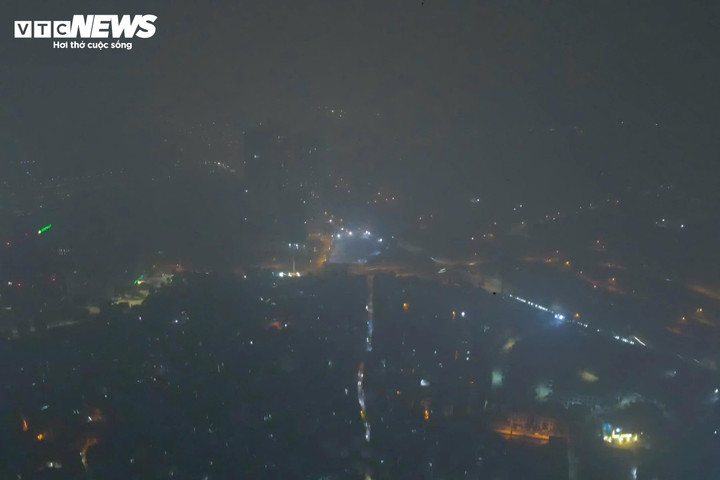
On the night of December 12th, Hanoi was shrouded in a thick layer of smog caused by fine dust and air pollution, the streetlights appearing dim against the dark gray sky.
Air pollution is not just a matter of dry numbers on a monitoring board; it is directly impacting the health and daily lives of Hanoi residents.
Sharing with reporters, Ms. Pham Thu Ha (34 years old, residing in Tu Liem ward) said: "One morning, I went out to work and saw the AQI reading from the monitoring station was over 200. I felt suffocated and had difficulty breathing. Although the city has deployed water spraying trucks and fogging vehicles to reduce pollution, these are only temporary solutions. After a very short time, the air becomes thick and heavy again."
According to reports and statistics from authorities, air pollution in Hanoi currently originates from various sources, with traffic being one of the five main causes. According to data from the Hanoi Department of Construction, the city has over 7.6 million motorbikes and nearly 1.2 million cars, generating a significant amount of PM2.5 fine dust and exhaust fumes, accounting for a substantial proportion of total urban emissions. Following this are industrial zones and recycling villages, which are "significantly contributing dust and toxic gases" to the inner city.
The burning of straw and waste in suburban areas is also a major source of pollution, with statistics from the Ministry of Agriculture and Environment showing that smoke from burning agricultural by-products repeatedly causes a surge in PM2.5 in Hanoi during the dry season.
In addition, thousands of construction and road digging projects each year continue to release inorganic dust, spilled materials, and exhaust fumes from uncovered trucks carrying materials, causing a serious decline in air quality.
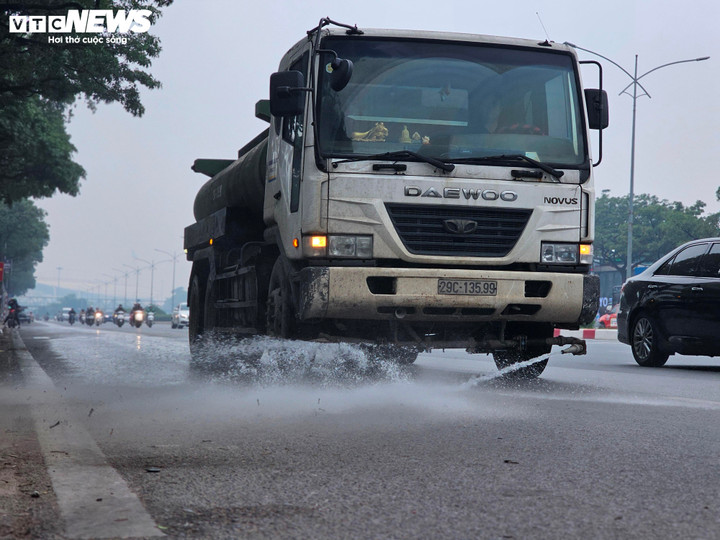
To reduce air pollution, the urban environmental company Urenco 7 has deployed three water-spraying vehicles to patrol several inner-city routes from 8:30 AM to 3:00 PM every day.
In some suburban communes of Hanoi, the burning of rice straw after harvest has resurfaced in recent days, contributing to a surge in PM2.5 levels in the early morning and late evening. Despite continuous public awareness campaigns and regulations prohibiting it, the burning of rice straw continues openly in fields, along highway access roads, and even near residential areas. From above, dozens of columns of white smoke can be seen rising simultaneously, stretching for kilometers.
"We know it's banned, but the fields are vast, there's a lot of straw, and not every household can afford to rent a machine or have a place to collect it. People have been used to burning straw for generations, so it's very difficult to stop now," said Ms. Nguyen Thi Lua, a farmer in Phuc Tho commune.
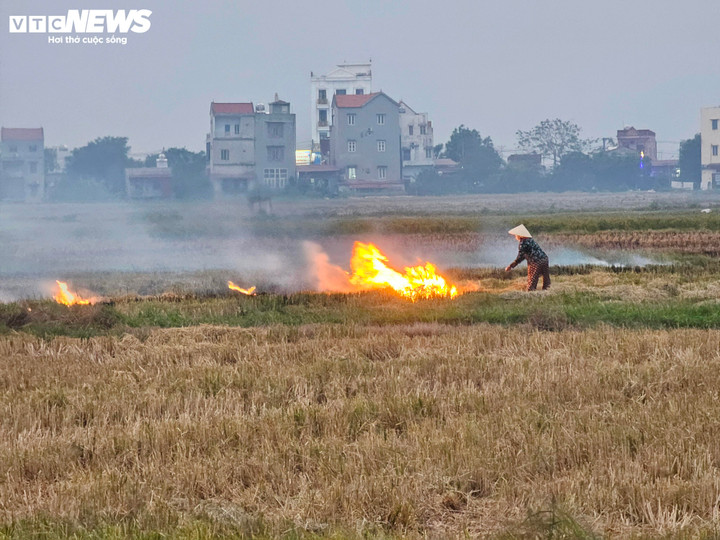
Burning rice straw has become a deeply ingrained habit for many farmers.
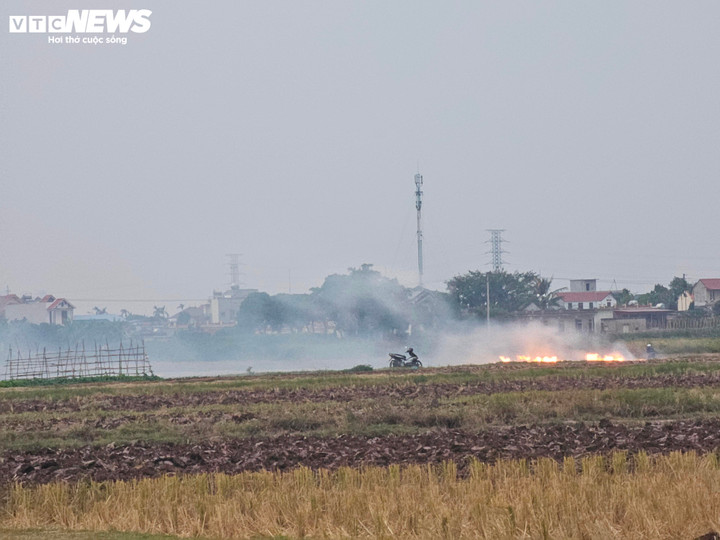
When faced with temperature inversions, this layer of smoke doesn't rise but is compressed downwards, carried by the wind directly into the city center.
According to environmental experts, burning rice straw is one of the biggest sources of fine dust and toxic gas emissions during the harvest season in the Northern Delta region. Each hectare of burned rice straw can release tens of kilograms of PM2.5 along with a range of toxic gases such as CO, NOx, and persistent organic compounds. Significantly, this activity coincides with cold weather and high humidity, preventing the smoke from dispersing and creating localized "pollution hotspots" that then spread into urban areas.
Besides smoke and dust from burning straw and construction sites, residents also face the problem of some production facilities and factories discharging emissions directly into the environment. Along the Thang Long Boulevard service road, or in the area around small industrial clusters in Hoai Duc commune, chimneys operating day and night continuously emit thick, gray gas with an unpleasant, acrid smell.
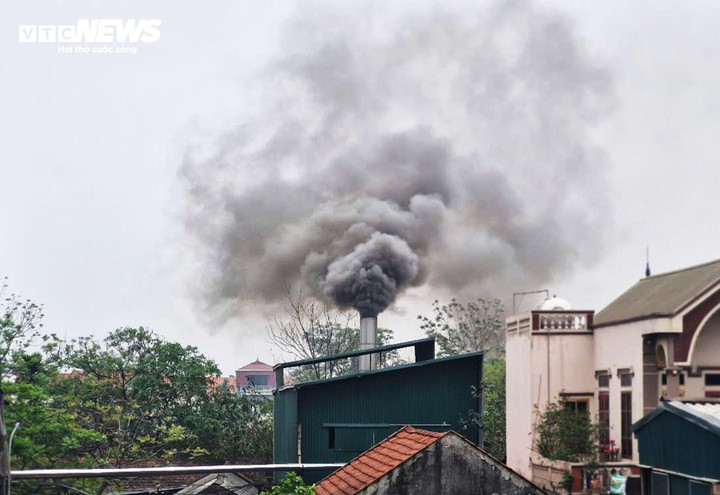
A manufacturing facility in Hoai Duc commune is emitting black smoke into the environment, negatively impacting the daily lives of local residents. (Photo: Provided by residents)
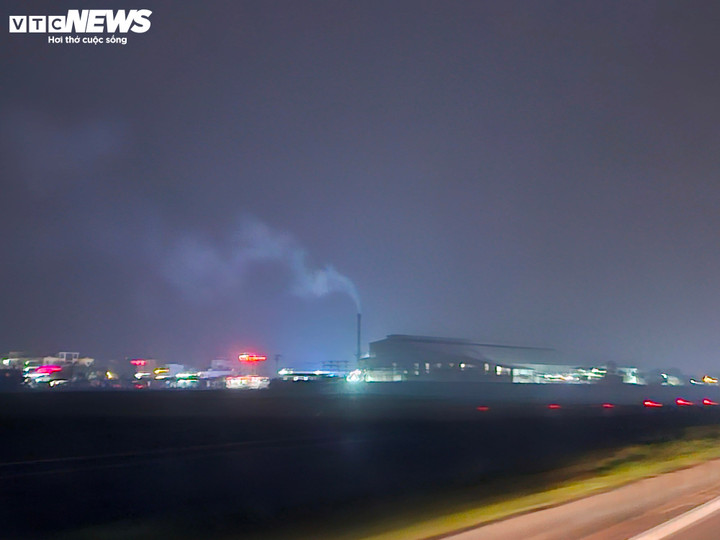
Ms. Le Thi Nguyet, a resident of Hoai Duc commune, shared: “On some days, when the wind changes direction, the whole village is engulfed in the smell of industrial smoke. Children in the house cough constantly, and adults suffer from headaches and stinging eyes. Sometimes we even have to wear masks indoors. We have complained many times, but the situation only improves for a while before returning to its previous state.”
According to residents, many small-scale production facilities operate interspersed within residential areas, with inadequate or inadequately functioning exhaust gas treatment systems. In the evenings, especially between 7 PM and 11 PM, the amount of smoke released is significantly higher, as this is the time when authorities find it most difficult to conduct inspections. This leads to a continuous decline in air quality in the area, creating localized pollution "hot spots" that monitoring data struggles to fully reflect.
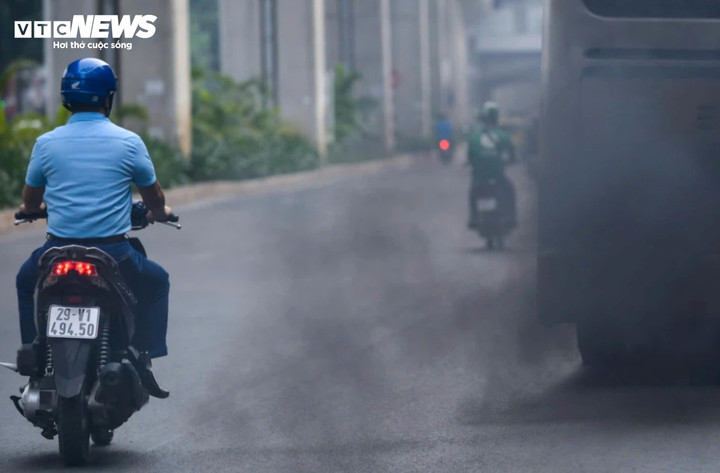
Traffic is one of the top five sources of air pollution emissions.
On December 10th, the Chairman of the Hanoi People's Committee issued Directive 19, requiring all departments, agencies, and localities to implement urgent measures to control air pollution amidst several days of "bad" and "very bad" AQI levels. The city demanded stricter management of industrial emissions, inspection of all waste treatment facilities, severe penalties for burning garbage and straw, increased dust suppression through misting, and street cleaning.
100% of construction sites must have dust control and monitoring systems in place; vehicles transporting materials without proper covering will be severely penalized. The city police have been tasked with launching a high-intensity campaign to inspect for violations.
The health and education sectors must advise residents and students to limit outdoor activities when pollution levels are high. Production facilities with a high risk of pollution must ensure their exhaust gas treatment systems operate effectively and absolutely not discharge untreated waste. The city also requires an increase in the frequency of street sweeping, vacuuming, and washing, and mobilizes the community to monitor polluting activities in the area.
Breathing the air outdoors these days is as harmful as smoking 2-8 cigarettes. Assessing the impact of air quality on health, Dr. Doan Du Manh, from the Vietnam Vascular Disease Association, stated that breathing the air outdoors these days "causes harm equivalent to smoking 2-8 cigarettes." PM2.5 fine dust particles, with a size only about 1/30th the size of a human hair, easily penetrate deep into the respiratory system. As they pass through the bronchi and reach the alveoli, they irritate the mucous membranes, trigger inflammatory responses, and can lead to lung tissue fibrosis, impairing respiratory function over time. According to Dr. Vu Van Thanh, Head of the Chronic Lung Disease Department at the Central Lung Hospital : “Dust from traffic and construction sites is mainly inorganic dust, while dust from factories contains many toxic chemicals. Both types of dust can cause acute effects on the respiratory system. They directly attack the mucous membrane of the airways, weaken the body's natural defenses, and can adhere to the lungs for a long time.” According to Dr. Thanh, when the mucous membrane is damaged, each breath, which always carries microorganisms from the air, becomes a potential risk. The most vulnerable groups are the elderly, young children, and those with underlying respiratory conditions such as asthma or chronic bronchitis. "When the airway's protective barrier is weakened, patients are highly susceptible to acute infections, exacerbations of chronic lung disease, and, with prolonged exposure, a higher risk of lung cancer," the doctor emphasized. |
Source: https://baolangson.vn/khoi-den-xa-thang-len-troi-ruong-dong-van-do-lua-giua-ngay-o-nhiem-dinh-diem-5068003.html











































































Comment (0)