

Previously, many people were hesitant to buy houses in suburban areas, far from the city center, due to concerns about difficult commuting and a lack of services and amenities. However, this mindset has clearly changed in recent years.
Thanks to good infrastructure connections facilitating convenient transportation and the development of numerous large megacities with complete and high-class living amenities, suburban urban areas are becoming a new trend in the real estate market.
Mr. Nguyen Tan Phat (an investor in Hanoi ) shared that in June 2024, he bought an apartment of over 60 m² in a mega-city in eastern Hanoi for over 3 billion VND. Recently, many real estate agents have been constantly calling or texting him, asking to buy it back for 3.8 - 4 billion VND.
" The real estate agent said my apartment has a reasonable size, so there are many potential buyers. If I agree, they can sell it for around 4 billion VND. They even guaranteed a buyer would put down a deposit immediately if I agreed ," Mr. Phat recounted.
The offer price was more than 1 billion VND higher than the initial price, which surprised Mr. Phat. However, because he needed a place to live, Mr. Phat had no intention of selling it yet.
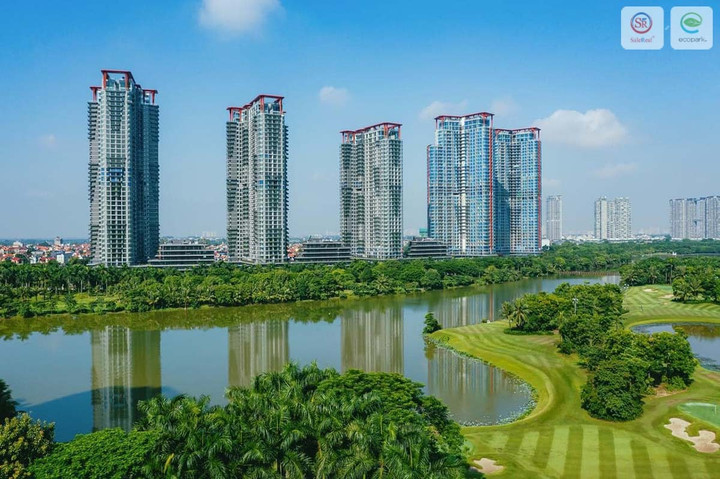
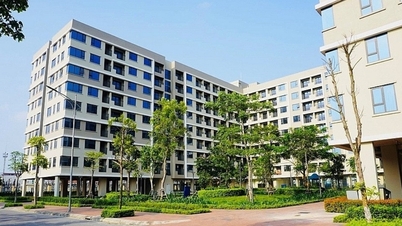
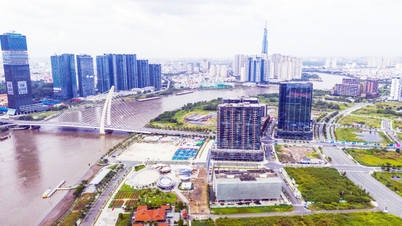
Suburban megacities attract buyers thanks to their green living spaces and comprehensive amenities.
" Houses in mega-cities usually appreciate in value better than those in smaller, independent neighborhoods because mega-cities have convenient transportation systems and good connections to central Hanoi. The urban areas offer a full range of amenities, from large playgrounds to schools, supermarkets, and restaurants... In general, residents lack nothing. Even if they don't have to go to work, they don't need to leave the urban area," Mr. Phat explained.
Similarly, Mr. Nguyen Van Thang (Hanoi, 60 years old) shared that two years ago, he decided to sell his old house in a small alley in the heart of the capital and move to a megacity in western Hanoi.
After settling in the megacity, the couple's lifestyle changed completely. Instead of walking several kilometers to the park for a morning stroll, they now take walks twice a day in the park right below their building, chatting with friends their own age.
Mr. Thang also found ways to improve both his physical and mental health through activities such as practicing Tai Chi, playing chess, and fishing, right in his neighborhood. These diverse community activities are all part of the plan to develop the "Living Happily, Healthily, and Greenly in a Civilized Lifestyle" Club in the megacity.
According to him, many people prefer and choose large urban areas because of their ample amenities and superior living environment, ranging from security and safety to entertainment, shopping, healthcare , and customer service.
" Since moving here, I've hardly needed to leave the urban area for a whole month because all the services and amenities are readily available. From supermarkets, restaurants, parks, playgrounds, cafes, hospitals, schools... everything is there. I can even walk to these places without needing a motorbike," Mr. Thang confided.
According to David Jackson, General Director of Avison Young Vietnam, the trend of buying houses in Hanoi is clearly shifting towards satellite urban areas thanks to the strong development of connecting infrastructure.
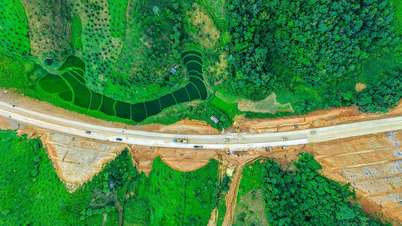
In particular, areas along major transportation routes such as Ring Road 3.5 (connecting Hanoi with Van Giang district, Hung Yen province) and Ring Road 4 (passing through Hanoi, Hung Yen, and Bac Ninh ) are becoming attractive destinations for homebuyers.
The increasingly improved transportation infrastructure not only enhances inter-regional connectivity but also promotes the development of satellite urban areas, creating new opportunities for the regional real estate market.
Sharing the same view, Mr. Bach Duong - General Director of PropertyGuru Vietnam, also said that the trend of moving to satellite cities is driven by the Hanoi Capital City planning focusing on developing regional linkages with neighboring localities.
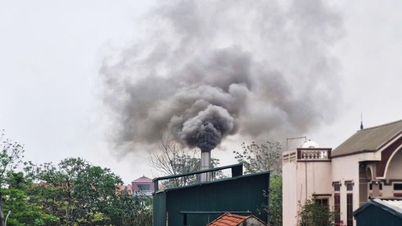
The synchronized investment in infrastructure, including the Ring Roads 2 and 3, expressways, and metro lines, has made inter-regional connectivity more convenient. Furthermore, the high population density and air pollution in the inner city are also reasons why many people are more interested in suburban areas, where the air is cleaner and the population is less concentrated.
Localities such as Vinh Phuc, Hung Yen, and Ha Nam are becoming attractive destinations thanks to their ample land resources, increasingly improved transportation infrastructure, and sustainable urban development policies.
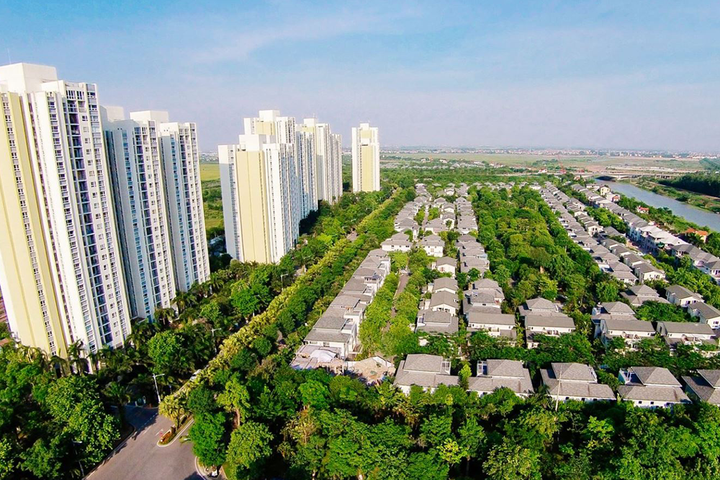
Suburban megacities also offer good growth potential for investors.
Along with that, real estate prices in these localities have also increased steadily, showing long-term potential. For example, real estate prices in Vinh Phuc increased by 33%, and in Bac Ninh by 45%... during the period 2022-2024.
Mr. Duong also emphasized that the capital city is transforming according to the "Hanoi expansion" trend, and many large investors have developed key projects, supplementing the real estate supply in satellite cities with the emergence of a series of new urban areas. Most of these projects attract a large number of residents to live, play, and work there.
Megacities will attract investment.
Nguyen The Diep, Vice President of the Hanoi Real Estate Club, believes that in reality, people's needs will become increasingly higher and more demanding.
Previously, the need was simply to have a basic, sturdy house, but now, homebuyers are no longer just concerned with ownership but are particularly focused on the quality of their surrounding living environment. They prioritize choosing megacities because they want to live in a safe space with plenty of greenery, complete with schools, hospitals, shopping malls, entertainment and sports facilities, resident care services, etc., and they want all these amenities to be within very close proximity.
Conversely, living in small, isolated residential areas lacking amenities forces residents to travel frequently, wasting a lot of time and putting pressure on traffic and the environment.
Once people have experienced the megacity model, they will find it difficult to return to fragmented residential areas. The convenience, safety, and quality of life that megacities create have become the new standard. In other words, it is the people themselves who are driving the market's shift towards megacities that are fully equipped, civilized, and professionally managed.
Sharing the same view, Ms. Do Thi Thu Hang, Director of Research at Savills Vietnam, predicted: "Urban areas with strategic locations, convenient transportation connections, and integrated amenities will continue to be bright spots attracting both investors and real estate buyers."
Several large businesses are heavily investing in large-scale urban development projects. With the strong development of transportation infrastructure and supportive government policies, well-planned large-scale urban areas will continue to attract buyers in the coming years.
According to experts, international investors will prioritize projects with comprehensive planning, transparent legal frameworks, and sufficient scale to ensure growth potential. World-class megacities will become "safe destinations" for foreign capital thanks to their internationally standardized planning, smart ecosystems, and modern management technologies.
When FDI flows into real estate, the construction, trade, and service sectors also benefit, creating a positive economic cycle.
Furthermore, differences in living standards, the completeness of amenities, integrated planning, and the developer's reputation give megacities a clear advantage in the minds of modern buyers. Megacities offer an ideal living environment – greener, smarter, and more conveniently connected – while simultaneously creating an internal market with high demand for housing, good liquidity, and sustainable price appreciation.
Investors also prioritize large-scale projects due to their long-term vision and low risk of delays. Meanwhile, small-scale projects lacking amenities and with fragmented legal frameworks are gradually losing their appeal, struggling to compete in terms of both quality of life and investment value.
Source: https://baolangson.vn/dat-ven-do-it-nguoi-muon-mua-bien-thanh-nhung-sieu-do-thi-hut-khach-5068049.html


![[Photo] Prime Minister Pham Minh Chinh attends the Conference summarizing and implementing tasks of the judicial sector.](/_next/image?url=https%3A%2F%2Fvphoto.vietnam.vn%2Fthumb%2F1200x675%2Fvietnam%2Fresource%2FIMAGE%2F2025%2F12%2F13%2F1765616082148_dsc-5565-jpg.webp&w=3840&q=75)












































































Comment (0)