

According to Les Echos, there are many reasons why Southeast Asia has become a key market for French companies. With nearly 700 million people, an average annual economic growth rate of over 4%, and a continuously expanding middle class, Southeast Asia is considered a "strategic gateway" to Asia. Figures from the French Ministry of Finance show that in 2024, French exports to ASEAN reached €14.3 billion ($16.7 billion), making the region Paris's sixth largest customer, after the European Union (EU), the United States, China, the United Kingdom, and Switzerland. Singapore continues to be the largest market for French goods, accounting for 53% of the total value of French exports to ASEAN, followed by Thailand, Vietnam, and Malaysia.
Yann Frollo de Kerlivio, Director of the ASEAN-Oceania region at Business France, the French trade and investment promotion agency, noted that ASEAN is playing a central role between the two major markets of China and India, and is directly benefiting from global geopolitical tensions.
According to Yann Frollo de Kerlivio, since Donald Trump's first term as US President, many companies have pursued a "China + 1" strategy. This is a business strategy employed by multinational corporations to diversify their supply chains, reducing dependence and risks associated with concentrating production solely in China, by expanding production to one or more other countries, including Southeast Asian nations like Vietnam and Thailand, to enhance flexibility, security, and cost efficiency. Yann Frollo de Kerlivio believes this trend benefits the "new Asian tigers" (a term referring to countries with strong, outstanding economies ), thereby solidifying their increasingly important role.
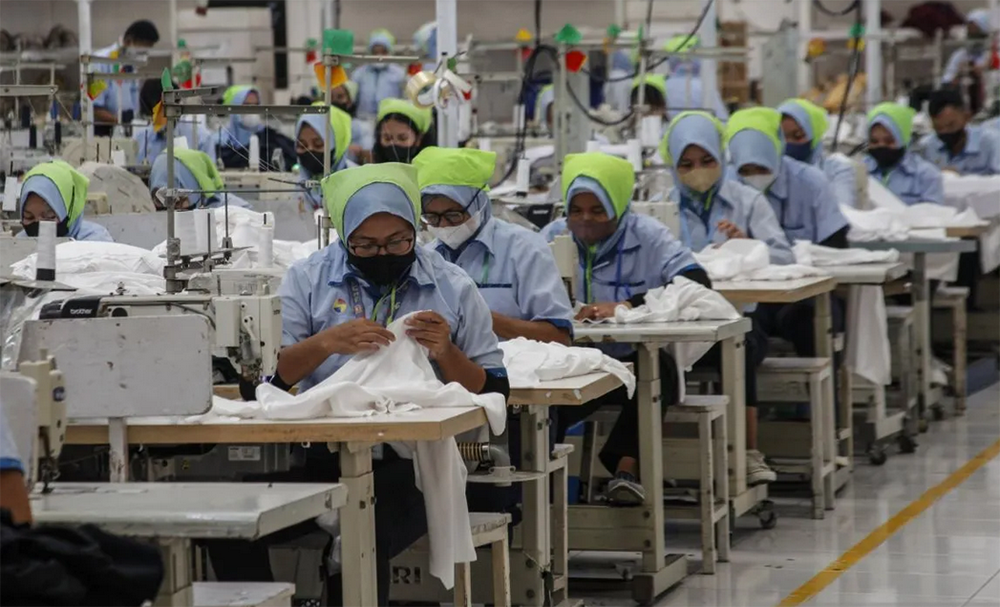
In the trend of international corporations diversifying their supply chains, Vietnam is considered one of the leading beneficiaries. Many international corporations have chosen Vietnam as a location to expand production or establish regional distribution centers. In the textile and garment sector, several major brands such as Adidas, Puma, and Decathlon have moved part of their production to Vietnam. In the electronics sector, many manufacturers are also taking advantage of Vietnam's high-quality workforce and rapidly developing supply network.
Another important factor is the Vietnam-EU Free Trade Agreement (EVFTA), as well as agreements between the EU and Singapore, and soon with Indonesia. These agreements help reduce tariffs, creating conditions for French businesses to develop more efficient and competitive supply chains in the region.
It is evident that the Trump administration's aggressive application of tariffs has had numerous impacts, leading to a reshaping of global trade. However, this has inadvertently become a catalyst for the restructuring of Asian trade, particularly in Southeast Asia. From fearing becoming victims of protectionism, ASEAN economies have rapidly transformed, proactively expanding multilateral and bilateral cooperation mechanisms, becoming "connecting hubs" in the new wave of trade integration. Free trade agreements have facilitated ASEAN's integration into the global economy and shaped regional dynamics, making the region one of the most dynamically connected and developed regions in the world, with outstanding economic growth and increasing attractiveness in the global value chain.
Nevertheless, the ASEAN market still presents challenges for French businesses. The diversity of political systems, levels of economic development, and numerous socio-cultural differences among member countries forces French companies to be flexible in their strategies for accessing each market. Furthermore, it is a fiercely competitive market, with China being the region's largest supplier. Meanwhile, the market share of French goods in ASEAN is currently only about 1.5%, half that of Germany.
Determined to strengthen economic and trade ties between Paris and the ASEAN region, French President Emmanuel Macron has called for expanding trade agreements between the EU and ASEAN. His visit to three Southeast Asian countries at the end of May also demonstrated Paris's resolve to expand its economic presence in ASEAN, which is increasingly playing a central role in global value chains.
Source: https://baolangson.vn/dong-nam-a-tro-thanh-diem-tua-chien-luoc-cua-cac-doanh-nghiep-phap-5068006.html





























































Comment (0)