

Breakthrough from winter crops
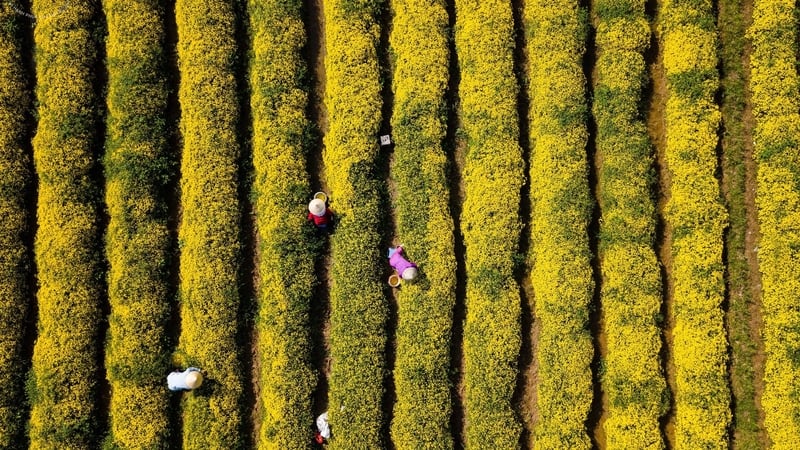
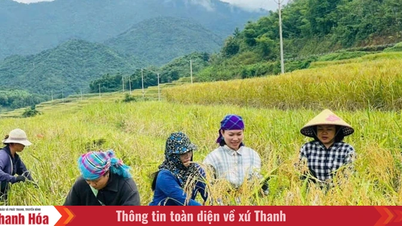
These days, we visited Binh An village – considered the "capital" of jicama cultivation in Luc Nam commune, as most households in the village grow this crop. Across the fields, vast expanses of green jicama plants stretch towards the sun in the winter weather, promising another bountiful harvest. The villagers brave the weather to care for the plants, ensuring their healthy growth and development.
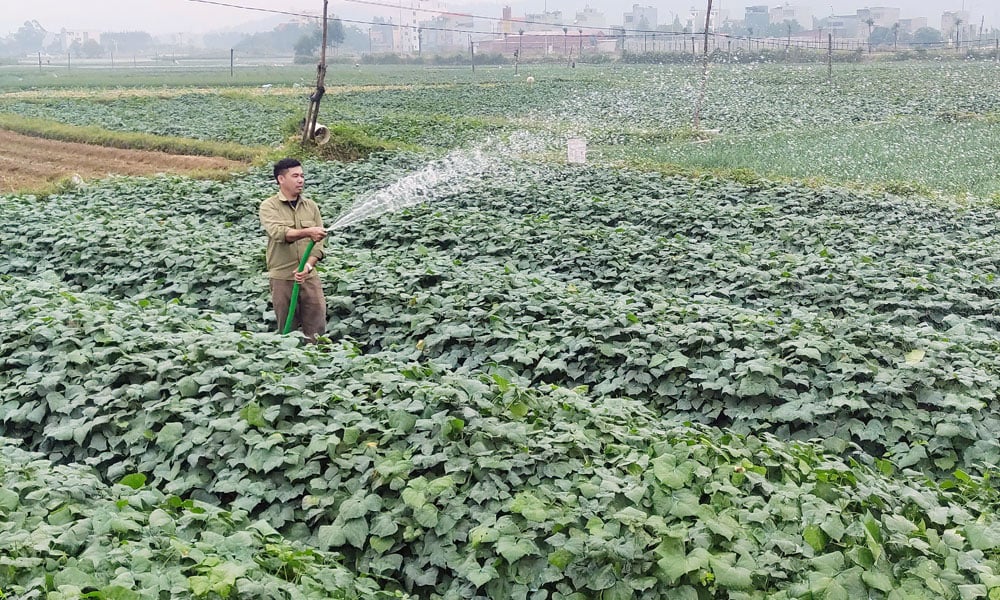 |
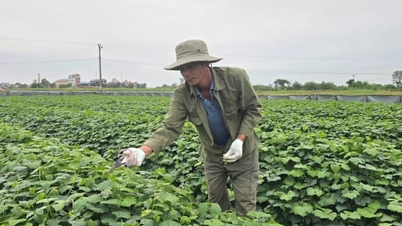
Mr. Nguyen Duc Thang, from Binh An village, is tending to his family's jicama crop. |
On her family's farm, Ms. Nguyen Thi Nhan (born in 1975), from Binh An village, is cleaning and clearing the drainage ditches around her family's jicama growing area to prevent rats from damaging the crops. According to Ms. Nhan, in the past, during the winter season, she, like other households in the village, would often leave her fields and work as a seasonal laborer to earn extra income.
Over 10 years ago, she began focusing on developing winter crops. Initially, she only cultivated 1-2 sao (approximately 1000 square meters) of land, but after seeing the effectiveness, she expanded production to the entire agricultural land of her family. To increase income, during the 3 months of the winter season, she intensively cultivates and intercrops many different types of crops. For example, this winter season, on an area of 6 sao, she planted 4 sao of jicama and 2 sao of kohlrabi. A few days ago, her family harvested 1 sao of early kohlrabi, yielding 1 ton per sao. With a selling price of 18,000 VND/kg, she earned 18 million VND per sao.
Not far from Ms. Nhẫn's spacious plot of land, Mr. Nguyễn Đức Thắng (born in 1975), also residing in Bình An village, is watering his rows of thriving jicama plants. It is known that this winter season, on his family's 6 sao (approximately 0.6 hectares) of agricultural land, Mr. Thắng planted 4 sao of jicama and the rest with onions.
To ensure a reliable water supply for his crops, he invested in drilling wells and extending electricity to his fields. He anticipates harvesting all of his family's winter crops before the upcoming Lunar New Year, bringing in over 60 million VND. "Along with winter crops, I also maintain cultivation of other crops such as watermelons and taro on my family's agricultural land. Thanks to our experience in farming, my wife and I earn over 40 million VND per sao (approximately 1000 square meters) annually from these different crops," shared Mr. Nguyen Duc Thang.
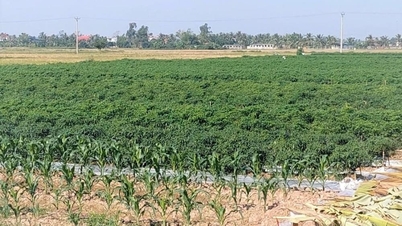
With over 5,000 hectares of agricultural land, Luc Nam commune has many favorable conditions for developing winter crop production. This winter season alone, the entire commune planted over 1,000 hectares, including 792 hectares of various vegetables. Thanks to winter crop production, many households have achieved stable incomes and risen out of poverty.
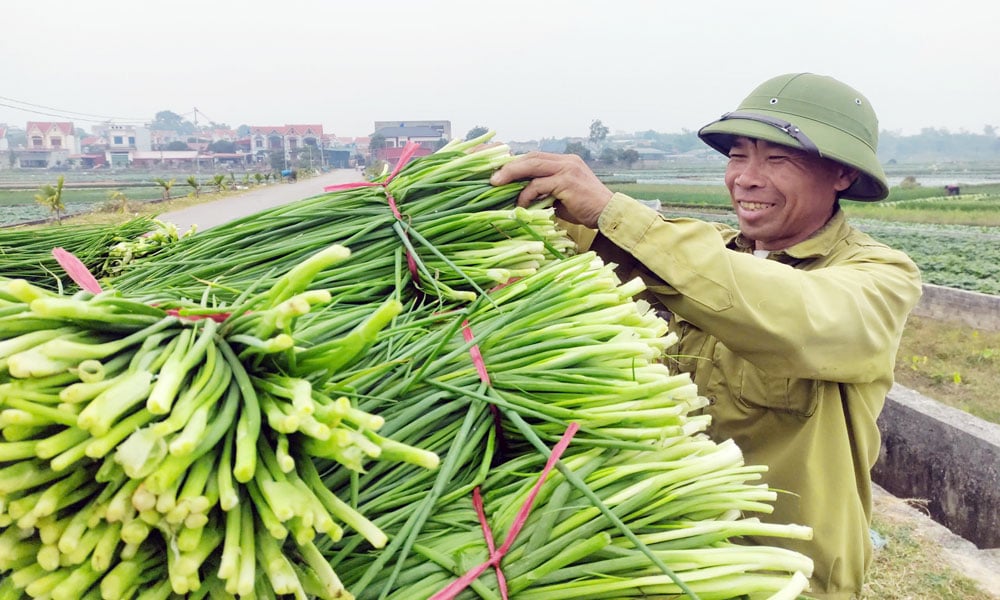 |
The joy of a bountiful onion harvest for farmers in Ha My village. |
For example, consider the case of Ms. Nguyen Thi Ho (born in 1959) from Binh An village. Previously, on her family's 5 sao (approximately 0.5 hectares) of agricultural land, she only cultivated two rice crops per year to have rice to eat, leaving the rest fallow. Thanks to the village Party committee, the village management board, and the guidance of the village farmers' association, she started planting winter crops in 2023. As a result, she increased her income, and in 2024, her family was removed from the list of near-poor households.
Similarly, the family of Mr. Nguyen Van Quan (born in 1972), residing in Ha My village, also escaped poverty thanks to developing winter crops on their 3 sao (approximately 0.3 hectares) of agricultural land. Likewise, Mr. Nguyen Van Song (born in 1961), also residing in Ha My village, boldly invested in planting winter crops on his 5 sao of agricultural land, and expects to move out of near-poverty this year. Comrade Nguyen Van Luu, Secretary of the Party Branch of Ha My village, stated: “Thanks to leveraging the advantages of winter crop cultivation, many families in the village have stable incomes and have escaped poverty. In 2025 alone, it is projected that the village will have an additional 4 households escaping poverty and 7 households escaping near-poverty.”
Support for production and product distribution.
Taking advantage of its agricultural land, in recent years, Luc Nam commune has focused on promoting and encouraging people to expand the cultivated area and introduce new crop varieties. Specifically during the winter season, the commune aims to concentrate on a number of key crops that people have experience in producing and that have high economic value, such as jicama, kohlrabi, onions, and cabbage. According to statistics, during the period 2020-2025, the commune's annual agricultural production value is projected to increase by 8%, with an average value of 130 million VND/hectare/year per hectare of agricultural land.
However, assessments show that the value of winter crop production in the commune is not commensurate with its potential, and farmers face many risks… The main reasons are still the mass planting and harvesting at the same time; the continuous increase in input costs; and the shortage of labor during the harvest season. In addition, the linkages for product consumption are not sustainable and depend on the market… “Growing winter crops is like fishing because it depends on the market. Sometimes, when prices are good, my family earns 17-20 million VND per sao (approximately 1000 square meters) of jicama, but other times, we only earn 6-8 million VND per sao,” said Ms. Nguyen Thi Nhan.
Drawing on lessons learned from previous experiences, immediately upon establishing a two-tiered local government system, and alongside the completion of socio-economic development programs and plans, the People's Committee of Luc Nam commune proactively developed a plan for winter crop development.
Accordingly, the locality has determined that the winter crop is the main production season for commercial vegetable crops, with ample room for expansion to increase value per unit area and boost farmers' income. Simultaneously, it requires specialized agencies to select and arrange a rational structure of warm-weather, cold-weather, and neutral crops according to the seasonal calendar to diversify products and spread out harvests; focusing on expanding the area of high-value and economically efficient crops, linked to market demand.
Encourage forms of land consolidation, large-scale concentrated production in specific areas, and promote the synchronized application of mechanization, advanced techniques, high technology, and safe production practices... in order to reduce investment costs, improve productivity, product quality, and production efficiency.
In fulfilling their responsibilities, officials from the Economic and Social Affairs Department proactively monitor the local area, encouraging and guiding households and groups of households to expand production linkages and post-harvest product distribution through contracts. Simultaneously, they connect with and find stable outlets to supply supermarkets, organic vegetable store chains, industrial zones, schools, etc., aiming to enhance the value and efficiency of production. They closely monitor weather conditions and pest outbreaks to provide timely guidance and advice to the people on caring for and controlling pests and diseases in unharvested vegetable crops.
“With the area ready for harvest, we guide farmers to harvest quickly and efficiently to supply products to the market, taking advantage of the current high prices and having land to cultivate another crop to serve the Lunar New Year market. We encourage people to promote business methods through social media, both to expand the market for local products and to promote digital transformation in agriculture,” said Comrade Tran Van Canh, specialist of the Economic Department of Luc Nam commune.
Source: https://baobacninhtv.vn/luc-nam-mo-rong-lien-ket-nang-gia-tri-cay-vu-dong-postid433060.bbg








































































Comment (0)