

The digital age we live in – where social media and multimedia have gradually become an inseparable "living space" for everyone, especially young people – sees the selection and worship of idols as not only a cultural trend but also a widespread social phenomenon.
Technology has created a flat world where stars can connect with fans with just a click of a mouse. However, the downside of this fame and influence also raises many issues, from shaping perceptions to the risk of leading young people into deviant lifestyles.
From role models to the depths of crisis
In the modern context, idols are no longer limited to entertainment stars or athletes. Today's youth aspire to a wider range of role models: from doctors, teachers, scientists , down-to-earth farmers, construction workers, and even digital content creators. This reflects a significant shift in the values of Generation Z and Gen Alpha – those who value authenticity, dedication, and the ability to create social impact.
During the Covid-19 pandemic, the image of resilient doctors and nurses on the front lines became a symbol of courage and selfless sacrifice. Many young people created fan pages, sharing stories about these "white-coat warriors," thereby spreading the message of community responsibility. This is a prime example of the positive impact of choosing role models based on their intrinsic values.
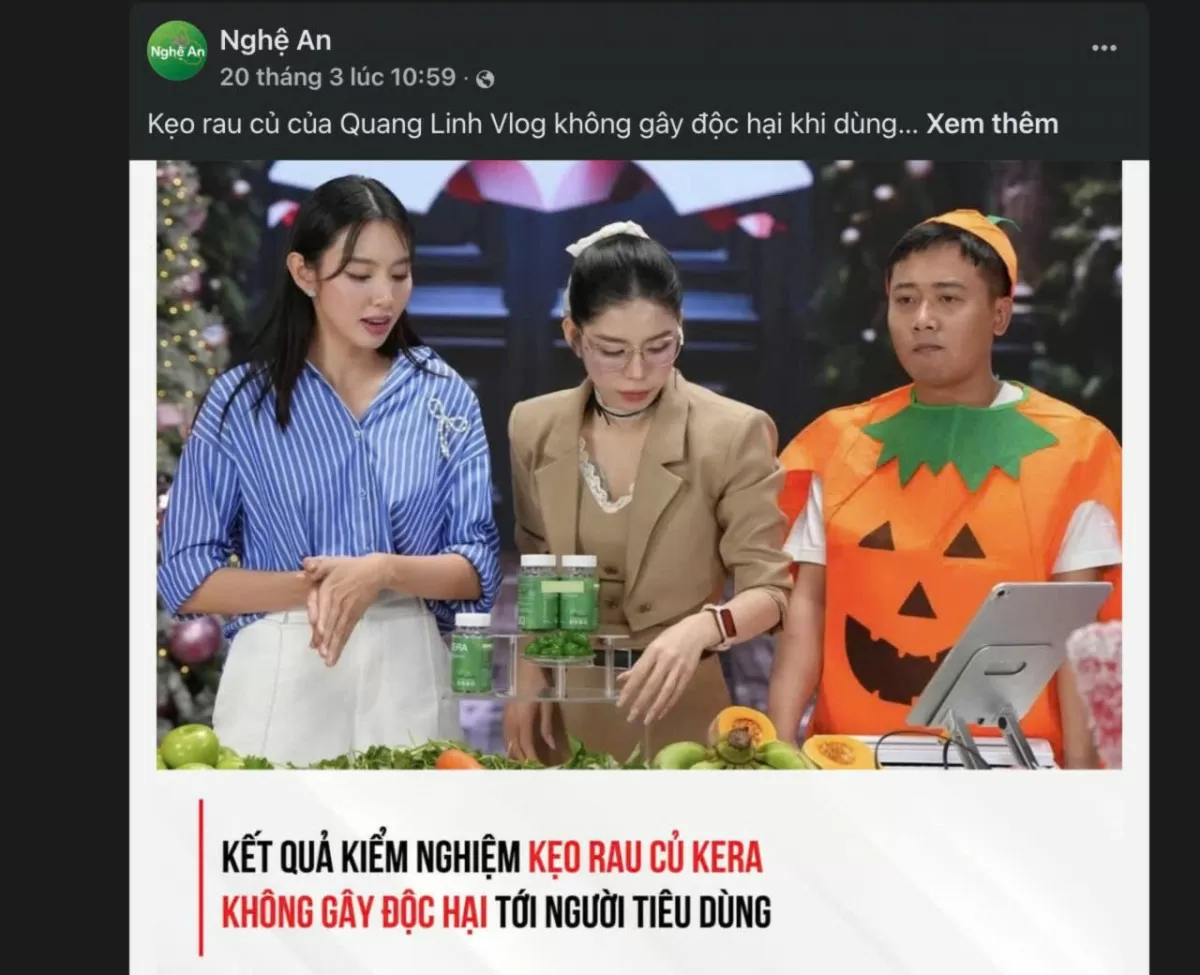 |
| Numerous social media pages simultaneously posted information related to the scandal involving Hang "Du Muc" and Quang Linh Vlogs. - Photo: Screenshot |
However, the downside of fame also becomes apparent when many young people place blind faith in fleeting stars.
A prime example is the scandal involving singer Jack in 2021, when a series of accusations about his dissolute lifestyle and uncivilized behavior were exposed. Instead of condemning him, a segment of his fans justified his actions, even threatening those who criticized their idol. This lack of discernment demonstrates how excessive idolization can distort perception, turning fans into "tools" to defend wrongdoings.
Social media and the mainstream media play a dual role in shaping the image of idols. On the one hand, they facilitate the recognition of talented individuals; on the other hand, they inflate fame based on artificial values. Driven by profit, entertainment companies often build artists' images using a "perfection" formula, transforming them into flawless figures. While this strategy attracts a large fan base, it has also led to numerous major scandals exposing truths that have shaken the trust of young people.
The recent case of actor Kim Soo Hyun in South Korea is a clear example. In 2023, the actor was accused of having an inappropriate romantic relationship with his co-star Kim Sae Ron (who was only 15 years old at the time), along with controversies surrounding money Kim Sae Ron allegedly borrowed. Although no official conclusion has been reached, the scandal has severely damaged Kim Soo Hyun's career and shaken the entire South Korean entertainment industry – where the image of a "flawless star" is considered crucial for survival.
Similarly, in Vietnam, the cases of Hang "Ngu Muc" and Quang Linh Vlogs, despite initially portraying positive lifestyles and mindsets, show that both made missteps while pursuing their business careers.
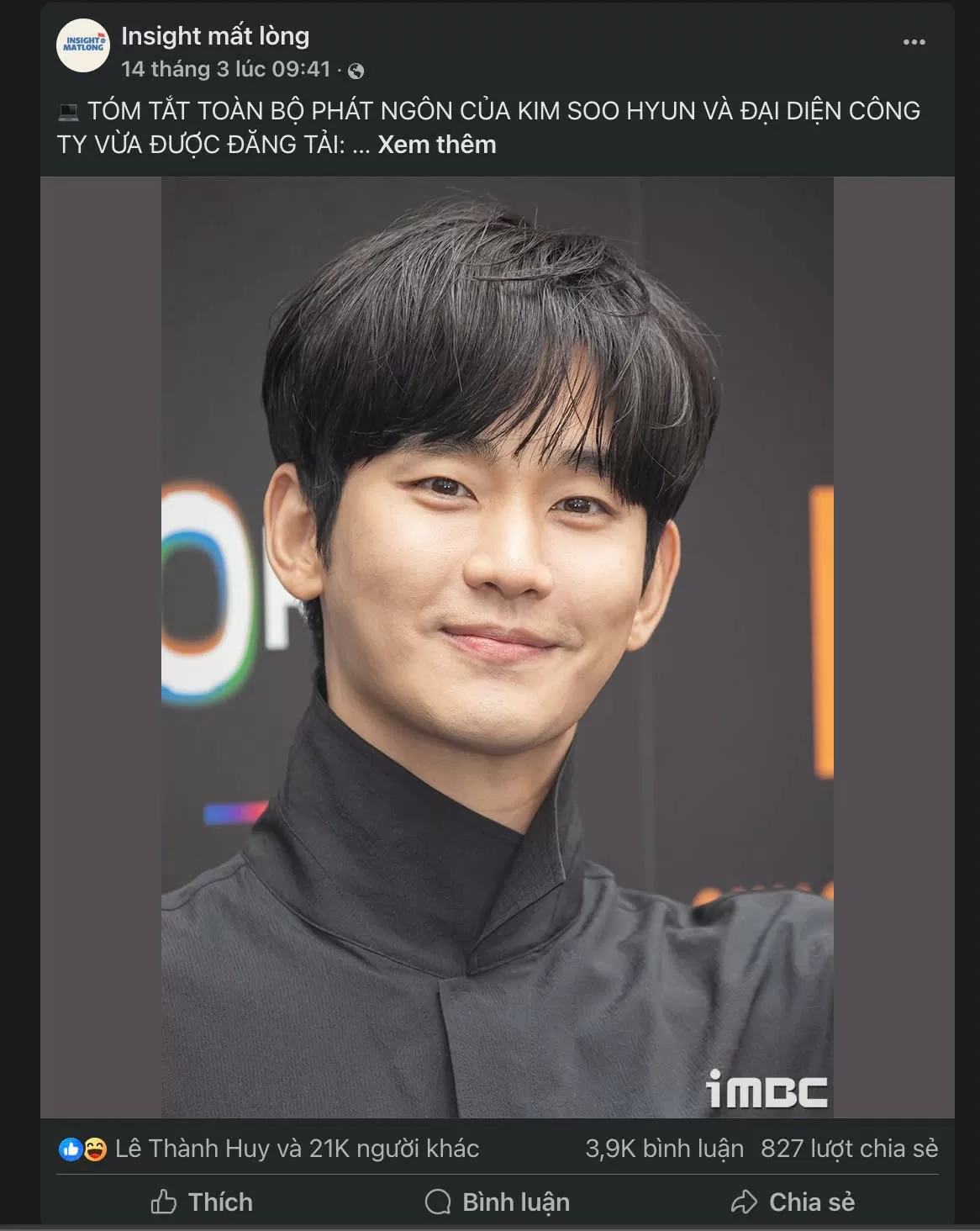 |
| Vietnamese social media is also buzzing with discussions about the incident involving actor Kim Soo Hyun in South Korea. - Photo: Screenshot |
In their advertising campaign for Kera vegetable candy, Hang "Du Muc" and Quang Linh Vlogs demonstrated a lack of responsibility as influencers. Both exaggerated the product's benefits, completely disappointing their fans. This advertisement violated professional ethics and misled fans into believing it could pose health risks.
One of the most worrying consequences of idolization is the development of "stan" culture – a term referring to obsessive fans who are willing to defend their idols at all costs. They not only spend time and money supporting their idols but also attack anyone who dares to criticize them. This is clearly demonstrated in the case of singer Jack, where a group of fans continuously spammed positive comments on social media, filed baseless complaints with authorities, and personally attacked those who opposed him.
This phenomenon is not unique to Vietnam. In the US, the fandoms of Taylor Swift (Swifties) and Beyoncé (Beyhive) have also repeatedly sparked controversy due to their extreme attitudes. Psychological studies indicate that excessive immersion in the world of idols can lead to "parasocial delusion"—a one-sided attachment to the celebrity, causing fans to lose sight of the boundaries between reality and fantasy. As a result, many young people gradually distance themselves from real life, judge themselves based on likes/shares related to their idols, or imitate inappropriate lifestyles.
Towards a generation of young people who are alert and self-reliant.
In an era where true and false information is mixed together in a chaotic way, choosing role models should be based on the principle of "respecting values, not worshipping images." Young people should learn to admire qualities such as perseverance, honesty, and dedication, instead of chasing after superficial glamour. At the same time, each person needs to realize that instead of spending time worshipping others, they can become the best version of themselves – a true role model in life.
In the quest for an ideal role model, the most important thing remains clear-headedness. Only when young people prioritize reason over fleeting emotions can they leverage the power of media to develop themselves, instead of becoming victims of celebrities. Society needs citizens who can think, act, and critically analyze, not "machines" who mindlessly chant the names of idols.
Source: https://congthuong.vn/bai-hoc-gi-tu-nhung-phot-cua-quang-linh-vlog-kim-soo-hyun-379589.html
![[Image] Leaked images ahead of the 2025 Community Action Awards gala.](/_next/image?url=https%3A%2F%2Fvphoto.vietnam.vn%2Fthumb%2F1200x675%2Fvietnam%2Fresource%2FIMAGE%2F2025%2F12%2F16%2F1765882828720_ndo_br_thiet-ke-chua-co-ten-45-png.webp&w=3840&q=75)
![[Photo] Prime Minister Pham Minh Chinh receives Lao Minister of Education and Sports Thongsalith Mangnormek](/_next/image?url=https%3A%2F%2Fvphoto.vietnam.vn%2Fthumb%2F1200x675%2Fvietnam%2Fresource%2FIMAGE%2F2025%2F12%2F16%2F1765876834721_dsc-7519-jpg.webp&w=3840&q=75)
![[Photo] Prime Minister Pham Minh Chinh receives the Governor of Tochigi Province (Japan)](/_next/image?url=https%3A%2F%2Fvphoto.vietnam.vn%2Fthumb%2F1200x675%2Fvietnam%2Fresource%2FIMAGE%2F2025%2F12%2F16%2F1765892133176_dsc-8082-6425-jpg.webp&w=3840&q=75)
![[Live] 2025 Community Action Awards Gala](/_next/image?url=https%3A%2F%2Fvphoto.vietnam.vn%2Fthumb%2F1200x675%2Fvietnam%2Fresource%2FIMAGE%2F2025%2F12%2F16%2F1765899631650_ndo_tr_z7334013144784-9f9fe10a6d63584c85aff40f2957c250-jpg.webp&w=3840&q=75)



























































Comment (0)