

The Net-works project will be implemented from 2023 with the support of Ostfalia University of Applied Sciences (Germany) and local businesses, aiming to promote a circular economic model in the marine environment.
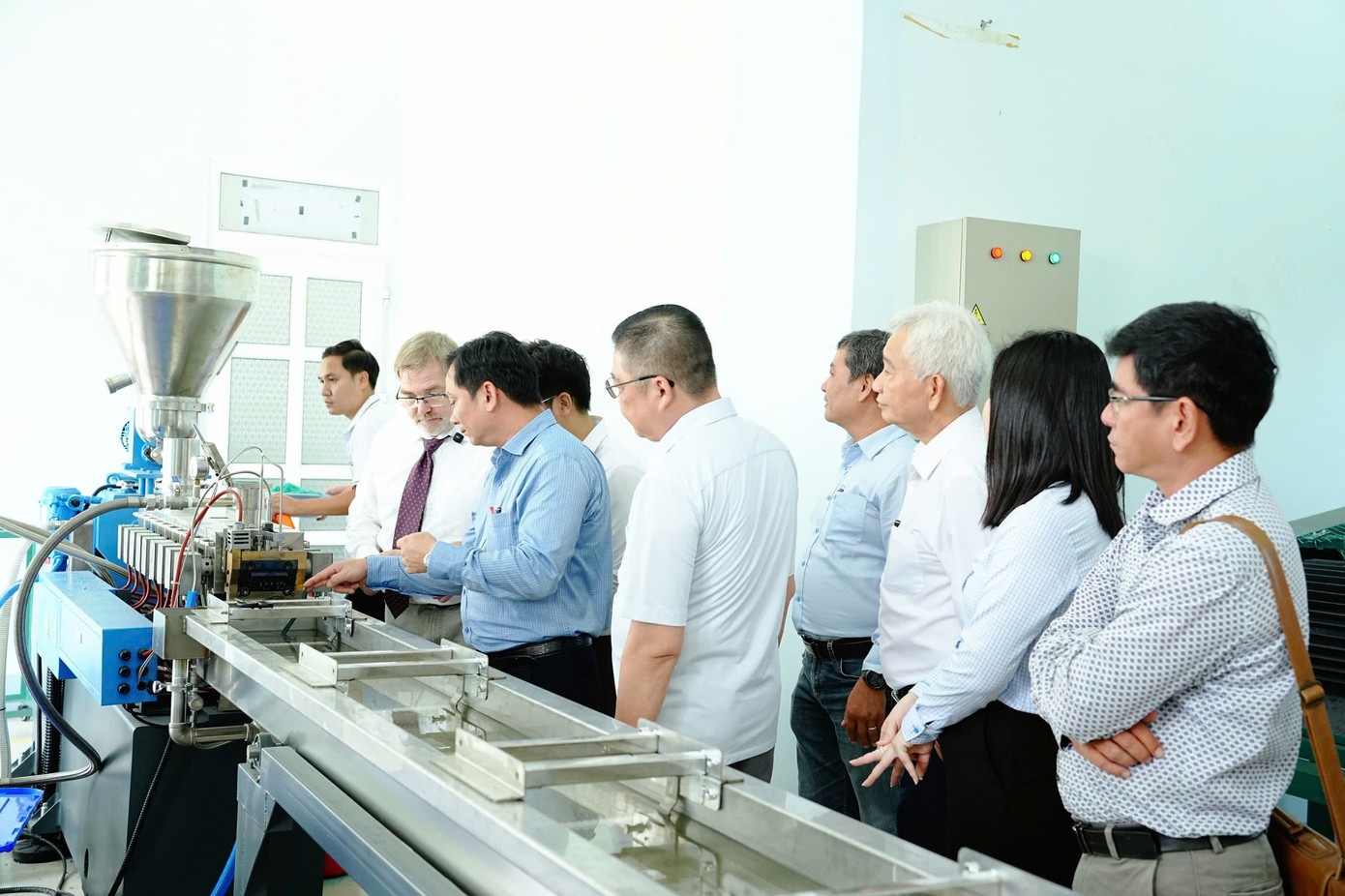
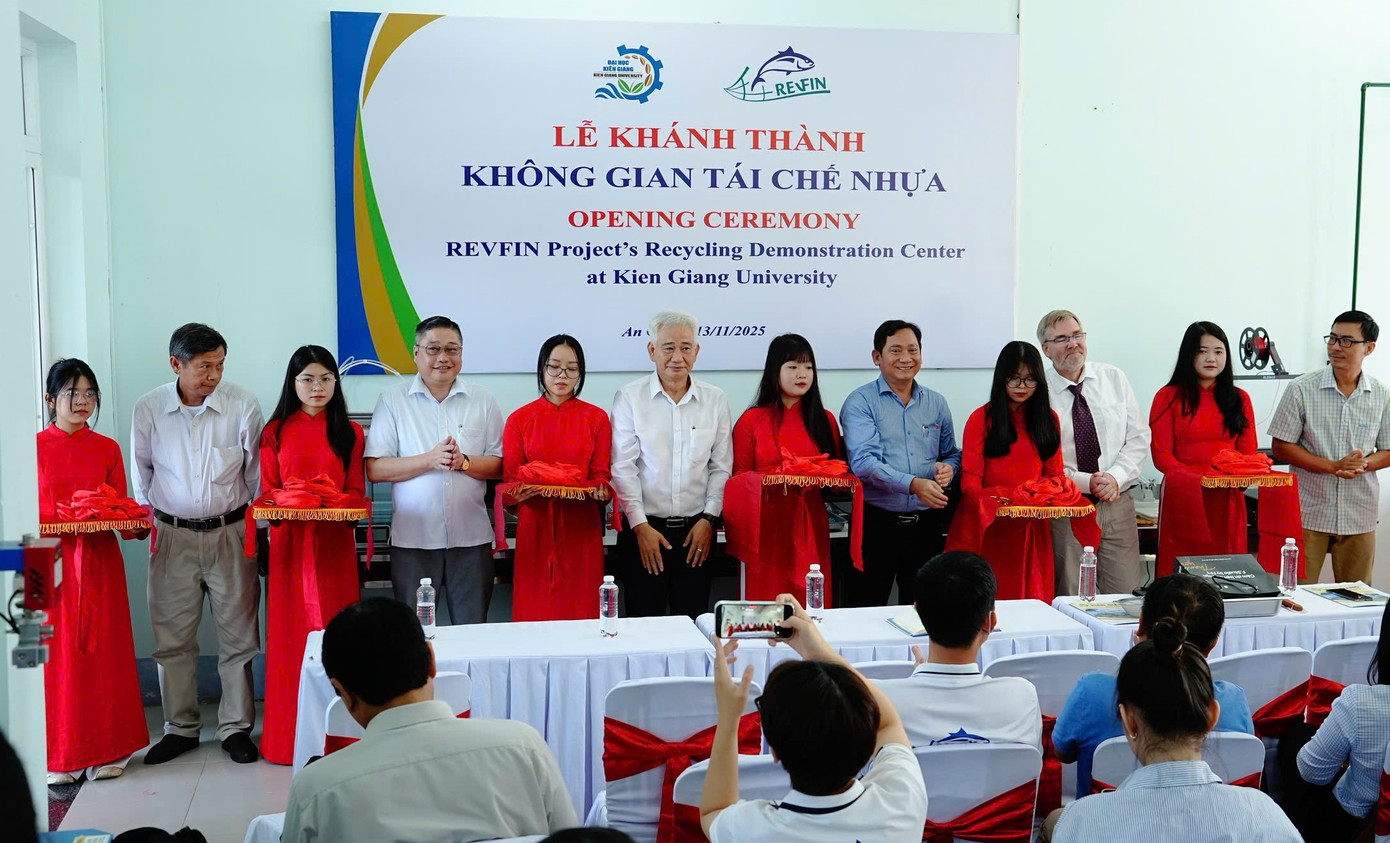
After more than two years of implementation, the project has completed the construction of a Plastic and Fishing Gear Recycling Space, which integrates visual collection, classification and recycling technology; and serves the purpose of learning, research and community communication activities. This place is also a practice room, training lecturers and students on environmentally friendly recycling processes, gradually forming a team of "green ambassadors" of Kien Giang University.
The project also connects schools, businesses, management agencies, and fishermen to turn waste into raw materials, creating a new value chain in sustainable marine economic development. Through the project, community awareness is also spread; many students have actively participated in collecting, creating recycled products, and sharing the message "No waste to return to the sea".
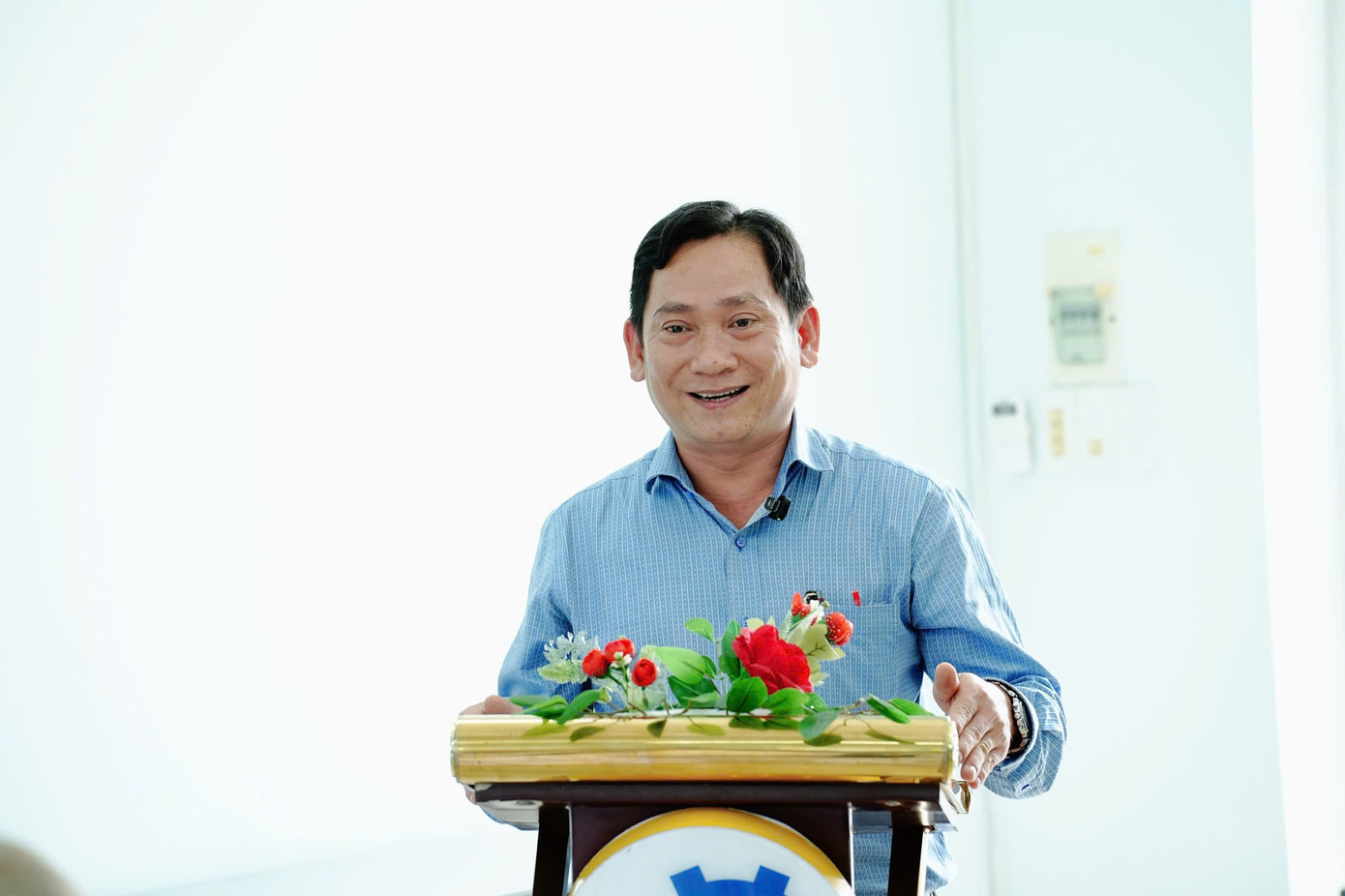
Dr. Nguyen Van Thanh - Rector of Kien Giang University said that plastic waste, especially fishing gear waste, is becoming a serious challenge for the marine environment. Therefore, putting into operation the Plastic Recycling Space is an important step in the effort to connect scientific research, training and production practices. The project serves the learning and research activities of lecturers and students, and is a place to demonstrate, transfer and spread green recycling models to the community.
Mr. Thanh believes that the Plastic Recycling Space will become a center for training, research and spreading green knowledge, contributing to improving students' capacity and promoting innovative initiatives for the environment.
Dr. Nguyen Tuan Khanh - Head of the Net-works Project Management Board (Kien Giang University) added that the plastic recycling space is an outstanding result of more than two years of project implementation. This place integrates technology for collecting, classifying and recycling fishing gear waste as well as serving training, research and community communication.
According to Dr. Khanh, the project has gradually formed a connection network between schools - businesses - management agencies and fishermen, thereby promoting the marine circular economic model.
In the coming period, Kien Giang University has determined that the Plastic Recycling Space is not only a laboratory but also a foundation for developing a green learning - innovation - startup ecosystem. Turn this place into an open learning space for students of Environmental Science, Engineering, Resource Management, and even students from outside the school to visit and experience the recycling process. Encourage lecturers and students to propose topics, inventions, or experimental models using recycled plastic - from school supplies, construction materials to commercial products.
In addition, through this, we strengthen links with fishermen's cooperatives, waste treatment enterprises, and non-governmental organizations to form a green value chain where every piece of waste can become a useful raw material.
Source: https://tienphong.vn/bien-rac-thai-ngu-cu-thanh-tai-nguyen-thuc-day-kinh-te-tuan-hoan-post1796441.tpo


![[Photo] General Secretary To Lam and National Assembly Chairman Tran Thanh Man attend the 80th Anniversary of the Traditional Day of the Vietnamese Inspection Sector](https://vphoto.vietnam.vn/thumb/1200x675/vietnam/resource/IMAGE/2025/11/17/1763356362984_a2-bnd-7940-3561-jpg.webp)
































































Comment (0)