

This spring, the concerns related to festivals are no longer dominating social media. By the 15th day of the first lunar month, most of the major spring festivals had already taken place. While the number of worshippers remains high, sometimes causing crowds, there are fewer instances of people pushing and shoving, disregarding the regulations of the site management to practice their faith recklessly.

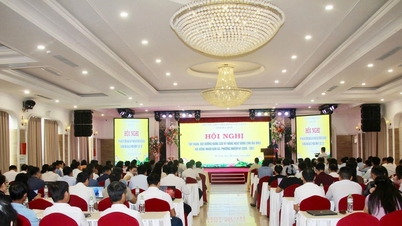
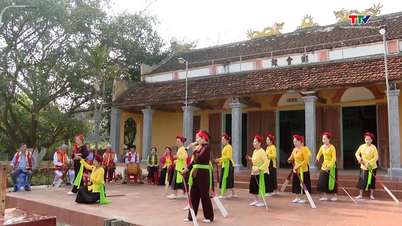
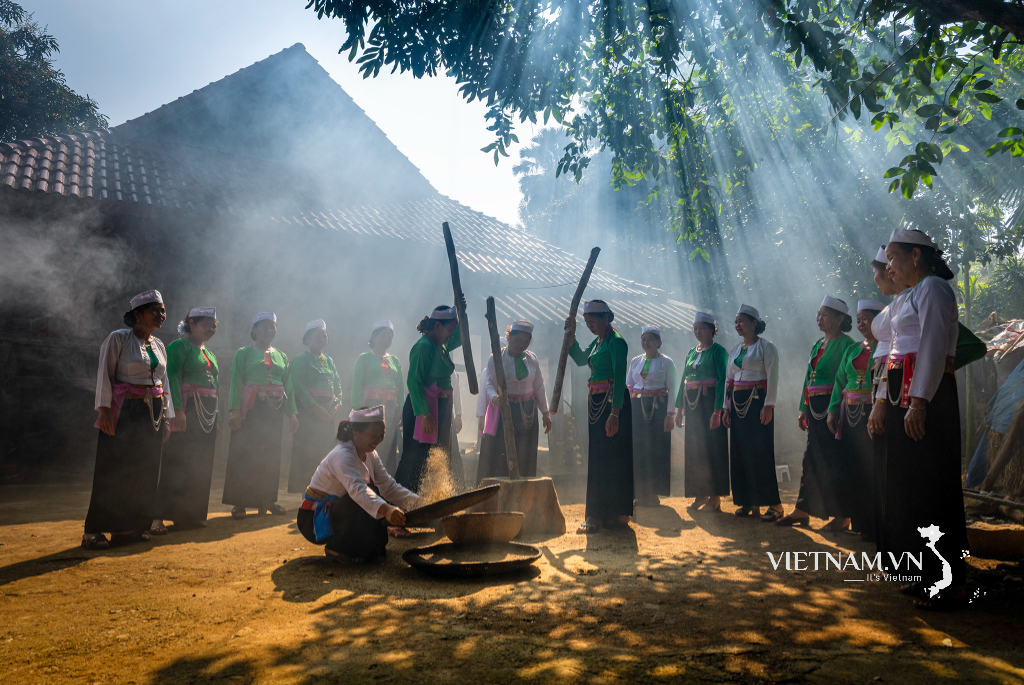
Illustrative image.
Offensive scenes are no longer frequently discussed, especially on social media. A major problem at festivals in previous years – theft and begging – is now well controlled. Superstition is also being curbed. The swift action taken to address the group of beggars at Phu Na (Nhu Thanh) is a prime example of restoring order and building a beautiful cultural atmosphere at the festival. Here, immediately after receiving reports of beggars appearing in front of the temple gate, the Nhu Thanh District Police, Xuan Du Commune, and the Management Board of the historical site promptly investigated and handled the situation. Subsequently, all eight beggars at the gate received financial assistance and rice, and were handed over to their families and local authorities for management, ensuring that festival-goers were no longer bothered.
Nationwide, unpleasant incidents such as the scramble for the "phết" (a type of ball) at Hien Quan in Phu Tho, the theft of offerings at the Giong Festival, the scramble for blessings at Huong Pagoda ( Hanoi ), throwing money into the boats of male and female singers at the Lim Festival (Bac Ninh), and the抢夺 (搶奪 -搶奪) of seals at various places where seals are distributed at Tran Temple... are no longer mentioned. The awareness of those attending these ceremonies has changed significantly. In this positive picture, the management boards of historical sites play a crucial role in guiding, disseminating information, supervising, and coordinating the handling of violations.
This spring festival marks the first time the entire country has begun implementing the set of criteria for cultural environment in traditional festivals, issued by the Ministry of Culture, Sports and Tourism. This is considered a tool for evaluating and measuring the capacity of state management and the effectiveness of festival organization at the local level. And based on what has happened so far, it shows that the criteria have initially proven effective in stimulating proactive management by localities with historical sites and festivals.
Gone are the days when religious practices were carried out haphazardly, almost as if everyone did as they pleased, while the role of local authorities in areas with historical sites and festivals, and management agencies, was sometimes seen as compromising, sometimes as vague, or even helpless. Observing images of festivals during this early spring season, some say that if local authorities had taken the initiative earlier, many festivals would not have been distorted, becoming pragmatic and losing their sacredness, leading to the debate and condemnation they have received recently. Hopefully, the set of criteria for the cultural environment in traditional festivals will be respected and strictly implemented by localities with historical sites and festivals, as well as by festival-goers, so that traditional festivals do not "go off track" in the future.
Hanh Nhien
Source
![[Photo] Admire the coral "masterpiece" amidst the million-year-old heritage of Dak Lak province.](https://vphoto.vietnam.vn/thumb/1200x675/vietnam/resource/IMAGE/2026/05/31/1780221235105_anh-man-hinh-2026-05-31-luc-16-53-27.png)

![[Photo] Solemn bathing ceremony and Buddha procession in Hue](https://vphoto.vietnam.vn/thumb/1200x675/vietnam/resource/IMAGE/2026/05/31/1780228263543_1-jpg.webp)

![[Image] Hanoi Police officially crowned champions of V-League 2025/2026](https://vphoto.vietnam.vn/thumb/1200x675/vietnam/resource/IMAGE/2026/05/31/1780244769054_ndo_br_039d561b692be875b13a-jpg.webp)
![[Photo] The General Secretary, President and his wife begin their state visit to the Philippines.](https://vphoto.vietnam.vn/thumb/1200x675/vietnam/resource/IMAGE/2026/05/31/1780230559452_anh-man-hinh-2026-05-31-luc-19-28-11.png)













![[Video] Sunset at Lap An Lagoon – Where the sun sets over the fishing nets](https://vphoto.vietnam.vn/thumb/340x192/vietnam/resource/IMAGE/2026/05/31/1780192137701_beach-landscape-sea-water-nature-grass-745871-pxhere-com.jpeg)





























![[Photo] Admire the coral "masterpiece" amidst the million-year-old heritage of Dak Lak province.](https://vphoto.vietnam.vn/thumb/402x226/vietnam/resource/IMAGE/2026/05/31/1780221235105_anh-man-hinh-2026-05-31-luc-16-53-27.png)




























Comment (0)