

In his article "Combating Waste," General Secretary To Lam pointed out several forms of waste that are currently emerging intensely, including the waste of development opportunities for localities and the country due to the ineffective operation of the state apparatus in some places and at some times, and the corruption, incompetence, avoidance, shirking of work, and fear of responsibility of some officials.
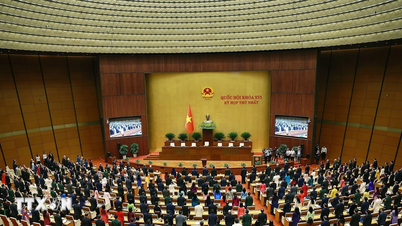
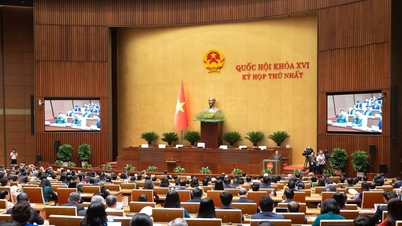
The above opinion received significant attention from National Assembly delegates of the 15th term at the 8th session. Upon closer analysis, many opinions indicated that currently, a considerable number of officials still view wastefulness as merely the inefficient management and use of state capital and assets, failing to recognize the serious consequences of fear of responsibility and shirking duties.
Delays lead to missed investment opportunities.
A clear manifestation of this is the fact that the handling of administrative procedures in many agencies is still prolonged, overdue, not following the one-stop process, and lacking mechanisms for inspection and supervision in the process of coordination, exchange, and consultation between ministries and sectors.
Delegate Nguyen Thanh Nam ( Phu Tho Delegation) cited the example of the implementation of two key projects on the construction and business of industrial park infrastructure in Ha Hoa and Tam Nong districts: Based on the land use planning and plans, investors showed interest in starting the projects in September 2018, submitted applications for initial investment approval in March 2021, and completed supplementary documents in August 2022.
During the project's inception, the People's Committee of Phu Tho province issued 51 documents requesting opinions and submitting explanatory reports to ministries and agencies regarding land procedures, traffic connection procedures, procedures for rearranging and handling public assets, and many other procedures related to the project.
According to the Investment Law, the total time for processing investment approval procedures should not exceed 3 months, with the time for obtaining opinions from relevant state agencies on the appraisal content not exceeding 15 days. However, to date, the dossiers for the aforementioned projects have not been definitively resolved, leaving investors still waiting and resulting in lost investment opportunities.
Currently, in many localities, the exploitation and use of land resources have not kept pace with the needs, potential, and opportunities of socio-economic life, posing a major problem in practicing thrift and combating waste.
Representative Ha Sy Dong (Quang Tri Delegation) requested the Government to urgently direct the Ministry of Finance to definitively resolve the issue of public assets and headquarters of agencies located in localities that have been rebuilt or relocated elsewhere.
For example, the headquarters of the Dong Ha City People's Court, a three-story building with an area of over 2,000 square meters on prime real estate, has been abandoned since 2016. Quang Tri Province and the Supreme People's Court have jointly requested the Ministry of Finance to submit a proposal to the Government to allow its auction or transfer to local management, but after eight years, they have only received the response that it is "awaiting overall restructuring."
During discussions on socio-economic development at the 8th session, many National Assembly deputies pointed out that currently, the country still has 51 problematic investment projects, 13 key projects that are delayed, 19 projects that are left abandoned, 880 projects that are slow to put land into use, and many public assets that are surplus after the reorganization of district and commune-level administrative units have not yet been effectively utilized…
According to the delegates, the immediate priority is to enhance the accountability of ministries, departments, and localities in reviewing and definitively resolving long-standing shortcomings in nationally important projects, key projects, and projects with low efficiency or delayed implementation, which cause significant losses and waste; at the same time, strictly and specifically address the organizations and individuals involved to strengthen deterrence and serve as a warning.
Improving the legal framework for preventing and combating waste.
In response to the above situation, the Government and the National Assembly have issued directives and requirements to specify the responsibilities of organizations and individuals, especially the accountability of those in leadership positions.
In reality, some localities have been very proactive in addressing waste, proposing and implementing projects, but have encountered many obstacles and impediments, preventing them from optimally utilizing resources. This situation stems from difficulties in defining responsibilities among ministries, sectors, and localities regarding the scope and procedures for arranging and handling public assets in relation to land recovery.
Laws on practicing thrift and combating waste have stipulated the responsibilities of individuals, the responsibilities of leaders, and the handling of violations when waste occurs; however, these regulations are mainly in the nature of warnings and reminders.
The Penal Code mentions criminal acts leading to wasteful consequences (Article 179: Negligence causing damage to the property of the State, agencies, organizations, and enterprises; and Article 219: Violation of regulations on the management and use of State property causing loss and waste). Legal experts have commented:
In practice, these laws are rarely used to address wasteful behavior; instead, it is often dealt with under other charges such as serious violations of accounting regulations or serious violations of bidding regulations. With this approach, although the perpetrators are still punished, the deterrent and educational effect regarding the prevention and control of wastefulness is not high.
Recently, the Central Steering Committee on Anti-Corruption and Negative Phenomena added the task of combating wastefulness. By placing the fight against wastefulness on par with the fight against corruption and negative phenomena, it is necessary to review, amend, and supplement the Party's regulations and State laws on combating wastefulness to ensure consistency and uniformity, linked to the restructuring of the political system's organizational apparatus to be "lean, strong, efficient, effective, and effective," and to promote decentralization and delegation of power to resolutely eliminate the "request-and-grant" mechanism.
The most urgent task now is to further strengthen digital transformation to change mindsets, working methods, and transparency in the public service environment. This will help officials feel secure, foster a sense of responsibility, dare to think and act, proactively research and advise on the issuance of pilot plans and solutions, even for new issues without regulations or precedents, ensuring both strict management and development creation.
Source: https://nhandan.vn/chong-lang-phi-ngay-tu-qua-trinh-thuc-thi-cong-vu-post846038.html



















































































Comment (0)