

The afternoon sun shone through the ventilation window into Ma Hoa's kitchen, "catching" the swirling blue smoke and illuminating the entire space. For the Jrai people, the kitchen is not only used for cooking, but also contains a treasure trove of information about their life experiences and spiritual world .
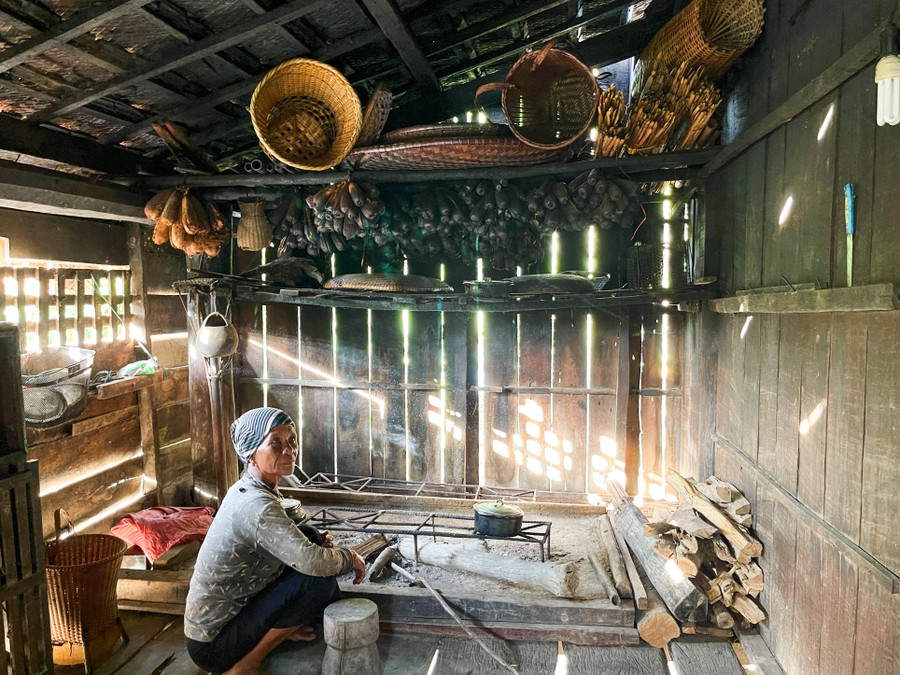
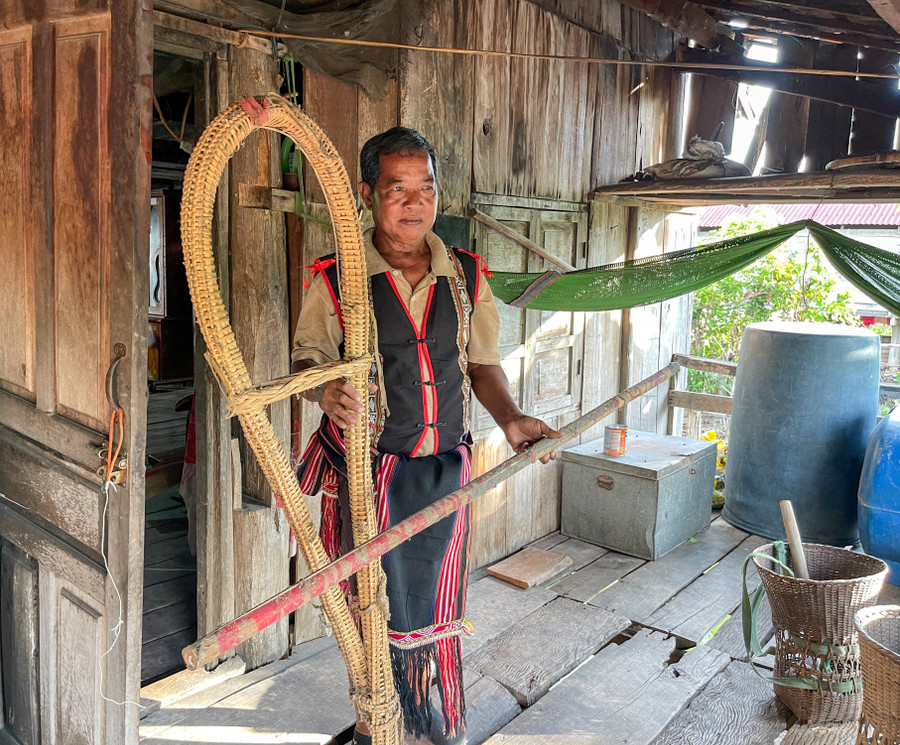
On the kitchen rack, stained a deep black by soot, were all sorts of seeds for the next season, along with winnowing trays, baskets, and other containers placed on top to protect them from termites. Among these everyday items, the village elder Ma Hoa carefully took down a buffalo head dried by the kitchen smoke, a buffalo tethering ring for the ritual sacrifice (Krotonr bong kpao), and a long rattan rope coiled into a circle.
He seemed lost in memories as he held the "sacred objects" from the buffalo sacrifice ceremony 20 years ago. Ma Hoa recalled: The buffalo sacrificed to the gods was raised by the family for three years, weighing over 400 kilograms. The buffalo's head was then kept on the kitchen rack. The ring used to tie the buffalo was woven by his brother-in-law, who went into the forest to find old rattan, taking three days and nights to complete. The long rattan rope used to thread through the buffalo's nose stretched from the yard to the kitchen—like a rope connecting the gods to the family's hearth.
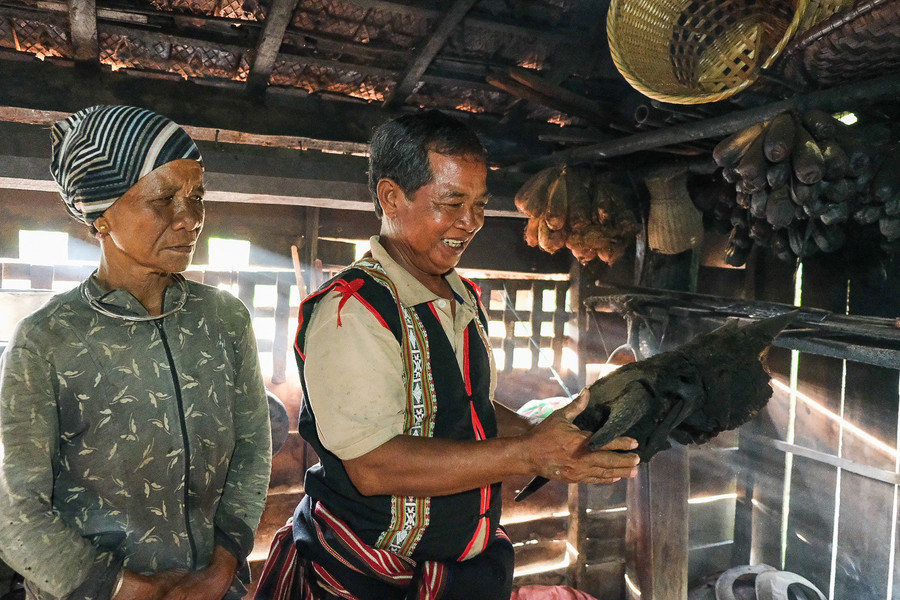
The Jrai people believe that the kitchen is the most sacred space in the house. Doing so ensures the flame of life never goes out, the hearth always remains warm, and the family enjoys a prosperous and peaceful life.
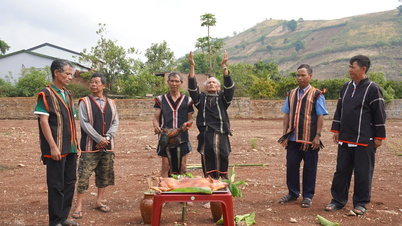
While the buffalo sacrifice ceremony is held at home to thank the spirits and pray for health, the ceremony held in the fields is to thank the Water God. This is one of the important rituals for the Jrai people because they consider water to be the source of life.
The buffalo sacrifice ceremony of the Ma Hoa family is still remembered by many today because on both occasions, people from the village attended in large numbers, bringing hundreds of jars of rice wine to contribute to the festivities. Therefore, the buffalo sacrifice ceremony is also considered an occasion to strengthen community bonds, with individual joys becoming shared joys of the village.
Besides organizing buffalo sacrifices, the Ma Hoa family has also held many traditional festivals and rituals of the Jrai people. Traces of those festivals are not only found in stories. Outside the kitchen, just above the smoke vents, are hundreds of buffalo and cow jawbones lined up—evidence of past festivals such as funeral rites, longevity celebrations, and new rice harvests...
Ma Hoa's wife, Ksor H'Dliap, added: "One year, just for my mother's funeral ceremony, relatives contributed 57 buffaloes, cows, and pigs. I kept them all, storing them around the kitchen. The kitchen is the most important place in the house. I keep them so that future generations will know what the cultural life of their ancestors was like, so they won't forget their roots and cultural traditions. The Jrai people are matriarchal; women must keep the hearth fire warm, guard the jars, and preserve the family's memories, ensuring the fire never goes out," she said.
If Mrs. H'Dliap is the keeper of the warm flame in the family, then Ma Hoa is entrusted by the village with the responsibility of keeping the spiritual "flame" of the community alive.
He is the village elder, a Party member for nearly 40 years, and has held many positions throughout his life. His house is adorned with numerous badges, commemorative medals, certificates of merit, and awards, all testament to his positive contributions in every role he has played. He is trusted by the villagers for his skillful persuasion, his decisive efforts to eliminate outdated customs, and his pioneering role in economic development.
In his longhouse, which still houses a collection of precious jars and ancient gongs, Ma Hoa slowly remarked, "Culture must be preserved, but festivals shouldn't be organized extravagantly and costlyly; we should focus on economic development." As proof, after his mother's funeral ceremony, which involved the largest number of buffaloes and cattle in the area along the Ia Mlah River, he had to hold a village meeting to advocate for a more frugal approach.
“In the past 20 years, I’ve only sacrificed buffalo twice, each time for the most important family events. It was both a way to strengthen community bonds and to maintain traditional culture. But now, that ritual is gradually fading away. I hope that when future generations see these sacred objects preserved under this longhouse, they will continue to uphold the cultural heritage of their ancestors,” he said.
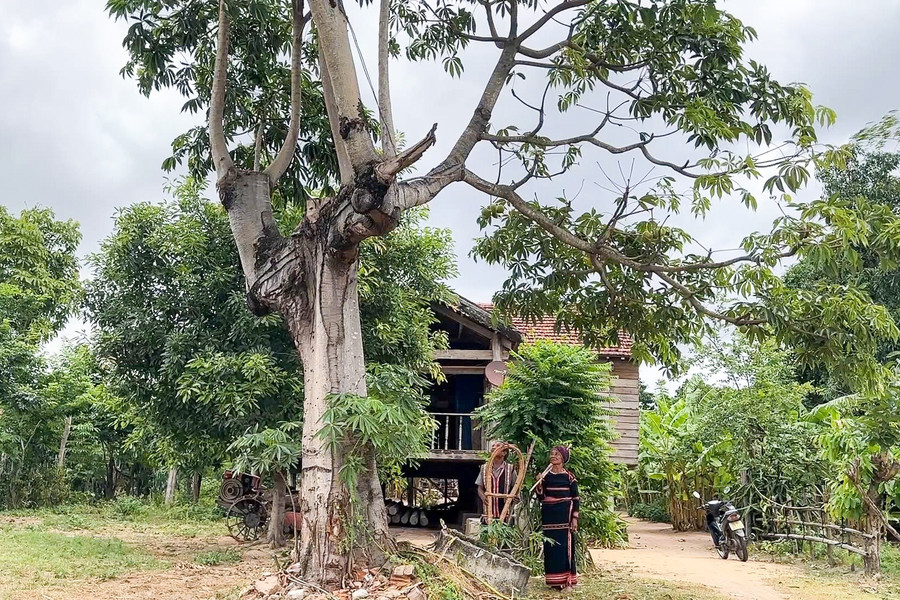
The kapok tree in front of the longhouse—the place once used to tether buffaloes for sacrificial rituals—now spreads its shade, its roots deeply embedded in the earth. Each season the kapok blossoms evokes memories of countless vibrant festivals etched in the village's mind. Within that space, the relics of the festivals silently remind people of a unique and mystical cultural region on the majestic plateau.
Source: https://baogialai.com.vn/chuyen-quanh-gian-bep-nha-ma-hoa-post566319.html

![[Image] National Assembly discusses the implementation of the socio-economic development plan.](https://vphoto.vietnam.vn/thumb/1200x675/vietnam/resource/IMAGE/2026/04/20/1776696707422_ndo_br_img-20260420-185419-jpg.webp)


![[Photo] General Secretary and President To Lam meets with National Assembly delegates from ethnic minorities.](https://vphoto.vietnam.vn/thumb/1200x675/vietnam/resource/IMAGE/2026/04/20/1776696701056_a1-bnd-8331-3342-jpg.webp)
































































Comment (0)