

The "Matrix" of Technology in the Digital Age
The history of the Vietnamese revolution shows that the Vietnam People's Army has always been the core, irreplaceable, and undeniable force, a sharp and effective instrument for firmly protecting independence, sovereignty, territorial integrity, national interests, the Party, the State, the people, and the socialist regime. For many years, the Party, the State, and the Central Military Commission have consistently been determined to build a revolutionary, regular, elite, and modern army. Building a "lean, efficient, and strong" army is an objective necessity. In particular, the Resolution of the 12th Congress of the Party Committee of the Vietnam People's Army set the goal of building a "revolutionary, regular, elite, and modern" army one term earlier than the 11th Congress of the Party Committee of the Vietnam People's Army. However, despite historical realities and these great achievements, hostile forces are deliberately "going against the tide," vigorously promoting the so-called "civilianization" of the army. In essence, this is a sinister and cunning variation of the "depoliticization" plot, part of the " peaceful evolution" strategy aimed at undermining the Vietnamese revolution. The danger of this plot lies in the fact that it is amplified by the power of technology in the digital age.
|
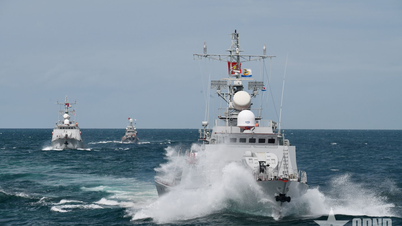
Illustration photo: qdnd.vn |
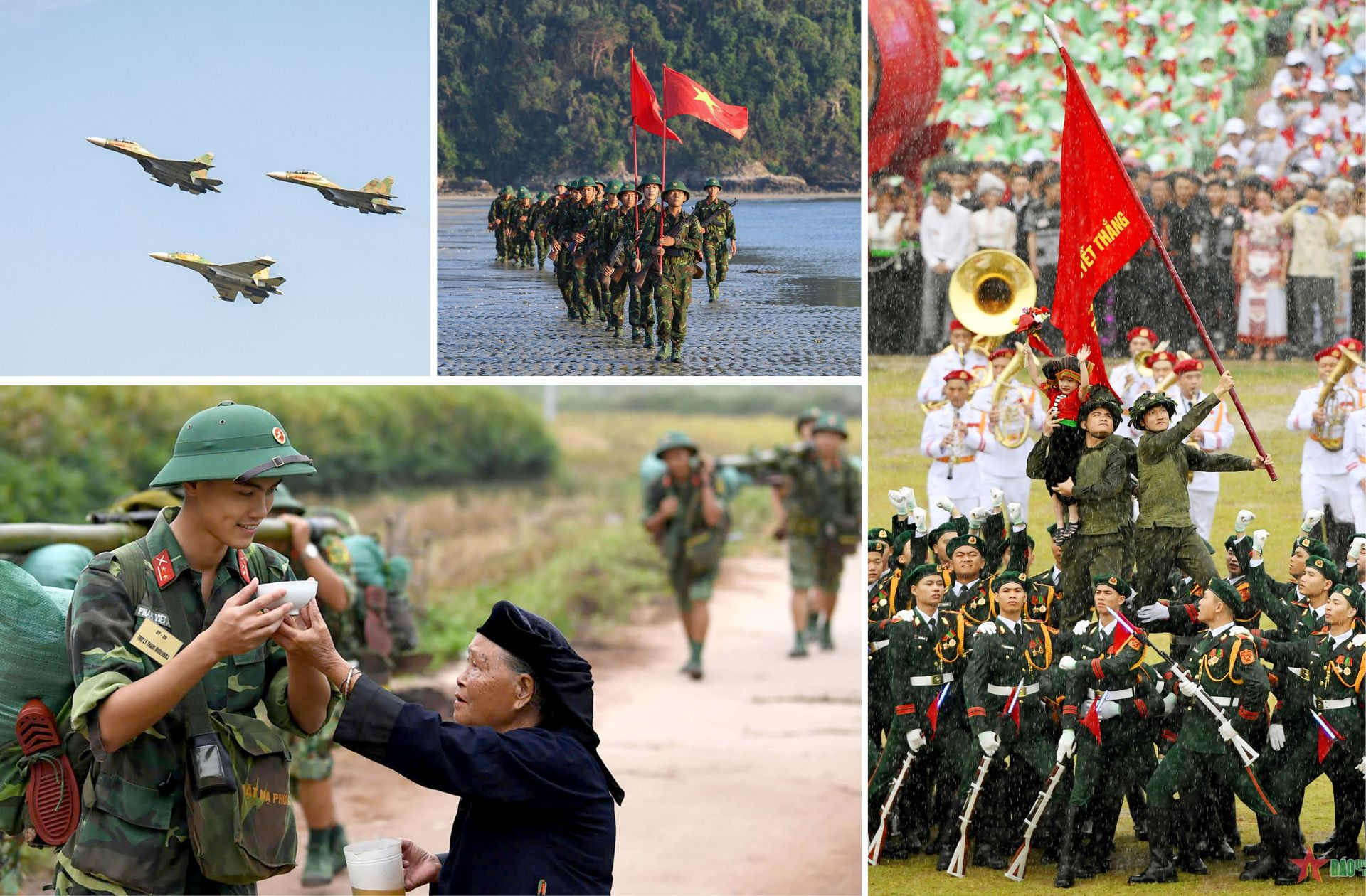
The first line of attack is ideological work in cyberspace. Hostile forces use big data technology to collect behavioral data on social media users, particularly targeting young officers, military cadets, teenagers, and intellectuals. Through algorithms on Facebook, YouTube, TikTok, etc., they create "echo chambers." When a user accesses military-related content, artificial intelligence (AI) automatically redirects them to a dense display of articles and videos praising the Western military model. They repeatedly convey the message: Western militaries are powerful because they "stay out of politics," are "neutral," and have civilian defense ministers. This deliberate repetition creates a cognitive illusion, leading viewers to mistakenly believe that "civilianization" is a civilized trend of humanity, thereby giving rise to a comparative and skeptical mindset regarding the mechanism of absolute and direct leadership of the Vietnamese Communist Party over the Vietnam People's Army in all aspects.
More dangerously, hostile and reactionary forces are exploiting deepfake technology to attack the trust of soldiers and the people. They edit and fabricate fake videos about the lives of soldiers with negative images, inventing "scandals," "corruption," or "violence" in barracks. The purpose of this tactic is to "demystify" and tarnish the image of the Ho Chi Minh Army, lowering the prestige of the military. From this loss of trust, they lead public opinion to demand: that management must be "civilianized," and that civilian organizations must supervise the military to ensure transparency and openness...
Unmasking the "facades" of language
One of the core arguments that hostile forces vigorously propagate is that a professional army must be "politically neutral," only adhering to the Constitution and laws and not serving any political party. This is a blatant deception in both theory and practice. Furthermore, they deliberately equate two completely different concepts: "modernization of weapons and equipment" and "change in political nature." They argue that in high-tech warfare, the decisive factor is advanced weapons and technical expertise; therefore, it is necessary to reduce or eliminate the political system and political cadres to create a "lean" and "professional" apparatus. Through this, they aim to strip away the "soul" of our army. They want to transform the Vietnam People's Army into a "robotic" army, technically skilled but politically insensitive, detached from the goal of national independence linked with socialism.
In reality, the so-called "neutral army" or "apolitical army" in the West is never truly detached from politics. In developed capitalist countries, the military is absolutely subservient to the power of the ruling bourgeoisie. These armies are not only used to protect national independence and sovereignty, but also to participate in wars in other countries with the political goal of establishing pro-Western governments that benefit the West. For example, in recent decades, military leaders in Western countries have openly interfered in the political lives of many independent and sovereign nations such as Yugoslavia, Afghanistan, Iraq, and Libya.
Deceptive tactics to misrepresent military enterprises.
Their "civilianization" plot goes beyond mere theoretical arguments and directly attacks the fundamental functions of the Vietnam People's Army. Aiming to deny the "labor and production army" function and disrupt national defense, they argue: "A professional army only knows how to wield weapons; it shouldn't engage in economic activities." They exploit isolated individual misconduct in economic activities (which has been severely punished) to generalize and demand the abolition of military enterprises. They deliberately ignore the fact that our economic-defense units are stationed in strategically important areas, including remote regions, border areas, and islands. The military's presence there is not just for economic purposes, but to protect the people, defend the land, protect the sea and islands, strengthen the "people's support," and thwart any subversive plots. Their demand for "civilianization" of these activities is essentially an attempt to leave these strategic areas undefended. Regarding the function of the "military task force," they distort the truth, claiming it's the government's responsibility, and that the military's involvement is "out of line" and a "waste of training resources." Even when soldiers brave floods to rescue civilians, they use derogatory terms like "acting" and "showing off." Their goal is to sever the close, blood-related relationship between the military and the people, transforming the military into an isolated, bureaucratic force detached from social realities.
The ideology of a "neutral army" was absorbed.
Furthermore, the proactive expansion of international integration and defense diplomacy by the Vietnam People's Army is a correct policy of the Party and State, a key pillar in the strategy of protecting the Fatherland early and from afar, through peaceful means, helping our Army learn from experience, absorb scientific and technical knowledge, and enhance its position in the international arena. However, hostile forces also exploit this process to "infiltrate" the ideology of a "neutral army." They spread the argument that the Army sending officers to study and work abroad, including in countries that apply the model of "civilian control over the military," gradually erodes awareness and sows the seeds of "apolitical" and "capitalist" ideology; The participation of the Vietnam People's Army in United Nations peacekeeping operations, regional and international military and defense forums is considered "inappropriate," "for its own benefit," or due to "external pressure," rather than a responsibility to the international community. In fact, Vietnam has established defense cooperation relations with over 100 countries and international organizations, including the five permanent members of the UN Security Council and all major powers. At the same time, the Vietnam People's Army has effectively participated in and contributed to UN mechanisms on development, peacekeeping (having sent over 1,100 officers and personnel to peacekeeping missions and UN headquarters), and responding to non-traditional security threats; and has deployed forces to directly carry out humanitarian assistance and disaster relief missions following earthquakes in Türkiye and Myanmar...
The plot to "transform" the military justice system.
Another dangerous attack is targeting the disciplinary system and specific relationships within the military, aiming to dismantle its unity. In reality, a strong army requires iron discipline. Hostile and reactionary forces understand this and are focusing their attacks on the "sword" that maintains the discipline of the Vietnam People's Army: the military judicial system (military courts, military prosecutor's offices, and criminal investigation agencies). They exploit the fact that the Party and the Army are fiercely fighting corruption and handling numerous major cases, many of which involve high-ranking military officers, to claim that the military judicial system is a "forbidden zone" and "covers up internal affairs." From there, they demand the "civilianization" of the judicial system, meaning the abolition of these specialized judicial agencies, with the aim of disrupting the specialized tools for maintaining discipline and handling specific crimes within the military environment. However, the existence of a military judicial system is international practice, not a "forbidden zone." Even the Western countries they praise, such as the US, UK, and Canada, maintain separate military court systems. Their recent reforms, such as the US amendment to the Uniform Military Justice Code (UCMJ) in 2022, aim to increase the independence of prosecutors and more clearly define criminal offenses, not to abolish the system. The fact that our military courts conduct trials openly, fairly, and rigorously without any "forbidden zones" is the strongest evidence against the "cover-up" rhetoric of hostile forces.
The argument that "the military is just a means of making a living"
Besides direct attacks on the ideological foundation, hostile and reactionary forces are also thoroughly exploiting the negative aspects of the market mechanism to promote their plot to "civilianize" the military. They sow the mentality of "working for a salary," replacing the sacred nature of the Ho Chi Minh Army with a purely labor relationship, arguing that soldiers are just a "profession" to earn a living in society, like doctors, engineers, or workers; thus, they claim that as a profession, it must follow the laws of supply and demand and be treated according to civil labor law. From this erroneous premise, they promote extremely dangerous ideas: demanding that soldiers have the "right to strike" to demand their rights, the right to "refuse orders" if those orders are detrimental to them personally or disproportionate to their remuneration; and requiring all military activities to be "contracted" with transparent benefits. Their aim is to strip away the "people's armed forces" nature, blurring the lines between dedication, sacrifice, and commercial transactions, transforming the Army into a mere security service provider. The essence of military activity is sacrifice and hardship, placing the interests of the Fatherland above personal lives. When the "employee-for-salary" mentality infiltrates officers and soldiers, the greatest danger is the erosion of the ideal of "Fighting to the death for the survival of the Fatherland." Even more dangerous, this mentality threatens to undermine the principle of democratic centralism and the hierarchical system. The relationship between superiors and subordinates in the Vietnam People's Army is one of comradeship, brotherhood, and solidarity, bound together by class solidarity and shared goals and ideals. However, the "civilianization" rhetoric seeks to transform this sacred relationship into one between "employer" (Party committee, commanders) and "employer" (soldiers). At that time, the commander's orders were no longer "military orders are as solid as mountains," which not only eroded the noble qualities of Uncle Ho's soldiers but also directly threatened the fighting strength of the Army.
All of these issues lead to the ultimate and most dangerous goal of the "civilianization" plot against the military: to paralyze the military during political upheavals and subversive riots. When the military, which is the most powerful instrument of violence and the "sword and shield" of a class or regime that created it, is inactive, it is essentially paralyzed in its function. This is precisely what hostile forces most desire. They know they cannot win by directly confronting a unified and loyal army. Their plan can only succeed when the army loses its direction, meaning the "sword" protecting the regime has been broken. They want the Vietnam People's Army to follow the same path as historical lessons, becoming a "neutral army" or standing by and watching the regime collapse.
|

Source: https://www.qdnd.vn/phong-chong-dien-bien-hoa-binh/dan-su-hoa-quan-doi-mui-ten-doc-trong-chien-luoc-dien-bien-hoa-binh-bai-3-nhung-bien-tuong-tinh-vi-cua-am-muu-dan-su-hoa-quan-doi-1017137

![[Photo] Prime Minister Pham Minh Chinh receives the Governor of Tochigi Province (Japan)](/_next/image?url=https%3A%2F%2Fvphoto.vietnam.vn%2Fthumb%2F1200x675%2Fvietnam%2Fresource%2FIMAGE%2F2025%2F12%2F16%2F1765892133176_dsc-8082-6425-jpg.webp&w=3840&q=75)
![[Image] Leaked images ahead of the 2025 Community Action Awards gala.](/_next/image?url=https%3A%2F%2Fvphoto.vietnam.vn%2Fthumb%2F1200x675%2Fvietnam%2Fresource%2FIMAGE%2F2025%2F12%2F16%2F1765882828720_ndo_br_thiet-ke-chua-co-ten-45-png.webp&w=3840&q=75)
![[Live] 2025 Community Action Awards Gala](/_next/image?url=https%3A%2F%2Fvphoto.vietnam.vn%2Fthumb%2F1200x675%2Fvietnam%2Fresource%2FIMAGE%2F2025%2F12%2F16%2F1765899631650_ndo_tr_z7334013144784-9f9fe10a6d63584c85aff40f2957c250-jpg.webp&w=3840&q=75)

![[Photo] Prime Minister Pham Minh Chinh receives Lao Minister of Education and Sports Thongsalith Mangnormek](/_next/image?url=https%3A%2F%2Fvphoto.vietnam.vn%2Fthumb%2F1200x675%2Fvietnam%2Fresource%2FIMAGE%2F2025%2F12%2F16%2F1765876834721_dsc-7519-jpg.webp&w=3840&q=75)

































































Comment (0)