

Ambassador Pham Quang Vinh
Recently, Vietnam has had a series of plans and proposals, both official and unofficial, regarding hosting important international events, such as hosting the Asia- Pacific Economic Cooperation (APEC) Forum in 2027; co-hosting the FIFA World Cup in 2034; and hosting a future United Nations Climate Change Conference (COP). There are also suggestions that Vietnam could be more proactive and flexible in inviting world-renowned bands and singers to perform. In the region, young people in Southeast Asia and Asia in general are currently obsessed with the tour of American singer Taylor Swift in Singapore. Thailand also wanted to invite her, but Singapore secured exclusive rights with an offer, according to media reports, of up to US$3 million (S$4 million) per performance, in exchange for Taylor Swift agreeing not to perform anywhere else in Southeast Asia. Singaporean officials believe that Taylor Swift's concerts could bring significant benefits to the country's economy, especially tourism. Singapore also recently hosted the International Airshow, with over 1,000 companies from 50 countries participating. This biennial aviation event is the largest in Asia and the third largest in the world, after Le Bourget in France and Farnborough in the UK. The Shangri-La Dialogue – also known as the Asian Regional Security Summit – will take place in Singapore at the end of May. The annual Shangri-La Dialogue attracts numerous researchers and defense and security officials from around the world.Does Vietnam have the capacity to host important international events?
Returning to the issue raised at the beginning of the article, the question is whether Vietnam has the capacity to host important international events? Based on my personal experience and expertise in foreign affairs, I would venture to answer: Yes, absolutely! In recent years, Vietnam has not only participated in many major international events but has also hosted numerous important regional and global conferences in various fields.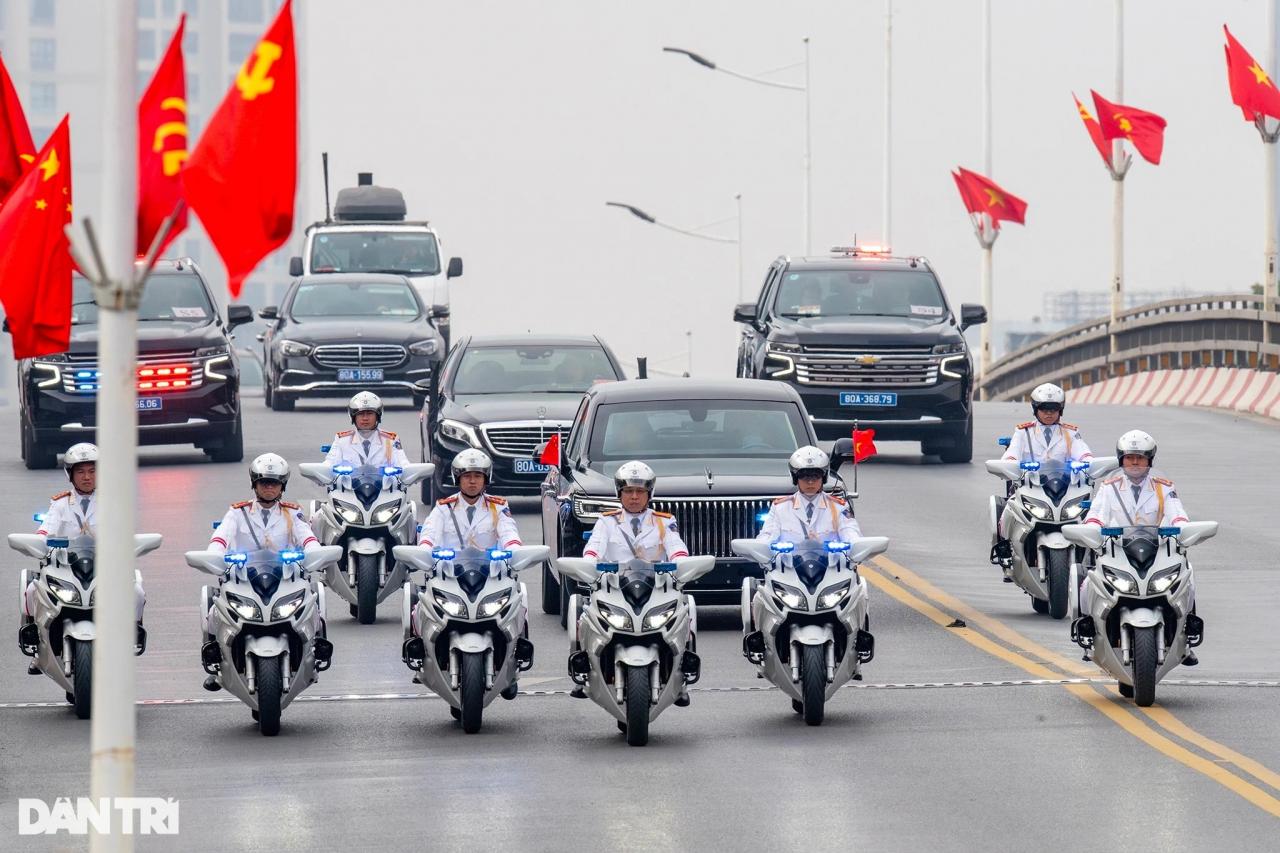
The escort team of the Hanoi Police Guard Command and Traffic Police escorted General Secretary and President of China Xi Jinping and his wife, along with a delegation of high-ranking Chinese leaders, through the streets of Hanoi during their official visit to Vietnam in December 2023 (Photo: Tien Tuan).
Examples include the 2017 APEC Summit and the 2019 US-North Korea Summit, attended by leaders Donald Trump and Kim Jong Un. Regarding the US-North Korea Summit, many questions were raised, such as why was Vietnam chosen instead of elsewhere? While several other locations were considered, the selection of Hanoi had certain implications. First, Vietnam certainly had the logistical capacity, including high-standard hotels, convenient transportation for both air and train travelers; security; and qualified personnel. Importantly, Vietnam also possessed strong international credibility. Clearly, despite the differences and confrontations between the US and North Korea, Vietnam was a destination that both countries viewed as a reliable partner. Thirdly, Vietnam's stability and security were also a key factor. For such sensitive high-level meetings, ensuring security is crucial. Fourth, Vietnam is a story that both sides can learn from. Vietnam and the United States once fought a war, were enemies before undergoing a process of reconciliation to become partners. Vietnam is also a country that went through war and then achieved peace ; it transitioned from a centralized, bureaucratic, and subsidized economy to a reform system, while simultaneously maintaining its chosen political system and promoting development and international integration. Perhaps both sides see these things, and whether explicitly stated or not, there are underlying messages that can be learned from. When the conference took place, we did very well, not only in terms of organization, security, hotel arrangements, and logistical support, but also in creating conditions for the two partners to consult with the utmost safety, confidentiality, and trust. In addition, we had to ensure the safety and working conditions for nearly 3,000 international journalists attending to cover the event. The host country's responsibility wasn't just with the two high-level delegations, but also with the press, providing an opportunity for the world to see a Vietnam that is innovative, peaceful, integrated, and developing – a Vietnam with a rich cultural and historical heritage, very beautiful and hospitable. I remember that the event even included culinary events, allowing foreign journalists to experience traditional Vietnamese specialties. It can be affirmed that after 3 or 4 decades of reform and integration, our capacity to organize and manage international activities has become very complete and mature, from infrastructure to transportation, means of travel, and the ability to organize, manage, and ensure security and safety. Regarding the US-North Korea summit, I recall we were only notified 10 days in advance and had to simultaneously prepare many elements related to meeting the demands of two large delegations, with very specific requirements. This demonstrates the country's ability to mobilize resources quickly and promptly to meet international-level demands."Not only were the facilities ready, but they also participated in managing the conference."
I also recall the time when we hosted a major international event in 1997, the Francophone Summit . This was perhaps the first major event held in Vietnam after national reunification and opening up to international integration. At that time, although more than 10 years had passed since the reforms, our country still faced many difficulties and needed preparation, such as lacking the necessary infrastructure to host a large international conference. France provided assistance, and we were able to establish the International Conference Center in time for the event, which was a success. Hosting a major international conference requires not only infrastructure but also participation in management, consultation, agenda development, script writing, draft declarations, and action programs. Following the success of the 1997 Francophone Summit, in 1998, Vietnam hosted its first ASEAN Summit , just three years after joining ASEAN. This was followed by the 2010 ASEAN Summit , by which time our organizational capacity had significantly improved. Why mention this event? The 2010 ASEAN Summit in Vietnam was, in fact, the first summit to put the ASEAN Charter and its new structure into operation and practical application. Instead of focusing solely on a series of ministerial meetings mid-year, from 2010 onwards, ASEAN had a new structure encompassing summits, ministerial councils, councils on the three pillars of the community, the ASEAN Coordinating Council, and other levels. For the first time, according to the Charter, the Chair country must organize and preside over ASEAN activities throughout the year, including two series of summit meetings, as well as a series of ministerial meetings and other events at various levels. The organizational model and arrangement of these meetings throughout the year have become established and are essentially similar to the approach initiated by Vietnam in 2010.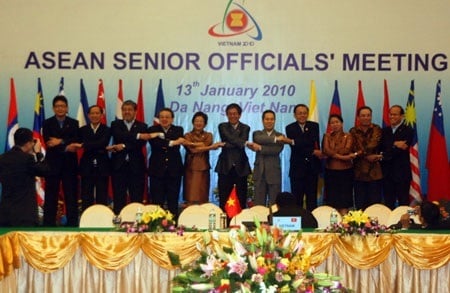
"Vietnam has the potential to host the World Cup in the future."
In short, hosting international conferences is not just about specific protocol and logistics, but also about content, coordination capabilities, showcasing Vietnam's position, and conveying political, economic, cultural, and foreign policy messages to the region and the world. It's also worth mentioning that Vietnam's personnel have matured significantly over time, becoming increasingly professional and capable of handling major foreign affairs events. Our country is developing and gaining a stronger position internationally and regionally. This is also the time when we can think more broadly about choosing and proactively hosting international activities and events of even greater scale, not only in foreign affairs but also expanding into other fields such as economics, culture, society, and tourism. The recent visits of many famous figures to Vietnam are also a significant highlight. In the technology sector, the recent visit of billionaire Jensen Huang, CEO of Nvidia, to Vietnam attracted the attention of investors, businesses, and technology companies from the US and other countries to a Vietnam undergoing a strong transformation in innovation, and the Vietnam-US relationship has been elevated to a comprehensive strategic partnership. Similarly, Blackpink's concert in Hanoi in 2023 also created a significant ripple effect regarding Vietnam. The fact that famous filmmakers choose Vietnam as a filming location also contributes to promoting the image of the country and its people. When I say "Vietnam has the potential to host the World Cup in the future," I mean an expectation, using a concrete analogy. ASEAN has also considered hosting such a World Cup. With Vietnam's position, capabilities, and accumulated experience, in the coming years, we can proactively host such events. Therefore, the implication is, "why not?" We need to select and proactively host events that create a significant impact, are worthy of our status, and contribute to national interests and standing. Furthermore, if we observe carefully, we can see that many countries have built their own brands by proposing initiatives and organizing major international and regional events. For example, the Munich Security Conference (Germany), the Boao Forum (China), and the Davos Conference – the annual meeting of the World Economic Forum (WEF) held in Davos (Switzerland) – where national policymakers and major business leaders discuss the economy at the beginning of the year. Or the Shangri-La Dialogue, named after a hotel but associated with a leading regional security forum, which Singapore has successfully established. At some point, Vietnam also needs to build a Vietnamese brand with a similar initiative – a forum, a mechanism, or a process bearing the name of Vietnam, that attracts the attention of the world and the region. As mentioned above, we also need to seize opportunities and expand further in areas such as culture and arts (music, painting, film, tourism, etc.), or technology and innovation, which are new areas of great interest. These activities directly contribute to the economic and social development of the country. To achieve this, we cannot rely solely on the government; social organizations, industry associations, and business associations, in particular, need to be proactive. Vingroup's VinFuture award is a commendable example. Similarly, we could have had a Formula 1 race if it weren't for the COVID-19 pandemic. Therefore, associations and businesses with potential and capabilities need to get involved and be more proactive in proposing initiatives and organizing major events in various fields from technology and economics to culture, art, and entertainment… in order to promote cultural exchange, advertise tourism, and thereby enhance the position and contribute to the socio-economic development of the country. Author: Mr. Pham Quang Vinh, former Vietnamese Ambassador to the United States and former Deputy Minister of Foreign Affairs. Mr. Vinh previously served as the Head of the ASEAN-Vietnam Senior Officials Meeting for seven years.
Dantri.com.vn
Source




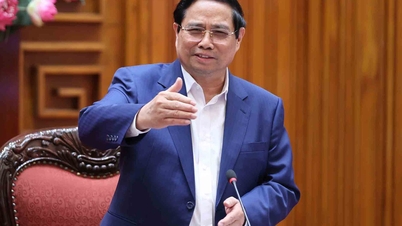

![[Photo] Prime Minister Pham Minh Chinh chairs a meeting on implementing infrastructure projects to serve APEC 2027](https://vphoto.vietnam.vn/thumb/402x226/vietnam/resource/IMAGE/2025/11/14/1763128613457_dsc-3135-jpg.webp)










![[Image] Vietnam's colorful journey of innovation](/_next/image?url=https%3A%2F%2Fvphoto.vietnam.vn%2Fthumb%2F1200x675%2Fvietnam%2Fresource%2FIMAGE%2F2025%2F12%2F14%2F1765703036409_image-1.jpeg&w=3840&q=75)







































Comment (0)