

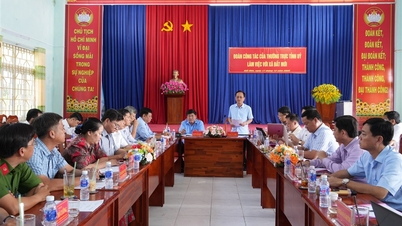
Today (December 16th), in Buon Ma Thuot City, Dak Lak province, the Presidium of the Central Committee of the Vietnam Fatherland Front held a meeting to understand the thoughts and aspirations of ethnic minority and mountainous people in the Central Highlands provinces in 2024.
The conference was attended by representatives of ethnic minorities from five provinces in the Central Highlands region: Kon Tum , Gia Lai, Dak Lak, Dak Nong, and Lam Dong.
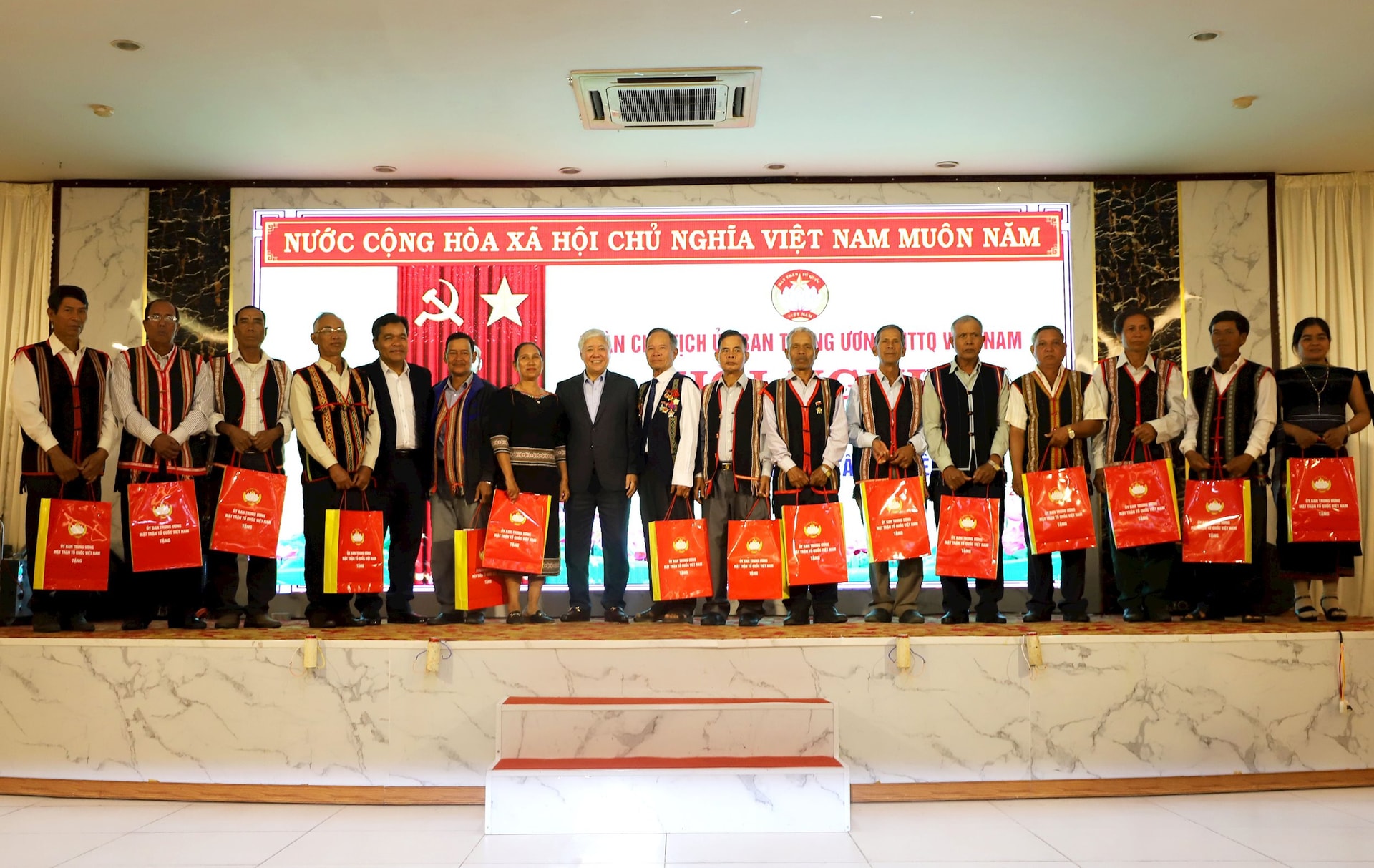
Strengthening the trust of ethnic minority people in the Party and the State.
Located in the heart of the mountainous region of Southern Indochina, the Central Highlands holds a particularly important strategic position in terms of national defense and security. The entire region has a total natural area of 54,474 km² (accounting for 16.8% of the country's total area) with a population of approximately 6 million people (accounting for about 6% of the country's total). It is home to all 54 ethnic groups, with ethnic minorities accounting for 36.52%, of which indigenous Central Highlands ethnic groups account for about 25%, including the Ba Na, Gia Rai, Ede, Co Ho, Ma, Xo Dang, and Mo Nong; other ethnic minorities account for over 10% (the most numerous being ethnic minorities from northern provinces, such as the Tay, Nung, Mong, Thai, Muong, and Dao, who have migrated and settled in concentrated communities).
According to Vice Chairman of the Central Committee of the Vietnam Fatherland Front, Hoang Cong Thuy, in 2024, the situation in the ethnic minority and mountainous areas of the Central Highlands provinces was generally stable: political security and social order were ensured, with no serious incidents occurring; cadres, soldiers, and people in ethnic minority and mountainous areas were enthusiastic and confident in the leadership of the Party and the State; programs and projects for ethnic minority and mountainous areas were effectively implemented; social welfare programs to help the poor and those facing difficulties, misfortunes, and risks in life were emphasized; ethnic minorities in the Central Highlands actively participated in campaigns and patriotic emulation movements launched by the Fatherland Front and political and social organizations, upholding the spirit of solidarity, mutual assistance, and self-reliance to develop the economy, eradicate hunger and poverty, and prevent and control diseases.
The Fatherland Front system and its member organizations at all levels in the region have actively and proactively coordinated the implementation of ethnic affairs, grasped the situation in ethnic minority and mountainous areas, anticipated complex issues that may arise from the grassroots, and advised Party committees on leadership and guidance solutions to ensure social stability and maintain security and national defense. In many places, the Fatherland Front has creatively and flexibly innovated the forms of mobilizing and gathering the people, firmly consolidating the trust of ethnic minorities in the Party and the State. Social monitoring and criticism activities have been improved in both quality and quantity. Relief, social, humanitarian, and charitable activities, as well as the implementation of grassroots democracy regulations, have been given special importance by the Fatherland Front system at all levels.
However, due to limited transportation and communication infrastructure in some remote, isolated, and border areas, and the scattered settlements of ethnic minority communities, the dissemination of the Party's guidelines and the State's policies and laws has not been as effective as desired. The security situation in some areas remains complex. Rising prices of some essential goods, outbreaks of diseases in humans and livestock, erratic weather patterns, and difficulties in selling agricultural products have negatively impacted the lives of ethnic minority and mountainous communities.
We must resolutely put an end to deforestation and the destruction of the ecological environment.
According to Vice Chairman Hoang Cong Thuy, in preparation for this significant conference, many aspirations and recommendations from ethnic minority communities have been submitted to the Presidium of the Central Committee of the Vietnam Fatherland Front. Ethnic minority communities requested that central ministries and agencies expedite the implementation of the Government's Action Program to implement Resolution 23 of the Politburo on the direction of socio-economic development and ensuring national defense and security in the Central Highlands region until 2030, with a vision to 2045; and Decision No. 104 dated December 8, 2023, of the Prime Minister on promulgating the Project on socio-economic development associated with protecting security and national defense in the Central Highlands region. The National Target Program for socio-economic development in ethnic minority and mountainous areas, in coordination with other programs and policies in the region such as the National Target Program for Sustainable Poverty Reduction and the National Target Program for Building New Rural Areas, is linked to the restructuring of the agricultural sector, adaptation to climate change, and sustainable environmental protection. This is considered one of the breakthrough solutions for socio-economic development in ethnic minority and mountainous areas in the Central Highlands region in general.
Ethnic minority communities in the Central Highlands also hope that state agencies and organizations will strengthen propaganda, mobilization, and strict handling of acts of forest destruction, resolutely ending deforestation and environmental degradation. They also hope for the restoration of some good customs and "cultures" of forest-related practices among ethnic minorities; research and listening to the thoughts and aspirations of ethnic minorities regarding forest management and protection; and the rational resolution of issues arising from practical situations.
In particular, ethnic minority communities have expressed their desire for local authorities to do a better job of stabilizing nomadic and spontaneously migrating populations; to implement comprehensive and timely planning, compensation, support, relocation, and resettlement for hydropower projects in the area, ensuring that people's lives in new homes are better than in their old ones. They also hope for effective implementation of housing support programs and residential planning in flood-prone and landslide-prone areas, aiming for safety, stability, and sustainable development.
Furthermore, ethnic minority communities requested that local authorities in the region improve their management to ensure basic social services for the people, including access to healthcare, education, information, and employment opportunities for ethnic minority workers. They also emphasized the need for better management of population registration, civil registration, and birth certificates. They stressed the importance of developing education, training, and healthcare in a coordinated manner to improve the quality of human resources in the Central Highlands region and eliminate the "human resource gap."
The People's Committees of the Central Highlands provinces need to continue effectively implementing policies to support startups, product consumption, market access, and job creation for ethnic minority communities; continue to focus on directing and improving the quality of the grassroots political system, and maintaining national defense and security in the Central Highlands region. Continuously strengthen the core forces of mass organizations, increase the development of Party members, including ethnic minority Party members in key areas and areas with special difficulties; emphasize the role of village elders, hamlet leaders, clan leaders, and influential people; consolidate and improve the quality of grassroots cadres, especially ethnic minority cadres; effectively implement grassroots democracy regulations; focus on building community agreements and organizing self-governance movements on security and order; and promote the effective operation of self-governance models in the community...
Source: https://daidoanket.vn/doan-chu-tich-ubtu-mttq-viet-nam-tiep-xuc-lang-nghe-tam-tu-dong-bao-cac-dan-toc-thieu-so-10296577.html
![[Image] Leaked images ahead of the 2025 Community Action Awards gala.](/_next/image?url=https%3A%2F%2Fvphoto.vietnam.vn%2Fthumb%2F1200x675%2Fvietnam%2Fresource%2FIMAGE%2F2025%2F12%2F16%2F1765882828720_ndo_br_thiet-ke-chua-co-ten-45-png.webp&w=3840&q=75)
![[Photo] Prime Minister Pham Minh Chinh receives the Governor of Tochigi Province (Japan)](/_next/image?url=https%3A%2F%2Fvphoto.vietnam.vn%2Fthumb%2F1200x675%2Fvietnam%2Fresource%2FIMAGE%2F2025%2F12%2F16%2F1765892133176_dsc-8082-6425-jpg.webp&w=3840&q=75)
![[Live] 2025 Community Action Awards Gala](/_next/image?url=https%3A%2F%2Fvphoto.vietnam.vn%2Fthumb%2F1200x675%2Fvietnam%2Fresource%2FIMAGE%2F2025%2F12%2F16%2F1765899631650_ndo_tr_z7334013144784-9f9fe10a6d63584c85aff40f2957c250-jpg.webp&w=3840&q=75)

![[Photo] Prime Minister Pham Minh Chinh receives Lao Minister of Education and Sports Thongsalith Mangnormek](/_next/image?url=https%3A%2F%2Fvphoto.vietnam.vn%2Fthumb%2F1200x675%2Fvietnam%2Fresource%2FIMAGE%2F2025%2F12%2F16%2F1765876834721_dsc-7519-jpg.webp&w=3840&q=75)






































































Comment (0)