

The ancestor worship ceremony is a long-standing tradition of the Lo Lo ethnic group, usually held annually on the 14th day of the 7th lunar month. In each Lo Lo home, the ancestral altar is placed in the central room, the most sacred place in the house, usually level with the ceiling beam. Above the altar are wooden figurines representing the spirits of the ancestors. Traditionally, each Lo Lo family has an ancestral altar, but the communal ancestor worship ceremony for the entire clan is only held at the head of the clan's family. The head of the clan prepares the offerings, and other families contribute according to their means.
The Lolo people's ancestor worship ceremony consists of three main rituals: the sacrificial ceremony, the memorial ceremony, and the farewell ceremony.
Before the ceremony, the eldest son in the family needs to prepare offerings including one chicken, three cups of wine, sticky rice, fresh flowers, fruit, and gold coins. Previously, the ancestral worship ceremony required offerings such as: one cow, one pig, one chicken, sticky rice, wine, gold coins, oil lamps, and a pair of bronze drums. They believe that ancestors are those from previous generations who gave birth to them, and they are divided into two systems: close ancestors (dùy khế) including ancestors from the 3rd to 4th generation, and distant ancestors (pờ xi) including ancestors from the 5th or 6th generation onwards.
The Lolo people's ancestral worship ceremony is dedicated to their deceased ancestors, reminding descendants of their roots and fostering a bond between generations. Many Lolo people in various regions still preserve this beautiful custom, and it is a cultural event that attracts many tourists and photographers passionate about exploring the unique cultural identity of the highlands.
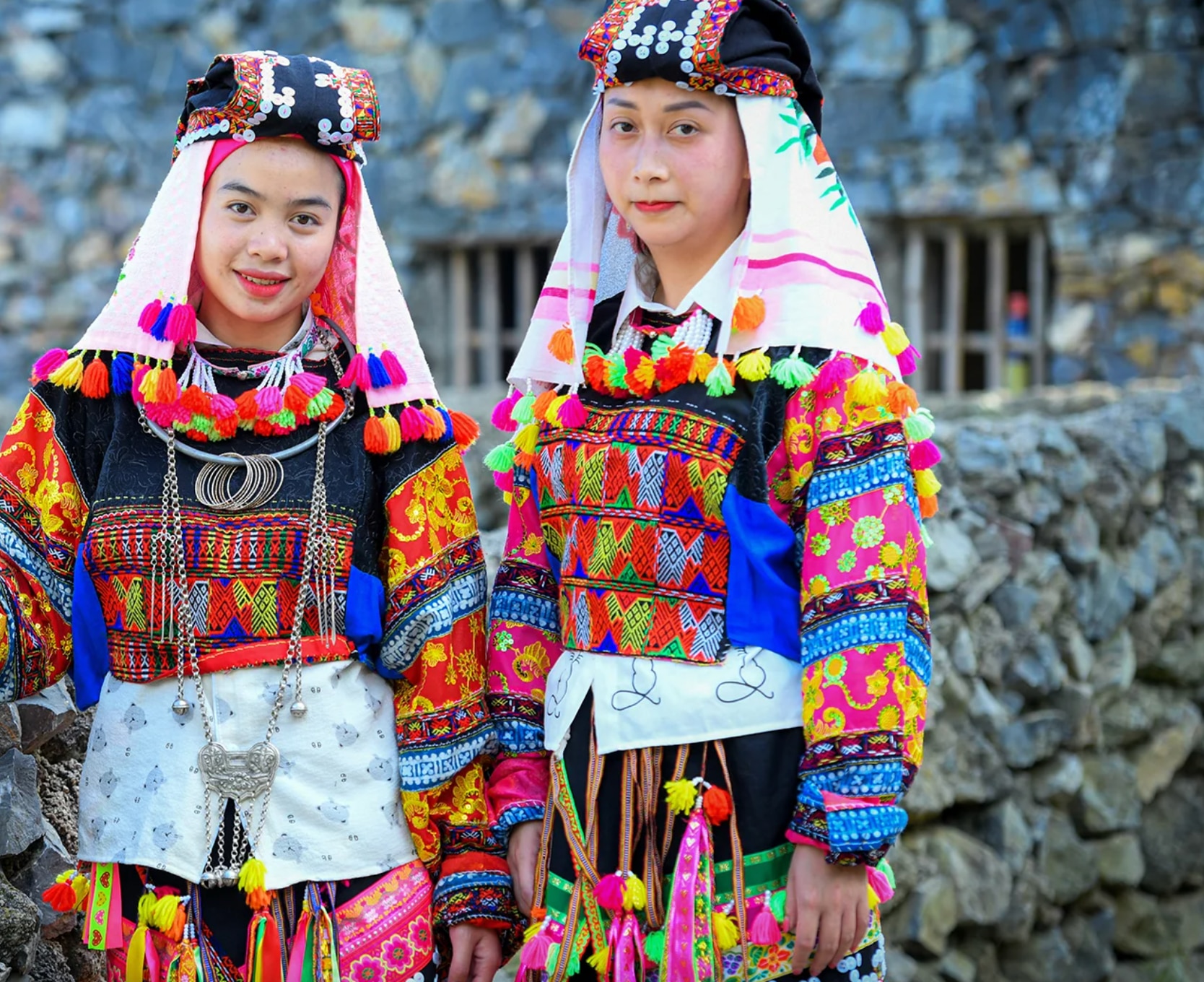
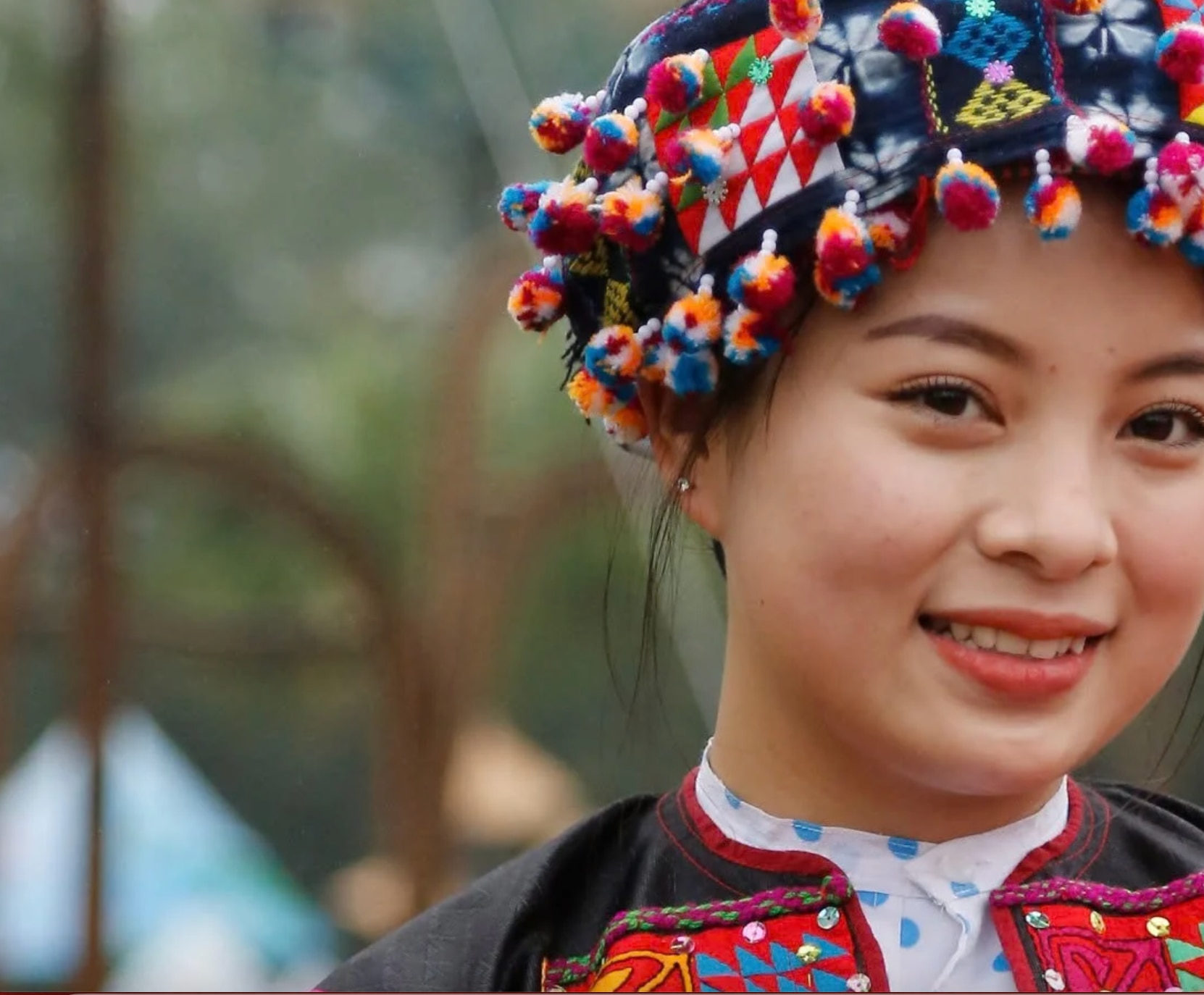
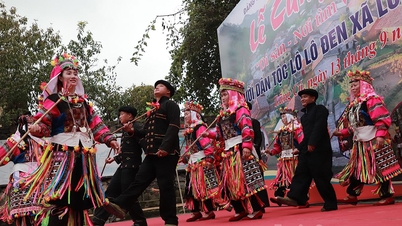
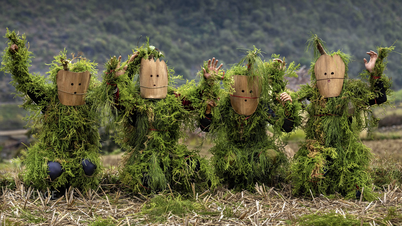
During that time, the young men of the clan would go into the forest to gather the freshest, most beautiful su choeo grass to weave into costumes for the forest dwellers, also known as "Grass Spirits" (Gha Lu Ngang). The girls would also prepare their costumes and dresses to participate in the dances during the ceremony, with buttons sewn in rows on their hats and blouses symbolizing unity and community solidarity.

Before the main ceremony, the clan leader invites the shaman to perform the ancestral worship ritual with the "wing-gathering" ceremony (slaughtering a chicken). This ritual is indispensable in the Lolo people's worship ceremony. The shaman performs the ritual of slaughtering a chicken right in front of the altar and then places it on the table as an offering in front of all the clan members. The clan leader will pour wine to thank the shaman for traveling a long distance to help the family.
After drinking the host's toast, the shaman performs the ritual, inviting the host's ancestors to attend the ceremony and partake in the offerings presented by their descendants. They pray for the ancestors' blessings, wishing their descendants good health, happiness, academic success, abundant harvests, plentiful livestock (cattle, pigs, chickens, etc.), and smooth sailing in all endeavors. Meanwhile, the chickens are slaughtered to be offered to the ancestors, and the pigs are brought out to the yard for sacrifice.
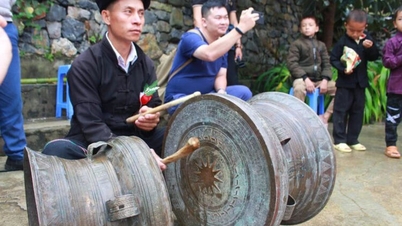
When the shaman's words end and the prayer concludes, the ritual of beating the bronze drums begins. The pair of bronze drums – sacred treasures of the Lo Lo community – are indispensable in the ceremony, consisting of one male drum and one female drum. The female drum (giảnh đú) is always the larger one, while the male drum (giảnh kê) is the smaller one. This pair of drums is only used during important community and clan ceremonies and festivals such as the dry funeral ceremony, ancestor worship, misfortune-averting rituals, and worship of stone gods. If a family does not have them, they must send someone from their clan to borrow them, as these are sacred treasures of the community. The person invited to beat the drums must be a reputable person, usually an experienced artisan. Drums are also the only musical instruments used in this ceremony.
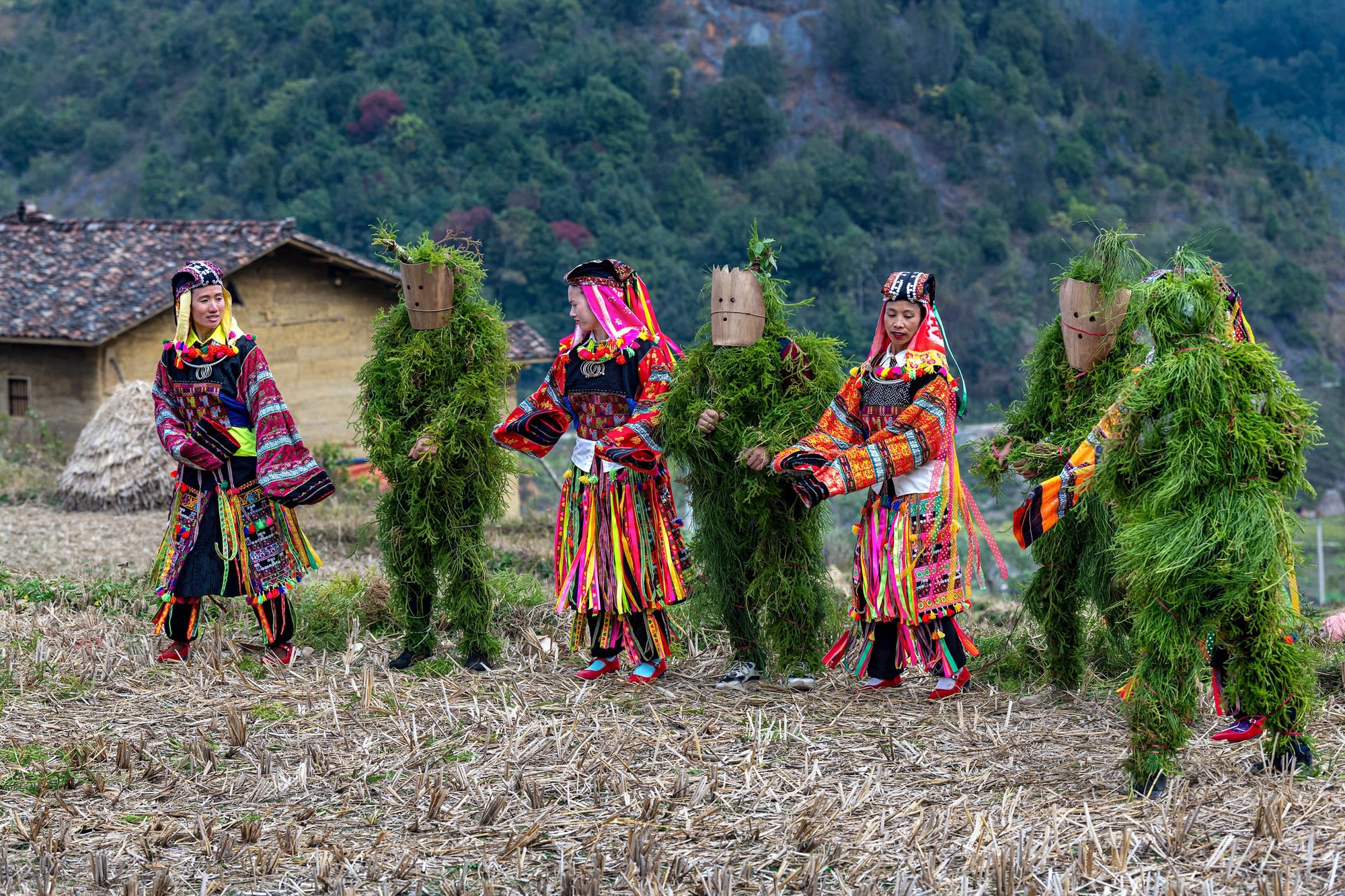
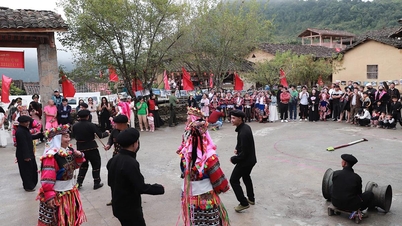
The sound of bronze drums echoed, and women in traditional costumes danced joyfully with the "Grass Spirits" troupe.
According to Mr. Sinh Di Trai from Lung Cu commune, Dong Van district, the ancestral worship ceremony of the Lo Lo people is usually held at home to teach children and grandchildren to remember their roots, be grateful to their ancestors, and create a bond between family, clan, and village.
After the ceremonial dance by the girls and the "Grass Spirits" troupe ended, the host prepared the offerings for the second ceremony – the ceremony commemorating the ancestors. The offerings included a pig, sticky rice, wine, incense, and gold leaf. In the presence of the family and community, the shaman performed the ritual, praying for the ancestors' blessings for the descendants to always be healthy, happy, and prosperous. The head of the family then poured more wine to thank the shaman.
As night falls, the shaman performs the ritual of bidding farewell to the ancestors. A large bonfire is lit in the middle of the courtyard. By the bright firelight, the shaman, on behalf of the family, reports to the ancestors about the offerings presented by their descendants, asking the ancestors to accept their sincerity and rest in peace in the afterlife , and to bless their descendants with good fortune. Afterwards, the offerings of gold and silver are burned by the shaman to conclude the ceremony at dawn the next day. Other offerings are prepared into various dishes, distributed to the participants of the ceremony, and a feast is held for the community to celebrate together.
Unique "Grass Ghost"
"Grass ghost" is the most unique aspect of the Lo Lo people's ancestral worship ritual. The "grass ghost" costumes are usually braided and woven just before the ceremony. The grass, gathered from the forest by the villagers, is su choeo grass, a soft, resilient type of grass that is easy to braid and weave for the costumes. The grass chosen must be fresh and green, resulting in a beautiful, vibrant green costume.
The "grass ghosts" are disguised in a secluded location outside the village. Those playing the "grass ghosts" wrap themselves in reed grass to cover their bodies, wear masks made of bamboo, leaving only their eyes and mouths exposed. The "grass ghosts" are usually people from the village, invited by an uncle or son-in-law of the host family.
On the way to the ceremony, no one is allowed to look at or approach the "Grass Spirit," only to observe from a distance. Upon arrival, the "Grass Spirit" kneels and bows three times before the altar and the shaman before performing the dance ritual. After being dressed, the "Grass Spirit" will dance to the rhythm of the drums all day long.
The "Grass Spirit" ritual involves dancing.
The ritual dance with the "Grass Spirit" usually lasts several hours, coinciding with the time of the worship ceremony. Therefore, the person dressed as the "Grass Spirit" must be in good health and enthusiastic, because they must dance until the end of the memorial ceremony, usually around 5 PM, without eating, speaking, or stumbling while walking or dancing. This is because the Lolo people believe that if the "Grass Spirit" stumbles or is recognized, the family will experience bad luck that year. The "Grass Spirit" only rests and eats a short meal at noon and is offered water by the family during the dancing.
After the ceremony ends, the spirit kneels before the altar, the shaman, and the bronze drum, then goes out the gate and hides behind the village, choosing a secluded spot where no one can see it. There, it removes its grass costume, goes home to wash, and then continues to participate in the farewell ceremony for the ancestors held when night falls.
The "grass spirit" dance is also the most important activity in the ancestor worship ceremony, because the Lolo people believe that the grass spirit is the origin of their ancestors who, when living in the forest, had to use grass as clothing. Today, for their ancestors to return to witness the reverence of their descendants, they need the "grass spirit" to guide them. The "grass spirit" acts as a bridge between descendants in the mortal world and their ancestors in the afterlife. Perhaps it is this strong spiritual belief that makes the "grass spirit" group dance from the beginning to the end of the ceremony to the rhythm of the drums without getting tired.
More than just a spiritual ritual with a unique cultural identity, the ancestor worship ceremony also reflects the worldview of the Lolo people, embodying humanistic values, guiding future generations back to their roots, and fostering intergenerational bonds. The "Grass Ghost" dance not only commemorates ancestors but also embodies the cultural essence and philosophy of life of the Lolo people, while simultaneously being a unique artistic ritual.
The ancestor worship ceremony of the Lo Lo people in Lung Cu commune, Dong Van district, Ha Giang province has been recognized by the Ministry of Culture, Sports and Tourism as a national intangible cultural heritage under the category of social customs and beliefs.
Nhandan.vn
Source: https://special.nhandan.vn/Doc-dao-le-cung-to-tien-cua-nguoi-lolo/index.html

![[Photo] Two flights successfully landed and took off at Long Thanh Airport.](/_next/image?url=https%3A%2F%2Fvphoto.vietnam.vn%2Fthumb%2F1200x675%2Fvietnam%2Fresource%2FIMAGE%2F2025%2F12%2F15%2F1765808718882_ndo_br_img-8897-resize-5807-jpg.webp&w=3840&q=75)








































































Comment (0)