

We were greeted at the Lo Lo Chai tourist village (Lung Cu commune, Dong Van district, Ha Giang province) by Ms. Vang Thi Xuyen, the owner of a homestay at the beginning of the village. Ms. Xuyen is a 31-year-old Lo Lo woman born here. She and her husband, Mai Van Hien, 41, manage a three-story guesthouse with 15 rooms and food services.
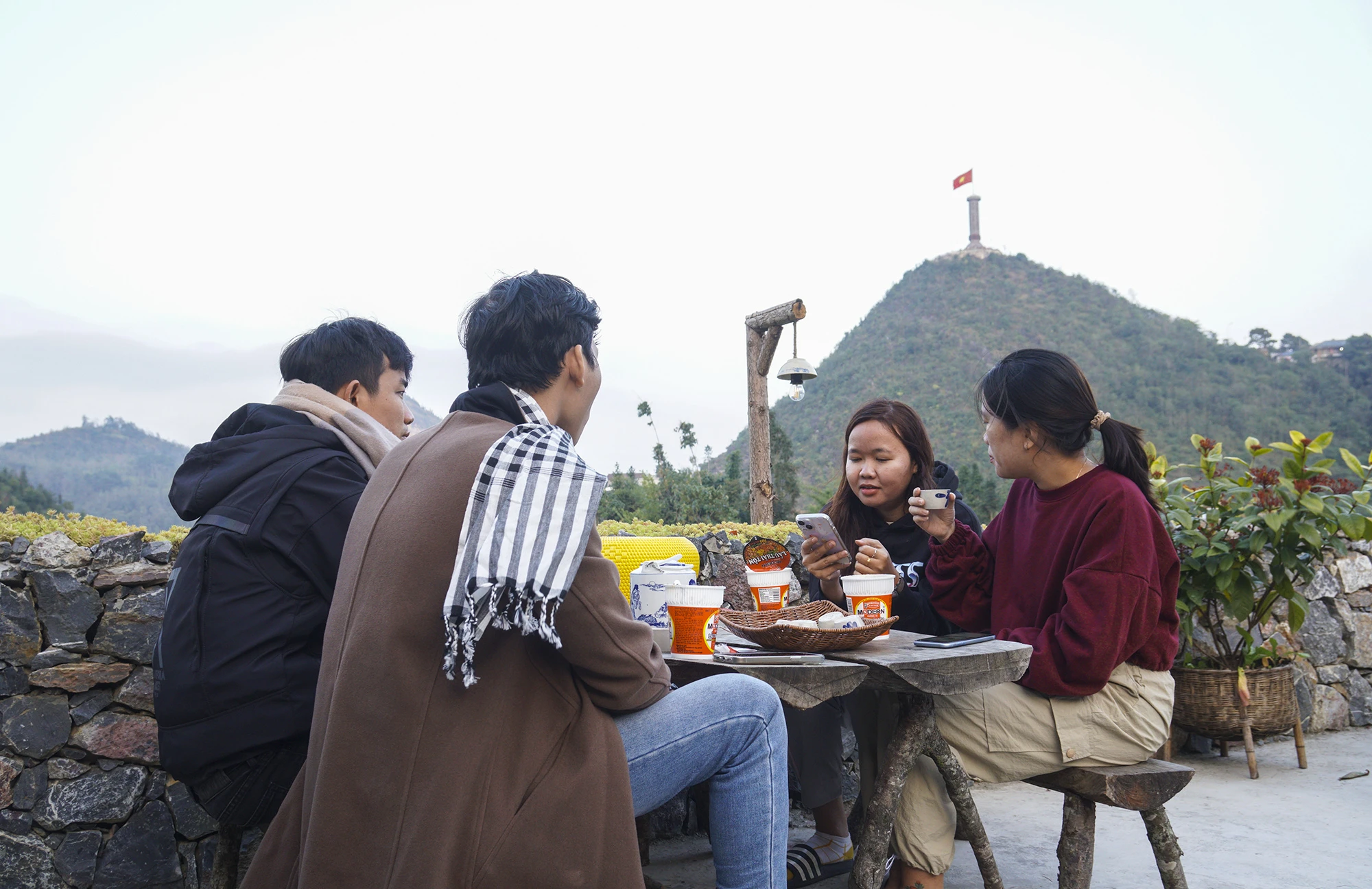
Four young people from Ho Chi Minh City stand in front of a homestay in Lo Lo Chai, calling it a million-dollar view with the Lung Cu flagpole in the foreground.
"We borrowed from the bank and gradually bought this 1,000 square meter plot of land. Our house is ordinary because we only invested a little over 2 billion VND, but there are many beautiful houses with earthen walls and yin-yang tiled roofs in the village," Ms. Xuyen said while serving 3-4 groups of guests checking in at the same time. Xuyen's homestay costs 500,000 VND per room, and guests flock in, confirming that Lo Lo Chai has now become a "phenomenon" of tourism on the Dong Van karst plateau.
Chiéo pa, yzá pa have become local specialties.
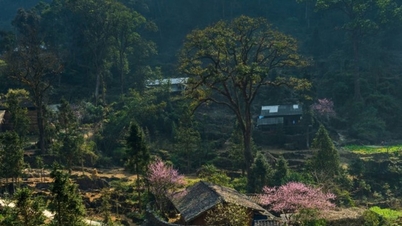
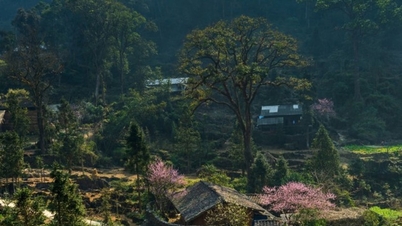
When I went to Lung Cu before, a border guard officer even advised me against going to Lo Lo Chai because the road was difficult and the area was remote, close to the border. From the top of Lung Cu, looking north, all I could see was Lo Lo Chai, a jumble of houses with earthen walls and yin-yang tiled roofs, and many peach blossoms blooming in the spring.
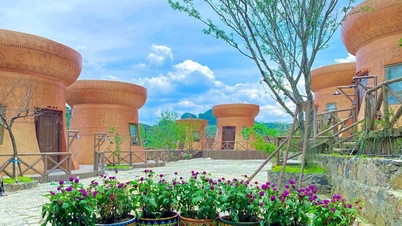
According to Ms. Xuyen, the Lo Lo people call earthen houses " chieo pa," and yin-yang tiled roofs "yza pa." Both are familiar "products" in the northern mountainous region, both made of earth in a rudimentary, handcrafted way. However, as the economy improved and the mountainous region caught up with the lowlands with many sturdy concrete houses being built, chieo pa and yza pa became specialties. Lo Lo Chai stands out because its community knows how to preserve the highland culture, including its architecture.
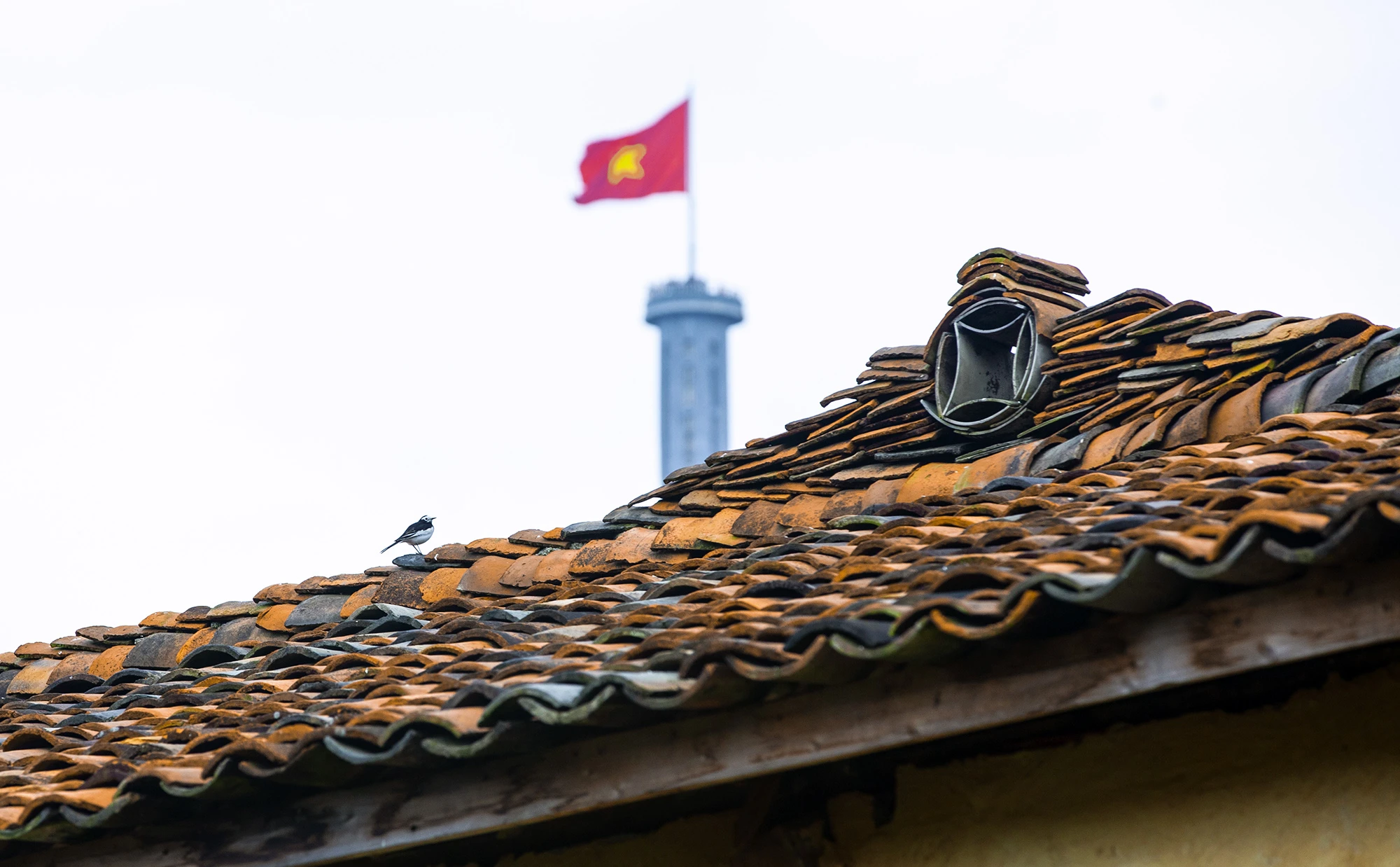
A yin-yang tiled roof - yzá pa - in Lo Lo Chai
The head of Lo Lo Chai village, Mr. Sinh Di Gai, who was the first person to engage in tourism in the village about 10 years ago, has urged the villagers not to demolish their traditional houses and build brick houses, and not to replace traditional tile roofs with corrugated iron roofs in order to preserve the landscape and attract tourists. Ms. Xuyen said that this has become a "village covenant," and all families have committed to it.
Deputy Secretary of the Party Committee of Lung Cu Commune, Ta Quang Tien, a border guard officer on secondment, excitedly said: "Before, no one thought Lung Cu would have such beautiful views, but now it does. At night, Lo Lo Chai is very sparkling. That architecture, that language, that traditional clothing are our OCOP (One Commune One Product) program. Poverty reduction also stems from that." Previously, visitors to Lung Cu only saw the flagpole and left; now they can stay overnight, with tens of thousands of people staying there each year. Before, the vegetables, fruits, pigs, and chickens raised by the local people had to be sold elsewhere; now, tourism can consume two or three pigs and several hundred kilograms of vegetables in a single day.
"This success is thanks to the efforts of many people. It started with a Japanese man, Yasushi Ogura, who loves the highland culture and supports the Lo Lo Chai people in developing tourism. Then there are dedicated individuals like Mr. Sinh Di Gai, Secretary of the Party Committee of Chu Van Huong commune, and Mr. Nguyen Van Chinh, Vice Chairman of Dong Van district. I personally went to the village to persuade the people to relocate their livestock pens and maintain environmental hygiene so that we could attract tourists," Mr. Tien added, noting that everything is going smoothly, with only one difficulty remaining: the area often lacks water during the dry season.
In particular, Party Secretary Chu Van Huong revealed that the architecture and culture of Lo Lo Chai village helped it achieve the 3-star OCOP (One Commune One Product) award. Mr. Huong also mentioned that Lung Cu has another promising tourist village that will become very famous: Then Pa Village.
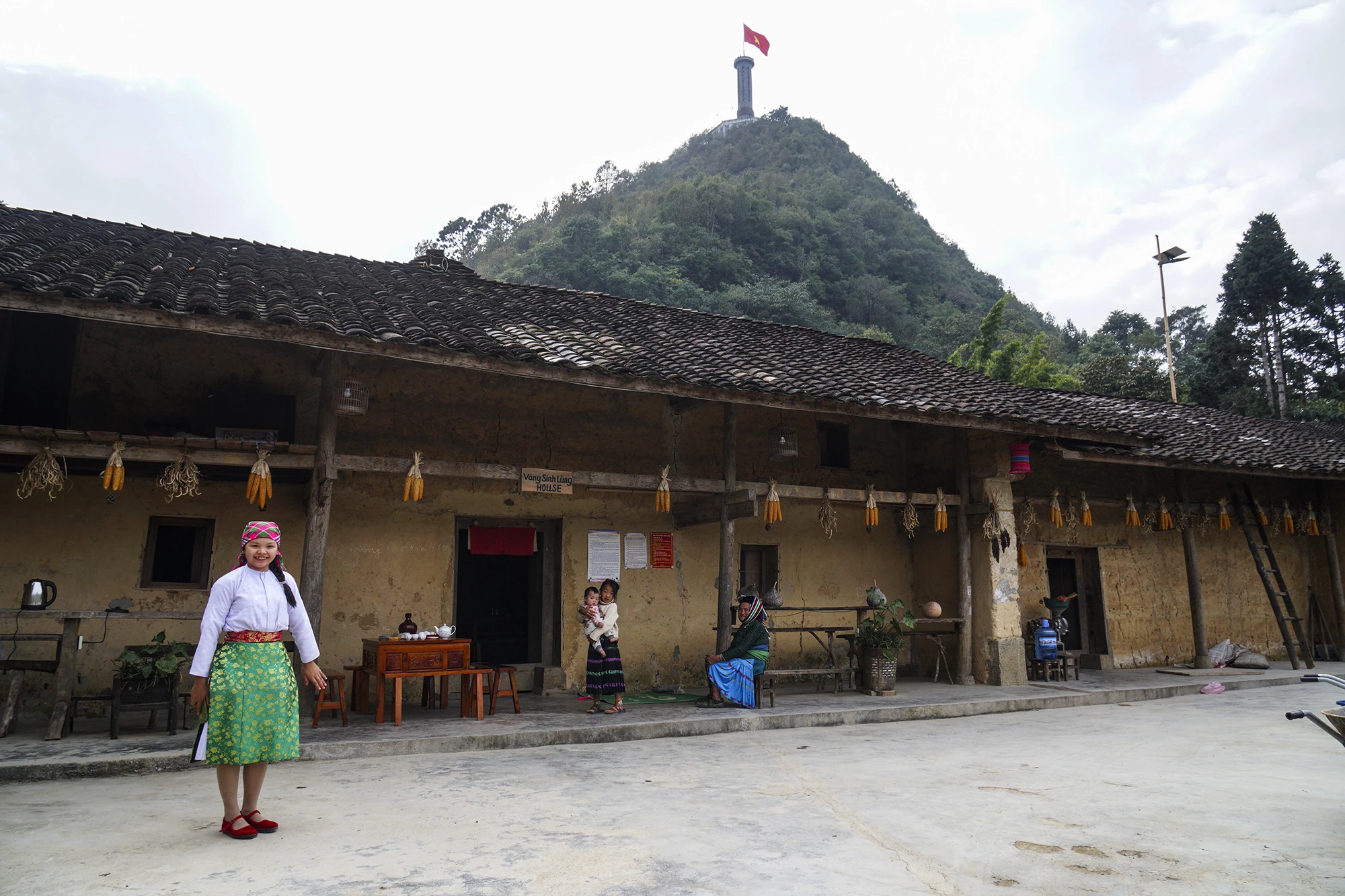
Ms. Hoang Thi Lanh, receptionist at Then Pa Village, guides visitors on a tour of the village.
Transforming a cowshed into a tourist accommodation.
Then Pa Village, a "5-star" tourist village as described by Mr. Huong, is located at the foot of Dragon Mountain, near the Lung Cu flagpole and surrounded by many straight cypress trees. Along the neatly arranged pathways are houses with earthen walls and yin-yang tiled roofs, winding around the foot of the mountain, with the flagpole visible above. As Mr. Huong jokingly said, "The villagers have turned the cowshed into a tourist accommodation," I only saw one fairly clean and beautiful cowshed, seemingly recreating the traditional living space of the Hmong people; the rest had been moved further away to make way for the accommodation.
The village's receptionist was a beautiful and polite 18-year-old girl from the Dáy ethnic group, Hoàng Thị Lãnh. Lãnh led me to visit some rather nice bungalows with luxurious interiors, next to traditional houses with earthen walls and yin-yang tiled roofs, each bearing a homestay sign with the owner's name, and decorated with pumpkins, corn, baskets, and farming tools in front. Everything was very clean. There was a restaurant and bar at the end of the village.
Mr. Vang Cha Sy, 58 years old, one of the people who rent out rooms in his house, said the village has only been operating for over a month. Mr. Sy's house has a communal room with 6 sleeping spaces and has been welcoming guests at a price of 120,000 VND per person per night. "Just clean and sanitize the place, and guests come to stay and praise how nice it is. We don't lose anything but still make money," Mr. Sy happily said.
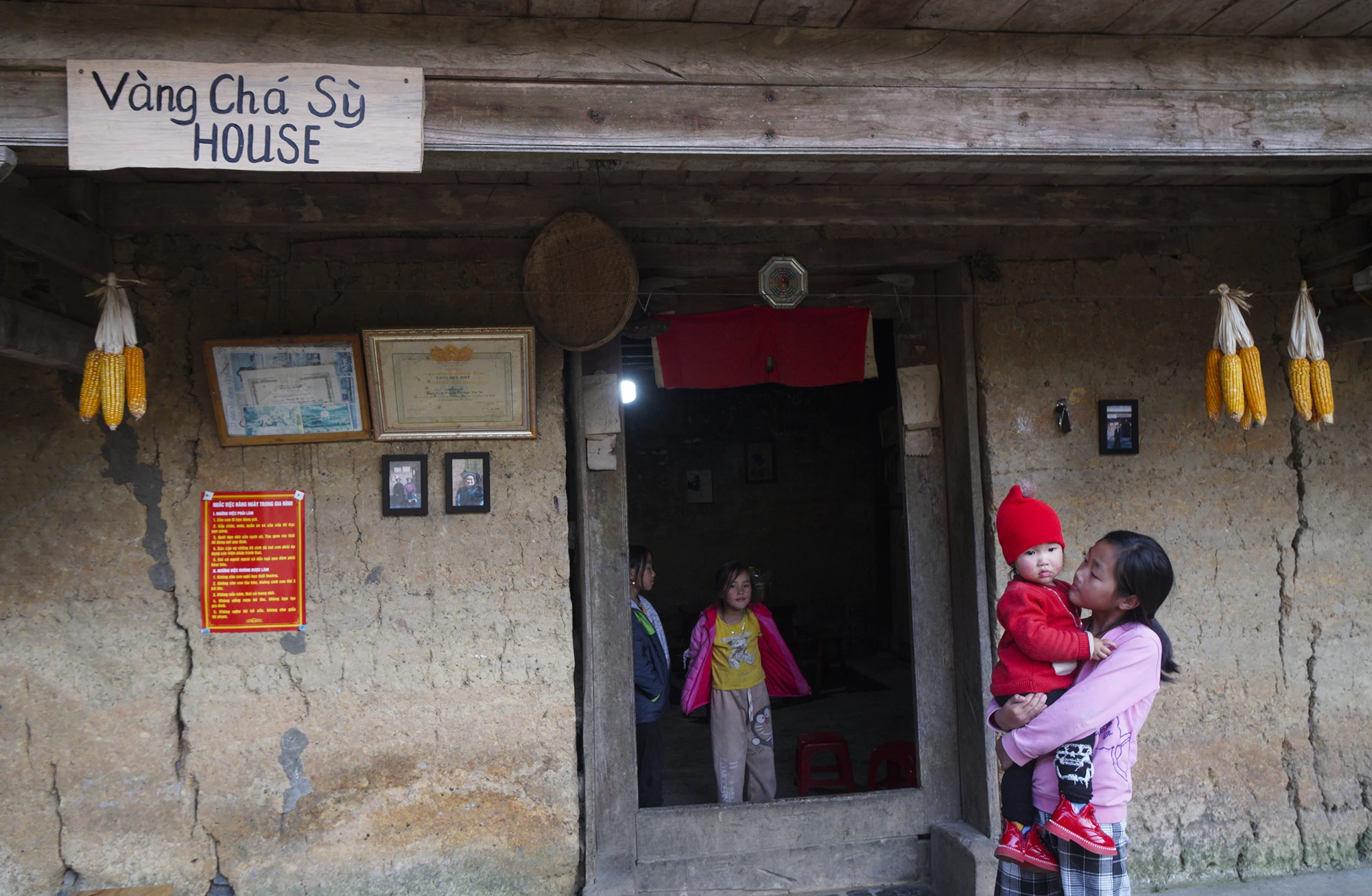
Mr. Vang Cha Sy's homestay in Then Pa village
In the village, I met Nguyen Sy Duc, a 28-year-old man from Bac Ninh who loves highland culture and is the village manager. Duc said that the Then Pa tourism village project is supported by a businessman from the lowlands named Vu Gia Dai. This is a "risky" investment project where Mr. Dai invests in the overall landscape and mobilizes the entire village to participate in tourism, while also directly building bungalows on the land of some households and entrusting them to families for management, after which the profits are shared. Mr. Duc and Ms. Lanh are the ones directly managing the village's operations; they organize marketing, welcome guests, and regulate everything so that all families benefit harmoniously.
It's a pity that when I arrived in Then Pa, the village had just opened to visitors, so there wasn't much information about revenue and sales. However, I believe what Mr. Huong said: if you want a lively atmosphere, go to Lo Lo Chai, but if you want something more upscale and peaceful, go to Then Pa. This tourist village will surely become famous and attract many visitors in the near future.
According to Chu Van Huong, Secretary of the Party Committee of Lung Cu commune, in 2017, the province had a policy to support and encourage businesses to participate in tourism development in Lung Cu, and the commune's Party Committee also passed a resolution identifying tourism as a key sector. Now, in Lo Lo Chai alone, there are more than 40 households engaged in tourism services.
The commune has not yet collected taxes or fees from households involved in tourism, but is seeking approval to sell entrance tickets and create a parking area for visitors to Lo Lo Chai.
Regarding Then Pa specifically, Mr. Huong believes that this village is still beautiful and has a professional tourism industry, which is naturally more expensive than Lo Lo Chai, promising to be a place for those who can afford a slower pace of life and need tranquility.
Source link

![[Photo] Two flights successfully landed and took off at Long Thanh Airport.](/_next/image?url=https%3A%2F%2Fvphoto.vietnam.vn%2Fthumb%2F1200x675%2Fvietnam%2Fresource%2FIMAGE%2F2025%2F12%2F15%2F1765808718882_ndo_br_img-8897-resize-5807-jpg.webp&w=3840&q=75)


































































Comment (0)