

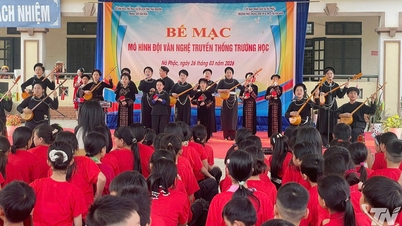
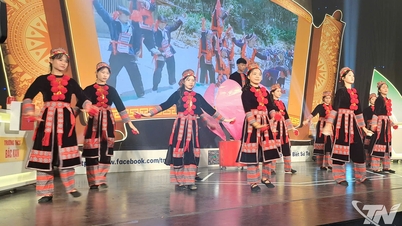
Over the years, the mass arts movement in ethnic minority areas has developed in both quantity and quality. Folk art troupes in villages and hamlets have brought together artisans knowledgeable in traditional culture, skilled in playing gongs, singing folk songs, and performing folk dances, contributing to keeping the cultural flame alive at the grassroots level.
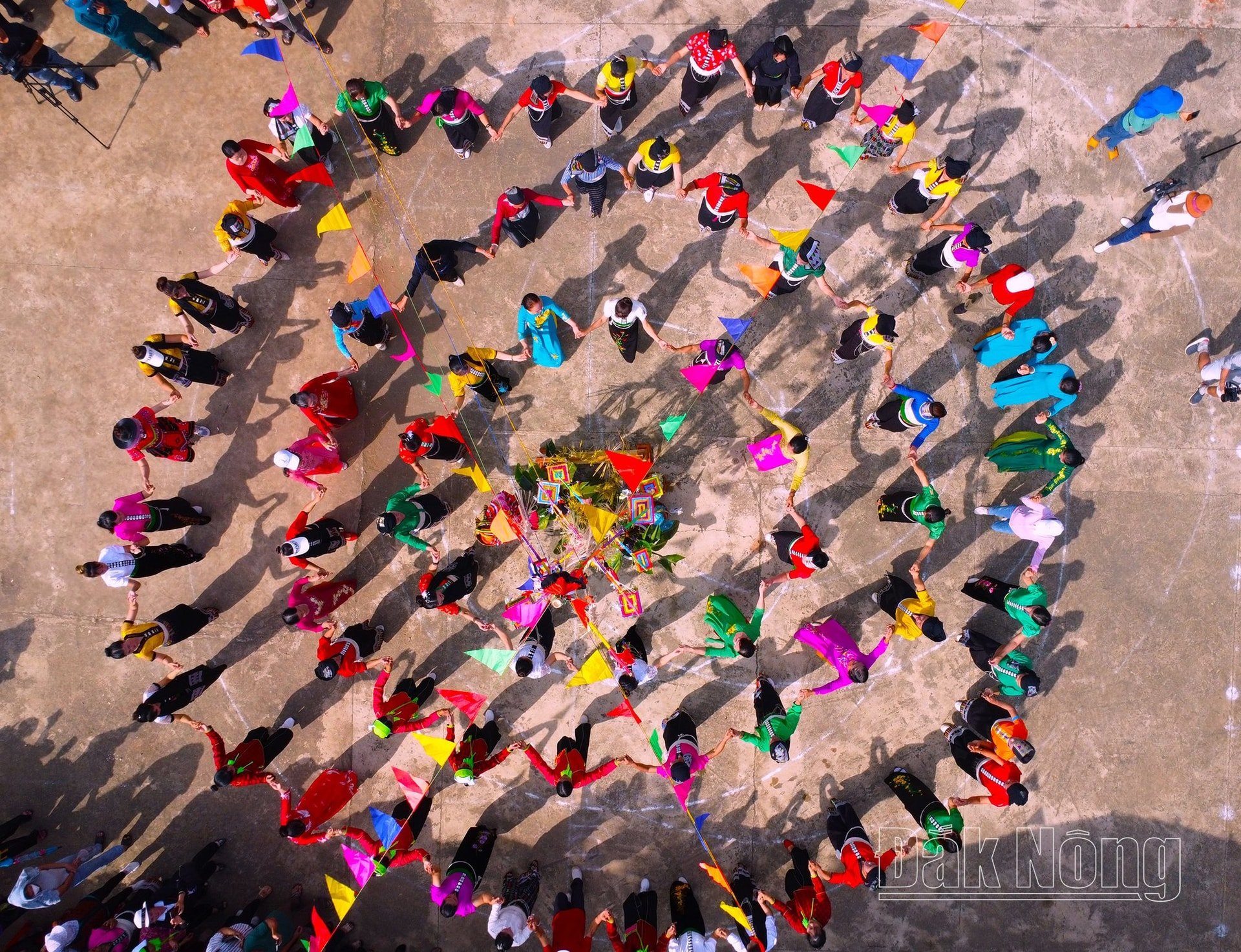
Most folk art troupes operate on a voluntary basis and actively participate in disseminating the Party's guidelines and policies, and the State's laws and regulations. With their enthusiasm and dedication to traditional culture, they are the ones who "keep the flame alive" and "pass it on" to the community, especially to the younger generation, instilling in them a passion for continuing the legacy of their ancestors and working together to preserve national culture.
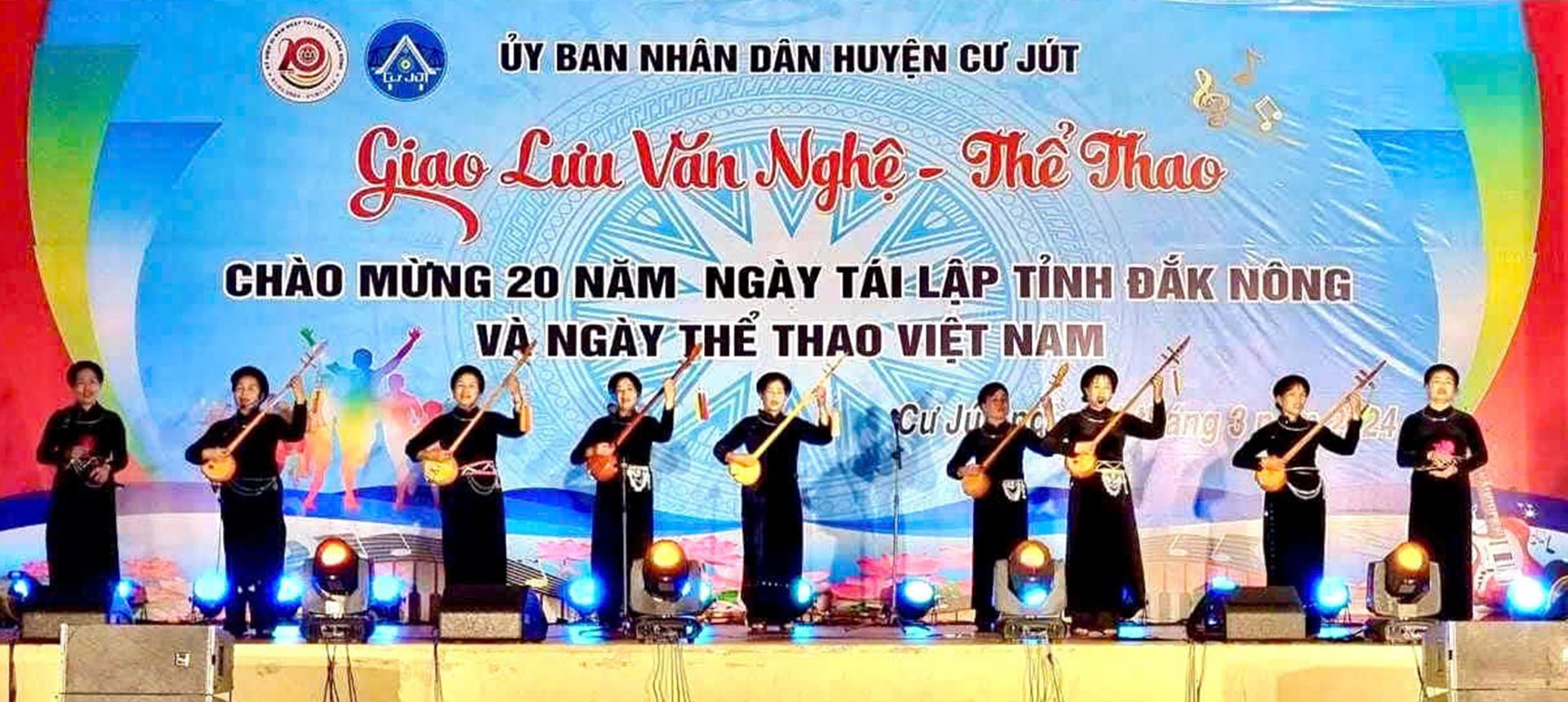
Cu Jut District currently has more than 25 ethnic groups living there, with ethnic minorities accounting for over 50.7%. In recent years, the local government has always paid attention to and created favorable conditions for the activities of the Traditional Folk Song Teams, contributing to preserving the traditional cultural identity of the ethnic groups and improving the spiritual life of the people.
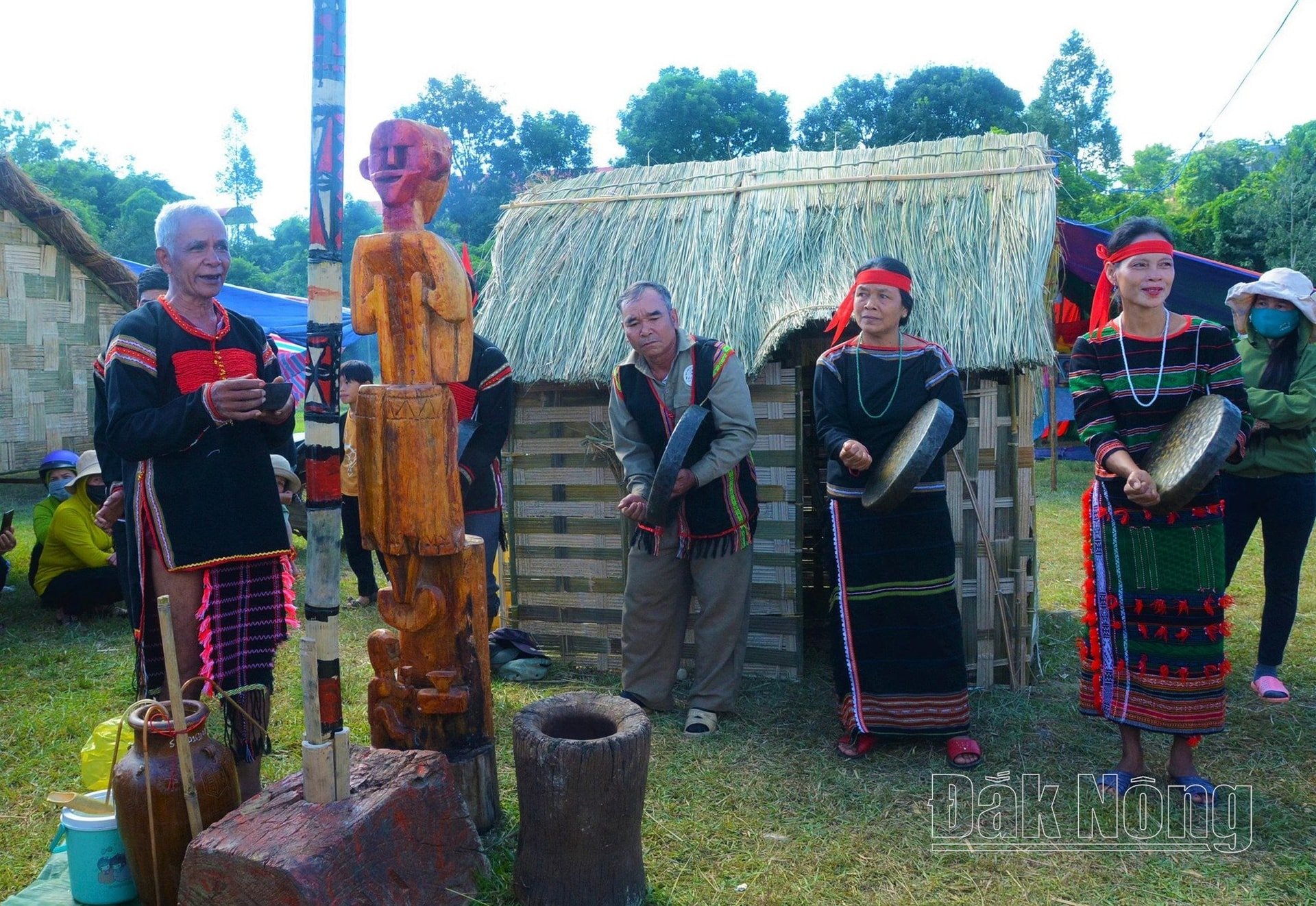
For example, the Dong Van Dong (Vietnamese Traditional Music) Team in Nui hamlet, Tam Thang commune, Cu Jut district, currently has 20 members. On weekends, the members practice playing gongs and drums with the artisans in the hamlet. Whenever there is a local event, the sound of gongs and drums and the Ay Ray folk songs resonate throughout the village.
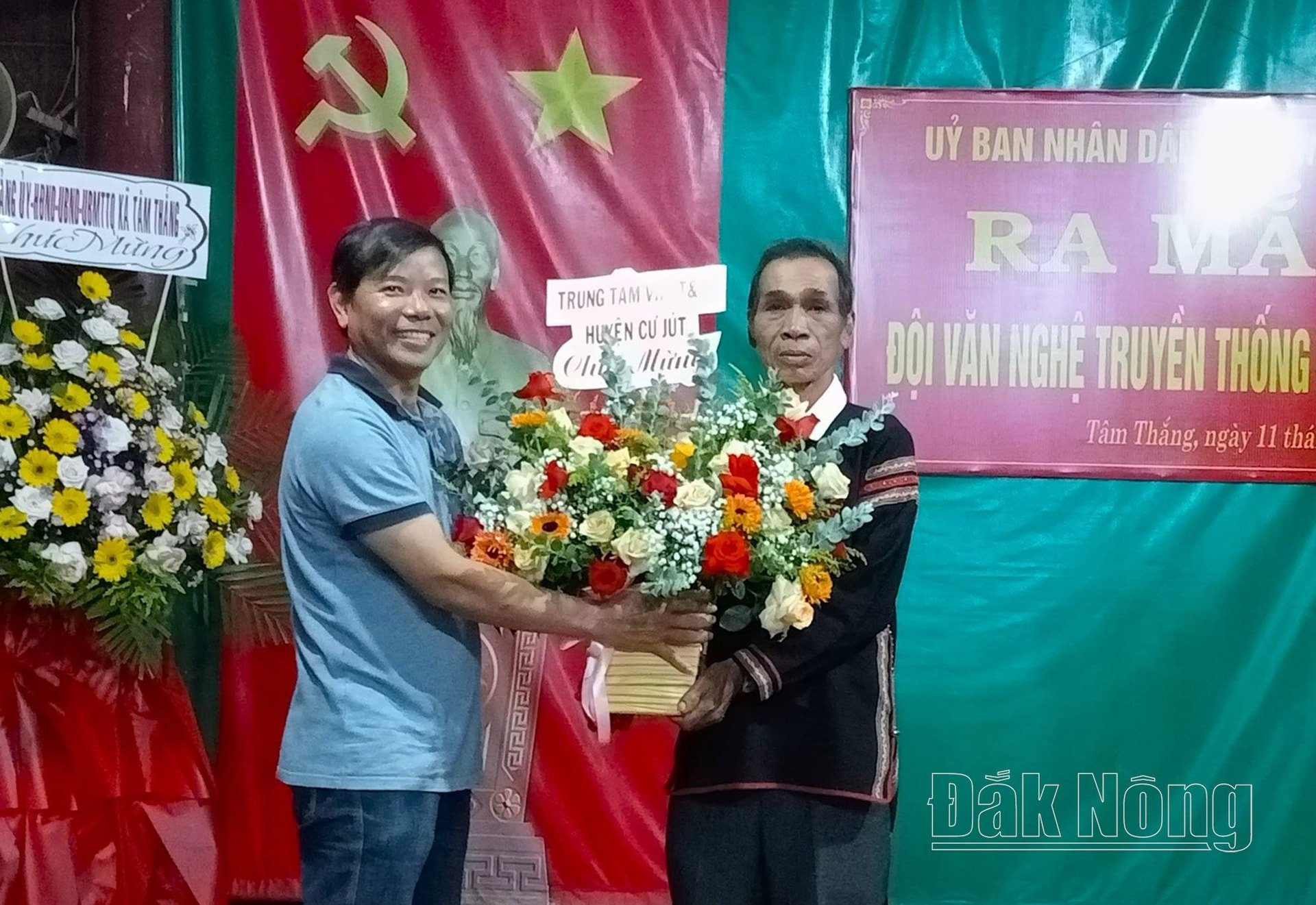
The performing arts troupe mainly operates in groups such as: singing and teaching Ede folk songs; crafting and performing musical instruments; playing gongs and composing new gong music; culinary arts ; weaving brocade; dance troupe…
In particular, thanks to their tireless practice, the VNDG Buôn Nui team has performed at many festivals, competitions, and shows at the local, provincial, and regional levels, achieving many high-ranking results.
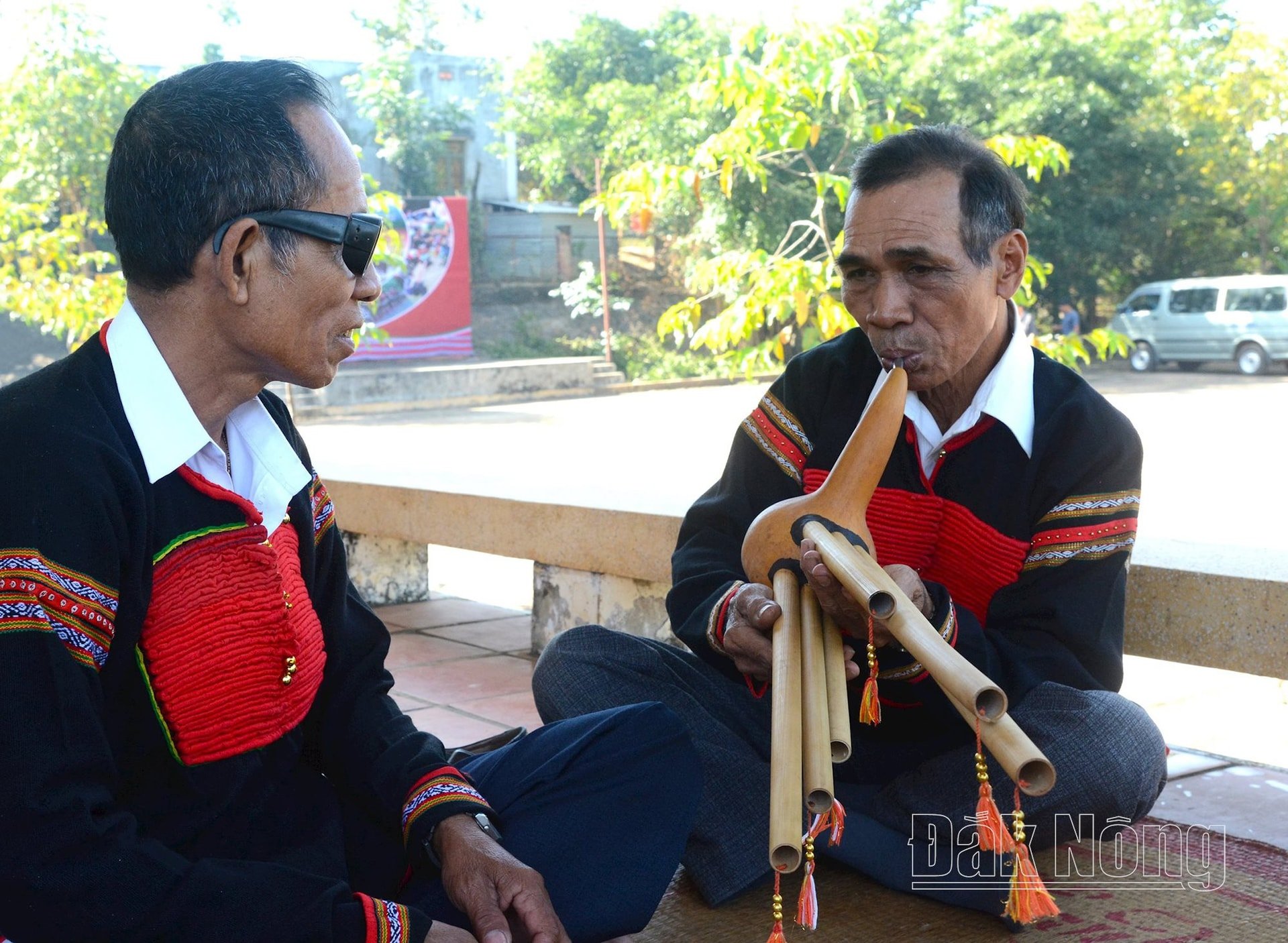
Outstanding artisan Y Sim Êban, a member of the Dong Van Dong Folk Artisan Team in Nui village, said: “Thanks to the attention and encouragement of the authorities at all levels, the village has established a Dong Van Dong Folk Artisan Team. Along with actively teaching gong playing and practicing folk songs and dances, the team members also share business experiences to build a better life. The younger generation also recognizes the invaluable values of their ethnic group's traditional culture and is striving to preserve and promote it.”
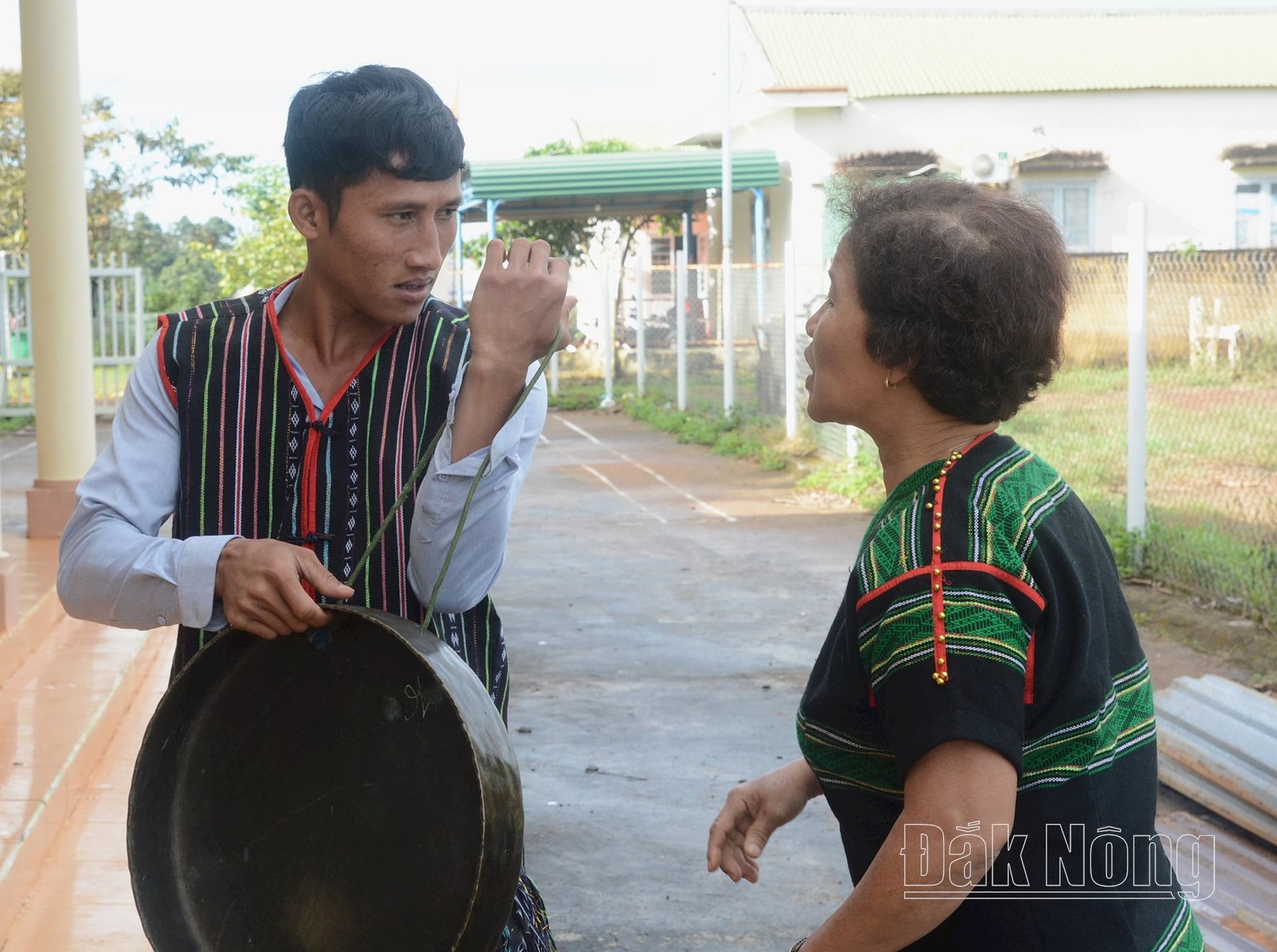
Similarly, the VNDG team of Bu Đắk, Sar Pa, Thuận An commune, Đắk Mil district, was established based on a group of 30 people who love the traditional culture of the M'nông people. Besides actively participating in cultural and artistic activities organized by the local authorities, the team also teaches the culture to young people in the villages.
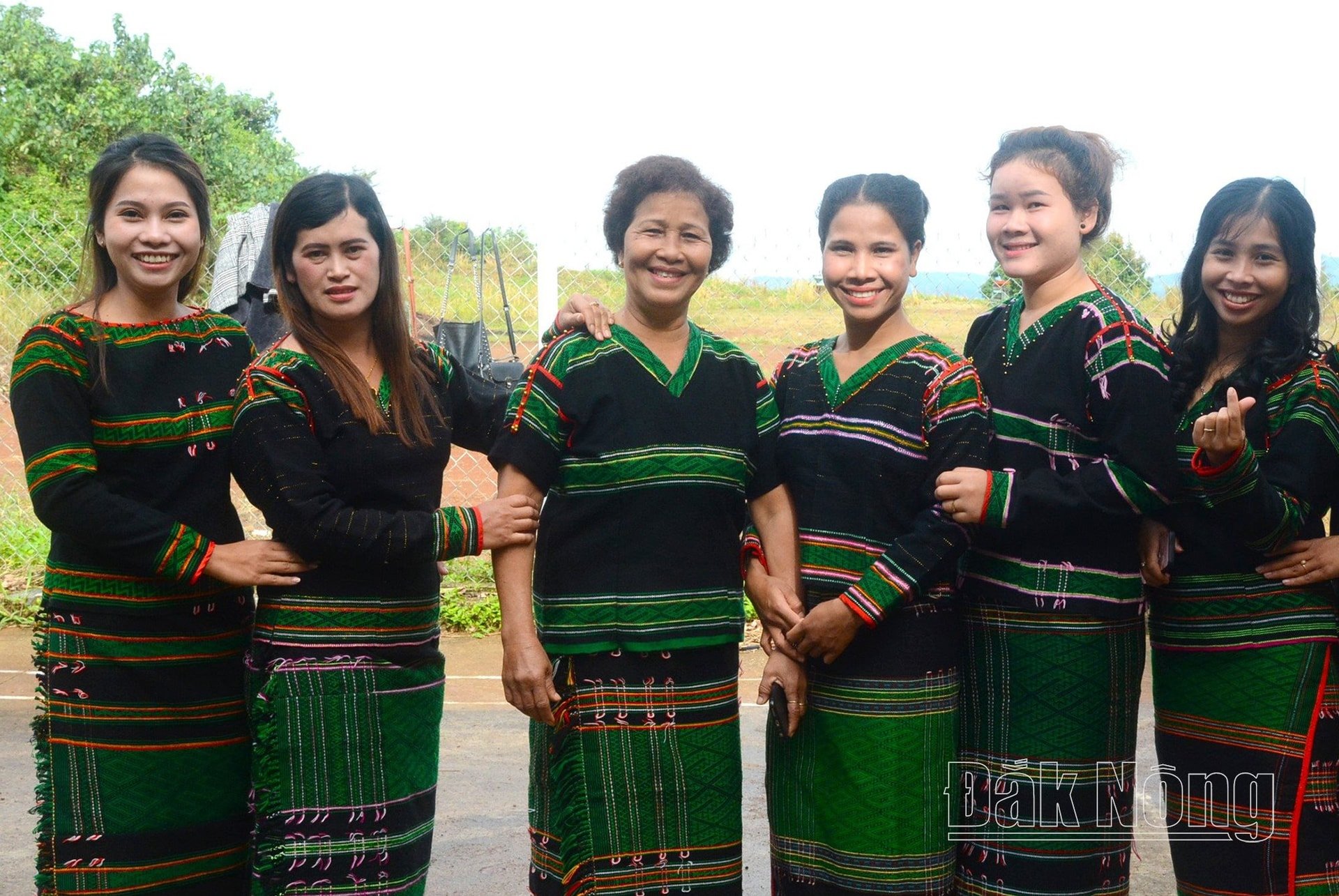
Mr. YA Ron, Head of the Dong Van Dong (Vietnamese Traditional Music) Team of Bu Dak and Sar Pa villages, said: “It is the passion for gongs and dances that has brought the members together to learn from each other and pass on many important performance skills. Each member is also actively involved in teaching the younger generation the experience and techniques of gong performance.”
According to Mr. Tran Dinh Ninh, Head of the Culture and Information Department of Dak Mil district, in recent times, folk culture clubs and teams in the district have not only focused on preserving and promoting the traditional values of ethnic minorities, but also supported members in developing production to achieve sustainable poverty reduction. The locality focuses on opening training courses and professional development programs on teaching intangible cultural heritage so that members of folk culture teams can maximize their efforts in preserving and promoting the traditional cultural values of their ethnic groups.
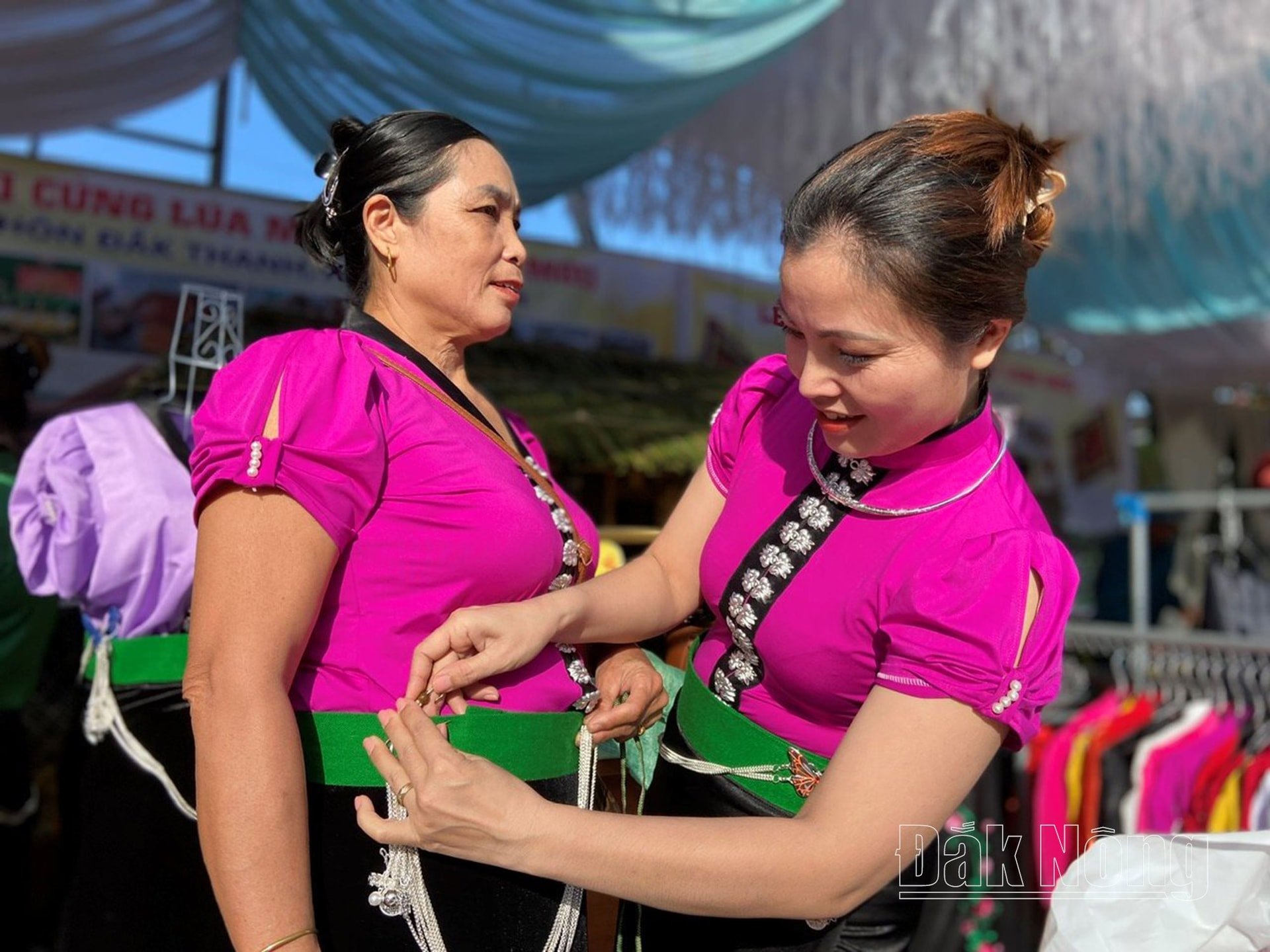
It is known that not only the local folk music troupe, but also many folk music clubs and troupes of ethnic minorities in the North, such as the Tinh Dan - Then Hoa Bang Lang Tim folk music club of the Tay ethnic group, village 9, Nam Dong commune, Cu Jut district, or the Thai ethnic folk music troupe, Nam Xuan commune, Krong No district... have made a great contribution to preserving and promoting the traditional cultural values of ethnic minorities in the province.
Through local, provincial, regional, and national competitions and performances, the image, culture, and people of Dak Nong, rich in identity and friendliness, have been promoted to the people, tourists from within and outside the province, and internationally.
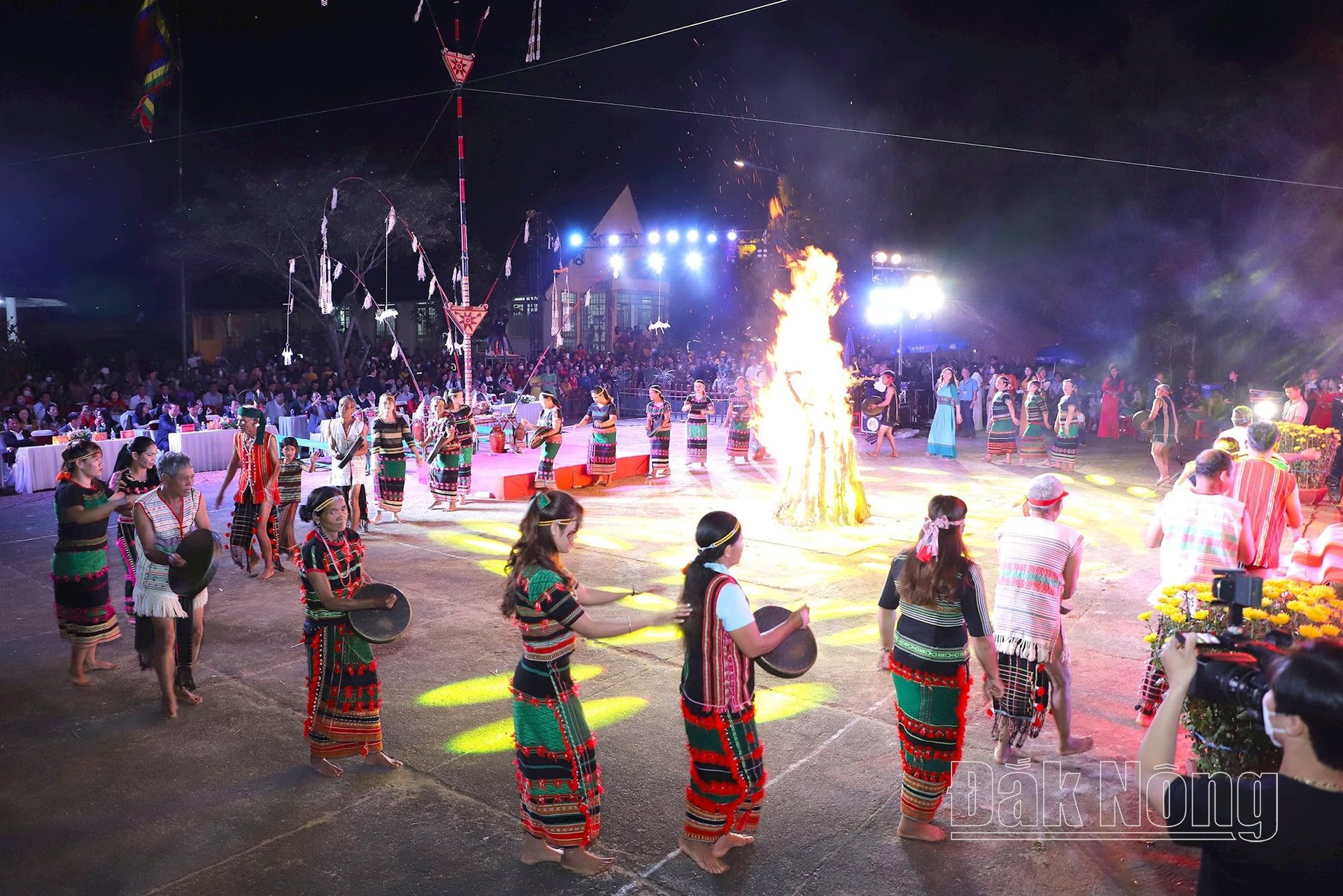
According to the Department of Culture, Sports and Tourism of Dak Nong province, the province currently has 79 folk music clubs and teams, with the participation of more than 194 artisans. These artisans are not only skilled in crafting and performing traditional musical instruments but also preserve rare and valuable traditional art forms. Among them, the most prominent are 12 artisans who sing and recite the Ot N'drong M'nong epic, 69 artisans who play the Tinh instrument and sing Then songs, and 32 clubs with diverse activities such as: gong playing, M'nong folk songs, folk dances, brocade weaving, and rice wine making…
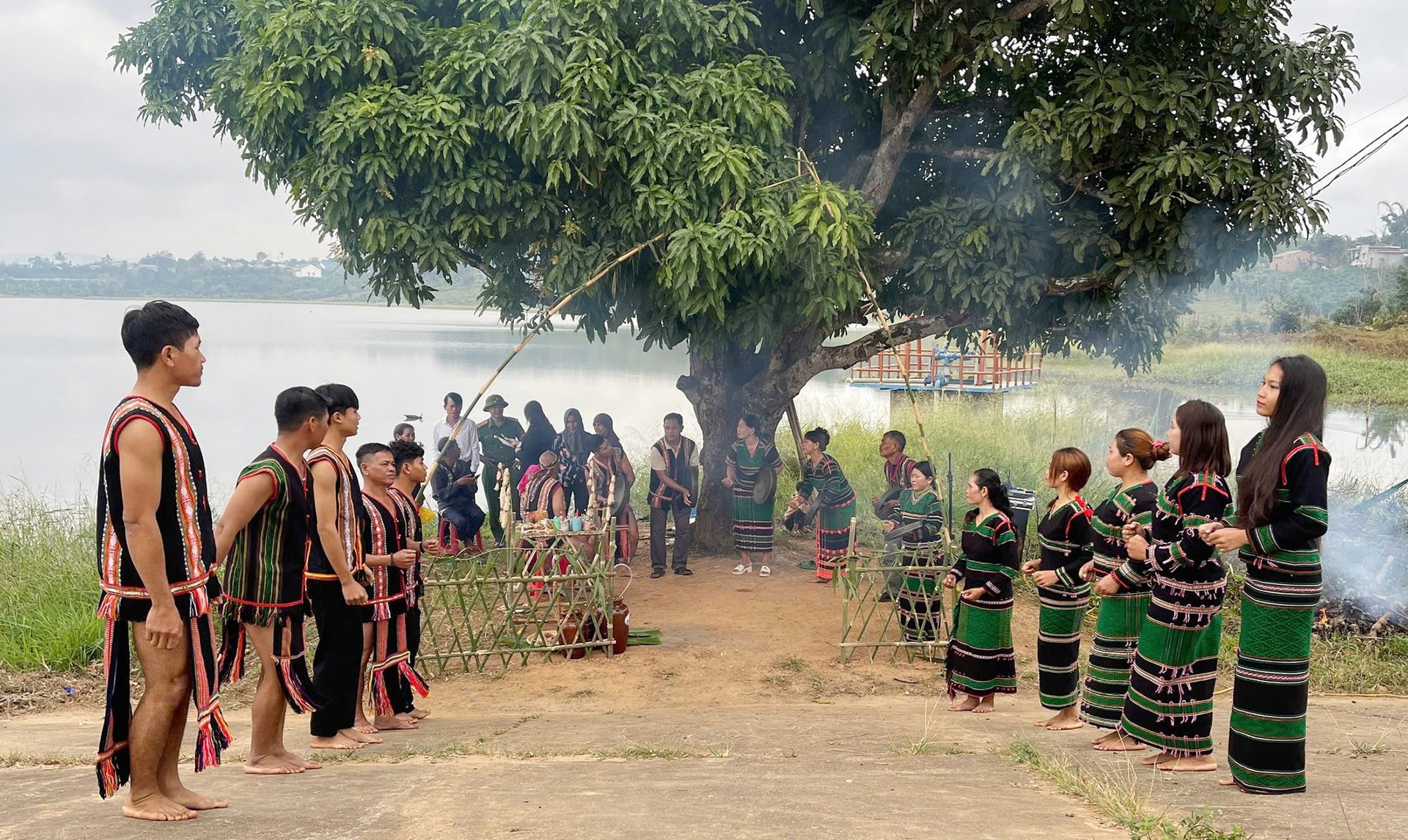
Over the past period, the provincial Department of Culture has promptly coordinated with localities to support the establishment of many exemplary arts clubs and folk art troupes; paying attention to and creating favorable conditions for these folk art troupes to operate. Most of the arts troupes operate on a voluntary basis. Many artisans strive to pass on their knowledge to the members. Village elders, hamlet leaders, and community leaders have actively cooperated with localities to promote the preservation of their ethnic minority cultural heritage among the people.
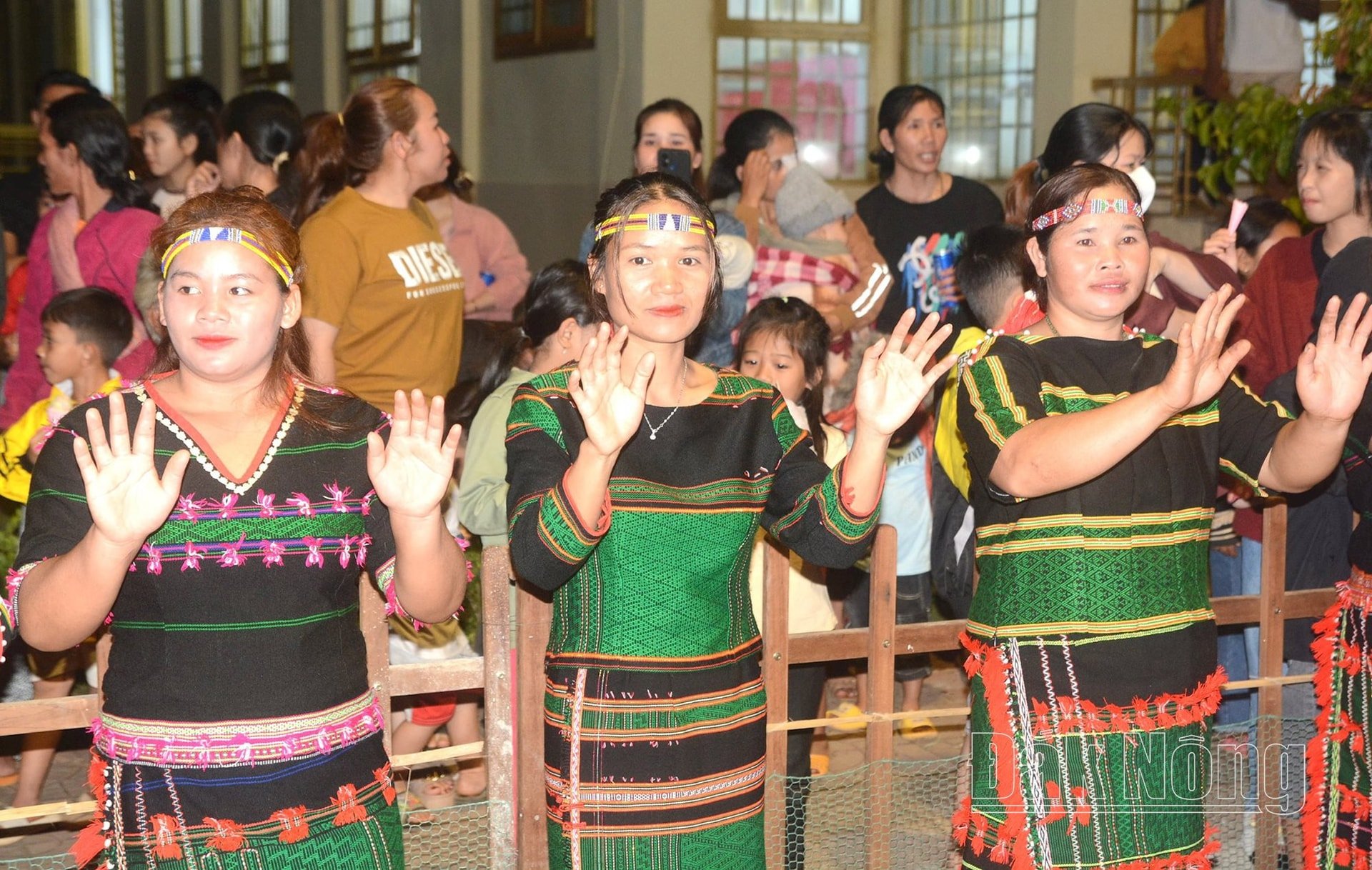
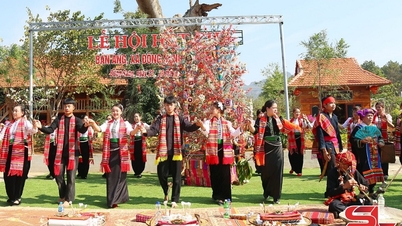
The VNDG teams consistently adhere to the operational guidelines of serving events and commemorating major holidays of the province and localities. In particular, at community tourism destinations, the VNDG teams introduce the beauty of the traditional culture of the ethnic groups of Dak Nong province to tourists.
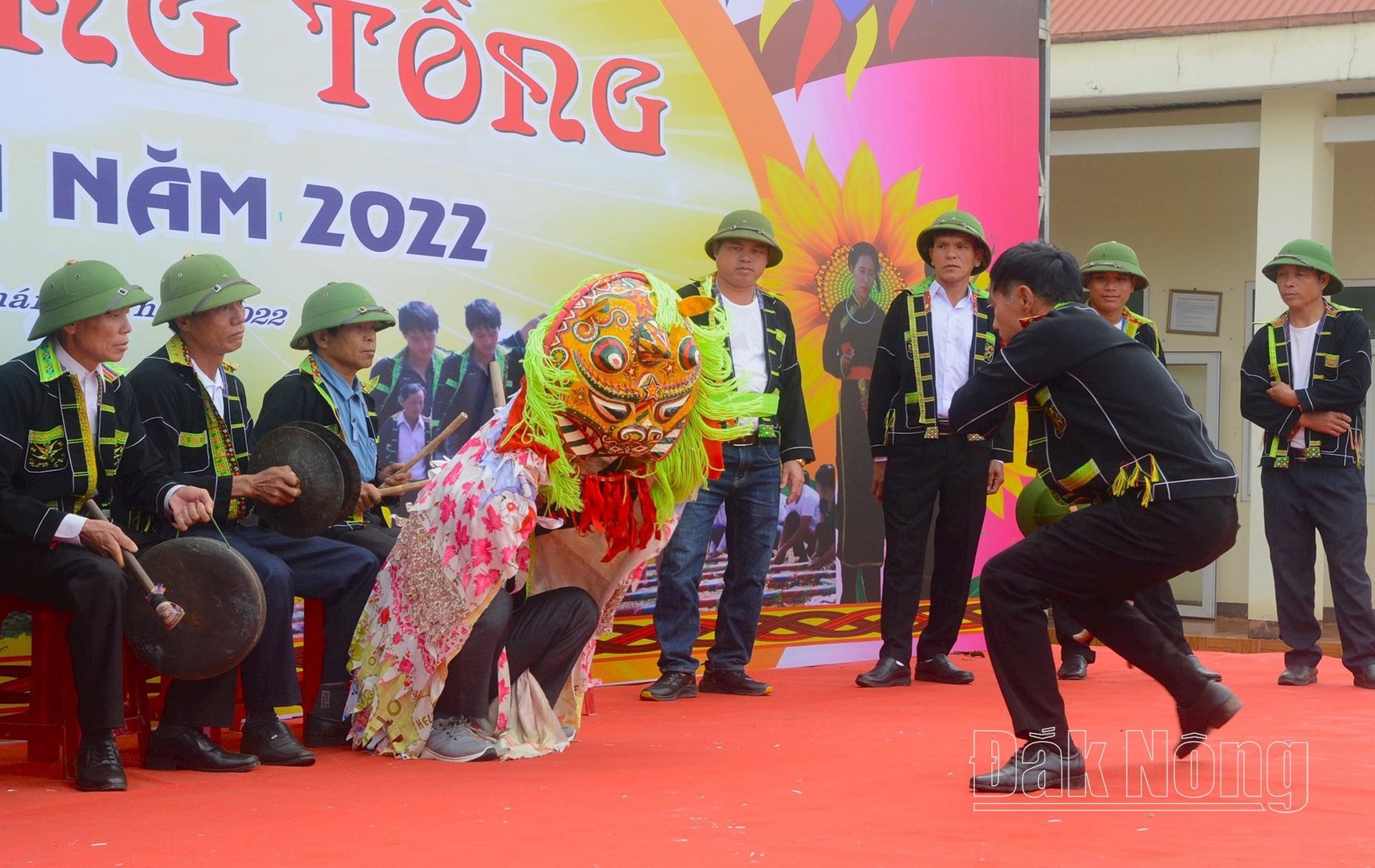
Not only traditional crafts, but many traditional cultural heritages of ethnic minority communities are also being effectively preserved and promoted by the Traditional Folk Arts Teams. In particular, thanks to support from ethnic policy programs and projects, especially Project 6, many clubs and teams of traditional folk arts have been established in ethnic minority villages and hamlets.
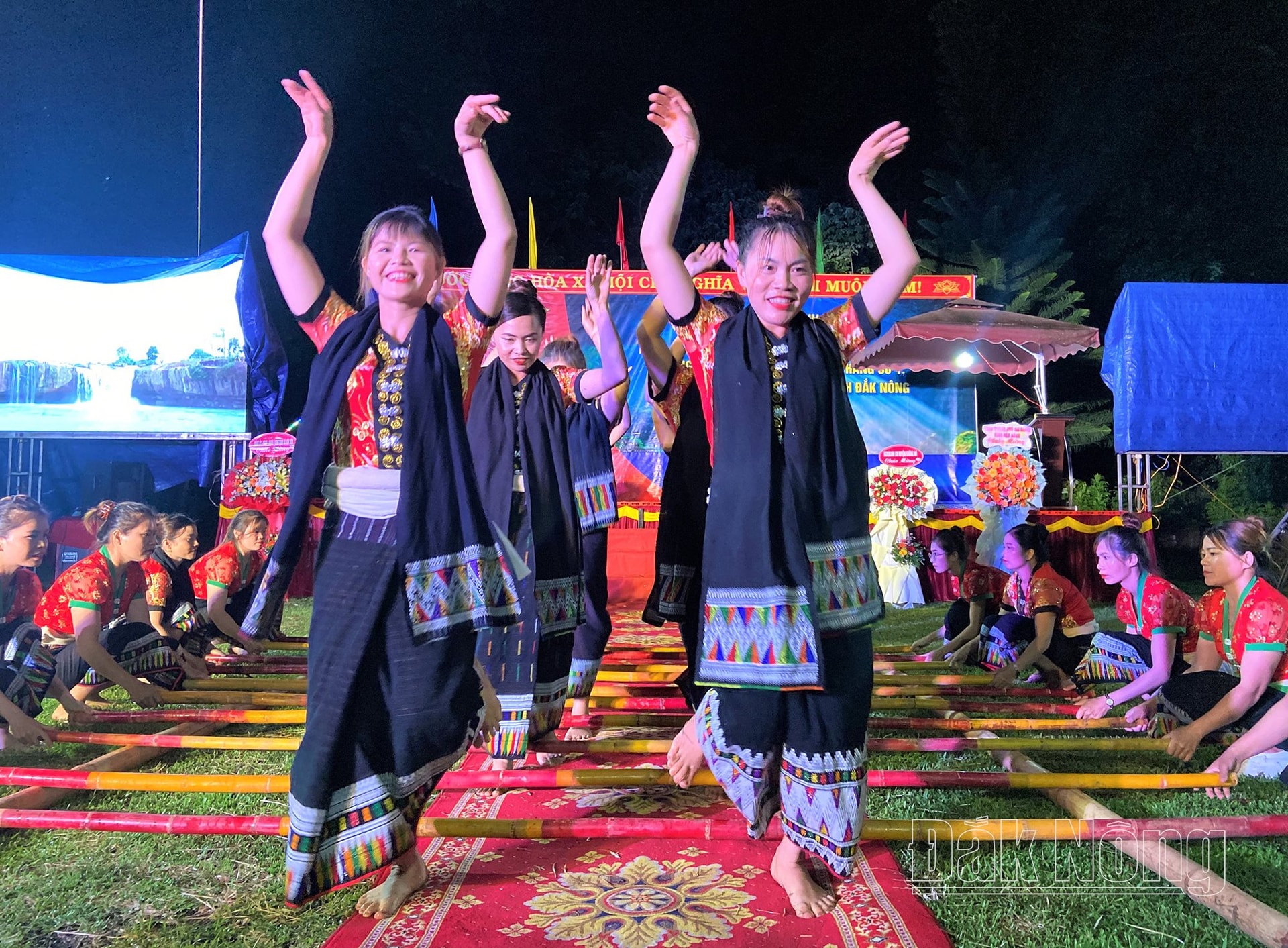
Many folk music groups have received support in terms of training and performance equipment; training in gong playing skills; transmission of intangible cultural heritage; and support for research, restoration, preservation, and promotion of traditional cultural values. Through the activities of these folk music groups, many young people have been taught to play gongs, perform traditional dances, and play traditional musical instruments.
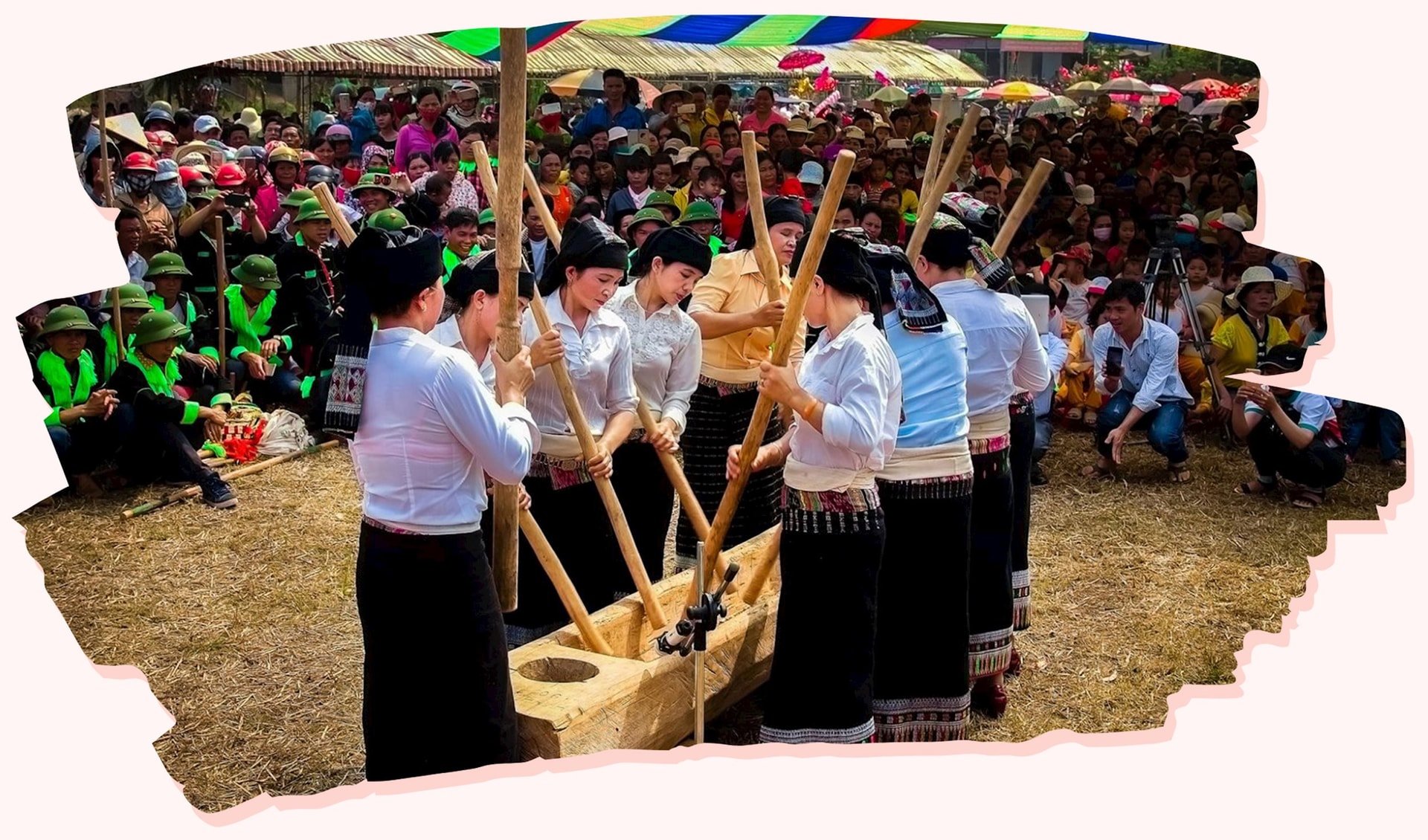
However, to maintain their activities, members of the Vietnamese Folk Arts Teams still face considerable difficulties in funding the purchase of necessary equipment such as speakers, lighting, musical instruments, props, and costumes. This limits the effectiveness of the Vietnamese Folk Arts Teams' activities. In addition, many Vietnamese Folk Arts Teams operate sporadically and seasonally, not regularly. Members only gather to practice when there is a program, competition, or performance, resulting in low effectiveness.
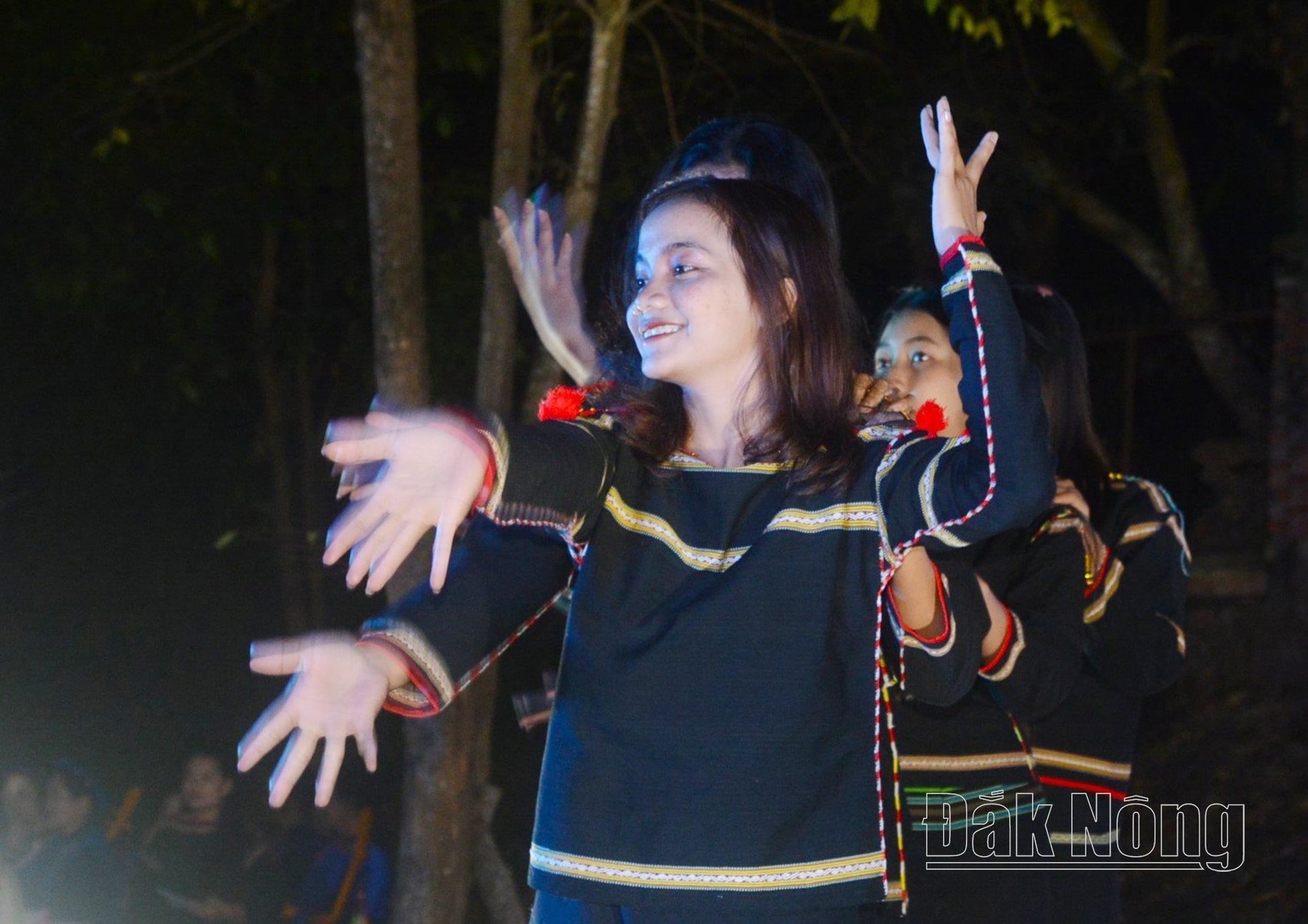
Furthermore, the cultural performances are mostly staged, rehearsed, and performed by the team members themselves, without formal training, resulting in low quality. The content and format of the folk art teams' activities are not diverse enough. Moreover, in many community tourism destinations, even with active folk art teams, the potential and advantages of the culture, especially programs serving tourism development, have not been fully exploited.
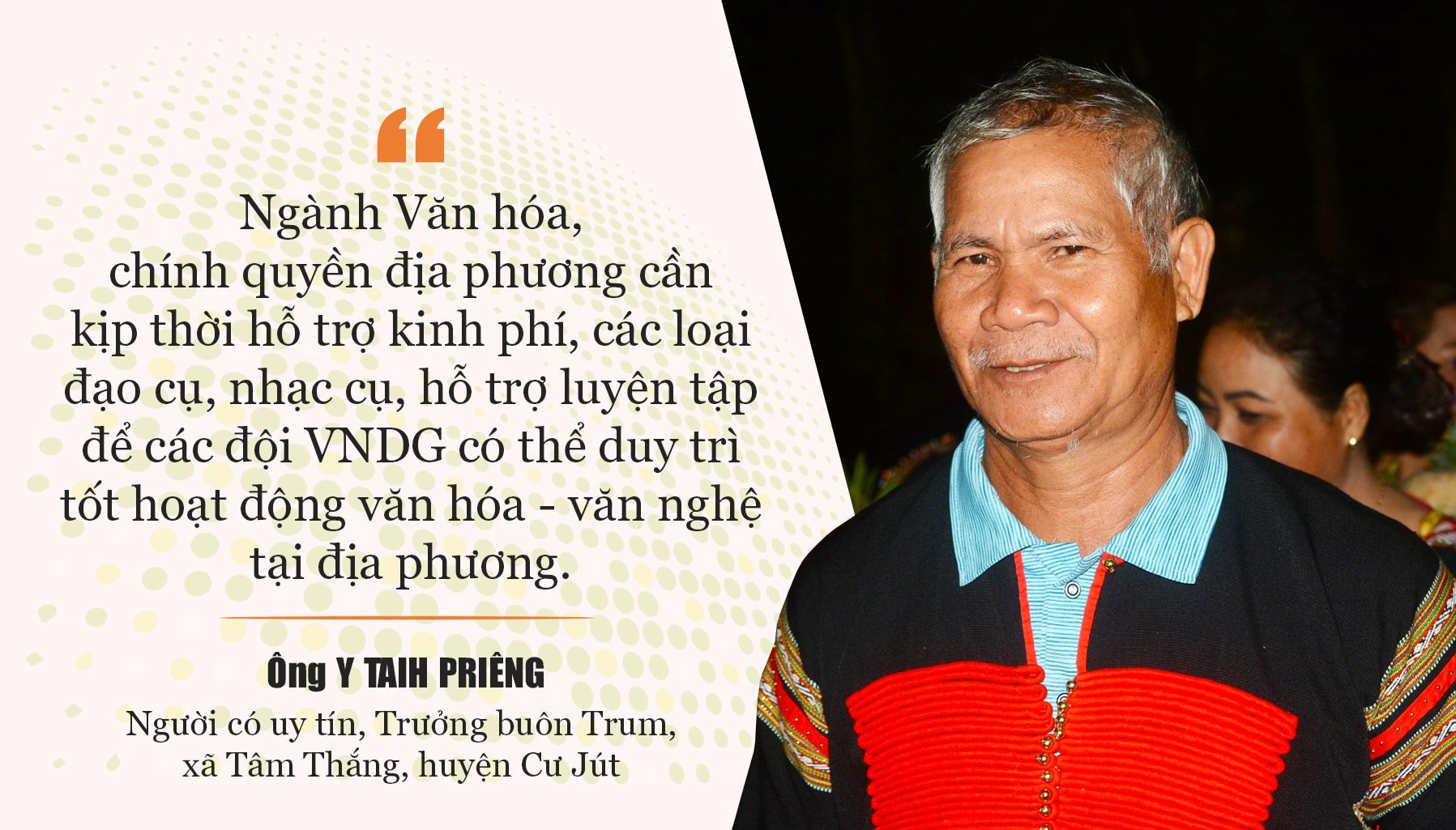
According to Mr. Nghiem Dinh Hieu, Director of the Department of Culture, Sports and Tourism of Dak Nong province, in recent times, the work of preserving and promoting traditional cultural and historical values in the province has continued to receive attention and focus. Many arts clubs and folk music groups have promoted these values, contributing to the preservation of traditional cultural values.
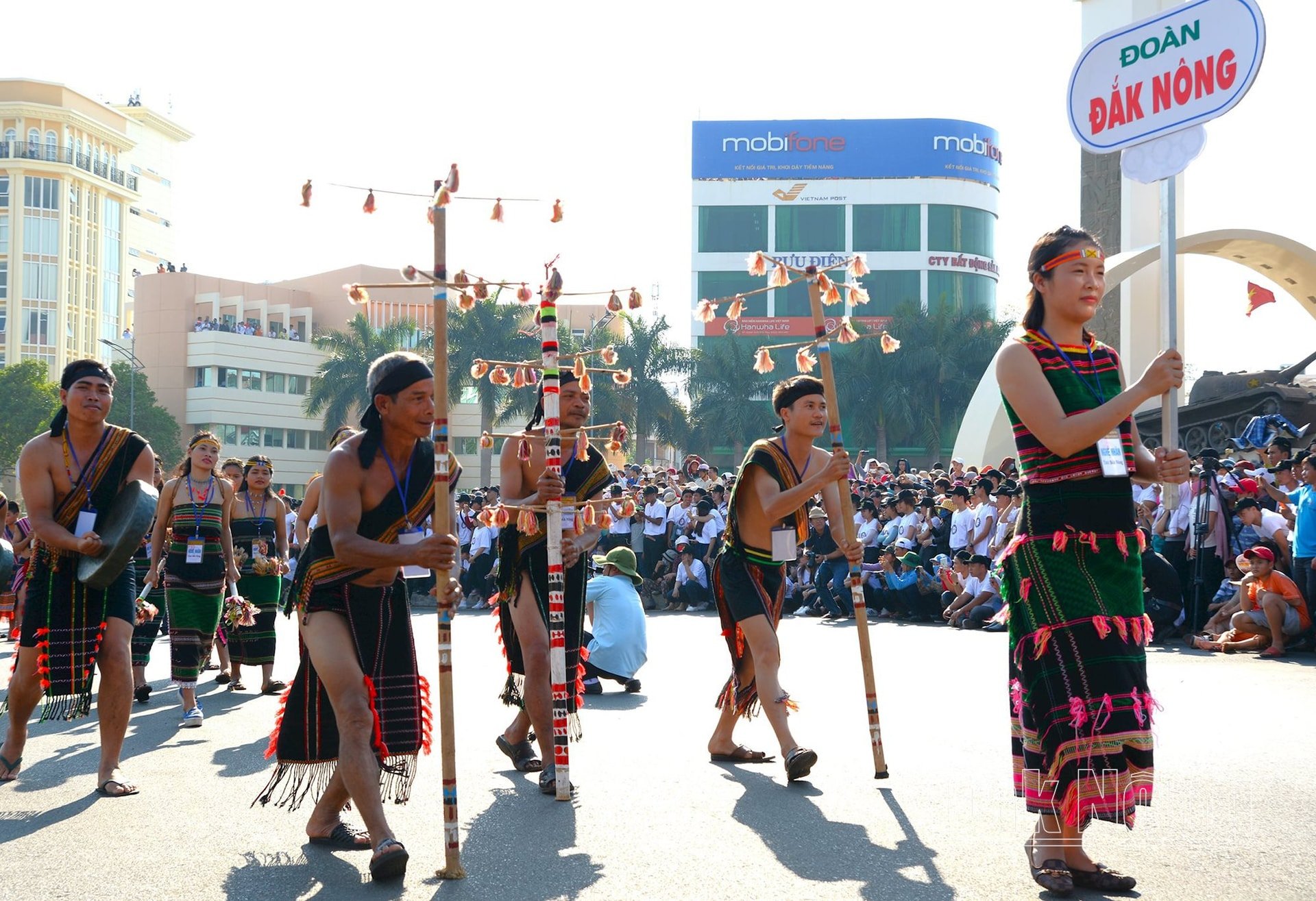
To enable the VNDG teams to promote and "keep the flame" of community culture alive, the Department of Culture continues to coordinate with localities to proactively exchange information, identify difficulties and obstacles. This will contribute positively to the preservation and promotion of cultural heritage values, creating a ripple effect within the community.
Y Krak
Source: https://baodaknong.vn/doi-van-nghe-dan-gian-giu-lua-van-hoa-cong-dong-238573.html



![[Photo] Standing Committee member of the Party Central Committee Tran Cam Tu working with the Central Inspection Committee](https://vphoto.vietnam.vn/thumb/1200x675/vietnam/resource/IMAGE/2026/05/28/1779969579668_ndo_br_bnd-2495-jpg.webp)






























































Comment (0)