

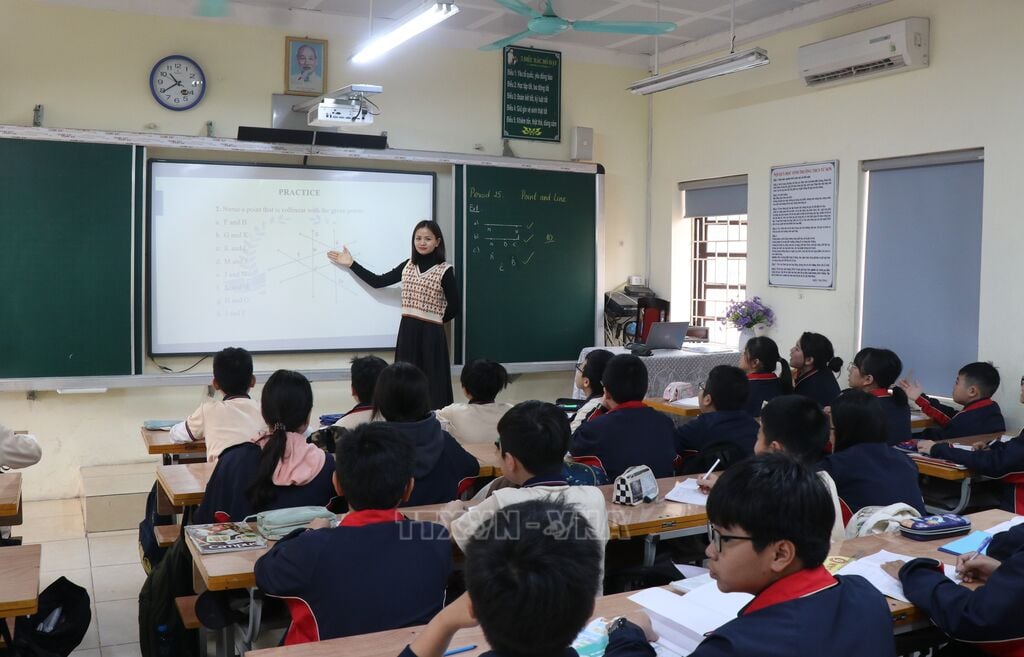
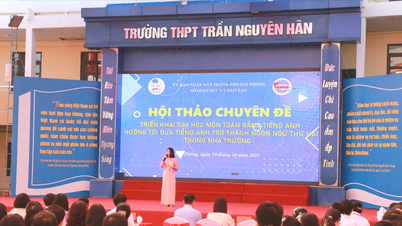
The project aims to make English the second language in Vietnamese schools; to widely, frequently, and effectively use English in teaching, communication, management, and educational activities; and to create an English-speaking ecosystem in educational institutions from Level 1 to Level 3. It also aims to improve the quality of English language teaching and teaching in English, contributing to the development of a generation of global citizens to meet Vietnam's international integration requirements.
Early childhood education: Helps children experience and become familiar with English; aims to form and develop English communication skills, preparing them well for learning English at the secondary school level.
General education: To help students develop their English language skills and abilities in critical thinking, academic performance in various subjects, educational activities, interactions, and experiences both inside and outside the school, contributing to the holistic development of Vietnamese people in the era of deep international integration.
Higher education: Develop an effective English-speaking environment in teaching courses, modules, and credits within training programs; and in training and developing teachers and lecturers. Develop higher education into a leading national pillar in the English-speaking ecosystem with the capacity for deep integration, knowledge transfer, and innovation using English.
Vocational education: Enhancing English language proficiency in communication and career guidance, meeting the demands of the domestic and international labor markets. Developing an effective English-speaking environment in vocational education institutions.
Continuing education: Enhancing English proficiency for learners in continuing education programs, diversifying the forms and content of English learning to meet the diverse needs of society, and contributing to improving the quality of the national workforce.
8 key tasks and solutions
To achieve the above objectives, the Project outlines eight key tasks and solutions to be implemented, including: Raising awareness throughout society about the role of English in education and integration; building and perfecting institutions and policies to make English a second language in schools; developing and improving the quality of training and professional development for administrators, teachers, and lecturers teaching English and teaching in English, ensuring sufficient quantity and consistent quality; developing and implementing programs and learning materials to support English language teaching and teaching in English; innovating teaching methods, examination methods, and assessment methods, and promoting the creation of an English-speaking environment in schools; promoting the application of advanced technology and artificial intelligence (AI), and strengthening infrastructure and equipment to ensure quality for the development of English language education and teaching, and teaching in English, prioritizing disadvantaged and particularly disadvantaged areas; Strengthen international cooperation and promote socialization in improving the quality of English language teaching, teaching other subjects in English, and organizing educational activities in English; launch practical and effective emulation and reward movements to motivate the implementation of the Project nationwide.
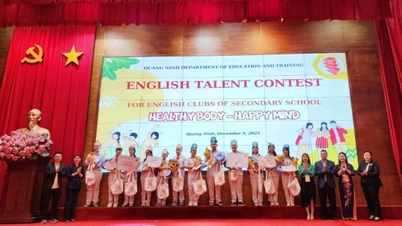
There are policies in place to reward students with outstanding English proficiency.
Specifically, to develop the workforce and improve the quality of training and professional development for English language teachers and lecturers, ensuring sufficient numbers and consistent quality, the Project will conduct surveys and assessments of English proficiency for English language teachers and lecturers and those teaching other subjects in English at all levels of education, disciplines, and training programs. Based on this, a suitable English proficiency framework will be developed, refined, and issued for each target group, serving as a basis for guiding training, professional development, and career advancement.
Develop a team of teachers and lecturers that aligns with the direction of making English a second language in schools; organize training and professional development programs for teachers and lecturers who teach English and teach using English.
Enhance and standardize the capacity of teacher training institutions, English language instructors, and teachers and instructors teaching other subjects and disciplines in English; promote the development of collaborative models between teacher training universities, specialized language universities, and preschool, general education, vocational, and continuing education institutions in training and providing professional support for teachers, especially English teachers and those teaching other subjects, and organizing educational activities in English.
There should be mechanisms to identify and reward students with outstanding English proficiency; policies to attract newly graduated students with excellent English skills and support English teachers to work in disadvantaged areas; and research into mechanisms and policies for foreigners proficient in English to participate in teaching at public educational institutions...
The project aims to develop a system of curricula, textbooks, teaching materials, and learning resources to support the teaching of English and other subjects and majors in English at all levels of education, disciplines, and training; to build and develop an open online learning resource system; to enhance the application of technology and online training on a national scale; and to ensure that all learners can easily and conveniently access high-quality English-language programs, subjects, and majors.
There are effective solutions to enhance English language proficiency for learners, enabling them to proactively access global knowledge and advanced technologies, thereby improving their competitiveness in the international labor market in the new era...
Innovate teaching methods and examination/testing methods.
To innovate teaching methods, testing, and assessment methods, and to promote the development of English as a second language in schools, the Project implements teaching all four skills: listening, speaking, reading, and writing, with a focus on developing listening and speaking skills; diversifying teaching methods both inside and outside the classroom; creating an environment that maximizes English use for learners; and strengthening experiential activities, exchanges, and the development of a reading culture in English.
At the same time, we will continue to innovate methods of testing, examination, and evaluation; design a diverse, flexible, and practical assessment system to promote the teaching and learning of English naturally, linked to real-world usage environments; and build a system of processes and tools for assessing English language proficiency and professional/vocational skills in English in higher education, vocational education, and continuing education according to output standards in a synchronized, interconnected manner, approaching international competency-based assessment standards...
The project aims to promote the application of advanced technologies and artificial intelligence (AI), and to enhance infrastructure and equipment to ensure quality in the development of education, English language teaching, and teaching in English, prioritizing disadvantaged and particularly disadvantaged areas. This includes investing in the development of digital learning platforms and AI applications capable of analyzing learners' proficiency and needs to organize personalized, appropriate, and effective English language education and teaching activities.
Strengthening teaching equipment, information technology infrastructure, and physical conditions to support the organization of English language teaching and teaching in English in schools to ensure quality and effectiveness; prioritizing investment in information technology infrastructure for areas with difficult and extremely difficult socio-economic conditions, ethnic minority areas, mountainous areas, and remote areas to ensure equity in access to education...
Source: https://baotintuc.vn/thoi-su/dua-tieng-anh-thanh-ngon-ngu-thu-hai-trong-truong-hoc-o-viet-nam-20251029203603304.htm

![[Photo] Prime Minister Pham Minh Chinh receives the Governor of Tochigi Province (Japan)](/_next/image?url=https%3A%2F%2Fvphoto.vietnam.vn%2Fthumb%2F1200x675%2Fvietnam%2Fresource%2FIMAGE%2F2025%2F12%2F16%2F1765892133176_dsc-8082-6425-jpg.webp&w=3840&q=75)

![[Photo] Prime Minister Pham Minh Chinh receives Lao Minister of Education and Sports Thongsalith Mangnormek](/_next/image?url=https%3A%2F%2Fvphoto.vietnam.vn%2Fthumb%2F1200x675%2Fvietnam%2Fresource%2FIMAGE%2F2025%2F12%2F16%2F1765876834721_dsc-7519-jpg.webp&w=3840&q=75)
![[Image] Leaked images ahead of the 2025 Community Action Awards gala.](/_next/image?url=https%3A%2F%2Fvphoto.vietnam.vn%2Fthumb%2F1200x675%2Fvietnam%2Fresource%2FIMAGE%2F2025%2F12%2F16%2F1765882828720_ndo_br_thiet-ke-chua-co-ten-45-png.webp&w=3840&q=75)
![[Live] 2025 Community Action Awards Gala](/_next/image?url=https%3A%2F%2Fvphoto.vietnam.vn%2Fthumb%2F1200x675%2Fvietnam%2Fresource%2FIMAGE%2F2025%2F12%2F16%2F1765899631650_ndo_tr_z7334013144784-9f9fe10a6d63584c85aff40f2957c250-jpg.webp&w=3840&q=75)












































































Comment (0)