

Domestic coffee prices plummeted for three consecutive sessions.
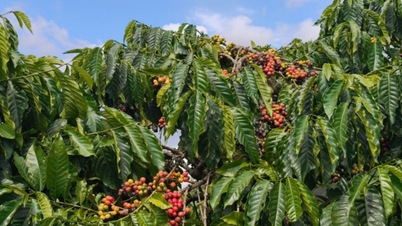
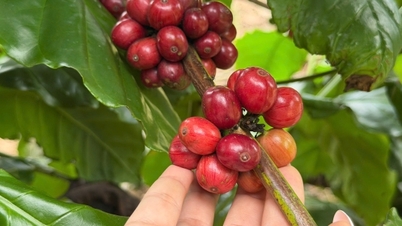
Coffee prices in the key Central Highlands regions continued to slide on November 16, with an average decrease of VND2,600/kg. This development brought the price of coffee in the entire region down to VND110,300/kg, one of the lowest levels in recent weeks.
This is also the third consecutive session that the coffee market has been under strong pressure, causing difficulties for both coffee growers and traders as the downward trend shows no signs of slowing down.
In Gia Lai, the average coffee price dropped by 2,700 VND/kg, down to 109,800 VND/kg. Dak Lak and Dak Nong recorded a decrease of 2,500 VND/kg, bringing the coffee price to 110,500 VND/kg. Lam Dong province also lost another 2,300 VND/kg, causing the domestic coffee price in this area to fall to 108,700 VND/kg. With the continuous decline, more coffee was sold due to concerns that the market could go down further.
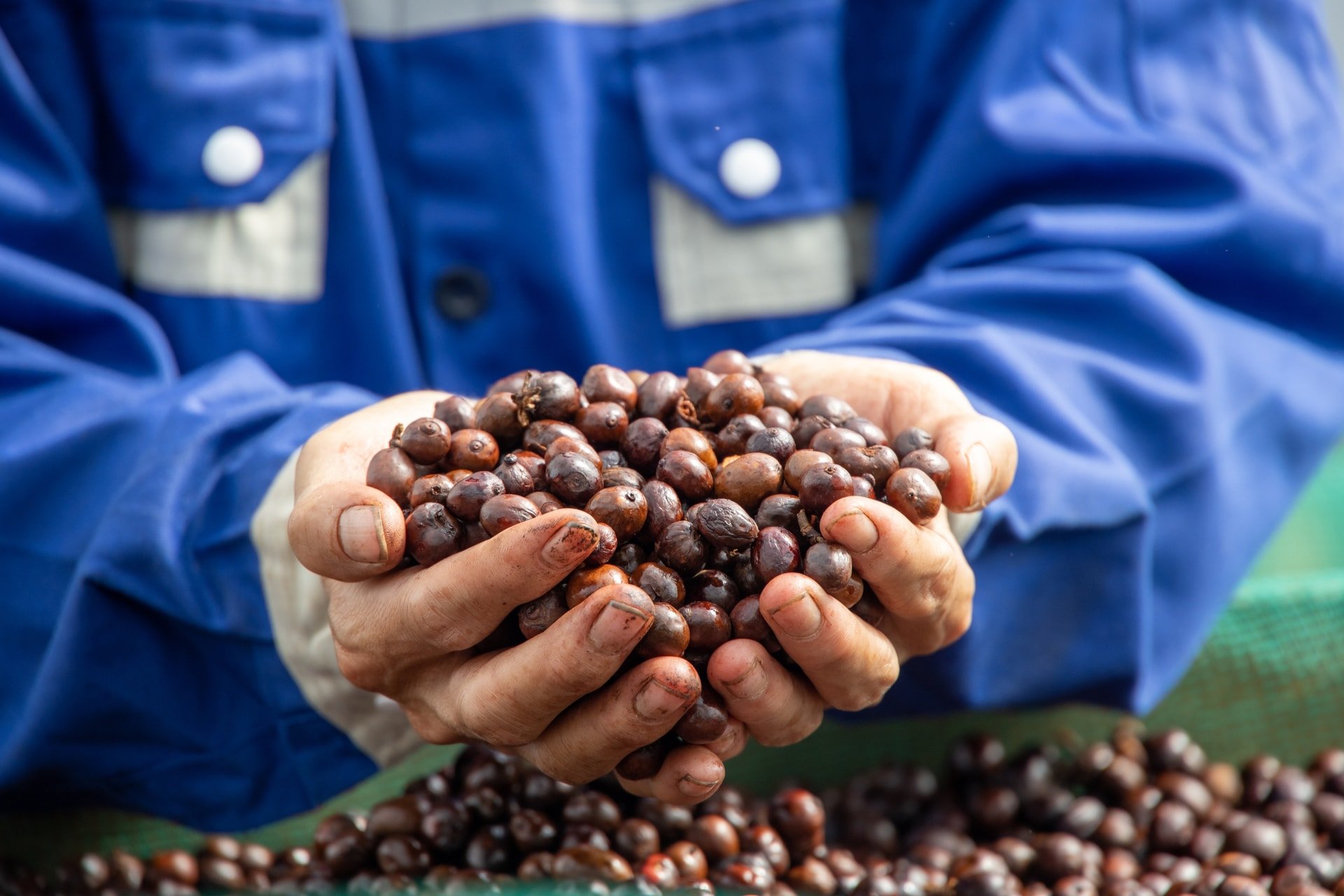
World coffee prices are in the red.
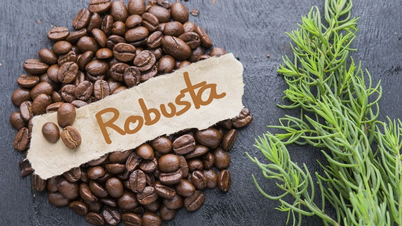
The international coffee market continued to record a series of price declines on November 15 for the third day. Robusta coffee on the London exchange fell sharply by 120 USD/ton, equivalent to a decrease of 2.75%, down to 4,223 USD/ton. Meanwhile, Arabica coffee on the New York exchange fell by 1.90 US cent/lb, closing the session at 399.80 US cent/lb.
The weakness in two major futures exchanges has sent the global coffee market into a new phase of uncertainty. Traders are accelerating their selling as global coffee supplies are expected to increase significantly. The cautious sentiment has made coffee trading more tense in the middle of the week.
Reasons for the sharp decline in coffee prices
Coffee prices have fallen sharply due to news that could directly affect the supply-demand balance. Hopes that the US will remove the 50% tariff on Brazilian coffee have become the focus of international coffee trade. The US Treasury Secretary’s statement about an “important announcement” in the next few days has further fueled the rapid sell-off of coffee.
Meanwhile, StoneX forecasts that Brazil’s coffee output in 2026/27 could increase by as much as 29%. This immediately puts pressure on the two futures exchanges because Brazil is the leading country in the global coffee market. When the possibility of a sharp increase in coffee supply is widely spread, coffee becomes a commodity that is easily sold to hedge risks.
Factors that could support coffee prices have been counterproductive. Heavy rainfall in Brazil – reaching 160% of the average – has eased concerns about drought, creating favorable conditions for coffee production. In addition, Robusta supplies in Vietnam remain abundant, with 10-month exports up 13.4% and forecasts for a large new crop.
While international coffee inventories are low (Arabica at a 1.75-year low, Robusta at a 3.75-month low), the news is not strong enough to turn the coffee market around. US purchases of Brazilian coffee over the past three months have fallen 52%, adding to the volatility.
Short-term trend forecast of coffee prices
Amidst a slew of negative headlines, the short-term outlook for coffee is looking bleak. News of tariffs and ample coffee supplies have overshadowed any recovery hopes.
Coffee prices on both exchanges are likely to probe for new bottoms if the market does not show clear signs of a reversal. The oversupply and the simultaneous sell-off trend are creating a series of continuous pressures that are pushing coffee prices down.
Impact of US tariff exemption policy
US President Donald Trump has just signed an executive order exempting reciprocal tariffs for many agricultural products that cannot be produced in the US, including coffee and many tropical fruits.
The November 14 executive order expands the list of tax exemptions for coffee, tea, cocoa, juice, bananas, oranges, tomatoes, beef and some fertilizers. This is the latest version of the import tax adjustment that the US President has implemented this year, with the aim of reducing the cost burden on items that are not self-sufficient in domestic supply.
The new exemption decree, which took effect on November 13, marks a significant change in US tariff policy. With many products such as coffee being included in the exemption list, the expectation of reduced import tariffs has become a strong factor influencing world coffee prices. At the same time, reaching new trade agreements with Argentina, Ecuador, Guatemala, El Salvador and Switzerland has contributed to opening up opportunities for broader tax adjustments.
The US President has repeatedly said that the rising cost of living is not due to import tariffs. However, economists believe that import tariffs have a certain impact on commodity prices. When businesses pass the cost burden onto consumers, prices may continue to rise in the future. Therefore, fluctuations related to coffee tariffs will continue to affect the market.
Opportunities and risks for Vietnamese enterprises
The Vietnam Pepper and Spice Association believes that the US's inclusion of coffee and spices in the tax-free list is a positive sign. This is considered an opportunity for Vietnamese businesses to expand their coffee market share in the US if they meet import, quality and certification standards.
However, reciprocal tax exemption does not mean exemption from all taxes. Coffee exporters must still comply with basic import taxes, customs procedures, food safety, traceability certificates and a series of other SPS regulations. Not all agricultural products are exempt, so Vietnamese coffee exporters need to coordinate closely with US partners to update requirements.
Source: https://baodanang.vn/gia-ca-phe-hom-nay-16-11-ap-luc-ban-thao-chua-dung-lai-3310172.html
![[Photo] Prime Minister Pham Minh Chinh meets with representatives of outstanding teachers](https://vphoto.vietnam.vn/thumb/1200x675/vietnam/resource/IMAGE/2025/11/15/1763215934276_dsc-0578-jpg.webp)




![[Photo] General Secretary To Lam receives Vice President of Luxshare-ICT Group (China)](https://vphoto.vietnam.vn/thumb/1200x675/vietnam/resource/IMAGE/2025/11/15/1763211137119_a1-bnd-7809-8939-jpg.webp)


















































































Comment (0)