

From a school in a disadvantaged area
Located in the newly established Nam Dong area – a region formed after administrative mergers – Nguyen Binh Khiem High School in Nam Dong still faces many challenges regarding economic conditions, transportation, and infrastructure. Currently, only 4 out of 20 classrooms have televisions (donated by previous classes). However, the primary goal that Principal Ly Anh Quyet and the teaching staff strive for every week is to maintain student enrollment numbers.
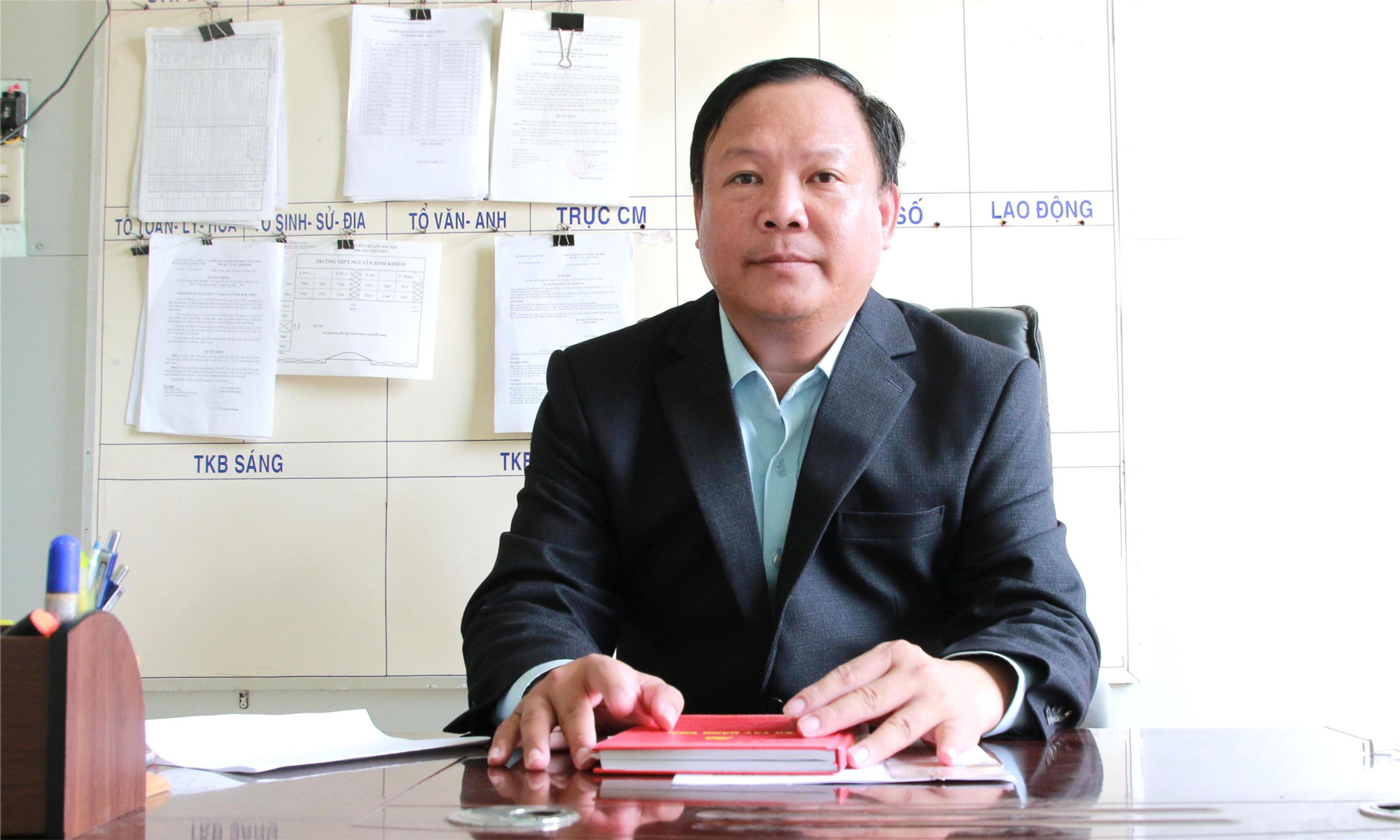
"Over 70% of the school's students are children of the M'nong, Tay, and Nung ethnic minorities, living scattered in remote villages and areas near the border. Their parents often work in distant fields and have little opportunity to pay attention to their children's education. Therefore, teachers always have to encourage them to have enough motivation to come to school," Mr. Quyet shared.
Sharing the same view, the head of the Culture and Social Affairs Department of Nam Dong commune also stated that the path to school for the children is still fraught with many obstacles, but every morning, the sound of the school bell still rings regularly and rhythmically, as proof of the perseverance of the teachers and students here.
It is known that in the 2024-2025 school year, the school has 19 classes with 703 students, of which 553 are from ethnic minority groups. Although the entry requirements are still low compared to the general level of Lam Dong province, with the spirit of "leaving no student behind," the school proactively innovates teaching and learning methods, closely cooperating with families and local authorities to maintain an attendance rate of over 98%.
"We believe that education in disadvantaged areas is not just about imparting knowledge, but also about instilling confidence, inspiring willpower, and fostering a sense of responsibility for learning in each student," Mr. Ly Anh Quyet further shared.
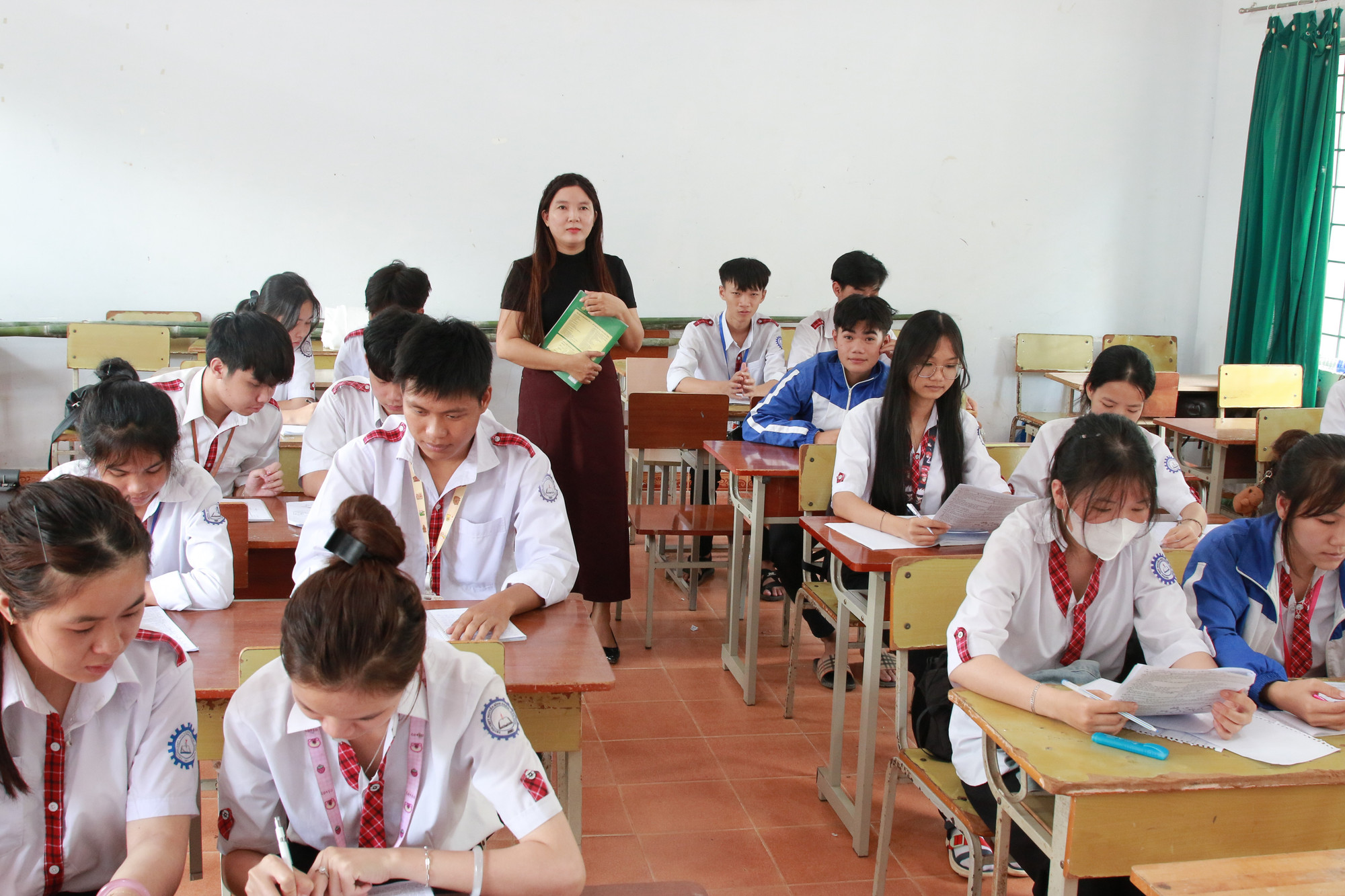
Improving the quality of the workforce – the foundation for transformation.
During the past academic year, the school's 50 staff members, teachers, and employees demonstrated a spirit of unity, responsibility, and continuous learning. 100% of teachers met the required qualifications and completed all training modules as mandated by the 2018 General Education Program. Three teachers received training in teaching integrated subjects; many proactively researched and designed digital lesson plans, incorporating information technology applications into their lessons.
In the face of a shortage of teachers for new subjects such as Music and Experiential Activities/Career Guidance, the school has boldly encouraged teachers to self-study, participate in short-term training courses, and share experiences with colleagues. These efforts have contributed to maintaining a high school graduation rate of nearly 98% in the 2024-2025 school year, with many students successfully admitted to universities with relatively high scores.
In addition, the scientific research movement and STEM activities have developed strongly. The school's "STEM Festival" attracted 107 entries, of which 44 were awarded prizes. From this platform, many creative ideas from students were formed, becoming the foundation for science and technology projects participating at the provincial level.

Digital transformation – a new step forward in management and teaching.
Over the past period, Nguyen Binh Khiem High School - Nam Dong has actively and proactively implemented digital transformation in management and teaching. The entire school uses QR codes for public notice boards, administrative procedures boards, and the traditional room; applies electronic student records for grade 10; and implements VNPT-Smart CA digital signatures and Misa and vnedu.vn management software in all administrative processes.
The school has also built an electronic learning resource library on the VNA system, helping students easily access lectures, exam questions, and review materials; organized online teaching and testing via Azota and Google Meet; and designed engaging lectures using images, videos, and virtual experiments. Although the network infrastructure has not yet covered the entire area, the application of technology has created a breakthrough, bringing new enthusiasm for learning to students in disadvantaged areas.
"Digital transformation is not just a tool, but also a new way of thinking in teaching. We encourage every teacher to become a 'digital nucleus' in their classroom," Mr. Ly Anh Quyet shared.
In addition to academic knowledge, moral education, life skills training, and career guidance are systematically implemented. Clubs such as martial arts, football, arts, badminton, and table tennis operate regularly, helping students develop physical fitness and teamwork skills. Many practical workshops on topics such as "Preventing School Violence," "Traffic Safety," "Drug Prevention," and "Adolescent Reproductive Health Education" are organized periodically, creating a positive impact throughout the school.
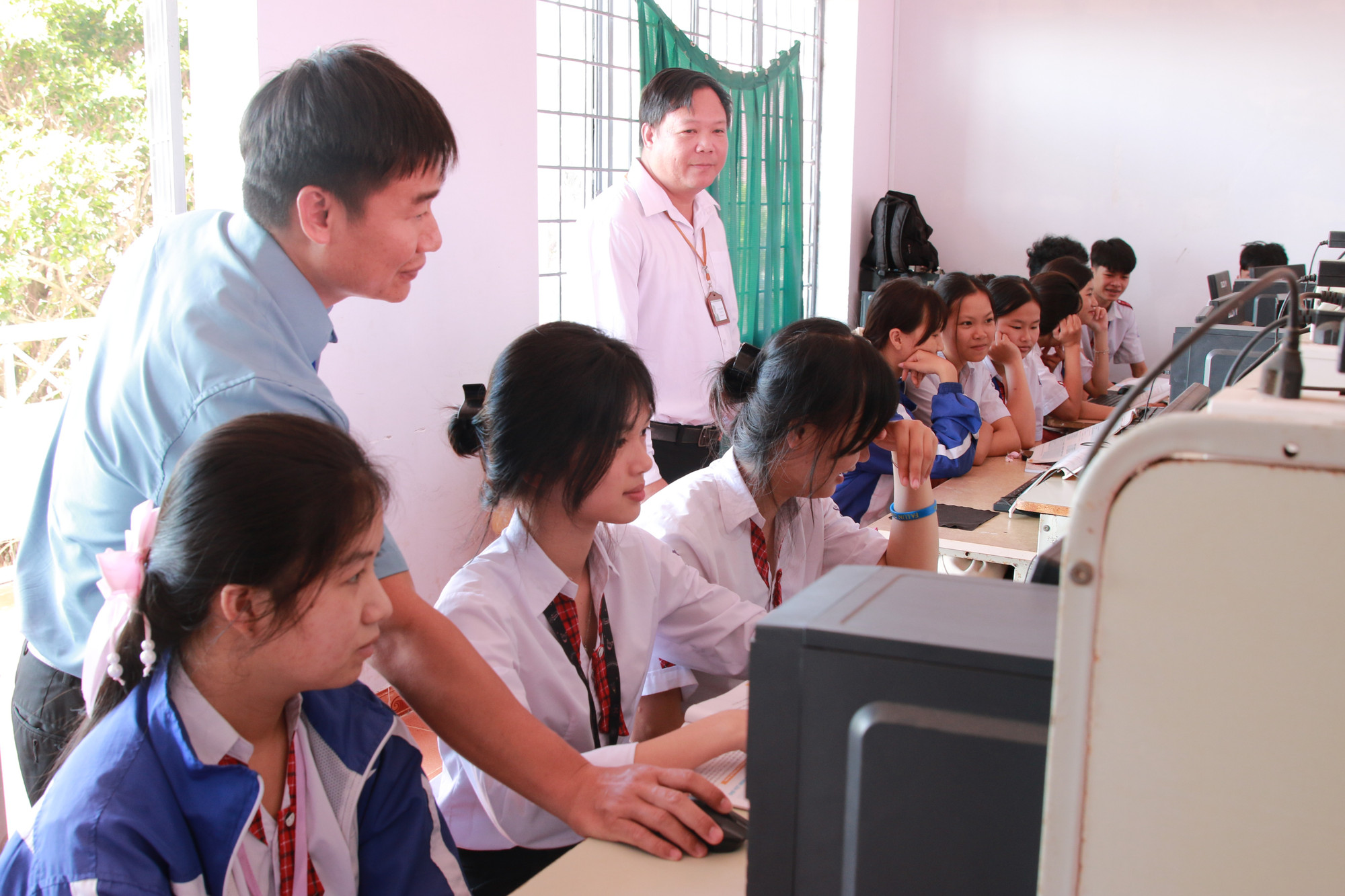
Not only are the students of Nguyen Binh Khiem - Nam Dong studious, but they are also highly regarded for their solidarity, politeness, and proactive participation in community movements. The image of teachers and students in the highlands working together to protect the classroom, the school, and knowledge has become a solid foundation in the journey of building a sustainable national standard school.
Nguyen Binh Khiem High School - Nam Dong has 19 classes and 703 students (553 of whom are ethnic minorities). 100% of teachers meet the required qualifications, and all 42 teachers have completed the mandatory module training. The school submitted 107 STEM projects to the competition, with 44 receiving awards. The high school graduation rate in 2025 is projected to be 97.7%. Electronic student records are implemented in grade 10. 100% of staff and teachers use VNPT-Smart CA digital signatures.
Source: https://giaoducthoidai.vn/giu-vung-chat-luong-day-va-hoc-o-vung-kho-lam-dong-post754103.html































![[Photo] Reception to welcome General Secretary and President To Lam and his wife on their State visit to the Philippines](https://vphoto.vietnam.vn/thumb/1200x675/vietnam/resource/IMAGE/2026/06/01/1780295488620_vna-potal-chieu-dai-chao-mung-tong-bi-thu-chu-tich-nuoc-to-lam-va-phu-nhan-tham-cap-nha-nuoc-toi-philippines-8798060-7855-jpg.webp)







































































Comment (0)