

On the "Mrs. Hoa's Kitchen" page, Mrs. Minh Hoa continues to share her recipe for "cháo ám" (a type of porridge). Mrs. Hoa wittily describes the dish's name as "similar to the term we girls use to describe guys who don't quite hit it off with our attempts at courtship."
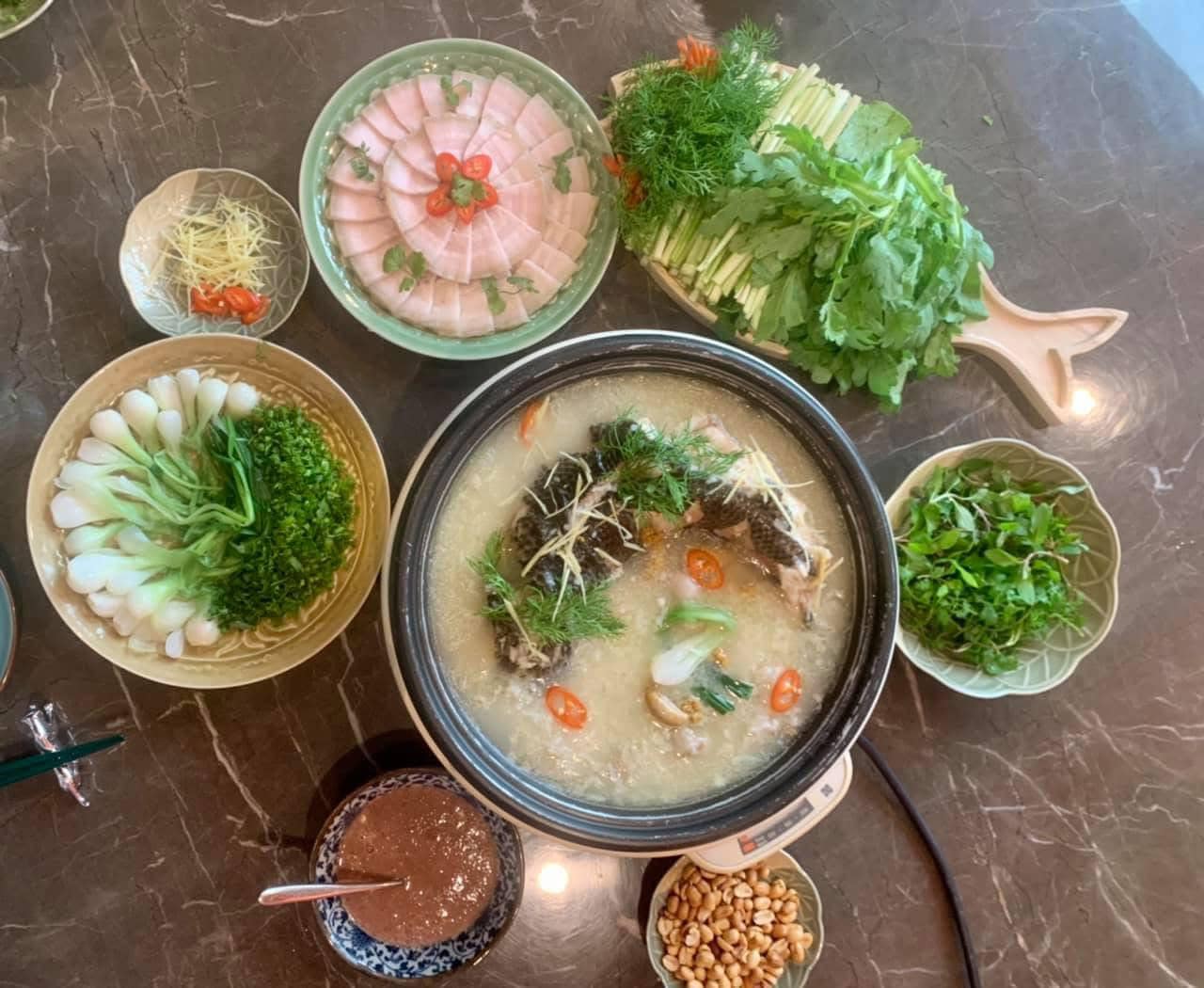
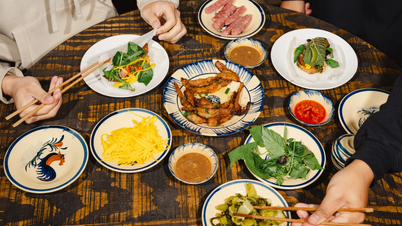
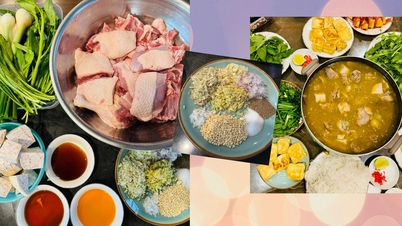
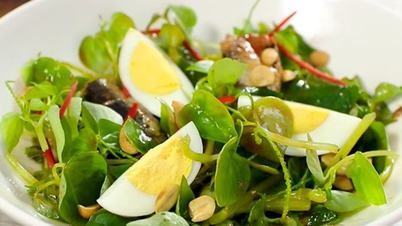
Shopping list: 1 snakehead fish, pork belly (3 layers), onions, ginger, celery, chrysanthemum greens, dill, mint, cilantro (the best ones are those with small, slightly purple stems; don't buy the bland cilantro from the supermarket), roasted peanuts, shrimp paste, lime, and chili peppers. Ask the fishmonger to clean the scales and gut the fish, but remember to keep the entrails. Bring it home, scrape off the slime, wash thoroughly with salt and vinegar, rub with a piece of crushed ginger to remove the fishy smell, dry it, and make several evenly spaced incisions on both sides of the fish. The picture shows a pot of fish porridge simmering gently to keep the fish warm, along with attractively arranged side dishes.
Mrs. Hoa's Kitchen is a place to share delicious recipes, cooking experiences, and the joy in each dish from Mrs. Tran Minh Hoa.
She just posted an article showing how to cook a steaming hot bowl of rice porridge, perfect for a Hanoi winter dinner when the whole family gathers together.
According to Ms. Hoa, this porridge can be eaten with side dishes such as: a plate of thinly sliced boiled pork belly, a plate of fragrant and crispy roasted peanuts, a bowl of frothy shrimp paste mixed with lemon, a plate of emerald green boiled onions, and, of course, a plate of chrysanthemum greens, water spinach, dill, etc.
Why is fish porridge served with shrimp paste and boiled meat?
Mrs. Hoa said that ever since winter arrived in Hanoi, she had planned to cook fish porridge for the whole family, but she hadn't been able to buy the right fish yet.
This morning, while idly wondering what to eat for dinner, her younger sister called to show off a really fresh and delicious snakehead fish she'd bought, and asked if she could bring it over to cook with her because eating alone would be lonely. Mrs. Hoa immediately agreed.
"We already have meat, peanuts, and delicious shrimp paste at home; we just need to buy onions and vegetables. Even though it's already spring, taking advantage of the last few cold spells, cooking a pot of fish porridge to enjoy the last bit of the season's chill is quite enjoyable. It might sound strange to eat fish porridge with shrimp paste and boiled meat, but after the first bite, my younger sister exclaimed, 'How did our ancestors come up with such a wonderful dish?'" - she recounted.
Speaking about the "cháo ám" dish, Mrs. Hòa shared:
"A slice of pristine white fish fillet sandwiched between slices of boiled pork belly with thin, translucent fat interspersed with streaks of pinkish lean meat;
Dip it into a bowl of pale purple shrimp paste, add a sprig of boiled scallions, a few roasted peanuts, and tiny sprigs of cilantro, along with some finely sliced ginger.
According to Ms. Hoa, to eat this dish, you have to open your mouth slightly wide to chew everything at once so that the chewy sweetness of the fish blends with the richness of the meat, the nutty flavor of peanuts, the sweetness of boiled fresh onions, the savory taste of shrimp paste, along with the fragrant aroma of coriander, mint, and a small sprig of dill.
"It's a harmonious blend of salty, sweet, fatty, savory, and aromatic flavors that our taste buds can fully and thoroughly perceive."
Next, for the porridge, after removing all the fish, only the shimmering broth and the floating, puffed rice grains remain in the pot. Ladle the porridge into a bowl, add some celery or chrysanthemum greens, sprinkle with a little pepper and chili powder, and... slurp! The broth has a naturally sweet and unique flavor, a perfect blend of meat and fish. Not to mention, if you're lucky enough to get some of the offal in your bowl, it's simply the ultimate experience!
This dish seems to be rarely sold these days. If you want to try it but don't know how to cook it, please check out the instructions with pictures!
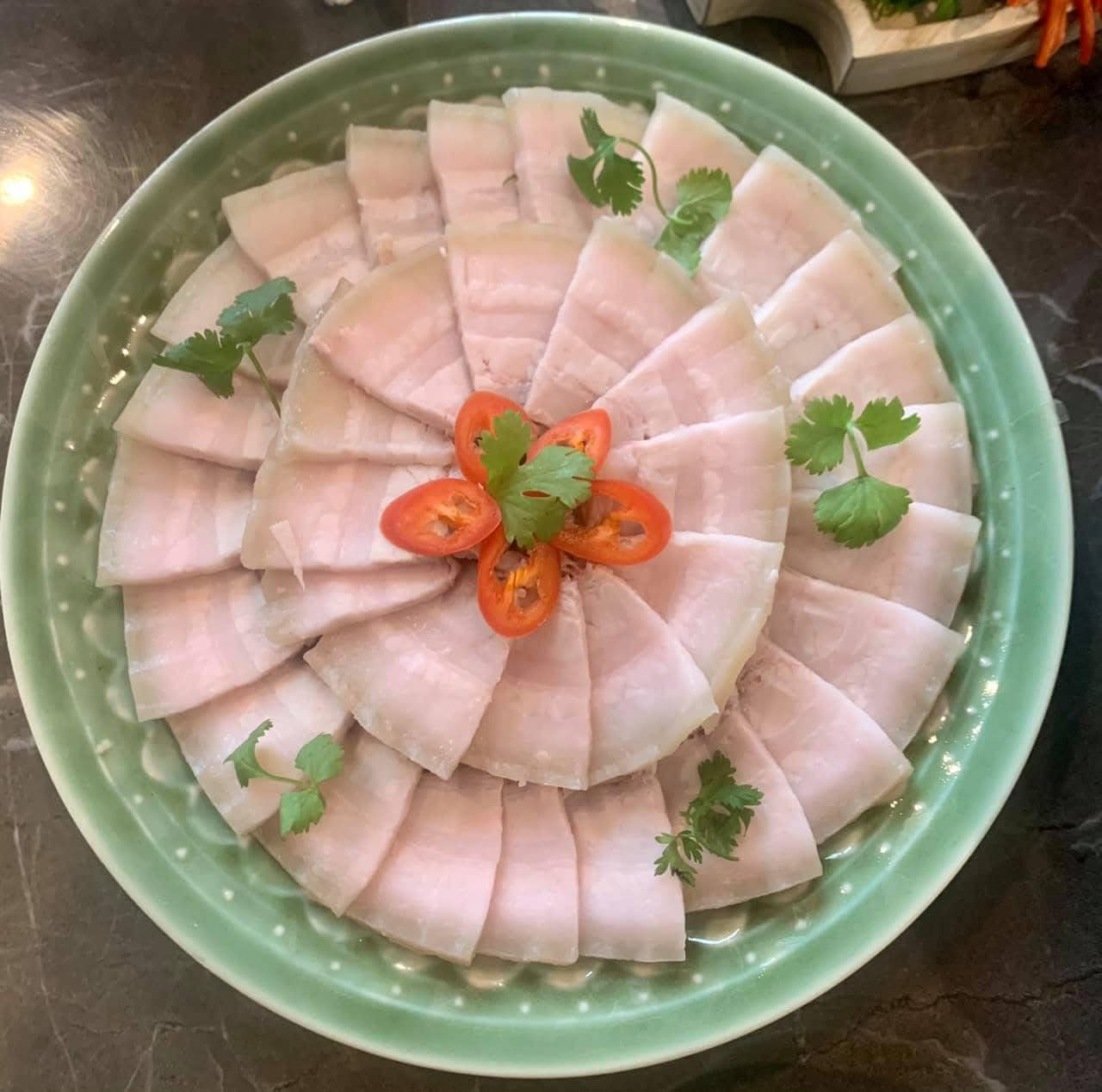
Bring a pot of water to a boil, crush 2 shallots, add 1 teaspoon of coarse salt, 2 teaspoons of fish sauce, and add the cleaned pork belly. Cook until tender (insert a piece of pork belly in the middle with chopsticks; if no pink liquid comes out, it's cooked. Don't overcook it; it will lose its sweetness). The picture shows the cooked pork belly sliced thinly (you can slice it into pieces about 2/3 the size of the picture) so you don't have to open your mouth too wide when eating.
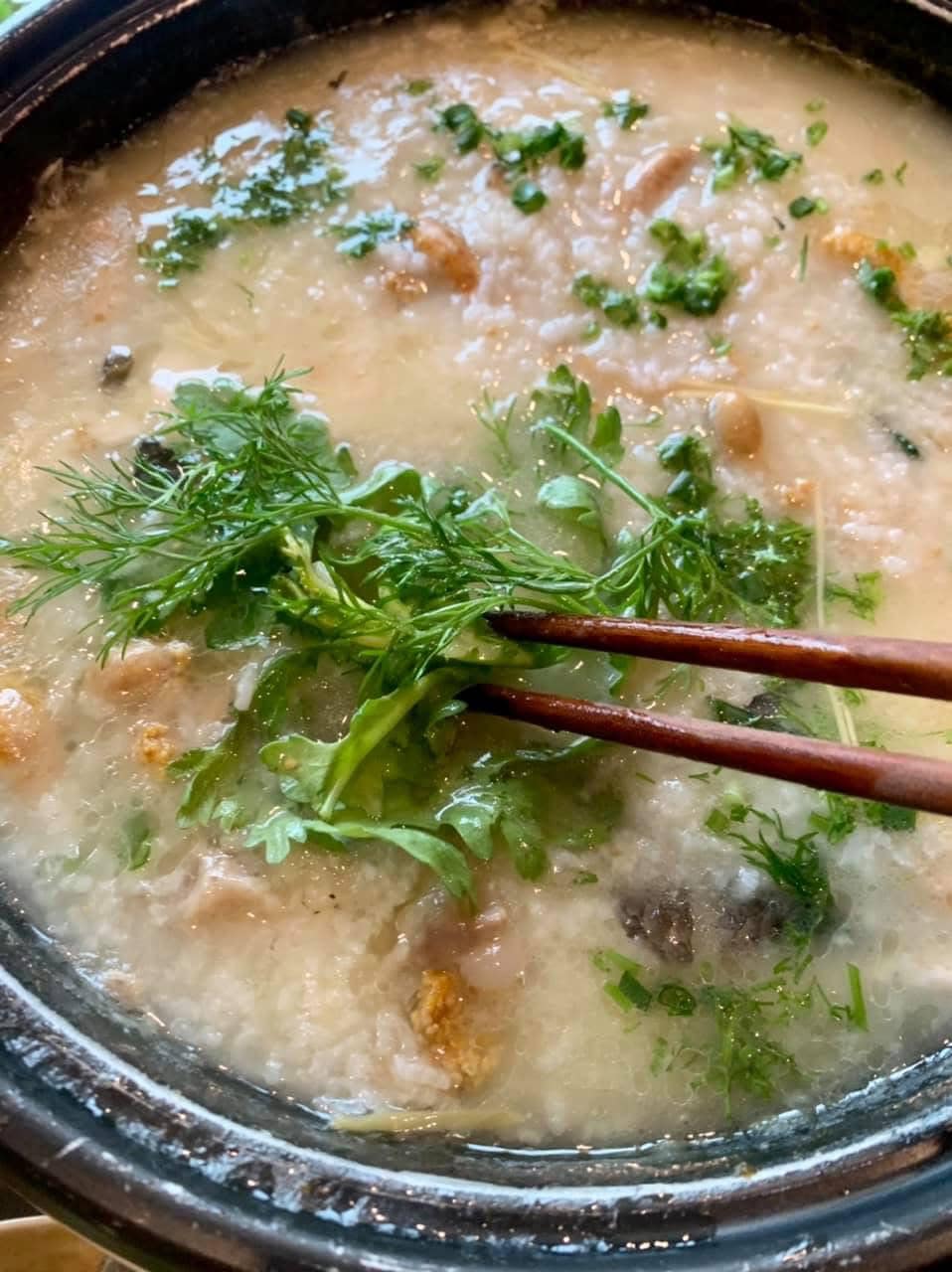
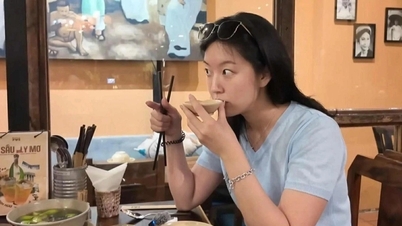
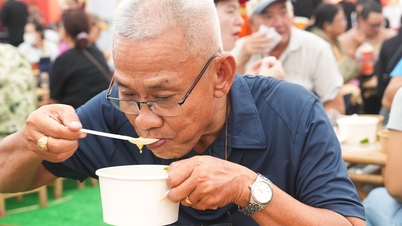
Remove the meat and add the fish to the pot to boil (note: if the meat broth is insufficient, add more boiling water to cover the fish). Once the pot boils, the fish is cooked when the cuts on the meat have opened up (if you're unsure, pierce the fish's back with a chopstick; if it comes through easily, the fish is cooked). Remove the fish and add about 100g of washed rice to the boiling water. Reduce the heat and simmer for about half an hour, stirring gently in one direction until the porridge thickens and the rice grains expand. Remember, the porridge should be thick but not too runny; it won't taste good if it's too thick. In the photo, Mrs. Hoa is dipping vegetables and eating the porridge.
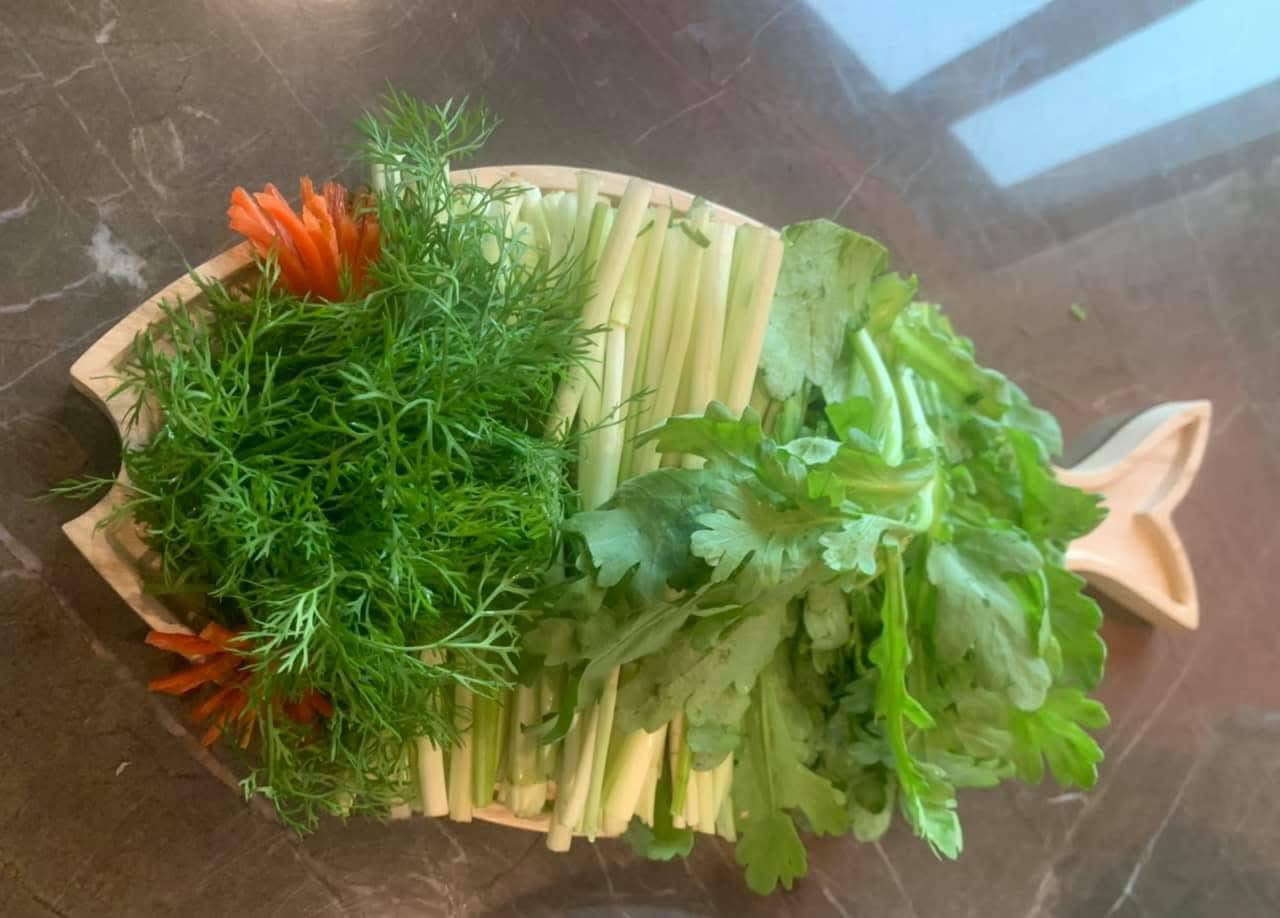
Wash the celery thoroughly and cut it into pieces; add chrysanthemum greens and dill.
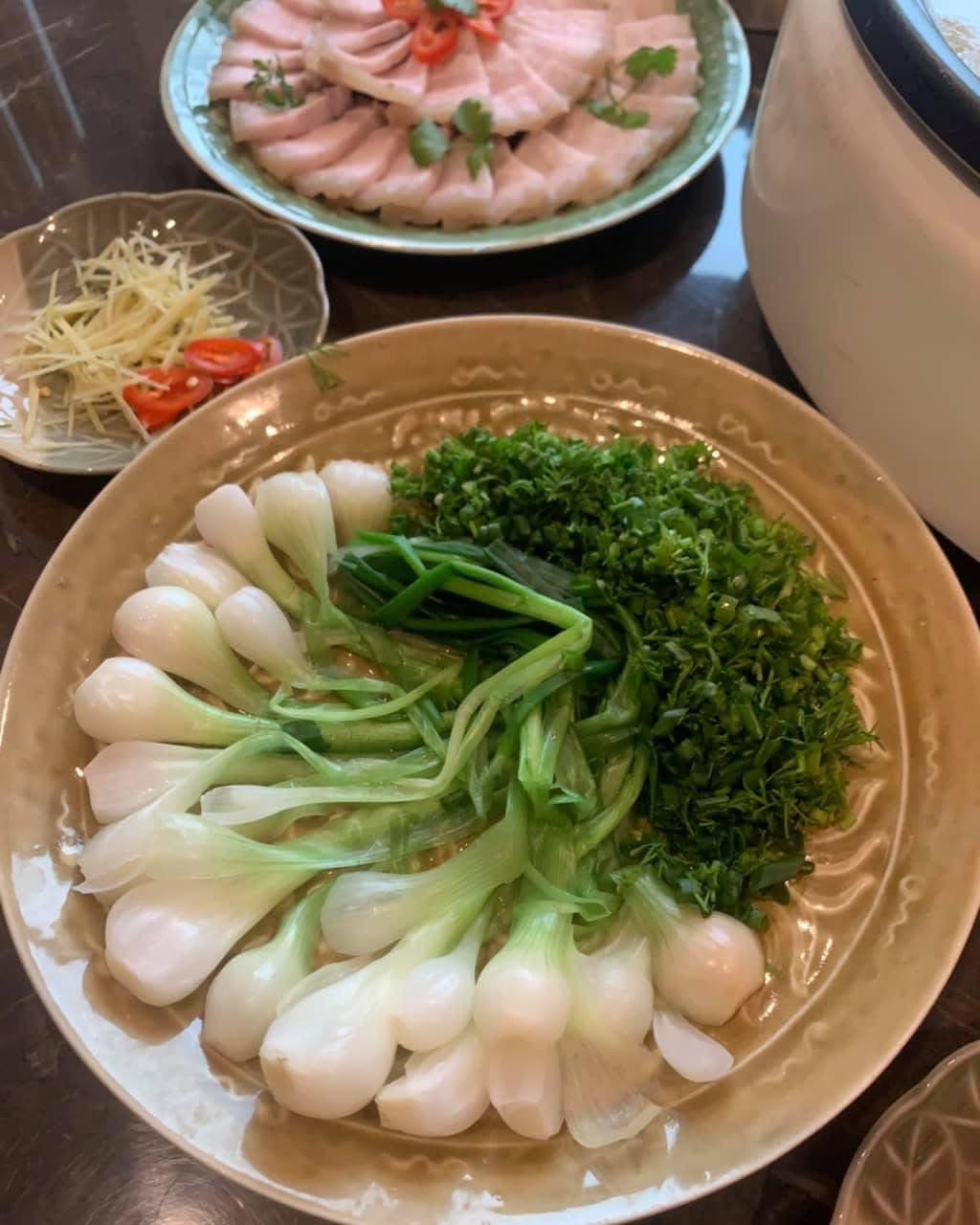
Slice onions in half and blanch them, julienne ginger, and finely chop scallions and dill to add to the porridge.
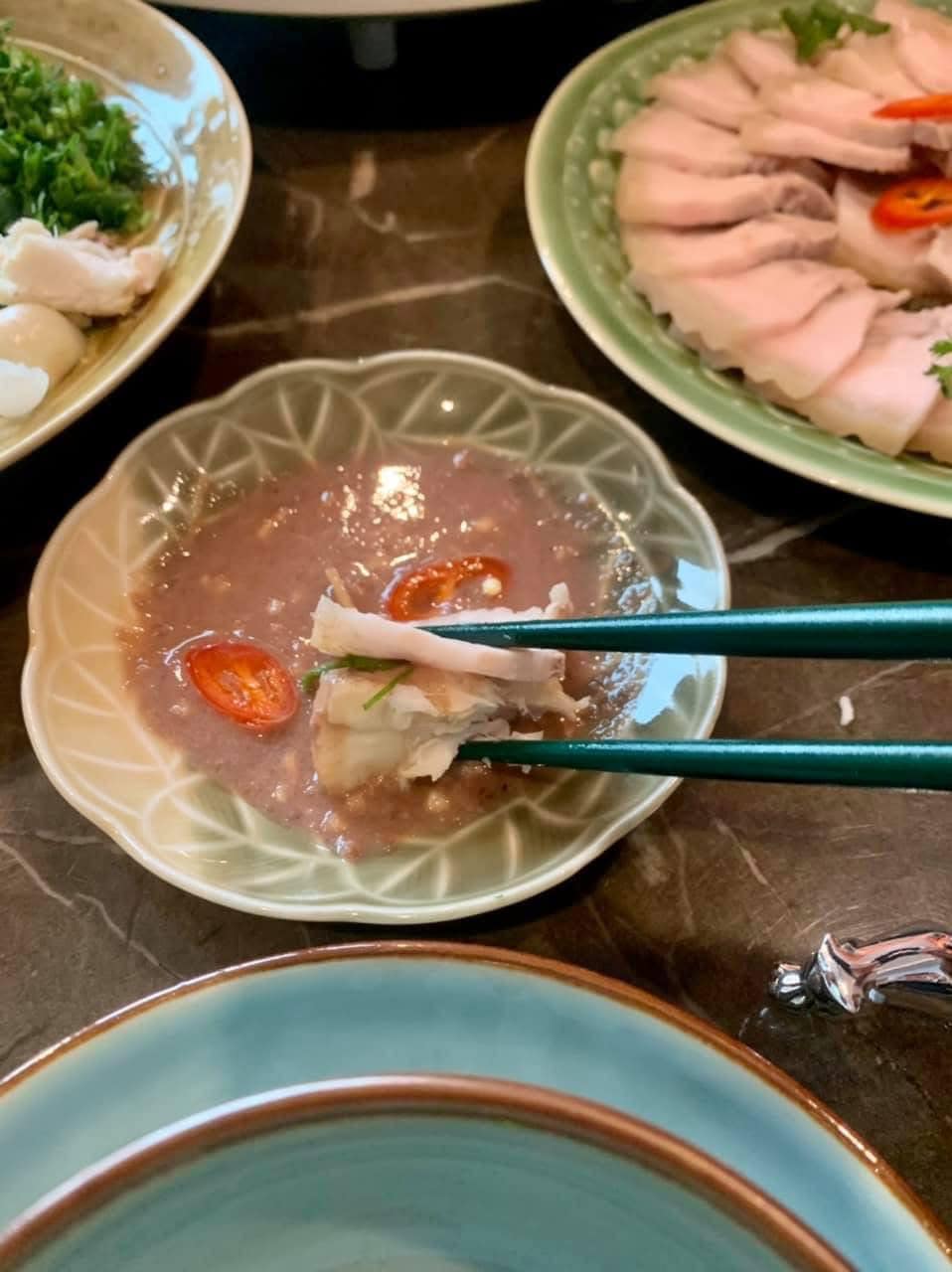
Take a piece of fish, a piece of meat, dip them in shrimp paste (mixed with vinegar, sugar, and lemon juice to taste, with a little garlic and chili added).
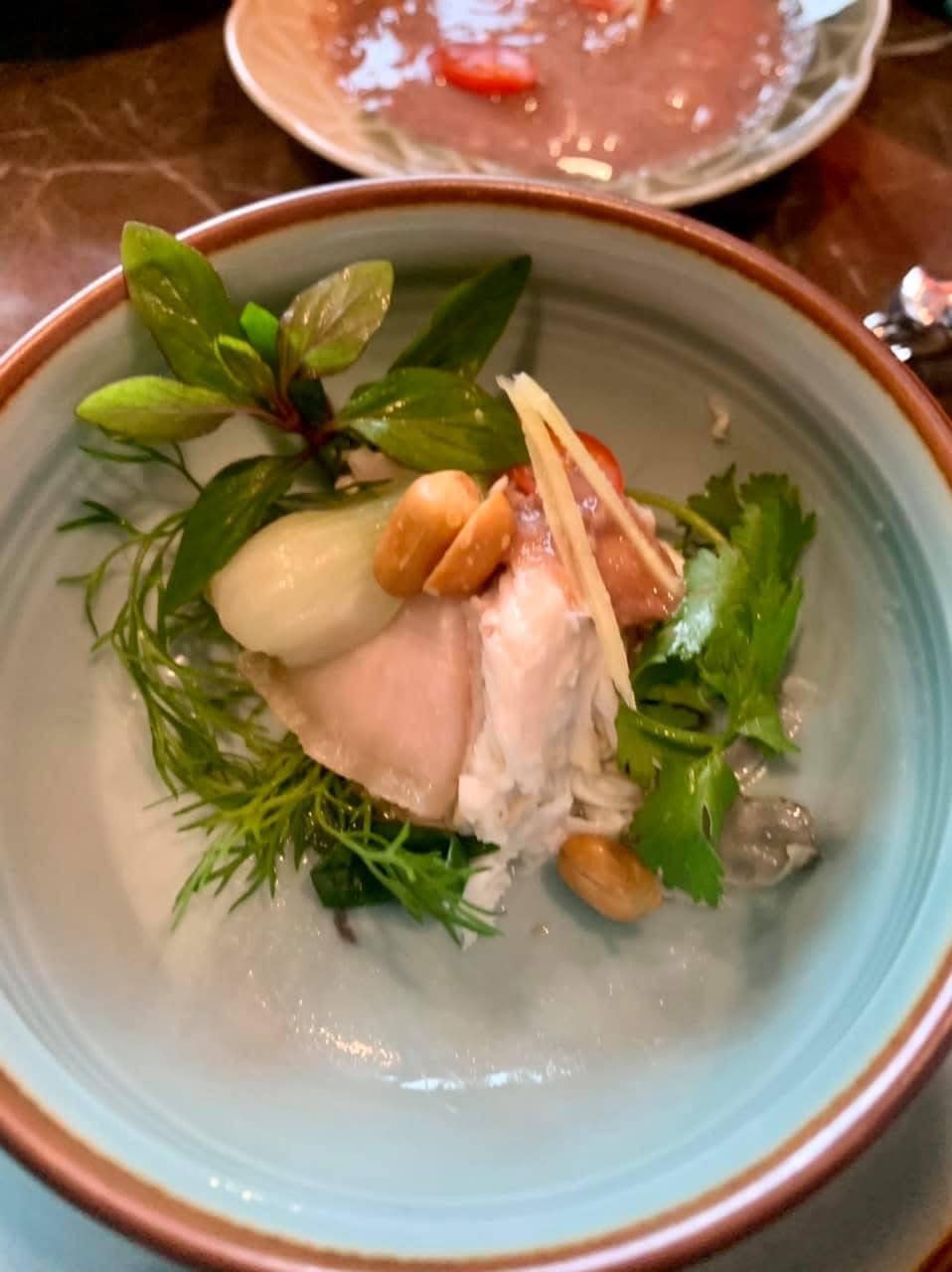
Add dill, mint, coriander, ginger strips, a few roasted peanuts, and boiled onions to the bowl.
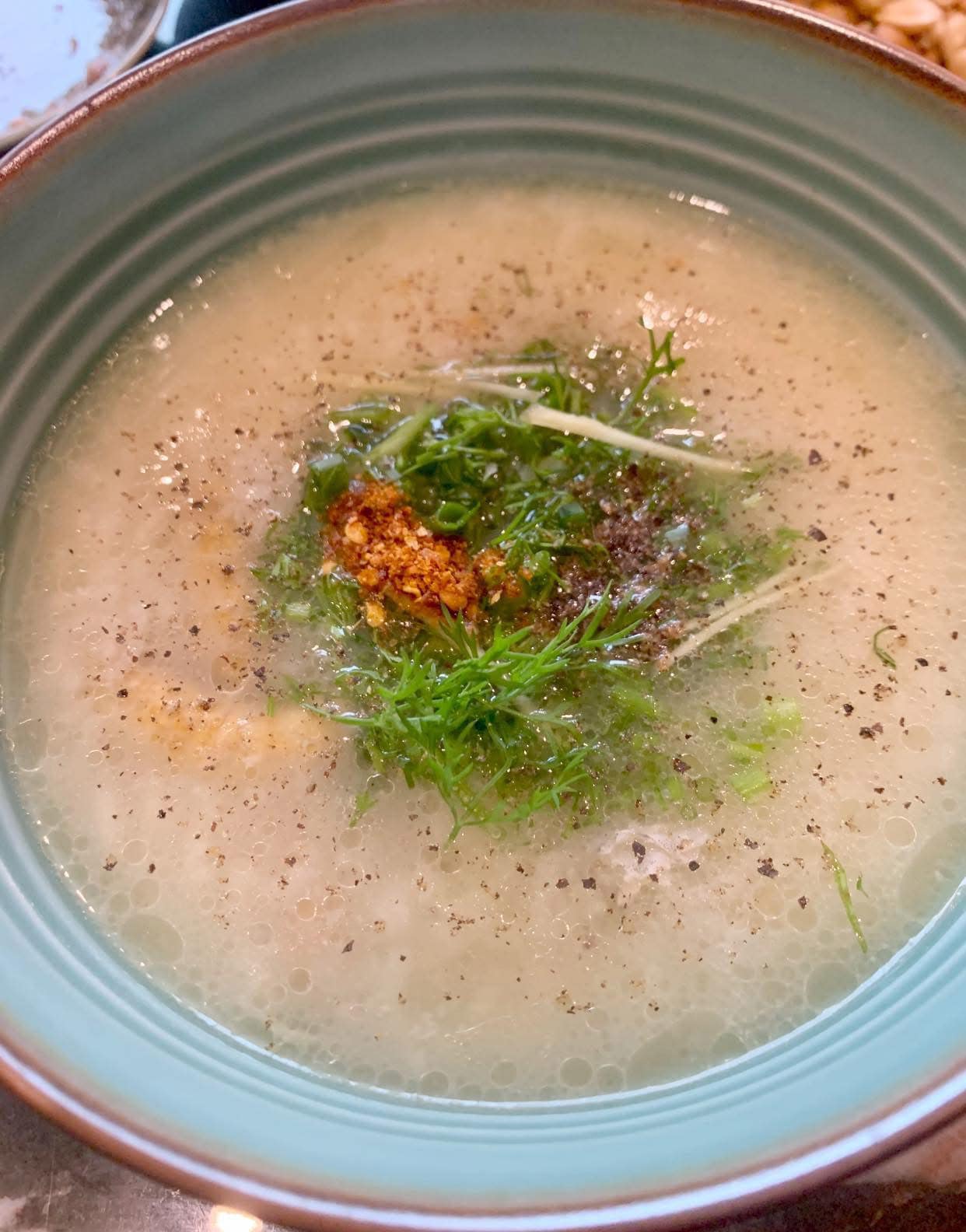
If you're lucky enough to find fish roe or a whole set of offal in your bowl of porridge, that's amazing!
Source: https://tuoitre.vn/goi-la-chao-am-ma-nau-rat-ky-cong-lai-an-cung-mam-tom-20250301121657963.htm
![[Image] Vietnam's colorful journey of innovation](/_next/image?url=https%3A%2F%2Fvphoto.vietnam.vn%2Fthumb%2F1200x675%2Fvietnam%2Fresource%2FIMAGE%2F2025%2F12%2F14%2F1765703036409_image-1.jpeg&w=3840&q=75)















































![[Image] Vietnam's colorful journey of innovation](https://vphoto.vietnam.vn/thumb/402x226/vietnam/resource/IMAGE/2025/12/14/1765703036409_image-1.jpeg)














![[Infographic] Portrait of the Standing Committee of the Dong Nai Provincial Farmers' Association for the 2025-2030 term](https://vphoto.vietnam.vn/thumb/402x226/vietnam/resource/IMAGE/2025/12/14/1765708210139_thumbnail_ban_thuong_vu_sua_20251214164836.jpeg)











Comment (0)